Who was the strongest samurai in Japan? Miyamoto Musashi is a compelling answer if you mean swordsmanship. Honda Tadakatsu belongs in the conversation for battlefield courage, while commanders such as Uesugi Kenshin and Oda Nobunaga demonstrate how military strength also depended on judgment, organization, and resources.
There is no historically accepted ranking that compares all these men. They lived in different periods, fought under different conditions, and left uneven records. This selection introduces ten outstanding warriors rather than pretending that history offers a tournament bracket. The numbers are reading order, not a proven ranking.
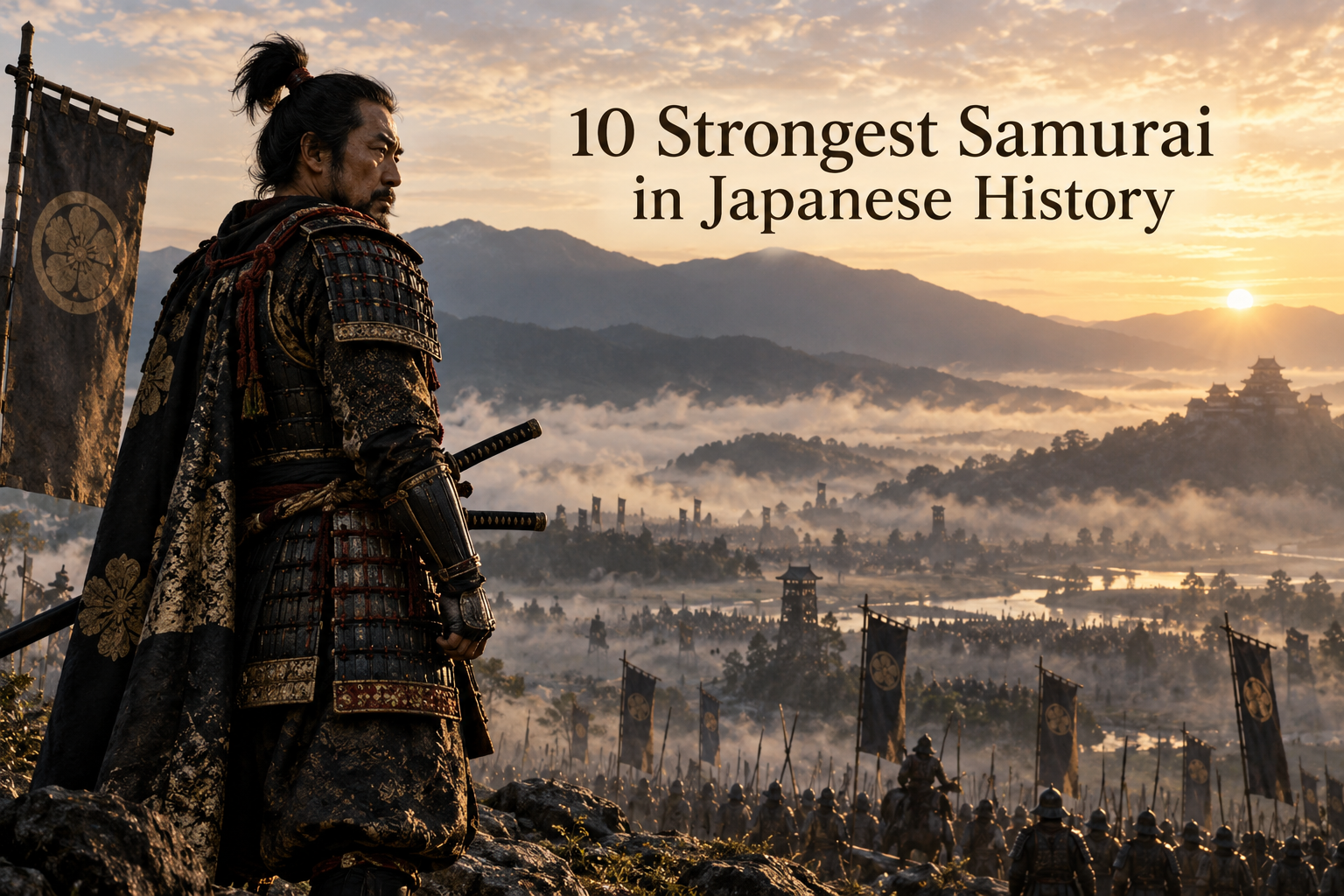
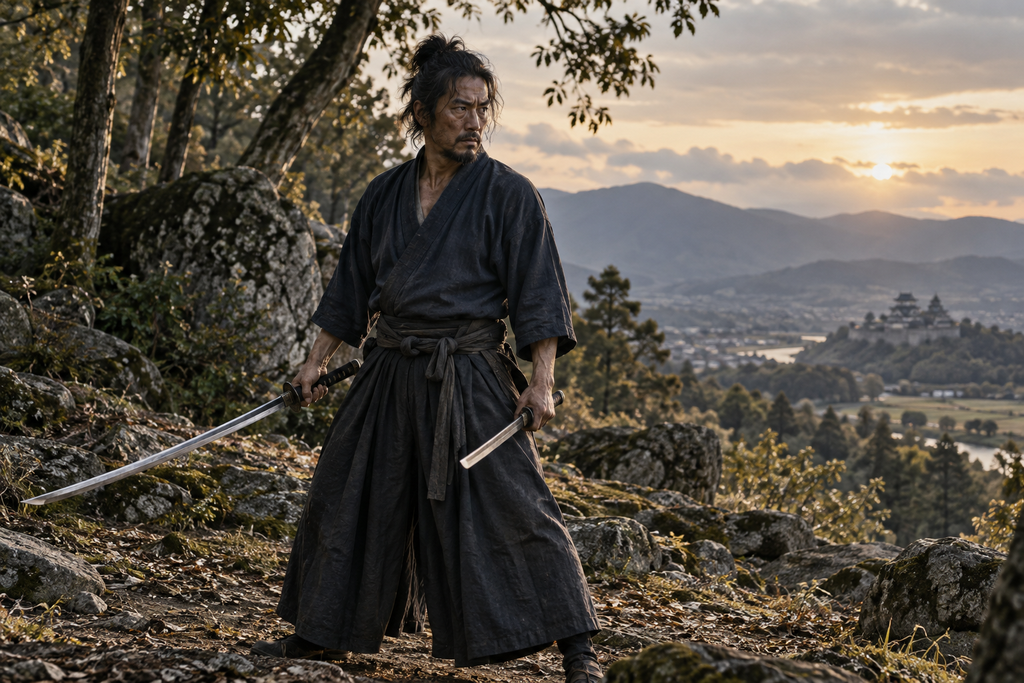
All images in this article are original artistic reconstructions. Faces, equipment, and settings are interpretive; they are not authentic portraits or documentary records.
What Does “Strongest Samurai” Actually Mean?
A skilled duelist and an effective army commander faced very different challenges. This guide considers three forms of strength: individual martial skill, leadership under battlefield pressure, and lasting influence on warfare or swordsmanship.
A samurai belonged to Japan’s warrior world; a daimyo was a territorial lord. These categories could overlap. A ronin was a masterless warrior. None of these labels automatically tells us how well someone fought.
Our selection includes swordsmen and warrior lords, but political power is not treated as proof of personal fighting ability. Stories of impossible victories, flawless records, and supernatural techniques need particular care.
1. Miyamoto Musashi — The Swordsman Who Studied Victory
Best known for: swordsmanship and strategic thought.
Miyamoto Musashi is famous for his two-sword tradition and The Book of Five Rings. His enduring appeal comes from the connection between technique and perception: reading an opponent, understanding timing, and adjusting to changing circumstances.
Musashi claimed an extensive undefeated dueling record, but that is not the same as a modern independently documented fight record. Many familiar scenes from his life were embellished in later biographies, novels, and films. His reputation is substantial without accepting every dramatic episode literally. [1, 2]
Why he belongs: Musashi represents strength developed through sustained practice and observation. His written legacy makes him especially interesting to readers who want more than a collection of battle stories.
History connection: Kumamoto is associated with his later years and writing; Ganryujima preserves the memory of his famous duel with Sasaki Kojiro.
2. Honda Tadakatsu — A Commander You Wanted Beside You
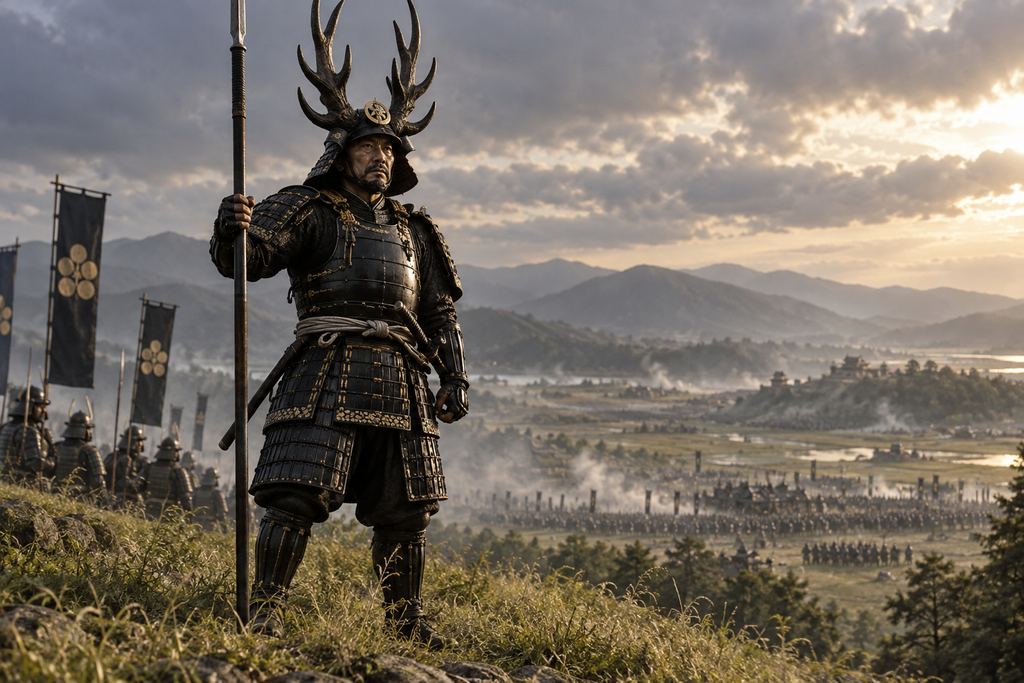
Best known for: battlefield service and martial reputation.
Honda Tadakatsu was one of Tokugawa Ieyasu’s leading commanders, remembered among the Tokugawa Four Heavenly Kings. His familiar image combines a deer-antler helmet with the celebrated spear Tonbokiri. Official heritage descriptions still use these features to introduce him. [3, 4]
Popular accounts portray him as almost impossible to injure. Treat such claims as part of his heroic reputation rather than evidence that any warrior could be invulnerable. The firmer foundation for his inclusion is his important place in Ieyasu’s military establishment.
Why he belongs: Tadakatsu offers a useful alternative to the lone swordsman. Strength could mean serving dependably within an army and inspiring confidence when a campaign became dangerous.
History connection: Okazaki Castle Park’s statue provides an accessible introduction to his recognizable armor and weapon imagery.
3. Minamoto no Yoshitsune — The Commander Who Seized the Initiative
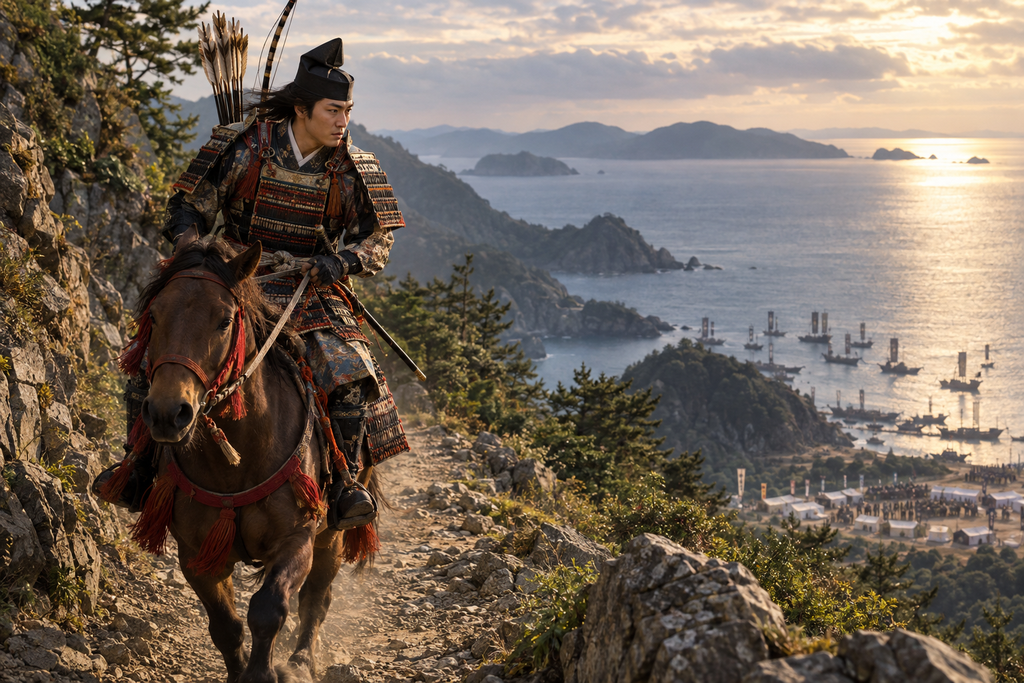
Best known for: rapid action and tactical imagination.
Yoshitsune helped defeat the Taira during the Genpei War, culminating in the naval victory at Dan-no-ura in 1185. His fame rests on an ability to unsettle opponents and press an advantage. His career also reminds us that samurai warfare took place on water as well as on land. [5]
Later stories made him an almost superhuman hero. Dramatic descriptions of cliff descents and extraordinary leaps belong to a mixture of military history and literary tradition; they should not become measured evidence of physical ability.
Why he belongs: Yoshitsune represents initiative. A commander who changes the situation before an opponent can respond may achieve more than a physically stronger fighter.
Japanese Perspective: His popularity also reflects the appeal of a gifted but tragic figure. Being remembered affectionately and winning the final political struggle are different things.
4. Sanada Nobushige (Yukimura) — Defiance at Osaka
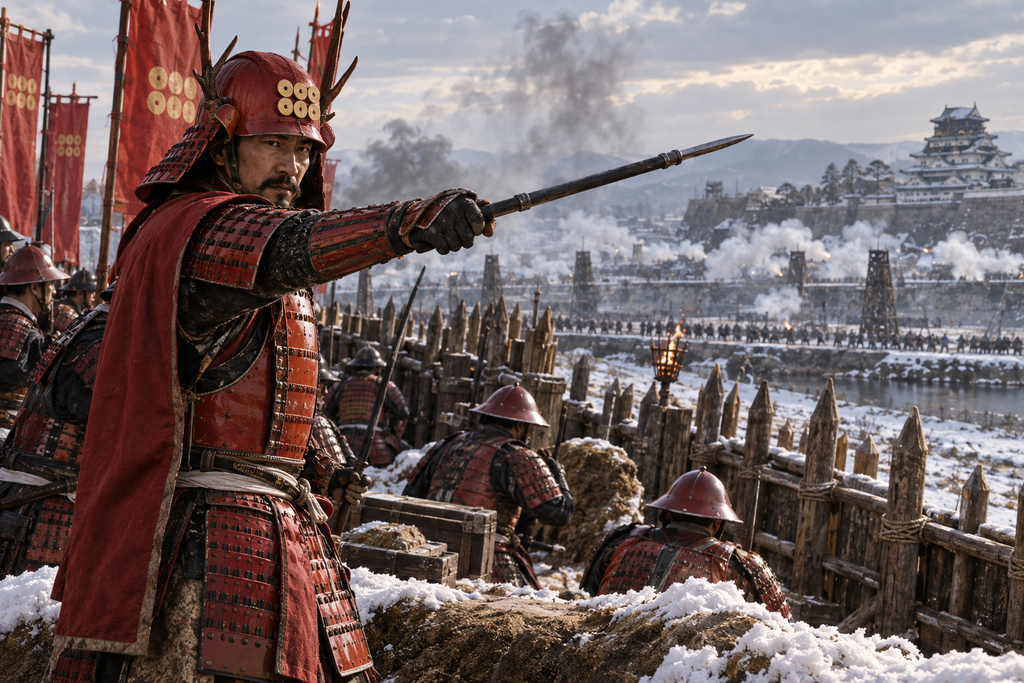
Best known for: defensive fighting and courage under pressure.
Sanada Nobushige is widely known as Sanada Yukimura, the name familiar from popular culture and many tourist signs. His reputation is closely tied to the Osaka campaigns of 1614–1615 and the Sanadamaru defensive work during the winter fighting. Osaka’s official historical walking route connects visitors with places associated with this story. [6]
His inclusion does not depend on pretending the Toyotomi side ultimately won. His appeal lies in the contrast between the strength of the opposition and the resistance he became famous for offering.
Why he belongs: Nobushige represents defensive intelligence and determination. In an army, selecting and preparing ground could be just as important as charging across it.
History connection: Explore the Sanada-related sites around Osaka as a focused history walk, with a map that distinguishes surviving structures from memorial locations.
5. Uesugi Kenshin — A Formidable Rival
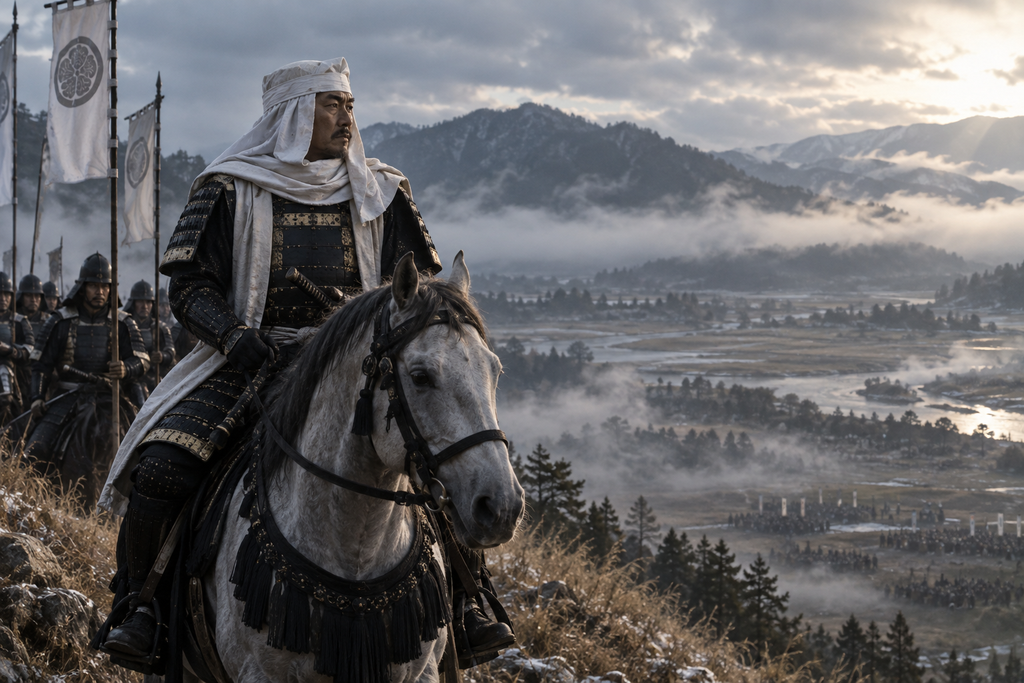
Best known for: military leadership and a powerful warrior reputation.
Uesugi Kenshin became one of the most feared warlords of his age. His rivalry with Takeda Shingen, especially their conflicts at Kawanakajima, remains central to his historical image. The surviving cultural memory extends beyond battlefields to places such as Uesugi Shrine in Yonezawa. [7, 8]
The famous scene in which Kenshin attacks Shingen personally is memorable, but it should be presented as a legendary episode rather than unquestioned evidence of a duel. A commander’s reputation cannot be reduced to one dramatic illustration.
Why he belongs: Kenshin represents the combination of leadership, military pressure, and reputation that made an opponent difficult to confront over many campaigns.
Japanese Perspective: Sacred imagery surrounding warriors helps explain their later commemoration. Describing someone as a war god expresses reverence; it does not supply a literal measure of combat ability.
6. Takeda Shingen — Strength at the Scale of an Army
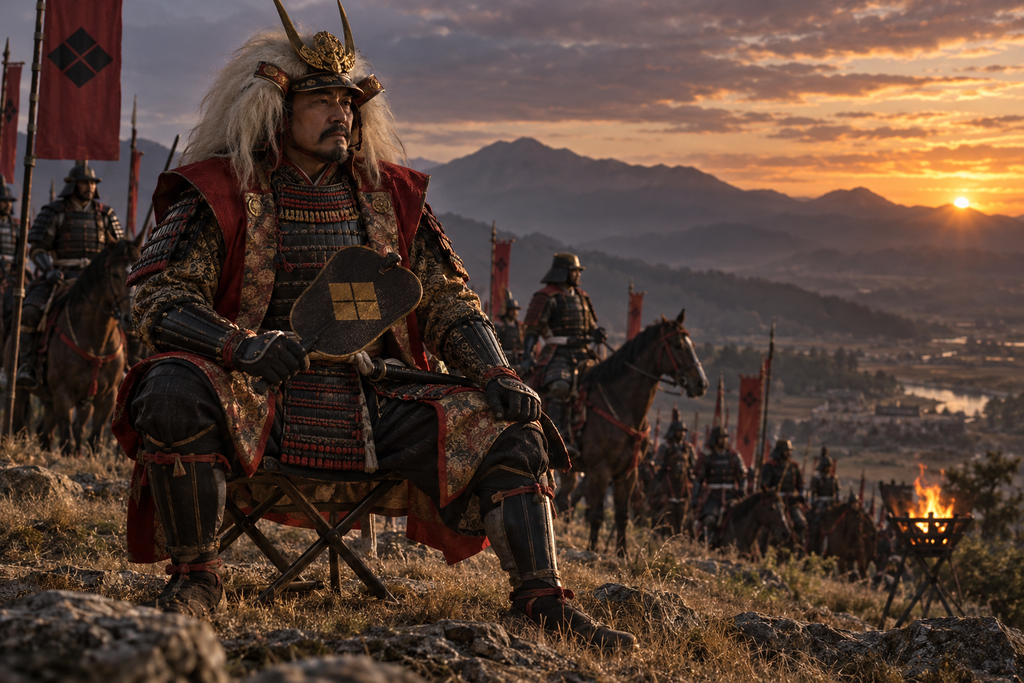
Best known for: sustained campaigning and regional power.
Takeda Shingen led the Takeda house of Kai and fought for influence in neighboring territories. His long rivalry with Kenshin at Kawanakajima makes him essential to any introduction to the military world of sixteenth-century Japan. [8, 9]
It is tempting to explain a famous army through one feature, such as its cavalry. Yet campaigns also depended on infantry, terrain, provisions, alliances, and the capacity to continue fighting. Calling Shingen strong is most meaningful when we consider that larger system.
Why he belongs: Shingen illustrates how a warlord’s effectiveness extended beyond his own weapon. Organizing other people’s efforts was itself a demanding military skill.
History connection: Kai corresponds broadly to present-day Yamanashi. Exploring that regional setting gives more context than treating every celebrated warrior as if he belonged to Kyoto or Tokyo.
7. Tachibana Muneshige — Resilience Beyond Defeat
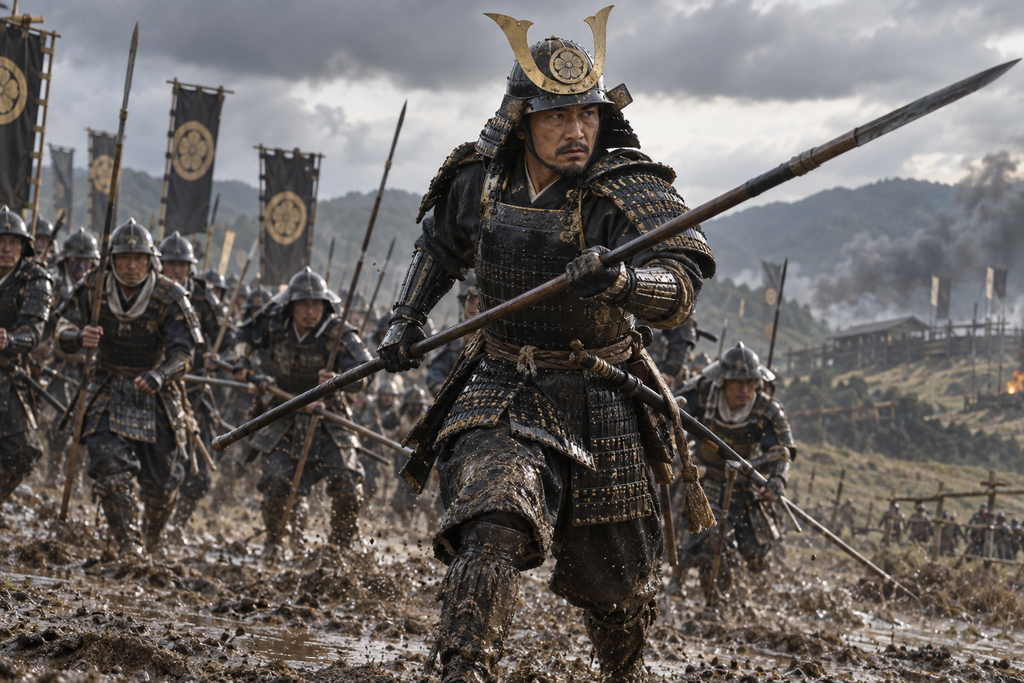
Best known for: warrior leadership and a remarkable recovery.
Tachibana Muneshige deserves attention beyond the most internationally familiar samurai names. The Tachibana Museum preserves armor and personal objects associated with him, giving visitors a material connection to the warrior behind the reputation. [10]
He lost his territory following the defeat of his side in the Sekigahara conflict, but eventually returned as lord of Yanagawa after gaining the Tokugawa family’s trust. This was a recovery involving political judgment as well as military standing.
Why he belongs: Muneshige broadens the idea of strength. Survival, rebuilding trust, and recovering from defeat can reveal capabilities that a simple win-loss list misses.
History connection: Yanagawa in Fukuoka is a fitting place to connect his story with family collections. Museum objects offer a valuable counterweight to the exaggerated equipment often seen in games.
8. Shimazu Yoshihiro — Keeping a Force Together in Disaster
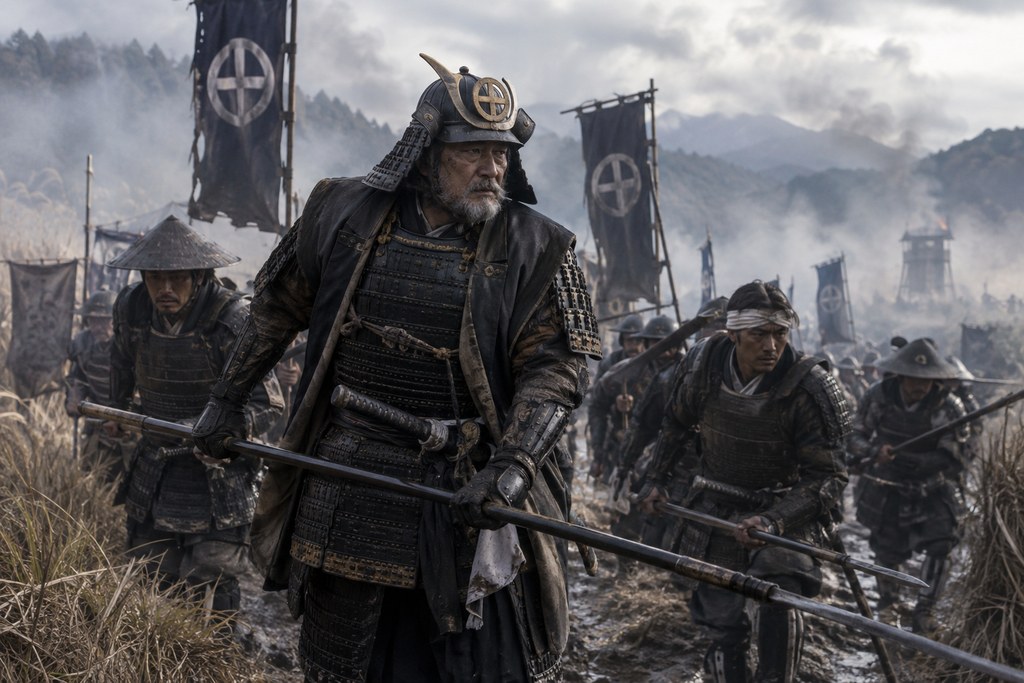
Best known for: battlefield leadership and the Sekigahara withdrawal.
Shimazu Yoshihiro is remembered for the breakout of his troops after their side lost at Sekigahara in 1600. Gifu Prefecture’s official route traces the movement from his encampment toward the escape route. The withdrawal came at a severe human cost, with warriors holding back pursuit. [11, 12]
This makes an instructive addition to a strongest-samurai selection. Command does not end when victory becomes impossible. A retreat can expose the discipline, decisions, and sacrifices on which an army depends.
Why he belongs: Yoshihiro represents leadership in an extreme situation. That judgment is distinct from celebrating the suffering caused by warfare or treating every campaign he joined as admirable.
History connection: At Sekigahara, studying the terrain and positions helps turn a dramatic escape story into a question about actual movement across a battlefield.
9. Oda Nobunaga — Making an Army More Dangerous
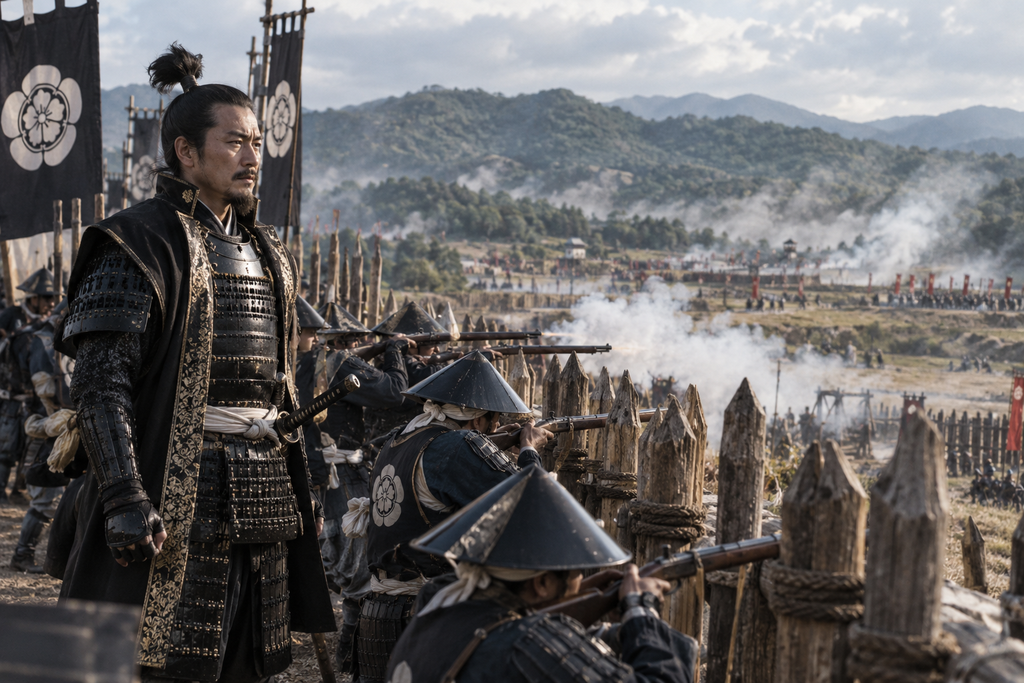
Best known for: military organization and effective use of firepower.
Nobunaga belongs here as a warrior lord and military leader, not as a proven champion duelist. His victory over the Takeda at Nagashino in 1575 is particularly associated with the use of firearms. Japan’s Tourism Agency identifies the battle as an important example of his military success. [13]
He did not invent guns, and samurai were not universally opposed to using them. The larger lesson is that military advantage could come from arranging weapons, men, and defenses effectively. Avoid treating a familiar cinematic account of the battle as a complete tactical record.
Why he belongs: Nobunaga represents the strength of an organized fighting system. Personal courage mattered, but organization could determine what thousands of soldiers were able to accomplish.
History connection: The Nagashino and Shitaragahara area in Aichi offers a setting for learning about firearms and battlefield defenses. [14]
10. Yagyu Munetoshi — Mastery That Outlasted a Lifetime
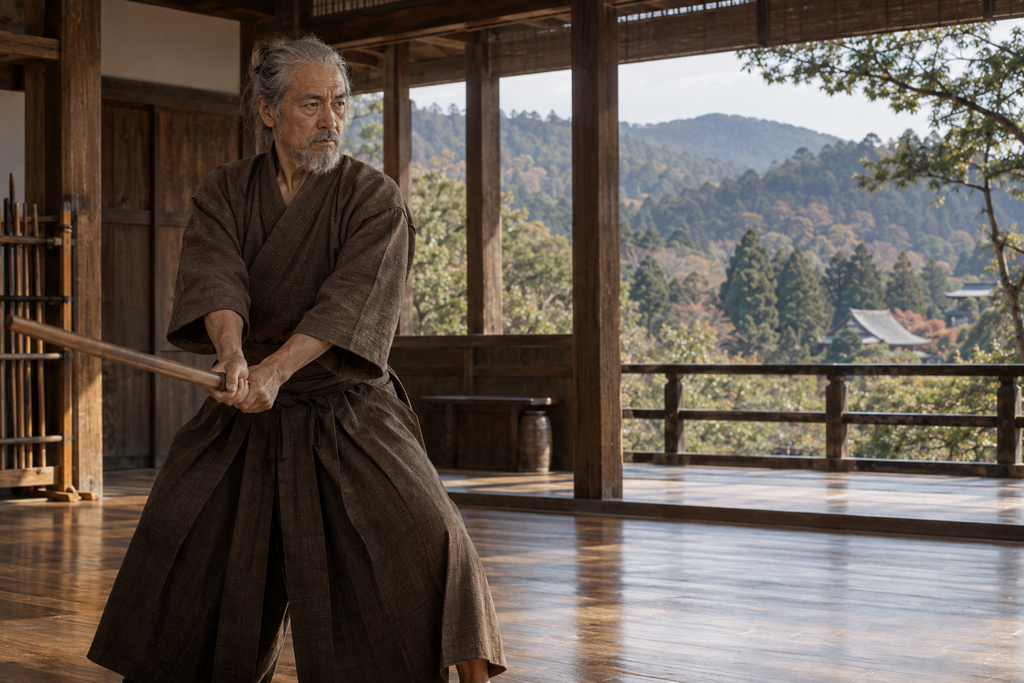
Best known for: swordsmanship and the Yagyu Shinkage-ryu tradition.
Yagyu Munetoshi, also called Muneyoshi or Sekishusai, is associated with the development and transmission of Yagyu Shinkage-ryu. His story points toward another kind of martial achievement: teaching a body of knowledge that later generations could practice. [15]
Yagyu’s local landscape also preserves legends, including the tale of a rock split during an encounter with a tengu. Enjoy the story as folklore rather than evidence of a supernatural sword technique. Nara’s tourism guide explicitly presents it as an anecdote. [16]
Why he belongs: Munetoshi represents technical depth and transmission. A fighter’s influence can extend far beyond the encounters he personally won.
History connection: Yagyu, in the hills of Nara, is a rewarding setting for readers interested in sword traditions and the relationship between history and local storytelling.
Japanese Perspective: Why the Winner Is Not Always the Hero
One useful way to approach these figures is to separate three questions: Who fought effectively? Who gained power? Who became beloved in later culture?
The answers need not match. Yoshitsune and Nobushige invite sympathy partly because their stories end tragically. Musashi appeals through the image of lifelong training. A regional museum may emphasize the lord whose family shaped its own town.
These are different ways of remembering the past, not a single opinion shared by every Japanese person. Likewise, “bushido” should not be treated as one unchanged rulebook followed uniformly across centuries. Read stories of loyalty alongside the practical pressures of family survival, service, ambition, and shifting alliances.
For overseas readers, this distinction makes samurai history richer: a famous reputation is something to investigate, not simply a score to accept.
Practical Guide: Turn the Article into a History Trip
Choose one region rather than trying to visit all ten warriors’ associated places in a short holiday. These are suggested themes, not timed transport itineraries.
| Region | Suggested historical focus | Planning approach |
|---|---|---|
| Osaka and Nara | Nobushige’s Osaka sites and the Yagyu area | Give Osaka its own walking day; plan a separate excursion for rural Yagyu. |
| Aichi and Gifu | Tadakatsu, Nobunaga, and Sekigahara | Select a few sites and study a battlefield map before traveling between them. |
| Northern Kyushu | Musashi’s Kumamoto connections and Muneshige’s Yanagawa | Treat them as separate stops within a wider Kyushu journey. |
| Yamagata and central Japan | Kenshin’s commemoration and the Kenshin–Shingen rivalry | Distinguish memorial sites from the places where campaigns actually occurred. |
Check official opening information and transport before departure, especially for rural museums and boat journeys. Some sites are ruins or memorials rather than surviving battle-period buildings. Read labels carefully: an original object, a later portrait, and a modern replica tell different kinds of stories. Follow each venue’s photography guidance.
FAQ
Who was the strongest samurai of all time?
There is no objectively established answer. Musashi is a compelling choice for swordsmanship; Tadakatsu for battlefield reputation; and commanders such as Kenshin or Nobunaga for military leadership. The answer depends on the ability being compared.
Was Miyamoto Musashi really undefeated?
Musashi claimed a remarkable dueling record. The evidence does not allow every encounter to be checked like a modern sporting result, and later storytelling added further detail. It is more accurate to distinguish his claims from independently established events.
Are Sanada Yukimura and Sanada Nobushige the same person?
Yes. Nobushige is the historical name, while Yukimura became widely familiar through later tradition. You will encounter both in English-language travel information and Japanese popular culture.
Did samurai only fight with katana?
No. Depending on the period and situation, warriors also used bows, spears, and firearms. Swords are culturally prominent, but they do not explain every battlefield victory.
Is this a list of the ten best duelists?
No. It deliberately includes swordsmen, battlefield commanders, and warrior lords. A ranking restricted to individual swordsmanship would need a different selection and different evidence.
Explore More of Japan
Continue exploring travel, history, and culture at Explore Japan with Yotsuha. For another view of how Japan’s warrior past is reimagined in storytelling, browse our Manga Reviews.