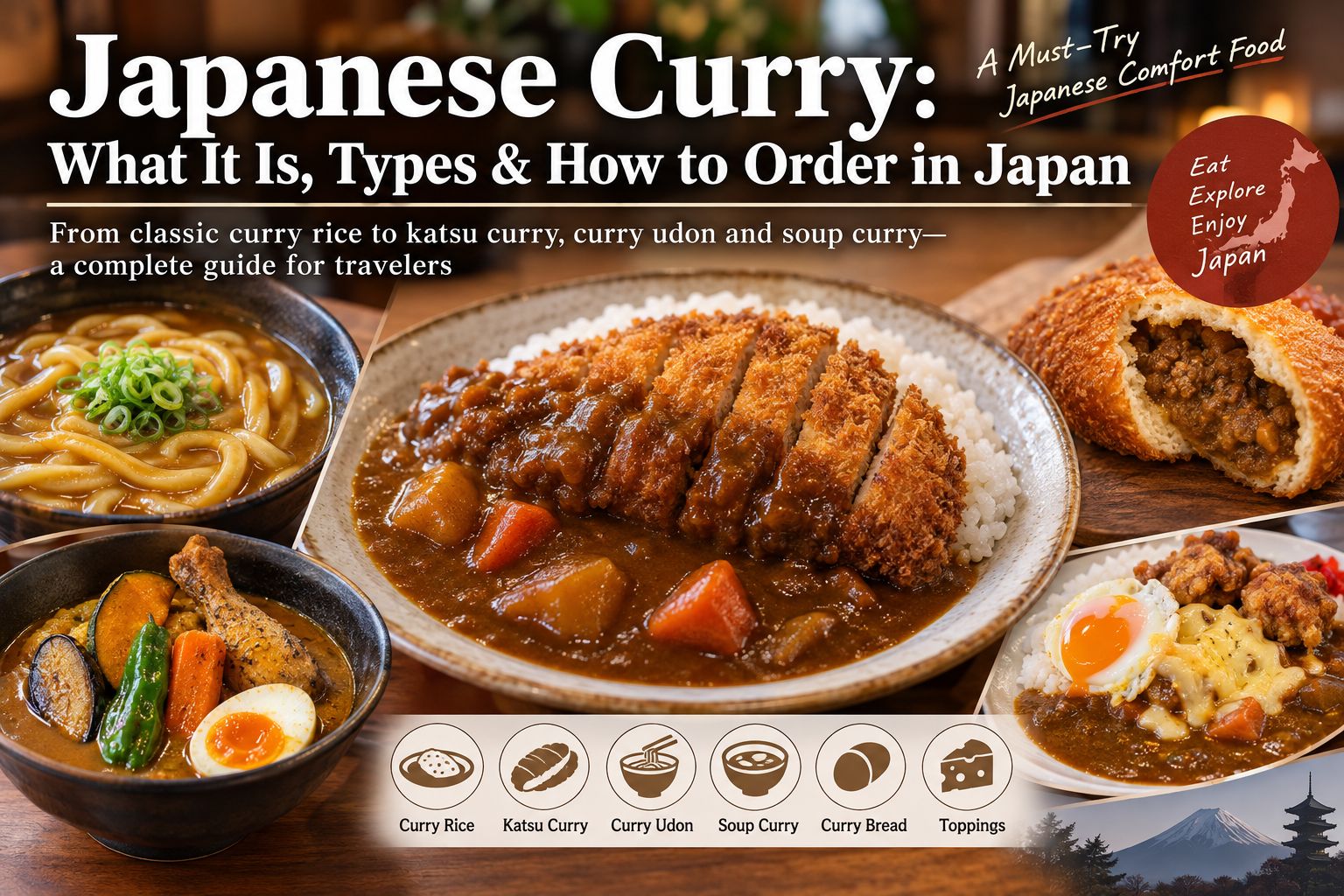
Japanese curry may not be the first dish international visitors think of when imagining food in Japan.
Sushi, ramen, tempura, and yakitori often receive more attention.
But spend enough time in Japan and you will quickly notice something:
Curry is everywhere.
You can find it in specialist curry restaurants, family restaurants, cafeterias, school lunches, convenience stores, supermarkets, train stations, and home kitchens.
It is warm, filling, affordable, and easy to customize.
Japanese curry is also quite different from many curries found in India, Thailand, or other parts of Asia.
The sauce is usually thick and smooth, with a mild balance of savory, sweet, and spicy flavors. It is most commonly poured beside or over steamed rice and served with meat and vegetables.
For travelers, Japanese curry is one of the easiest everyday dishes to try.
And once you start exploring it, you may discover far more variety than expected.
What Is Japanese Curry?
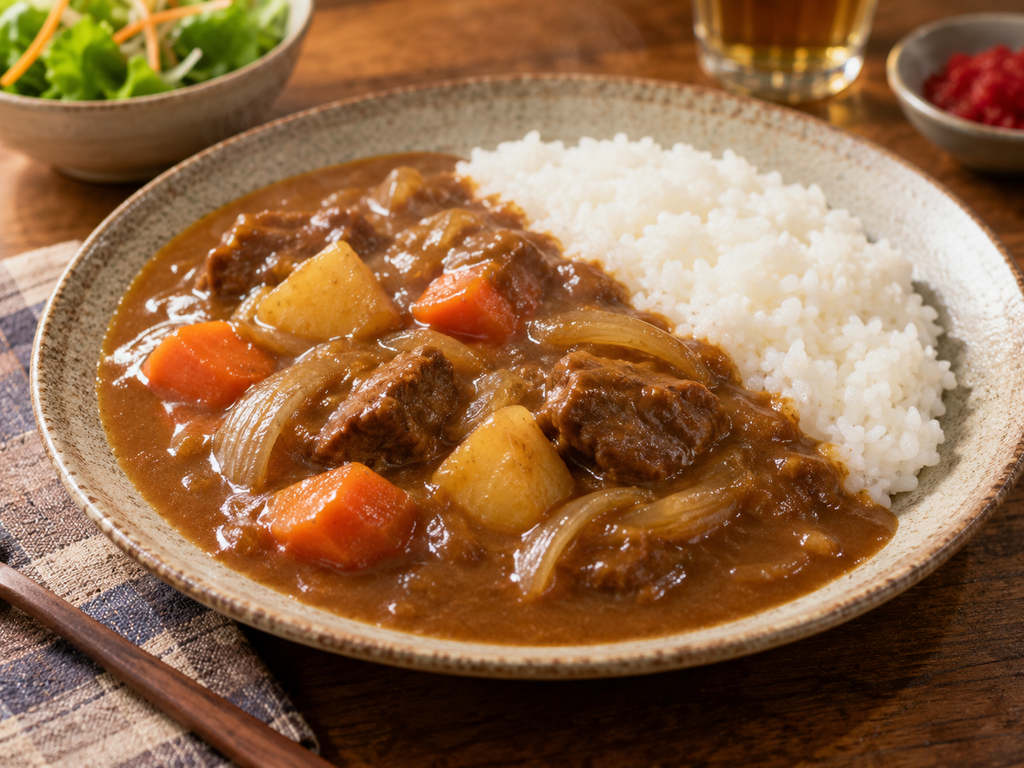
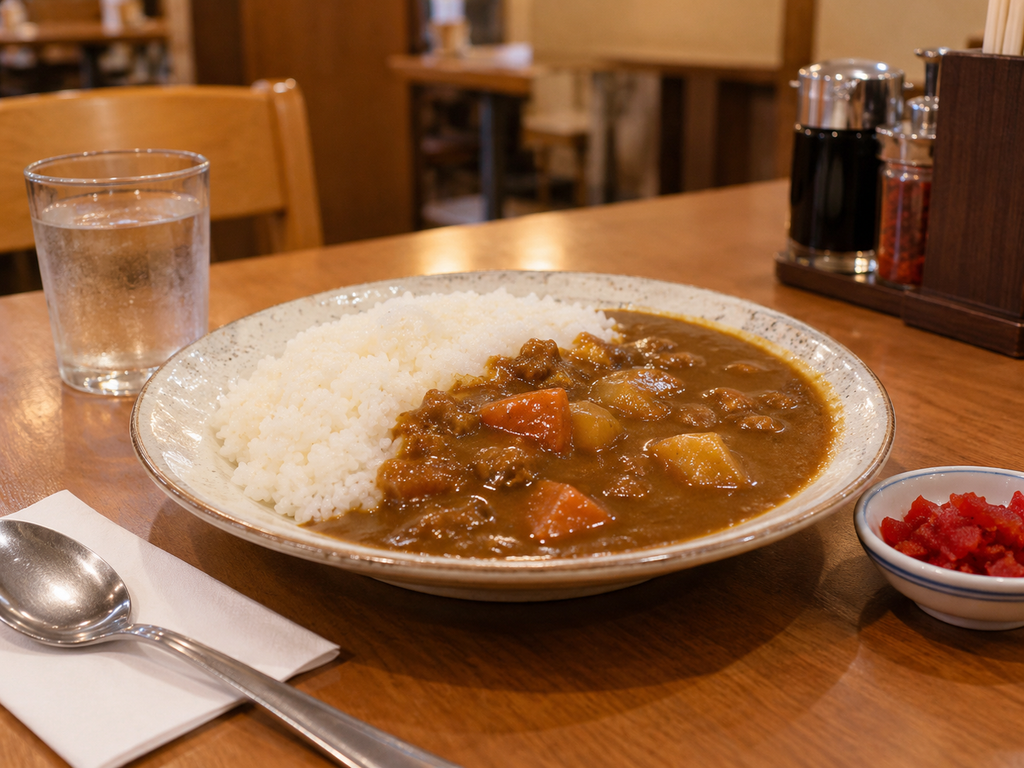
The most familiar form is curry rice, or kare raisu.
A plate typically contains:
- Steamed Japanese rice
- Thick curry sauce
- Meat
- Potatoes
- Carrots
- Onions
The curry is usually thicker than Indian-style curry and often has a smooth, gravy-like consistency.
Beef, pork, and chicken are all common.
The flavor can range from mild and slightly sweet to intensely spicy.
Unlike meals built around several small Japanese dishes, curry rice is generally served as one complete plate.
That simplicity is part of its appeal.
Why Does Japanese Curry Taste Different?
Visitors who expect strong South Asian spices may be surprised by Japanese curry.
Japanese curry usually emphasizes a rich, comforting sauce rather than sharp heat.
Common characteristics include:
- Thick texture
- Mild sweetness
- Savory depth
- Gentle spice
- Soft-cooked vegetables
Some versions include ingredients such as apple, honey, fruit, chocolate, or other flavorings to create additional sweetness and richness.
This does not mean Japanese curry cannot be spicy.
Specialist restaurants may offer many levels of heat.
But the everyday version served to children and families is often comparatively mild.
1. Curry Rice — The Classic
If you are trying Japanese curry for the first time, start with simple curry rice.
Rice occupies one side of the plate and curry fills the other.
Depending on the restaurant, vegetables may be visible in large pieces or cooked until they almost disappear into the sauce.
Beef curry is common, but pork and chicken versions are also widely available.
Some restaurants specialize in just curry, allowing customers to customize almost every part of the meal.
You may be able to choose:
- Rice amount
- Spice level
- Meat
- Toppings
- Sauce quantity
This makes Japanese curry particularly easy to adapt to your appetite.
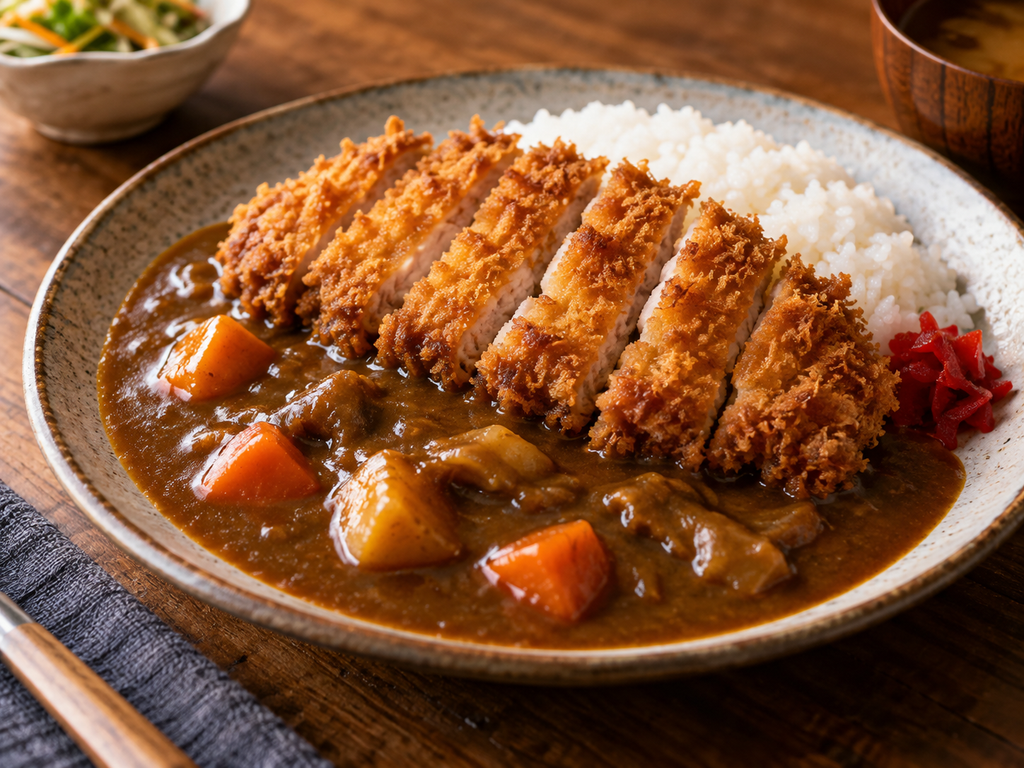
2. Katsu Curry — Curry with a Crispy Pork Cutlet
One of the most satisfying versions is katsu curry.
A breaded pork cutlet is fried until crisp, sliced, and placed beside rice before being covered partly or completely with curry.
The combination works because the textures are so different.
You get:
crispy pork + soft rice + thick curry sauce
It is a substantial meal and can be quite filling.
Travelers who enjoy tonkatsu but also want to try curry can experience both at once.
Chicken katsu versions are also available.
Japanese Perspective: Curry Is Everyday Food
One of the most useful things to understand about Japanese curry is that it is not generally treated as exotic food.
It is ordinary.
Many Japanese people grow up eating curry at home.
It can appear at school lunches.
Families prepare large pots that can feed several people.
Leftover curry may be eaten again the following day.
This is very different from the way Japanese cuisine is sometimes presented to overseas visitors.
Not every Japanese meal is carefully arranged sushi or delicate seasonal cuisine.
Sometimes dinner is simply a large plate of curry rice.
And that ordinary side of Japanese food culture is worth experiencing too.
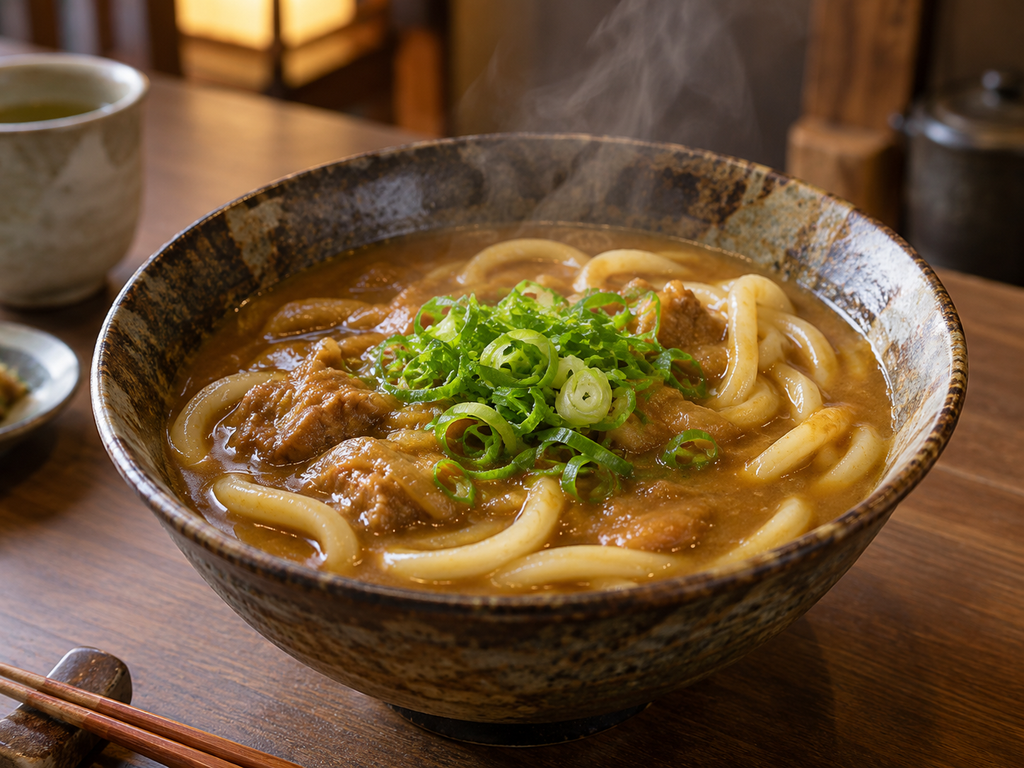
3. Curry Udon — Thick Noodles in Curry Broth
Japanese curry does not always come with rice.
Curry udon combines thick wheat noodles with curry-flavored soup.
The sauce is usually thinner than curry rice because it must function as a noodle broth.
Green onion, meat, and other ingredients may be added.
Curry udon is especially satisfying in cooler weather.
There is one practical warning:
The noodles can splash.
Curry sauce on a white shirt is not ideal.
Eating carefully is recommended.
4. Curry Bread — Kare Pan
Another completely different form is kare pan, or curry bread.
Curry filling is enclosed inside bread dough, which is typically coated in breadcrumbs and fried.
The outside becomes crisp while the inside remains soft and filled with warm curry.
You may find curry bread at:
- Bakeries
- Convenience stores
- Supermarkets
- Train-station shops
It is easy to eat while traveling and makes a good snack between meals.
Freshly fried curry bread from a bakery is particularly worth trying.
5. Soup Curry — Hokkaido’s Different Approach
Travel to Hokkaido and you may encounter soup curry.
This is very different from standard curry rice.
The curry is much more liquid and resembles a highly seasoned soup.
Large vegetables are often served visibly rather than disappearing into the sauce.
Typical ingredients can include:
- Chicken
- Potato
- Carrot
- Pumpkin
- Eggplant
- Bell pepper
- Boiled egg
Rice is normally served separately.
You take a little rice and combine it with the soup as you eat.
Soup curry is strongly associated with Sapporo and makes an excellent regional food experience when visiting Hokkaido.
Related Guide: Hokkaido Travel Guide for First-Time Visitors
6. Japanese Curry Toppings
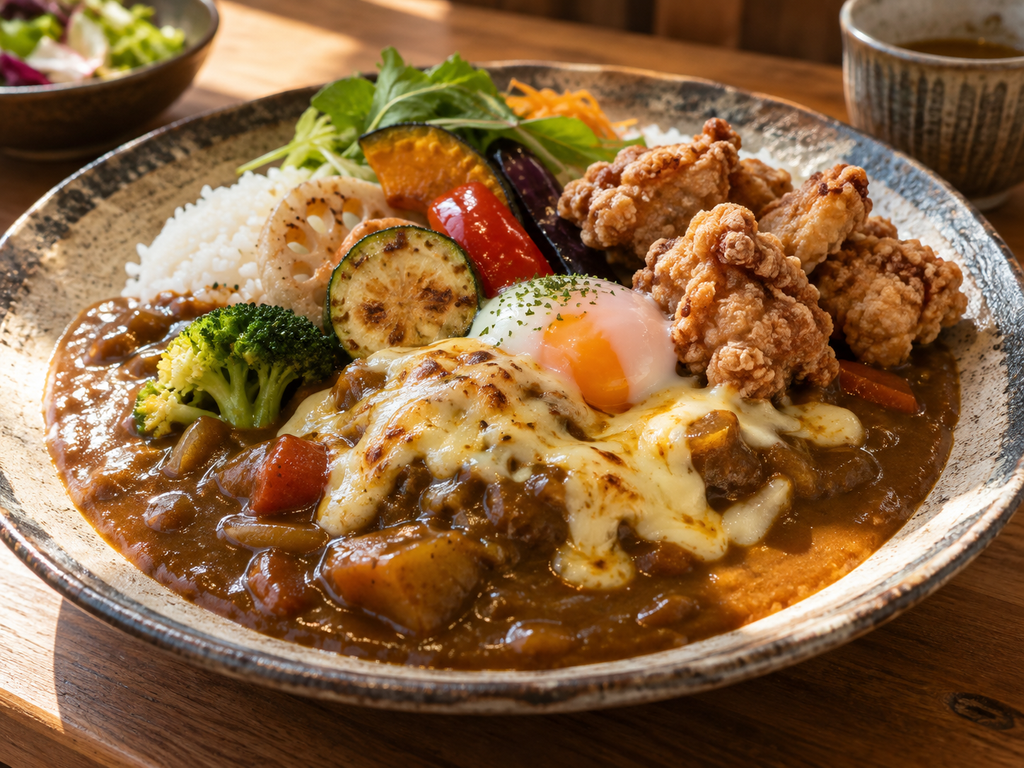
One reason curry restaurants are fun is the enormous variety of toppings.
Common options include:
- Tonkatsu
- Chicken cutlet
- Fried chicken
- Sausage
- Cheese
- Egg
- Croquette
- Vegetables
- Seafood
- Hamburger steak
You can transform a simple plate of curry into a very large meal.
Cheese is especially popular with people who want to soften the spice.
Egg also works well because the yolk creates a richer, milder sauce.
How Spicy Is Japanese Curry?
Many restaurants allow you to choose the spice level.
The exact scale depends on the restaurant.
Options might range from:
Mild → Medium → Hot → Very Hot
Specialist curry shops sometimes offer far more extreme levels.
If you normally eat spicy food, standard Japanese curry may feel relatively mild.
But do not assume the highest level will also be mild.
Some curry restaurants take extreme spice very seriously.
For a first visit, choosing a middle level is usually easier than immediately selecting the hottest option.
How Much Rice Should You Order?
Curry shops often let customers choose the quantity of rice.
This can be useful because standard Japanese portions may be larger or smaller than you expect depending on the restaurant.
You may see options such as:
- Small
- Regular
- Large
- Extra large
If you are ordering katsu curry or several toppings, remember that the toppings add significant volume.
A regular rice portion is usually a sensible first choice.
What Are the Pickles Served with Japanese Curry?
Japanese curry is often accompanied by small condiments.
One common example is fukujinzuke, a sweet and salty relish made from vegetables.
Another possible accompaniment is rakkyo, small pickled onions.
These add acidity and sweetness that contrast with the rich curry sauce.
They are optional.
You do not need to add them if you prefer the curry by itself.
Curry at Japanese Convenience Stores
Convenience stores also make curry easy to try.
Depending on the store, you may find:
- Curry rice
- Katsu curry
- Curry bread
- Curry noodles
- Curry-flavored snacks
Prepared curry meals can normally be heated.
They are useful if you return to your hotel late or need an inexpensive meal.
A specialist curry restaurant will usually offer more customization, but konbini curry demonstrates how deeply curry has become part of everyday Japanese food.
Japanese Curry at Home
Home cooking is another major part of curry culture.
Japanese supermarkets sell blocks of curry roux that make preparation relatively simple.
Families usually cook meat and vegetables, add water, then dissolve the curry roux into the pot.
Common home ingredients are:
- Onion
- Potato
- Carrot
- Beef, pork, or chicken
Because it can be cooked in a large quantity, curry works well for families.
And everyone has preferences.
Some households like sweeter curry.
Others prefer stronger spice.
Some add hidden ingredients to adjust the flavor.
This is why asking Japanese people about their family’s curry recipe can produce surprisingly different answers.
My Curry at Home
I occasionally eat curry at home. My usual version contains beef and potatoes, and I prefer a medium level of heat. If there is curry left over, I often eat it for breakfast or lunch the following day. For me, this is part of the appeal of home-style Japanese curry: one pot can provide several simple and satisfying meals.
School Lunch Curry
For many Japanese people, curry also creates childhood memories.
Curry rice is commonly associated with school meals and other group settings.
It is inexpensive, easy to prepare in large quantities, and popular with many children.
That familiarity helps explain why curry remains comfort food for adults as well.
For travelers, this background is difficult to see from restaurant menus alone.
But it is important because Japanese curry is not simply another restaurant dish.
It is connected to home, school, and everyday memories.
What to Order on Your First Visit
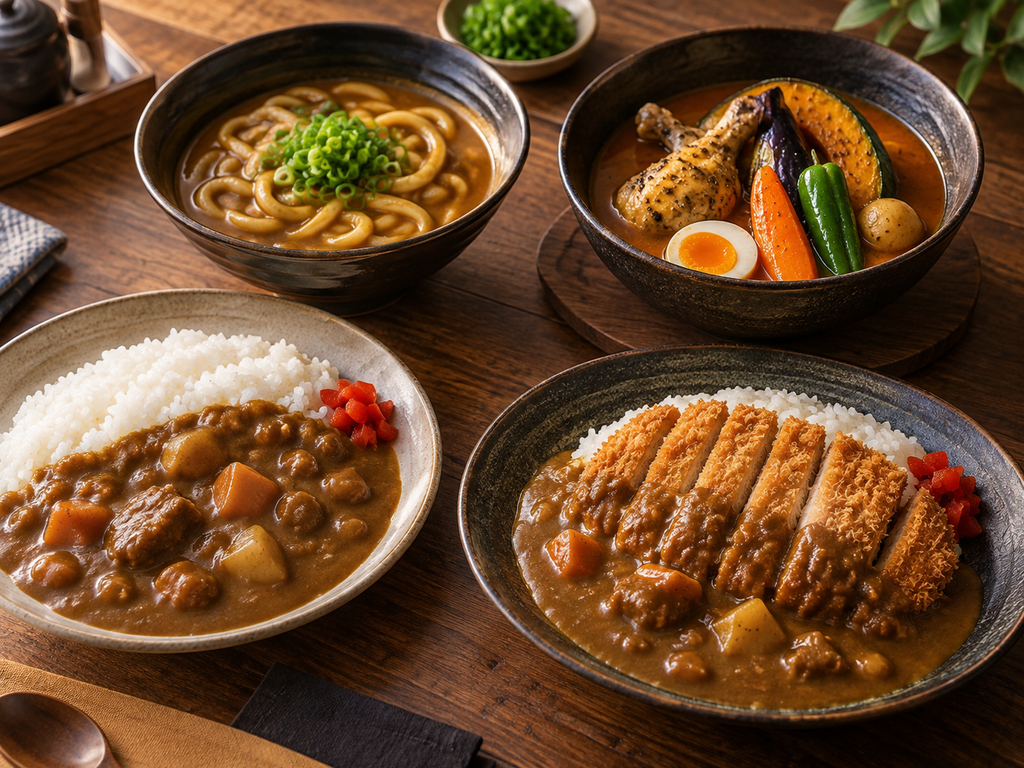
If you have never tried Japanese curry, three good starting points are:
Classic Curry Rice
Best if you want to understand the basic flavor.
Katsu Curry
Best if you want something crispy, filling, and easy to enjoy.
Soup Curry
Best if you are visiting Hokkaido and want a more regional version.
If you enjoy noodles, curry udon is also worth trying.
Where Can Travelers Find Japanese Curry?
Curry is easy to find throughout Japan.
Look for:
Curry Restaurants
The best choice for customization and different spice levels.
Family Restaurants
Often serve simple curry dishes alongside many other Japanese and Western-style meals.
Udon Restaurants
Good places to find curry udon.
Bakeries
Look for freshly made kare pan.
Convenience Stores
Useful for quick curry meals and curry bread.
Supermarkets
Prepared-food sections often sell curry, while grocery aisles show the ingredients Japanese households use to make it at home.
Japanese Curry vs Indian Curry
Both are called curry, but the eating experience can be very different.
Japanese curry is generally thicker, smoother, and sweeter.
Indian cuisine includes a far broader range of spice combinations, sauces, breads, rice dishes, and regional traditions.
Rather than deciding which is “better,” it makes more sense to treat Japanese curry as its own style of comfort food.
Its identity comes from how Japan adapted curry into local eating habits over generations.
Japanese Perspective: Why Curry Belongs in a Japan Food Guide
International visitors sometimes prioritize foods that look obviously traditional.
That makes sense.
You probably did not travel to Japan specifically to eat something that resembles a stew served over rice.
But skipping curry entirely would mean missing an important part of modern Japanese eating culture.
Japanese people do not only eat traditional cuisine.
We eat ramen.
We buy onigiri at convenience stores.
We eat toast for breakfast.
We order curry when we want something simple and filling.
Understanding Japan means seeing both sides:
ceremonial and ordinary, traditional and modern.
Curry sits firmly on the everyday side.
And that is exactly why travelers should try it.
FAQ About Japanese Curry
Is Japanese curry spicy?
It can be, but standard Japanese curry is often milder and sweeter than many South Asian curries. Curry restaurants may offer multiple spice levels.
What is katsu curry?
Katsu curry combines Japanese curry rice with a breaded and fried pork or chicken cutlet.
What is curry udon?
Curry udon consists of thick Japanese wheat noodles served in a curry-flavored soup.
What is soup curry?
Soup curry is a thinner curry style strongly associated with Hokkaido, especially Sapporo. It often contains large pieces of vegetables and meat.
Can I eat Japanese curry cheaply?
Yes. Curry is widely available at casual restaurants, cafeterias, supermarkets, and convenience stores.
Is Japanese curry good for first-time visitors?
Yes. Its familiar texture, simple ordering system, and wide range of toppings make it one of the easiest everyday Japanese meals for travelers to try.
Final Thoughts
Japanese curry is not Japan’s most glamorous food.
And perhaps that is exactly what makes it interesting.
It is something people eat at home.
Children encounter it at school.
Workers order it for a quick lunch.
Travelers can buy it at train stations or convenience stores.
Restaurants allow customers to add everything from pork cutlets and cheese to eggs and vegetables.
And regional versions such as Hokkaido soup curry show that even this everyday dish changes as you travel.
Start with simple curry rice.
Try katsu curry when you want something substantial.
Order curry udon on a cool day.
Buy fresh kare pan from a bakery.
And if you travel to Sapporo, make time for soup curry.
Japanese curry may begin as a convenient meal.
But it can easily become one of the foods you unexpectedly miss after leaving Japan.