Japan is famous for cherry blossoms in spring and colorful leaves in autumn, but the changing seasons are not only something Japanese people see.
They are something we eat.
Autumn is especially important in Japanese food culture. You may hear the expression shokuyoku no aki, meaning roughly “autumn, the season of appetite.”
As the weather becomes cooler after Japan’s hot and humid summer, supermarkets, cafés, restaurants, bakeries, and convenience stores begin filling with distinctly autumn flavors.
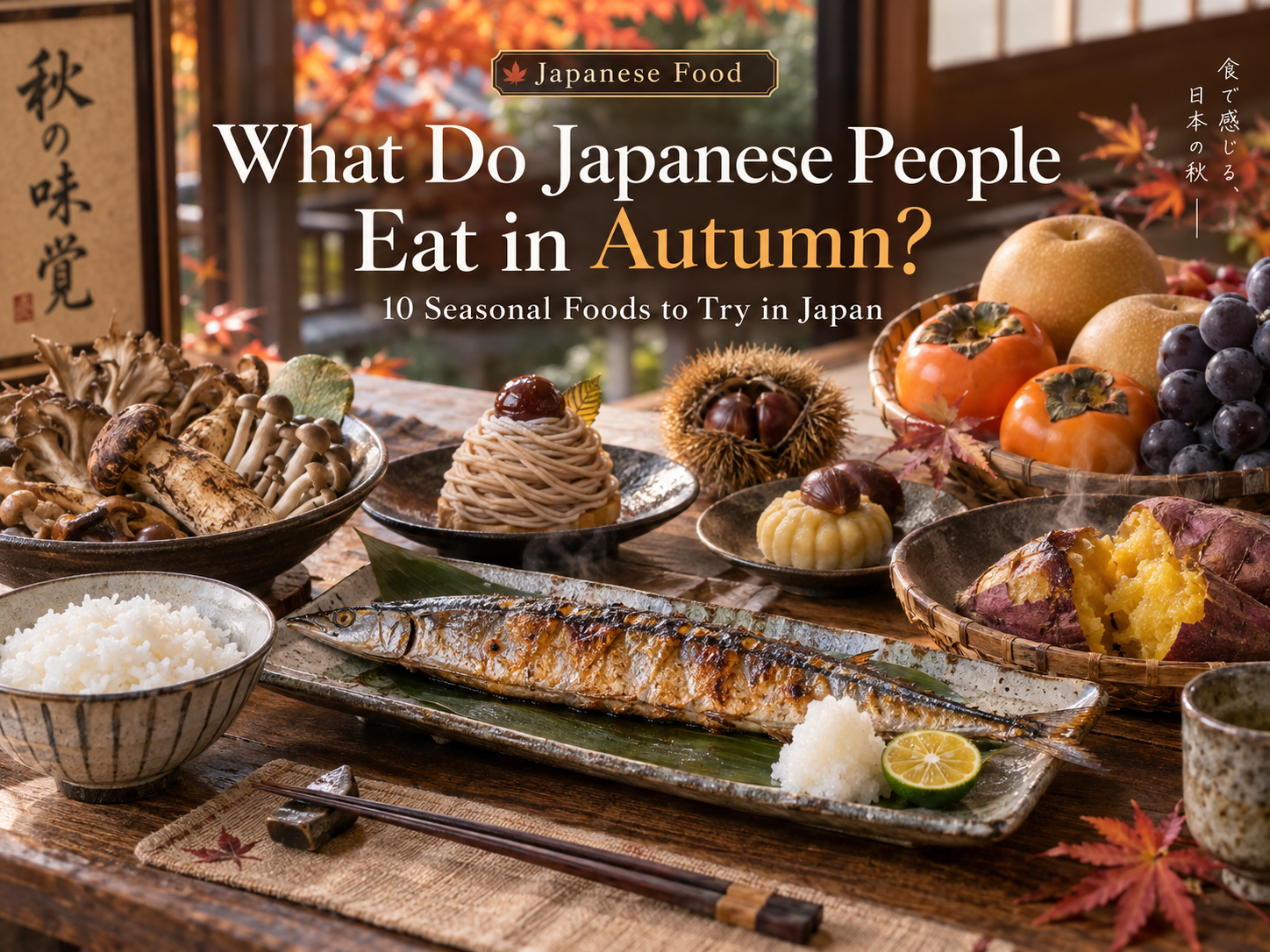
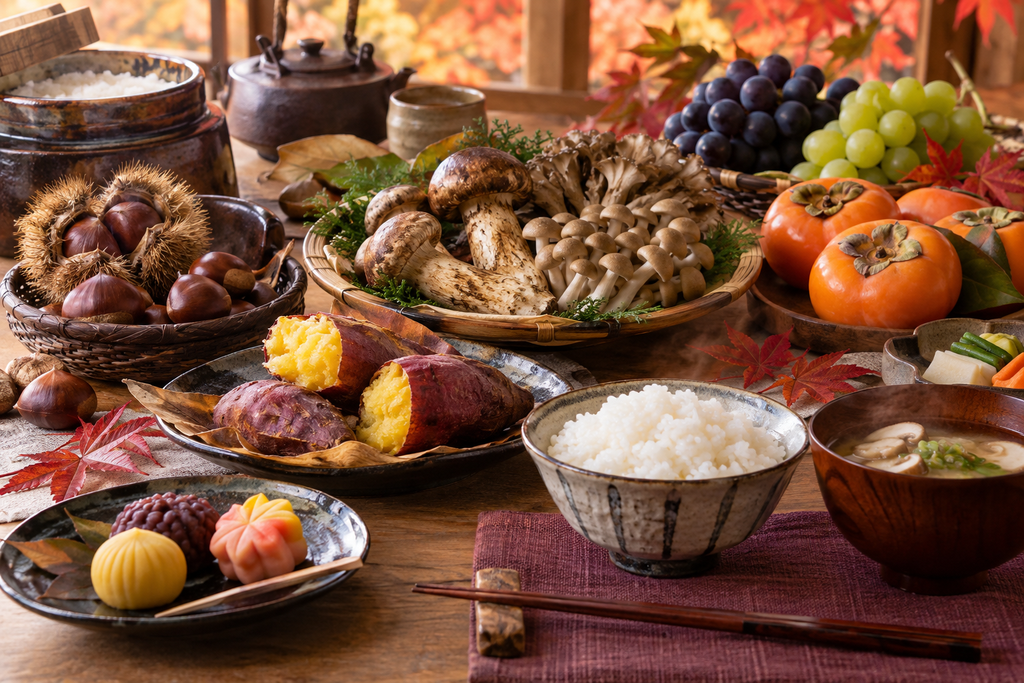
Sweet potatoes appear in desserts. Chestnut sweets return. Mushrooms become more prominent in rice dishes. Persimmons arrive in fruit sections, while restaurants begin serving seasonal fish.
For travelers visiting Japan from September through November, food can be one of the easiest ways to experience the Japanese sense of seasonality.
Here are 10 autumn foods worth looking for in Japan.
1. Sanma — Pacific Saury
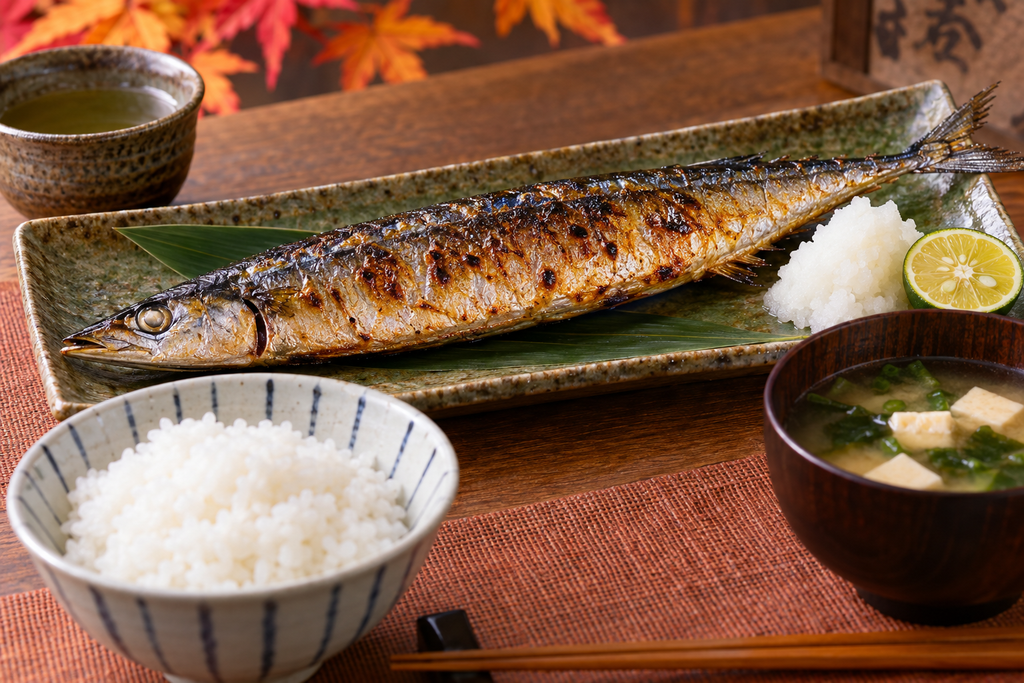
Few foods are associated with Japanese autumn as strongly as sanma, or Pacific saury.
The most familiar preparation is surprisingly simple.
The fish is salted and grilled whole until the skin becomes crisp, then commonly served with grated daikon radish and citrus.
The slightly rich flavor of the fish works particularly well with freshly cooked white rice.
Sanma is the kind of food that immediately feels like autumn to many Japanese people.
You may find it at:
- Japanese set-meal restaurants
- Izakaya
- Supermarkets
- Seasonal restaurant menus
Unlike elaborate sushi or expensive kaiseki cuisine, grilled sanma represents a much more ordinary side of Japanese seasonal eating.
A Note from Yotsuha: I enjoy eating sanma grilled. When it is in season, the fish is rich and fatty, which gives it a deep, satisfying flavor. It is a simple autumn dish, but one I find especially delicious.
2. Yakiimo — Roasted Sweet Potato
Walk through Japan during cooler weather and you may encounter the warm, sweet smell of roasted sweet potatoes.
Yakiimo means roasted sweet potato.
Traditionally associated with autumn and winter, sweet potatoes become soft and naturally sweet when slowly roasted.
Different varieties can have noticeably different textures.
Some are fluffy and relatively dry, while others become creamy and almost honey-like.
You may find yakiimo at:
- Supermarkets
- Specialty sweet potato shops
- Food stalls
- Some convenience stores
One of the best things about yakiimo is its simplicity.
There is no complicated preparation to understand.
It is simply a hot roasted sweet potato.
Yet for many Japanese people, that simple food is strongly connected with cooler weather.
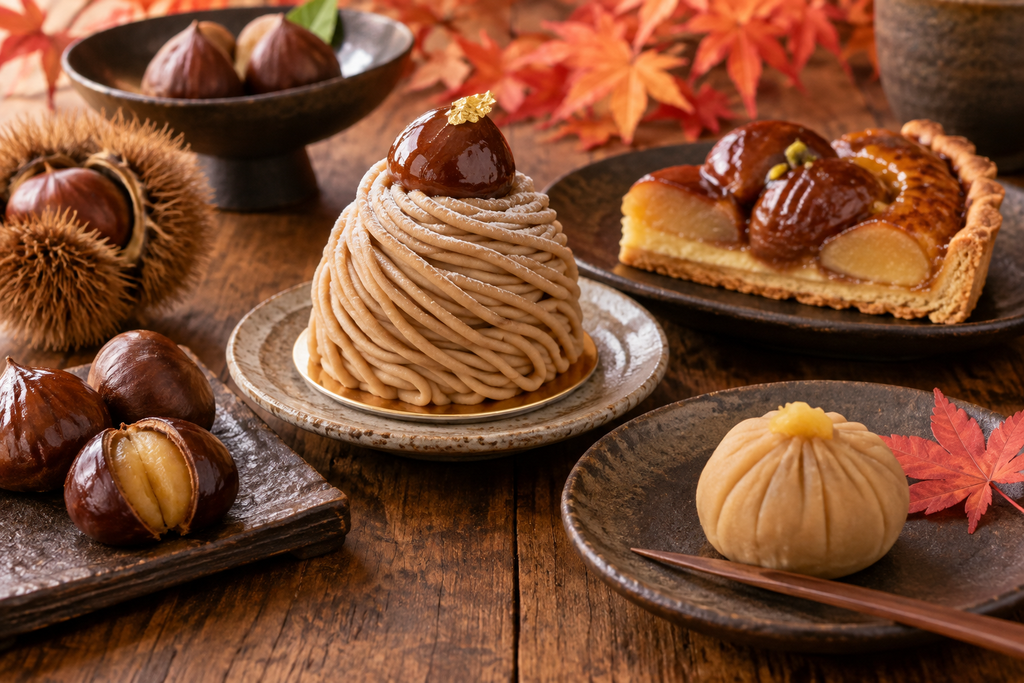
3. Kuri — Japanese Chestnuts
Chestnuts, or kuri, are another classic symbol of autumn.
One traditional dish is kurigohan, rice cooked with chestnuts.
The chestnuts add gentle sweetness to the rice without turning the dish into a dessert.
But visitors are probably even more likely to encounter chestnuts in sweets.
During autumn, you may see:
- Mont Blanc cakes
- Chestnut cakes
- Chestnut wagashi
- Chestnut ice cream
- Chestnut-filled pastries
- Chestnut parfaits
Japanese cafés and confectionery shops often use seasonal flavors aggressively, so autumn can feel very different from summer even when visiting the same shop.
Japanese Perspective
Seasonal limited editions are extremely common in Japan.
People do not necessarily eat chestnuts every day, but seeing chestnut desserts return to shops helps signal that autumn has arrived.
Food can function almost like a seasonal calendar.
4. Matsutake and Other Autumn Mushrooms
Mushrooms are an important part of autumn cooking in Japan.
The most famous is matsutake.
Matsutake are valued particularly for their aroma and seasonal character and can be expensive.
They may appear in dishes such as:
- Matsutake rice
- Clear soup
- Grilled matsutake
- Seasonal kaiseki meals
You certainly do not need to eat expensive matsutake to experience Japanese autumn mushrooms, however.
More everyday varieties include:
- Shimeji
- Maitake
- Enoki
- Shiitake
These mushrooms are commonly used in soups, hot pots, stir-fries, and rice dishes.
A mixed mushroom rice dish, or kinoko gohan, is one of the easiest autumn foods to imagine appearing on a Japanese home table.
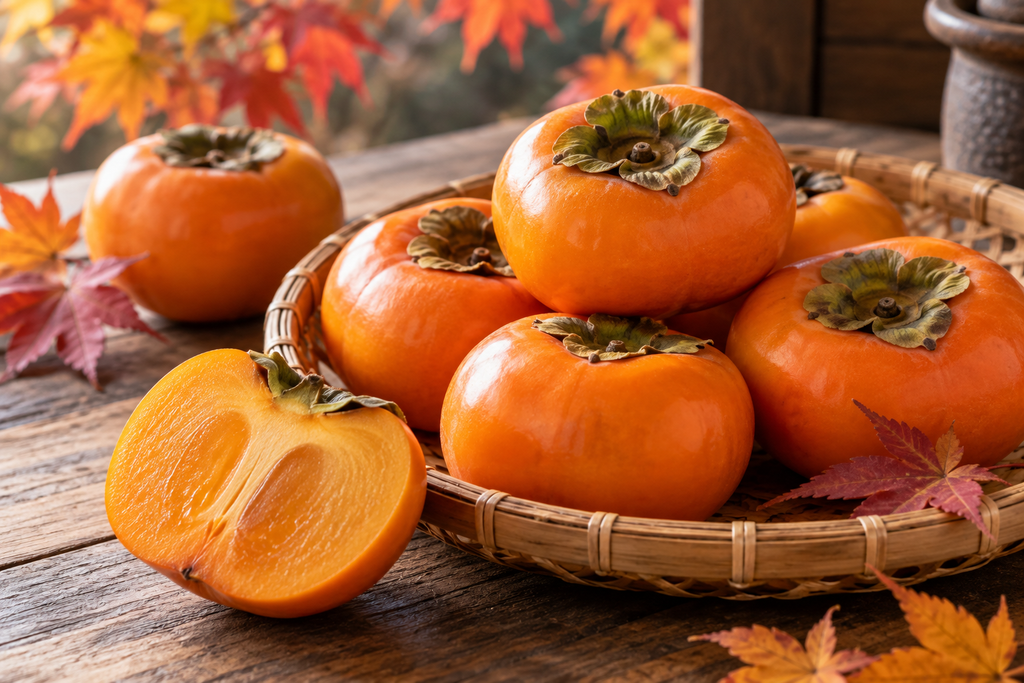
5. Kaki — Japanese Persimmons
One of the easiest Japanese autumn foods for travelers to try is kaki, or persimmon.
In autumn, their bright orange color becomes increasingly visible in supermarkets and fruit shops.
Fresh persimmons can be firm and crisp or softer and sweeter depending on the variety and ripeness.
They are usually eaten very simply.
Peel the fruit, cut it into pieces, and eat it as it is.
Persimmons are interesting because they are not only food.
A persimmon tree heavy with orange fruit beside a traditional Japanese house is also a very recognizable autumn landscape.
You may also see hoshigaki, persimmons that are dried by hanging them.
For travelers interested in Japanese seasonal culture, persimmons connect food and scenery particularly well.
6. Japanese Pears — Nashi
Japanese pears, known as nashi, are very different in texture from many European-style pears.
They are usually round and extremely crisp, with a refreshing amount of juice.
Instead of having a soft, buttery texture, a Japanese pear can almost feel somewhere between an apple and a pear.
They are normally chilled, peeled, sliced, and eaten fresh.
That makes them one of the easiest seasonal foods for travelers to buy from a supermarket.
Japanese fruit can sometimes appear expensive compared with fruit in other countries, especially premium gift varieties.
However, ordinary supermarket fruit provides a much more realistic picture of what families actually buy.
A chilled Japanese pear after a long day of sightseeing can be surprisingly satisfying.
7. Grapes — Especially Japanese Premium Varieties
Autumn is also an excellent season for grapes.
Japanese supermarkets and department stores can display an impressive variety.
One of the best-known is Shine Muscat.
These large green grapes are popular for their sweetness, fragrance, and edible skin.
You may also encounter large dark-purple varieties.
Premium Japanese grapes can be expensive, particularly when sold as gifts.
But visitors do not need to buy the most luxurious box.
Smaller supermarket packages can provide the same opportunity to experience Japan’s autumn fruit culture.
Grapes also appear in:
- Parfaits
- Cakes
- Fruit sandwiches
- Jelly
- Seasonal café drinks
Japan’s dessert shops often transform fresh seasonal fruit into elaborate limited-time menus.
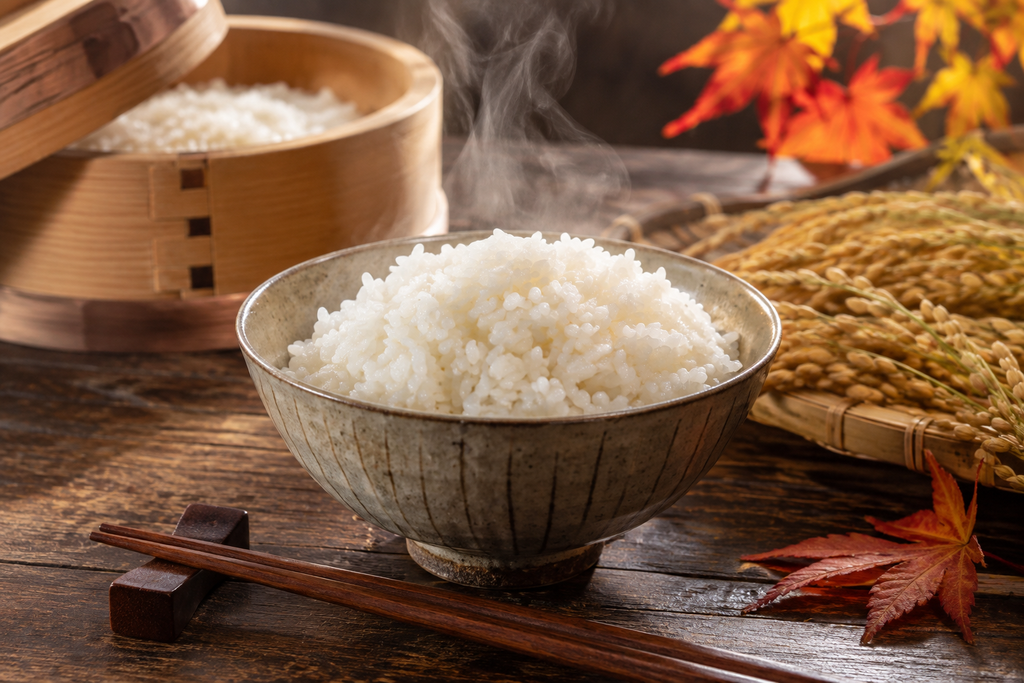
8. Shinmai — Newly Harvested Rice
One autumn food that international visitors may easily overlook is shinmai, meaning newly harvested rice.
Rice is eaten throughout the year, so it may seem strange to think of it as seasonal.
But freshly harvested rice has traditionally been associated with autumn.
For people who care deeply about rice, new-crop rice can be appreciated for its aroma, moisture, and texture.
And this illustrates an important point about Japanese seasonal food.
Seasonality does not always mean eating an unusual ingredient.
Sometimes it means appreciating an everyday ingredient at the moment it is considered especially good.
A simple bowl of fresh rice with grilled fish and miso soup can therefore feel very autumnal.
9. Salmon and Autumn Seafood
Salmon also has a strong connection with autumn in Japanese cuisine.
It may appear grilled, cooked with vegetables, added to rice dishes, or used in regional meals.
Autumn seafood menus can vary by location, which makes travel particularly interesting.
A coastal region may emphasize seafood, while mountainous areas may focus more heavily on mushrooms, chestnuts, and vegetables.
This is why there is no single definitive Japanese autumn menu.
Japan stretches a long distance from north to south, and seasonal timing varies between regions.
For travelers, regional variation is part of the experience rather than something that needs to be simplified.
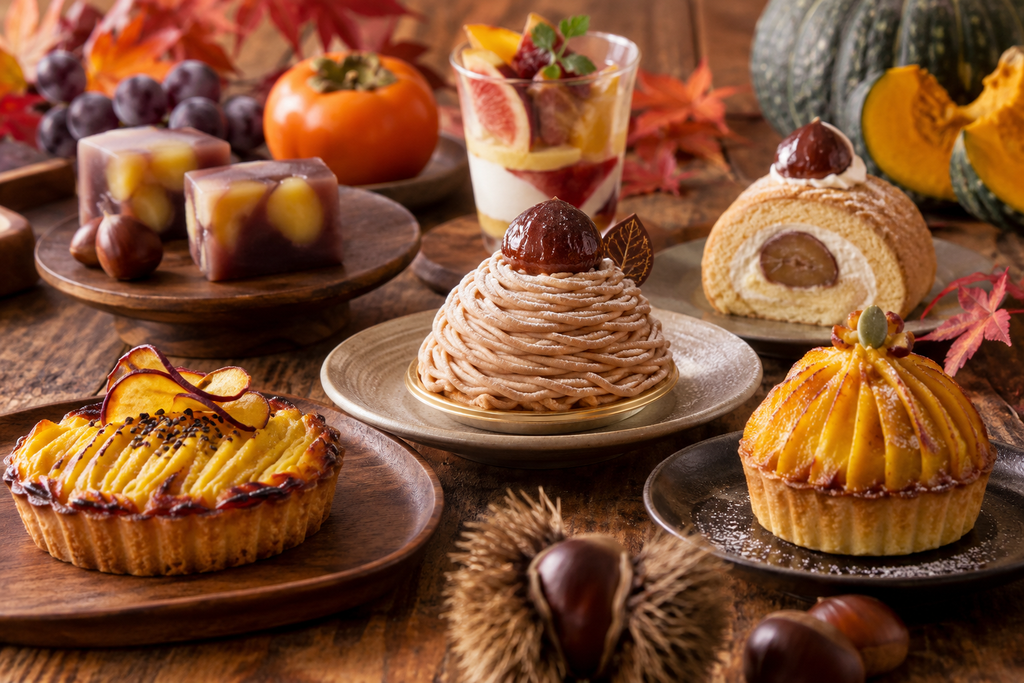
10. Autumn Sweets — Sweet Potato, Chestnut and Pumpkin
Perhaps the easiest place to notice autumn in modern Japan is the dessert section.
As summer ends, shops begin introducing desserts featuring familiar autumn flavors.
Common examples include:
- Sweet potato
- Chestnut
- Pumpkin
- Apple
- Grape
- Persimmon
You may find them in:
- Convenience stores
- Cafés
- Department-store food halls
- Bakeries
- Cake shops
- Traditional wagashi stores
A chestnut Mont Blanc cake may sit beside a sweet-potato dessert and a seasonal fruit parfait.
This is modern Japanese seasonality.
Traditional seasonal ingredients are constantly reinterpreted as new sweets and limited editions.
Why Is Autumn Called the Season of Appetite in Japan?
You may hear the Japanese phrase:
Shokuyoku no aki — 食欲の秋
It literally refers to autumn as the season of appetite.
There are several reasons autumn developed such a strong association with food.
Historically, autumn was harvest season.
Rice, vegetables, fruits, mushrooms, and other foods became available after months of growing.
At the same time, cooler weather after the intense Japanese summer makes hearty meals more appealing.
Today, the phrase is also widely used in advertising, magazines, television, restaurant promotions, and everyday conversation.
You may hear related expressions describing autumn as the season for reading, sports, and art.
But food remains one of autumn’s strongest cultural images.
Japanese Perspective: We Notice Seasons Through Supermarkets
Visitors often associate Japanese seasonality with famous experiences such as cherry blossoms or autumn leaves.
But there is a much more ordinary way Japanese people experience the seasons.
Go to a supermarket.
The displays gradually change.
In summer, you see cooling foods, cold noodles, watermelon, and summer drinks.
Then autumn arrives.
Sweet potatoes appear.
Chestnuts become more visible.
Sanma appears in the fish section.
Persimmons and pears fill the fruit shelves.
Desserts change flavor.
Even convenience stores begin promoting autumn products.
Nobody needs to announce that summer is ending.
The food already tells you.
This everyday seasonal awareness is an important part of Japanese food culture.
Where Can Travelers Find Autumn Food?
You do not need to visit an expensive restaurant.
Supermarkets
Excellent for seasonal fruit, roasted sweet potatoes, fish, mushrooms, and prepared meals.
Convenience Stores
Good for seasonal desserts, drinks, baked goods, and limited-edition sweets.
Izakaya
Look for seasonal fish, mushrooms, grilled dishes, and changing autumn menus.
Department-Store Food Halls
A great place to discover high-quality sweets and seasonal prepared foods.
Ryokan
Traditional inns may incorporate local seasonal ingredients into dinner and breakfast.
Cafés
Autumn parfaits, chestnut cakes, sweet-potato desserts, and seasonal drinks are common.
When Is the Best Time for Autumn Food in Japan?
Japanese autumn does not begin on exactly the same date everywhere.
Japan is geographically long, and temperatures differ considerably between Hokkaido, Tokyo, Kyoto, Kyushu, and Okinawa.
Availability also depends on the ingredient.
As a general rule, September through November is the main period to watch for autumn menus and seasonal products.
Some foods begin appearing toward the end of summer, while others become more prominent as temperatures fall.
Rather than looking for one perfect week, pay attention to what local restaurants and shops are advertising during your trip.
A Simple Autumn Meal to Try
If you want one meal that captures the feeling of Japanese autumn, look for something like:
Fresh rice + grilled autumn fish + mushroom dish + miso soup + seasonal fruit
Then finish with a chestnut or sweet-potato dessert.
It does not need to be expensive.
In fact, experiencing seasonal food at an ordinary neighborhood restaurant or supermarket can sometimes tell you more about everyday Japanese life than an elaborate luxury meal.
FAQ About Japanese Autumn Food
What food is Japan famous for in autumn?
Sanma, sweet potatoes, chestnuts, mushrooms, persimmons, pears, grapes, and seasonal seafood are strongly associated with autumn.
What is yakiimo?
Yakiimo is roasted Japanese sweet potato. It becomes especially popular as the weather becomes cooler.
What is sanma?
Sanma is Pacific saury, a fish strongly associated with Japanese autumn cuisine and commonly served grilled.
Are chestnut desserts popular in Japan?
Yes. Chestnut cakes, Mont Blanc desserts, wagashi, and other chestnut sweets become especially visible during autumn.
Can I find autumn food at convenience stores?
Yes. Convenience stores frequently introduce seasonal desserts, drinks, snacks, and other limited-time products.
What months are considered autumn in Japan?
September, October, and November are generally regarded as the main autumn months, although weather and ingredient availability vary by region.
Final Thoughts
Japanese autumn is not only about red maple leaves and cooler weather.
It has a flavor.
Grilled sanma.
Warm roasted sweet potatoes.
Chestnut desserts.
Crisp pears.
Sweet grapes.
Fresh rice.
Mushrooms cooked into comforting dishes.
Many of these foods are simple, but that simplicity is exactly what makes them important.
They connect everyday meals with the changing season.
If you visit Japan in autumn, do not only look upward at the colorful trees.
Look inside supermarkets, cafés, convenience stores, and neighborhood restaurants too.
You may discover that some of the best signs of autumn are waiting on the table.