Walk into almost any Japanese convenience store and you will quickly understand why konbini are such an important part of everyday life in Japan.
They are not simply places to buy drinks and snacks.
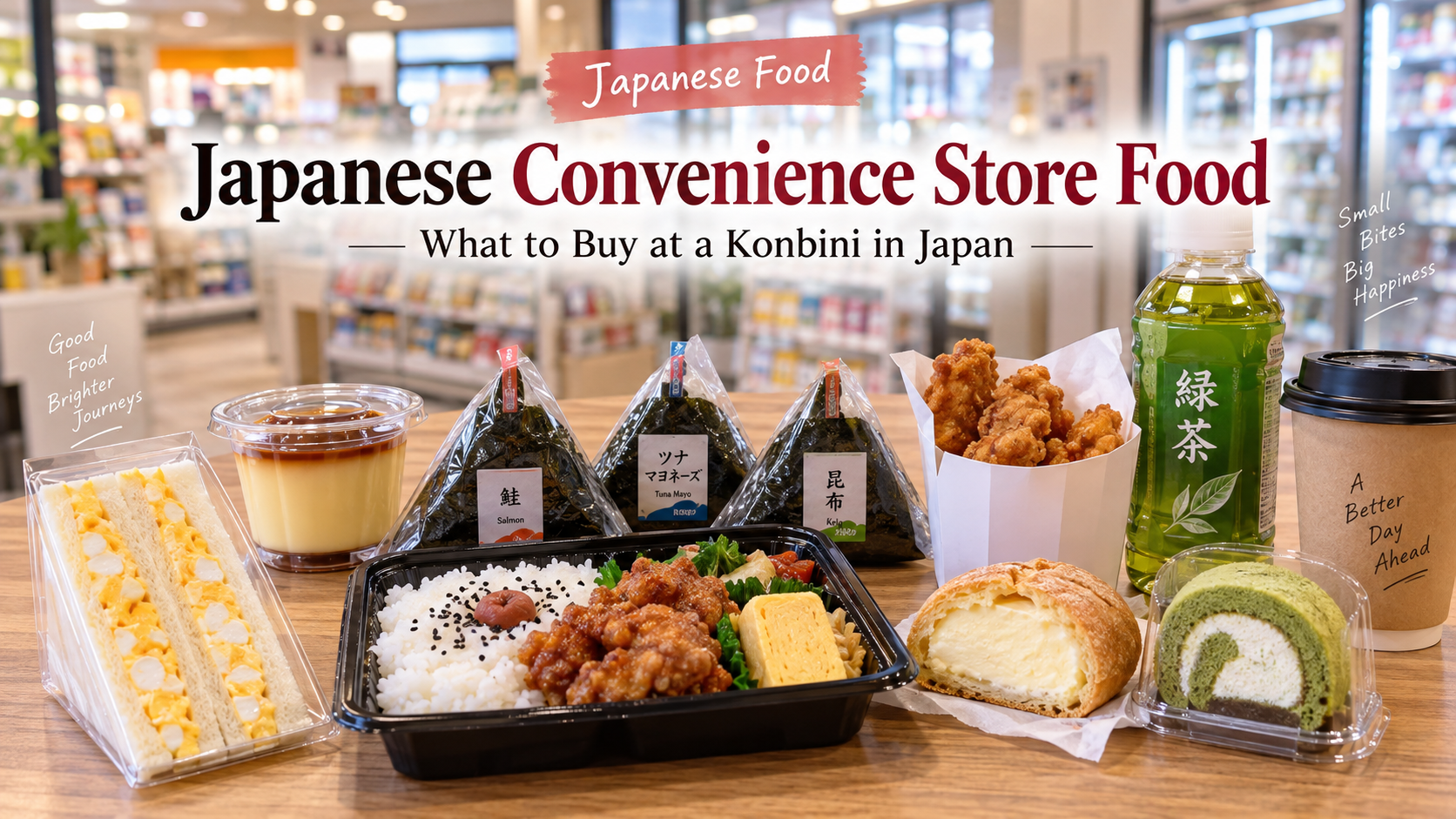
Inside, you will often find rice balls, bento meals, sandwiches, noodles, salads, fried chicken, desserts, coffee, and even seasonal dishes that can easily become a full breakfast, lunch, or late-night meal.
For travelers, Japanese convenience stores are particularly useful.
They are usually easy to enter, inexpensive compared with restaurants, and filled with foods that require little knowledge of Japanese dining etiquette.
But konbini are also interesting from a cultural perspective.
They show another side of Japanese food culture—one focused not on elaborate restaurant cuisine, but on speed, convenience, variety, and everyday life.
So what should you buy at a Japanese convenience store?
Here are some of the foods worth trying.
What Is a Konbini?
The Japanese word konbini comes from “convenience store.”
Major convenience-store chains can be found throughout Japanese cities and towns, often within only a short walk of train stations, hotels, offices, and residential neighborhoods.
For visitors, they can become surprisingly useful during a trip.
You might stop at one to:
- Buy breakfast before an early train
- Pick up lunch during sightseeing
- Get drinks on a hot day
- Buy a late-night snack
- Find inexpensive coffee
- Purchase a quick meal after restaurants have closed
Food is one of the main reasons travelers quickly become familiar with konbini.
Unlike the limited snack selection some visitors may associate with convenience stores in other countries, Japanese stores usually offer many items designed to function as complete meals.
Onigiri: The Essential Konbini Food
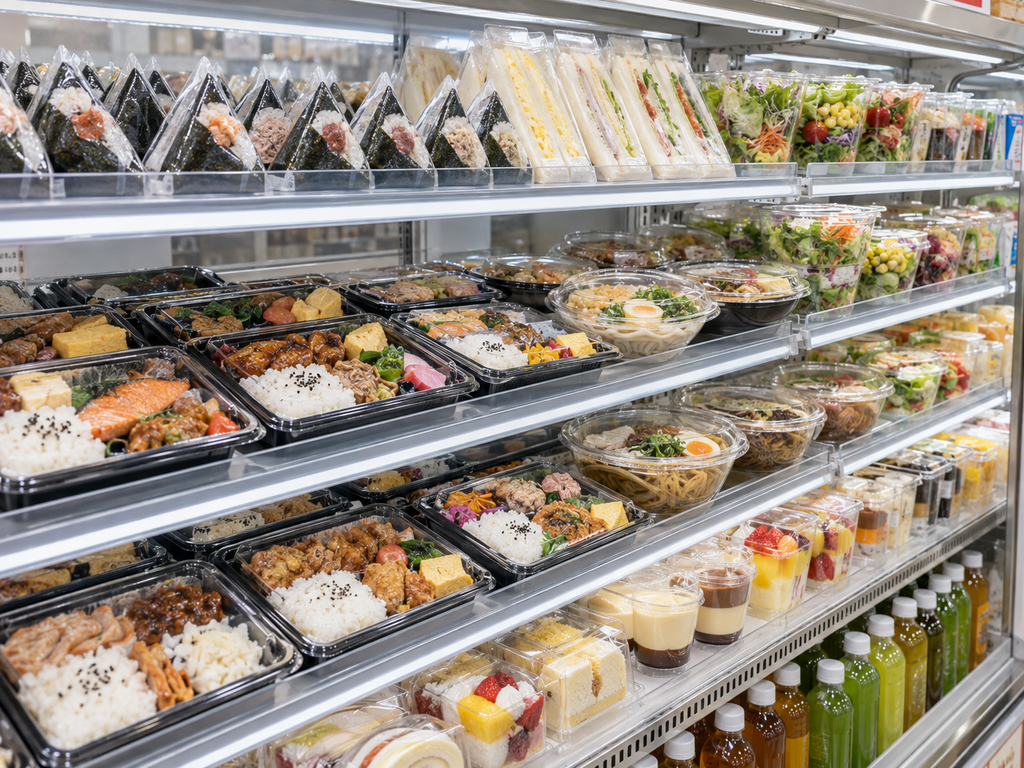
If you try only one convenience-store food in Japan, onigiri should probably be near the top of the list.
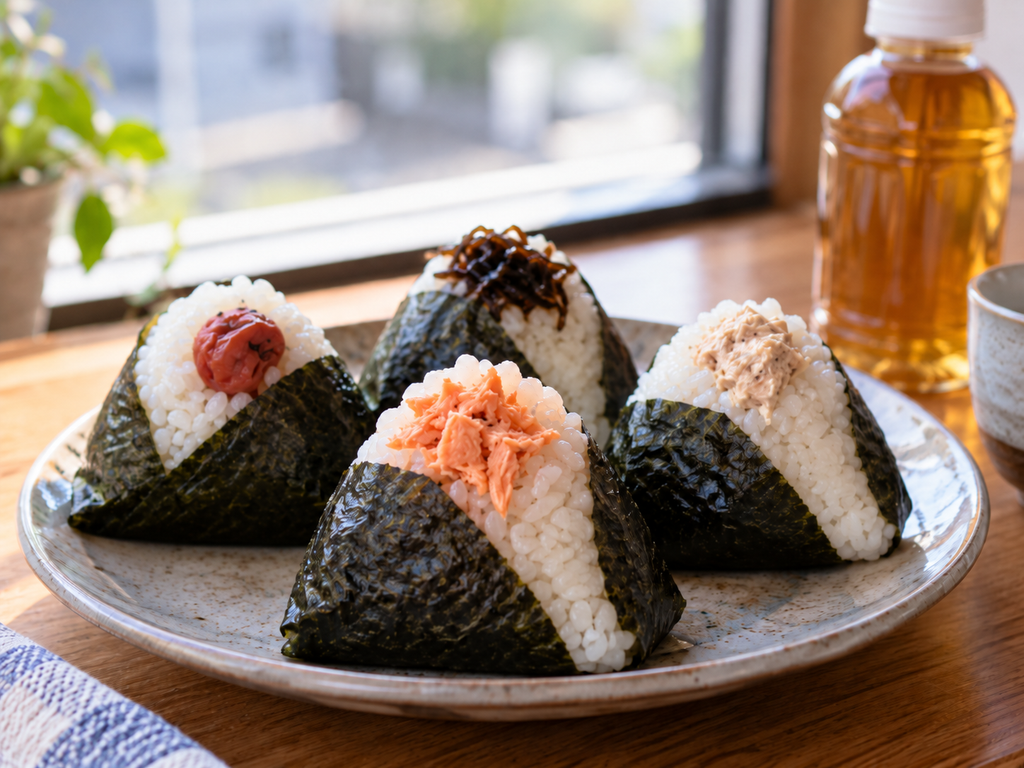
Onigiri are rice balls, often triangular, filled with different ingredients and wrapped in nori seaweed.
Common fillings include:
- Salmon
- Tuna mayonnaise
- Umeboshi pickled plum
- Kombu
- Mentaiko
- Okaka
They are inexpensive, portable, and filling enough to work as a small breakfast or snack.
For travelers, onigiri are particularly useful because they can easily be eaten before a train journey or during a busy sightseeing day.
The Packaging Can Be Confusing
Some onigiri use special packaging designed to keep the seaweed separate from the rice until the moment you eat it.
The wrapper is removed in a particular sequence, allowing the crisp nori to wrap around the rice.
The first attempt can be confusing.
Look for the numbered instructions printed on the packaging.
Once you understand the system, opening them becomes easy.
Japanese Perspective
Onigiri are not unusual tourist food.
They are an ordinary part of Japanese daily life.
Office workers, students, families, and travelers all buy them.
That everyday character is part of what makes them worth trying.
Bento: A Full Japanese Meal in a Box
For something more substantial, look for bento.
Convenience-store bento usually contain rice combined with meat, fish, vegetables, or fried foods.
Popular examples can include:
- Grilled salmon bento
- Karaage fried chicken bento
- Pork cutlet bento
- Hamburger steak bento
- Chicken with rice
- Curry rice
Many stores can heat the bento for you when you purchase it.
This makes a konbini particularly useful when you arrive at your hotel late and do not want to search for a restaurant.
Bento also give travelers an opportunity to experience familiar Japanese flavors in a very casual setting.
They may not have the presentation of a restaurant meal, but they represent something much closer to everyday eating.
Japanese Sandwiches
Japanese convenience-store sandwiches have become surprisingly famous among international travelers.
One reason is the bread.
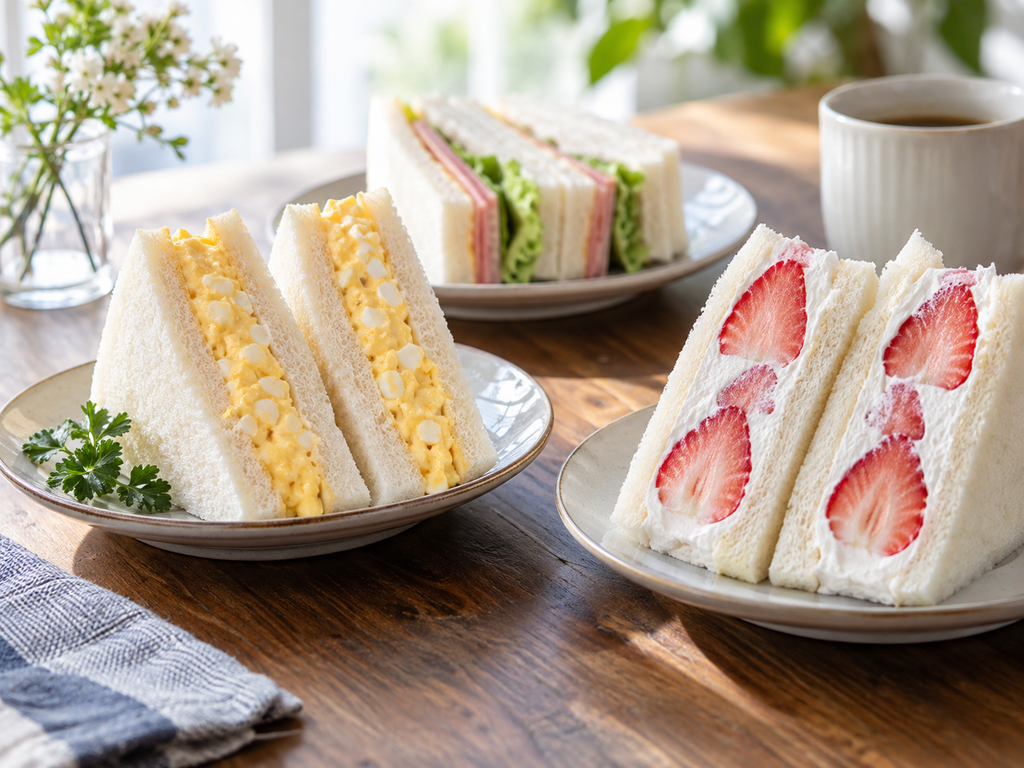
Japanese shokupan tends to be very soft and fluffy, creating a texture different from many packaged sandwiches overseas.
Common fillings include:
- Egg salad
- Tuna
- Ham and cheese
- Chicken
- Pork cutlet
- Fruit and whipped cream
The egg sandwich, or tamago sando, is especially popular.
Its filling is usually creamy and mild, making it an easy choice for visitors who want something familiar.
Fruit sandwiches are very different.
They usually contain pieces of strawberry, kiwi, orange, or other fruit surrounded by whipped cream and soft bread.
They can feel closer to dessert than lunch.
Hot Snacks at the Counter
One of the easiest sections to overlook is the heated display near the cash register.
Depending on the store, you may find:
- Fried chicken
- Karaage
- Croquettes
- Fried potatoes
- Sausages
- Steamed buns
These foods are particularly tempting during colder months.
Fried chicken has become one of the most recognizable Japanese convenience-store snacks.
It is usually sold as a single portion, making it easy to add to an onigiri or salad for a more filling meal.
For travelers who are tired after walking all day, this combination can be remarkably convenient.
Nikuman: A Winter Favorite
During the cooler months, many convenience stores sell nikuman, steamed buns filled with meat.
They are kept warm near the checkout counter.
The bun itself is soft and slightly sweet, while the filling is savory.
You may also encounter variations containing:
- Curry
- Pizza-style fillings
- Red bean paste
- Cheese
Eating a hot steamed bun outside on a cold Japanese evening is a simple experience, but it can become surprisingly memorable.
Seasonal food is an important part of Japanese convenience stores, and the available selection changes throughout the year.
Noodles: Ramen, Soba and Udon
Convenience stores also sell many noodle dishes.
These may include:
- Ramen
- Soba
- Udon
- Yakisoba
- Pasta
Some are sold cold, while others are designed to be heated.
Convenience-store ramen is obviously very different from visiting a specialist ramen shop.
However, it can still be useful when you want something inexpensive and quick.
For travelers interested in Japanese ramen culture, I recommend experiencing both.
Try proper ramen at a ramen restaurant, then compare it with the everyday convenience-store version.
Salads and Lighter Meals
Japanese convenience stores are not limited to fried food and rice.
You can often find:
- Green salads
- Seaweed salads
- Potato salad
- Boiled eggs
- Tofu
- Chicken breast
- Vegetable side dishes
- Yogurt
- Fruit
This makes it possible to build a lighter meal.
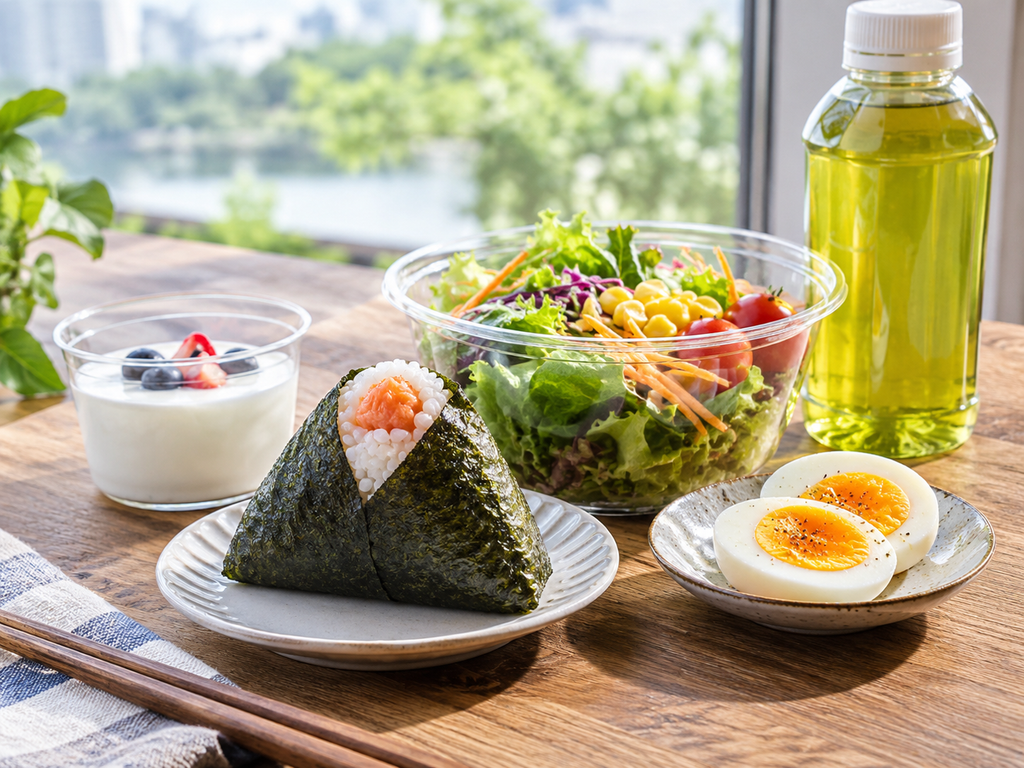
For example:
onigiri + salad + boiled egg + tea
can work as a simple breakfast or lunch.
Travelers eating restaurant meals every day sometimes appreciate having a lighter option.
Convenience-Store Breakfast in Japan
Konbini can be particularly helpful in the morning.
Restaurants and cafés may not always open as early as travelers expect, especially outside major tourist areas.
A convenience store solves that problem.
Some common breakfast combinations are:
Japanese-Style Breakfast
- Onigiri
- Miso soup
- Boiled egg
- Green tea
Western-Style Breakfast
- Egg sandwich
- Yogurt
- Coffee
Very Quick Breakfast
- Banana
- Yogurt
- Coffee
This reflects something important about breakfast in modern Japan.
Not everyone prepares a traditional meal of rice, miso soup, grilled fish, and several side dishes every morning.
Busy people may eat something much simpler.
A Personal Note from Yotsuha
I often choose a salmon onigiri and coffee when I stop at a convenience store. I buy this combination because it is convenient, easy to enjoy, and genuinely tasty, especially when I want something quick. It is a simple choice, but it is a realistic example of how I use convenience stores in everyday life in Japan.
Desserts Are One of the Best Surprises
Convenience-store desserts in Japan deserve their own section.
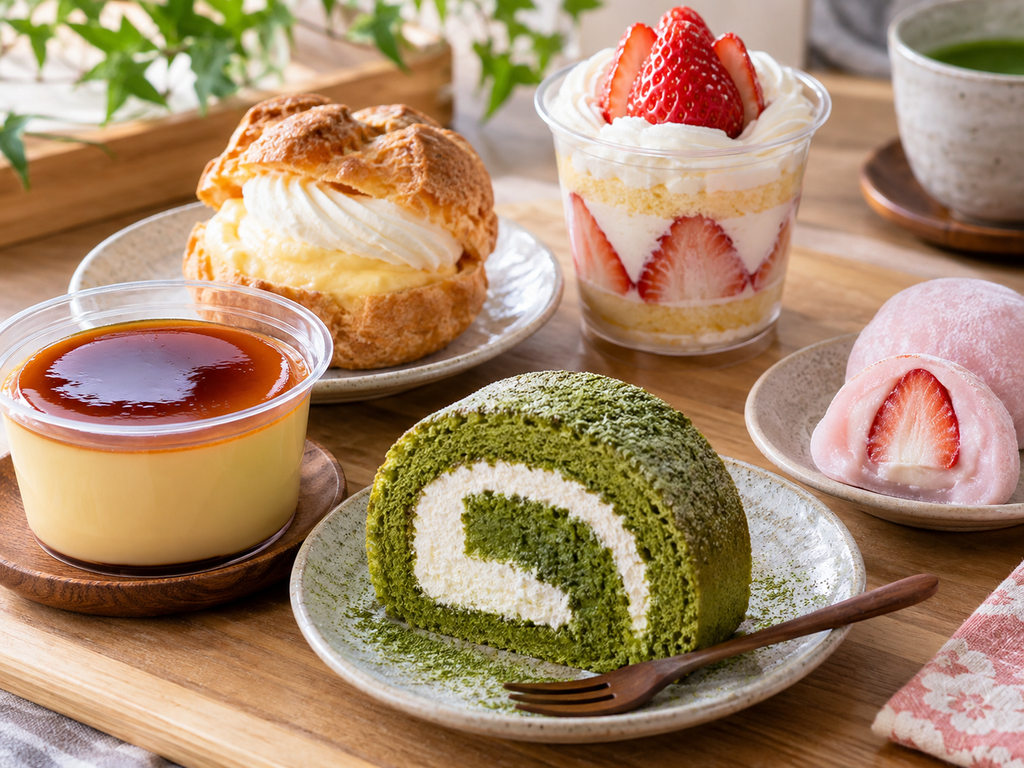
Even small stores may have refrigerated displays filled with:
- Pudding
- Cheesecake
- Roll cake
- Cream puffs
- Mochi desserts
- Parfaits
- Seasonal sweets
Quality is often better than first-time visitors expect from convenience-store food.
Seasonal ingredients are also common.
During the year, you may see sweets featuring flavors such as:
- Sakura
- Matcha
- Strawberry
- Chestnut
- Sweet potato
Limited seasonal releases are extremely common in Japan.
This gives regular customers a reason to keep checking what is new.
Drinks and Convenience-Store Coffee
Japanese convenience stores also carry a huge range of drinks.
Typical choices include:
- Green tea
- Barley tea
- Coffee
- Water
- Fruit drinks
- Sports drinks
- Milk tea
Many stores also have coffee machines near the register.
You normally buy a cup at the counter and then prepare the drink yourself using the machine.
This can be an inexpensive way to get coffee before starting a day of sightseeing.
Bottled Japanese tea is also particularly convenient because unsweetened tea is widely available.
How to Buy Food at a Japanese Convenience Store
Buying food is generally straightforward.
Take the items you want to the checkout counter.
If you have purchased food that can be heated, the staff may ask whether you want it warmed.
You may also be asked whether you need utensils such as:
- Chopsticks
- Spoon
- Fork
Self-checkout machines are becoming increasingly common, especially in larger stores.
You do not need advanced Japanese to shop successfully.
Observing the screen and following visual instructions is usually enough.
Can You Eat Inside a Konbini?
Some convenience stores have eating spaces, but many do not.
Where an eat-in area is available, it may have tables or counters.
If there is no eating space, taking your food back to your hotel is usually the easiest option.
One thing worth remembering is that eating while walking has traditionally been less common in Japan than in some countries.
There are exceptions, especially around festivals and dedicated street-food areas, but travelers do not need to eat immediately outside the store.
What Should First-Time Visitors Buy?
If this is your first visit to a Japanese convenience store, try building a small tasting menu.
A good combination would be:
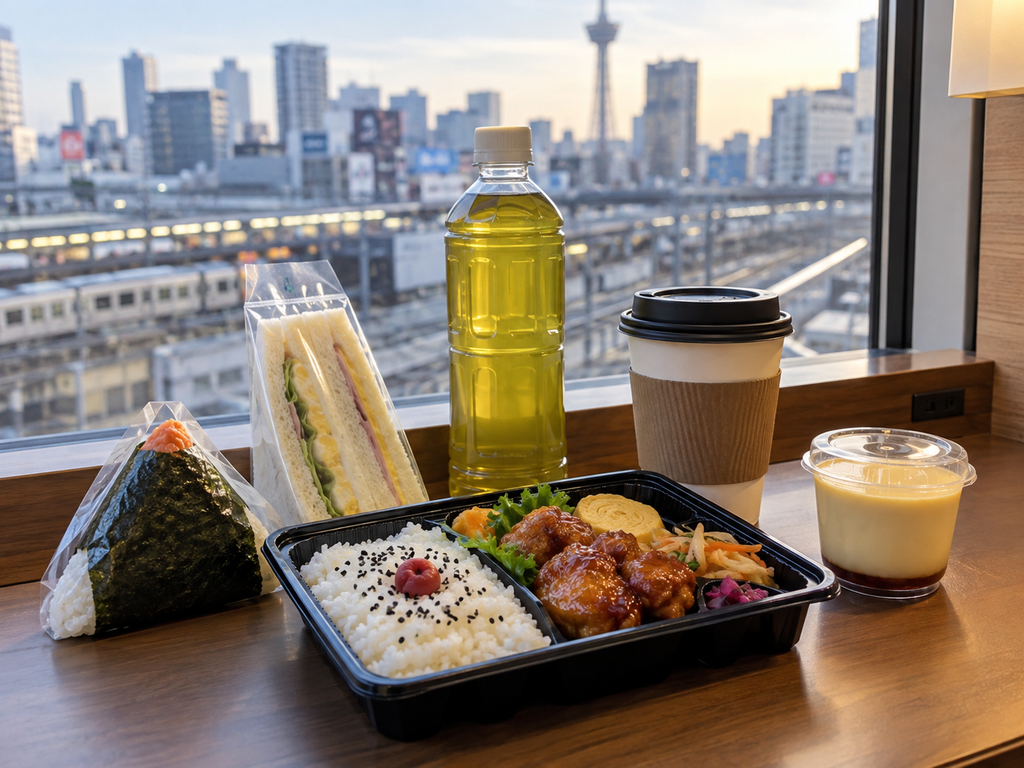
Onigiri + egg sandwich + fried chicken + green tea + pudding
This allows you to experience several different sides of konbini food without needing a full restaurant meal.
On another visit, try a bento.
And if you travel during winter, add a hot steamed bun.
The fun of convenience stores is that you do not need to try everything at once.
Most travelers will naturally visit several during a trip.
Japanese Perspective: Why Konbini Matter in Everyday Japan
For international visitors, Japanese convenience stores sometimes become tourist attractions themselves.
For Japanese residents, however, they are simply part of everyday infrastructure.
Someone might stop by before work for coffee.
A student might buy an onigiri after school.
A traveler might buy breakfast before boarding an early train.
An office worker might pick up lunch.
Someone returning home late might buy dinner.
This is what makes konbini interesting culturally.
They show a version of Japanese food that is very different from sushi counters, traditional ryokan meals, or famous ramen restaurants.
It is ordinary.
And ordinary life can sometimes tell you just as much about a country as its famous cuisine.
Are Convenience Stores Cheap in Japan?
Konbini food is generally positioned as an affordable and convenient option rather than luxury dining.
However, supermarkets may sometimes offer better value, particularly later in the evening when prepared foods are discounted.
The main advantage of a convenience store is availability.
When you are tired, unfamiliar with an area, or travelling early in the morning, paying slightly more for convenience can be worthwhile.
For budget-conscious travelers, combining restaurants with convenience-store meals can also help control food costs without eating the same thing every day.
Convenience Store or Restaurant?
You do not need to choose one.
Japanese restaurants provide experiences that convenience stores cannot reproduce.
A bowl of ramen prepared by a specialist shop, fresh sushi, or food shared in an izakaya offers atmosphere as well as cuisine.
But eating every meal in restaurants can hide another side of Japan.
A convenience-store breakfast before a train journey or a late-night bento in your hotel can become part of the travel experience too.
FAQ About Japanese Convenience Store Food
What is the best food to buy at a Japanese convenience store?
Onigiri, bento, egg sandwiches, fried chicken, noodles, and desserts are good starting points for first-time visitors.
Are Japanese convenience stores good for breakfast?
Yes. Onigiri, sandwiches, yogurt, boiled eggs, fruit, coffee, and tea make convenience stores especially useful in the morning.
Can convenience stores heat food for you?
Many prepared meals are designed to be heated, and stores commonly provide facilities for warming suitable items.
Are there vegetarian foods at Japanese convenience stores?
Some products may appear vegetarian, but ingredients such as fish-based dashi can be difficult to identify. Travelers with dietary restrictions should check ingredient information carefully.
Can I find healthy food at a konbini?
Yes. Salads, fruit, tofu, boiled eggs, chicken, yogurt, and vegetable side dishes are commonly available alongside fried foods and desserts.
Is convenience-store food worth trying in Japan?
Yes. It provides an inexpensive and practical way to experience ordinary Japanese food culture in addition to restaurant dining.
Final Thoughts
Japanese convenience stores are much more than places to buy emergency snacks.
They are part of everyday Japanese life.
From onigiri and bento to sandwiches, fried chicken, coffee, and surprisingly good desserts, a konbini can provide almost everything you need for a quick meal.
For travelers, the best approach is not to replace Japanese restaurants with convenience stores.
Try both.
Enjoy a traditional Japanese breakfast.
Visit a ramen shop.
Share food at an izakaya.
But also stop at a konbini before an early train and choose an onigiri simply because it looks interesting.
Those small everyday experiences can become some of the most memorable parts of traveling in Japan.