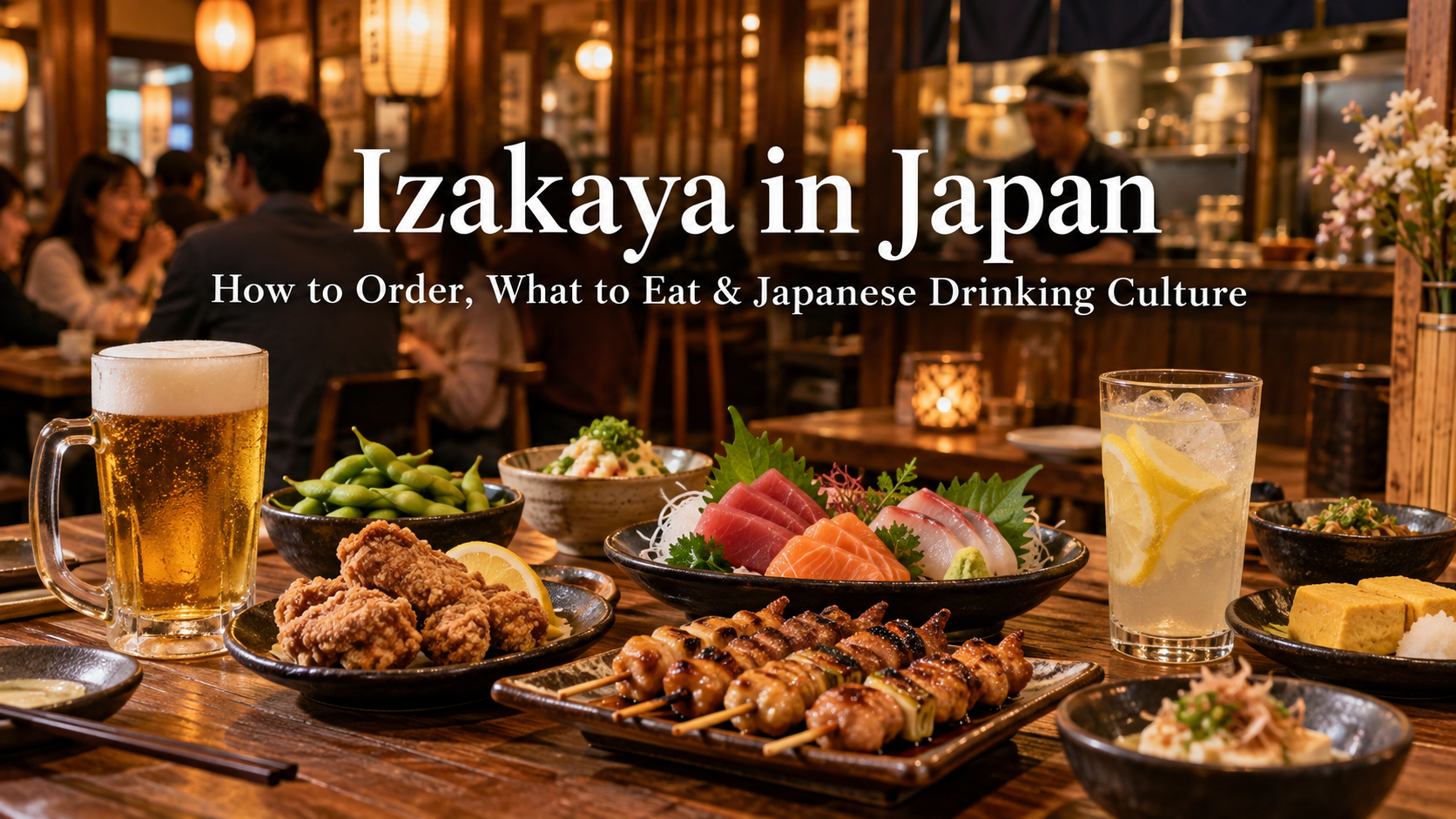
Walking into an izakaya can be one of the most enjoyable food experiences in Japan.
However, it can also be confusing for first-time visitors.
You may receive a small dish that you did not order. The menu might contain dozens of small plates. Drinks may arrive before the food. In some restaurants, you order from a tablet. In others, you call a staff member directly.
None of this is unusual.
An izakaya is not simply a Japanese bar. It combines drinking, eating, conversation, and shared dishes in a way that reflects an important part of modern Japanese social life.
This guide explains what an izakaya is, how to order, what to eat, what otoshi means, useful etiquette, typical costs, and what Japanese people actually expect when visiting one.
What Is an Izakaya?
An izakaya is a casual Japanese establishment where people order drinks together with a variety of small dishes.
It is sometimes translated as “Japanese pub.” However, that description is only partly accurate.
In many Western pubs, drinking may be the main activity. At an izakaya, food is usually just as important.
Customers may order grilled chicken, sashimi, fried foods, vegetables, noodles, rice dishes, and many other items during the same meal.
Therefore, an izakaya is somewhere between a restaurant and a bar.
It is also designed for sharing.
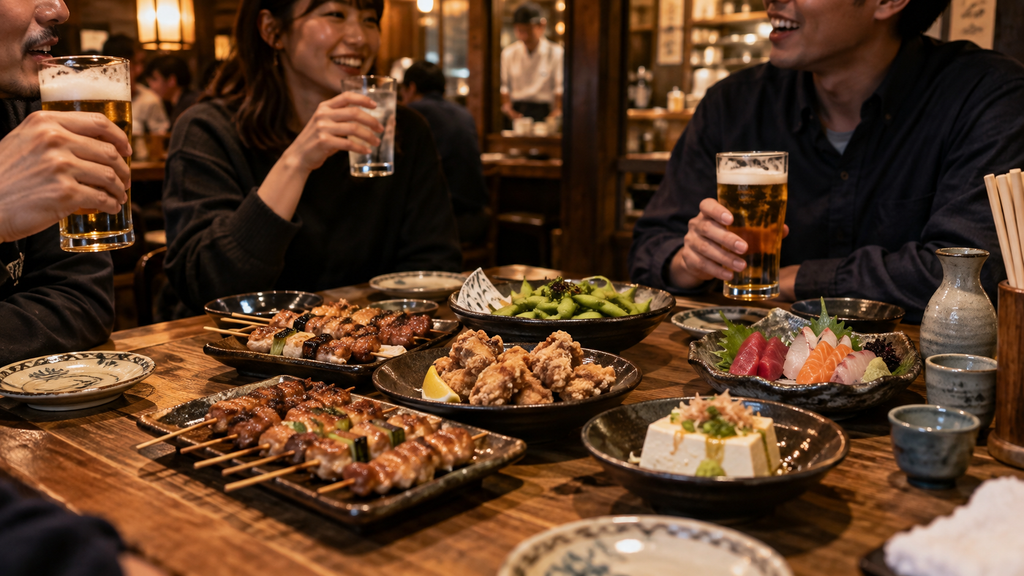
Instead of each person ordering one main dish, a group often chooses several plates and places them in the center of the table.
Everyone then takes a little from each dish.
Why Izakaya Are Important in Japanese Food Culture
Izakaya are closely connected with socializing.
Friends meet there after work. Colleagues may visit together. Couples use them for casual dinners, and groups gather there for celebrations.
At the same time, not every izakaya visit involves heavy drinking.
Some people order only one alcoholic drink. Others choose non-alcoholic beverages throughout the evening.
Food remains an important part of the experience.
More Than a Place to Drink
One reason izakaya are interesting for travelers is their variety.
In a single meal, you might try tofu, sashimi, yakitori, karaage, grilled fish, pickles, and rice.
Therefore, an izakaya can act as an introduction to many different parts of Japanese cuisine.
You do not need to choose just one specialty.
Japanese Perspective: The Izakaya as a Social Space
Visitors sometimes imagine izakaya mainly as nightlife destinations.
In Japan, their role is broader.
For many people, an izakaya is simply an easy place to talk while eating.
The atmosphere is usually less formal than a traditional restaurant. People can order gradually, stay for conversation, and share several dishes.
After-Work Culture
The image of office workers visiting an izakaya after work is real.
A group may meet for a nomikai, or drinking gathering.
However, Japanese work culture is changing. Not everyone participates in such gatherings, and attitudes toward workplace drinking vary greatly.
Therefore, it is better to think of nomikai as one part of Japanese social culture rather than something every worker regularly does.
Friends and Family
Izakaya are also common places for friends to meet.
Some restaurants even have private rooms or semi-private seating.
Families may visit family-friendly izakaya as well, especially larger chains that offer broad menus.
This diversity means an izakaya is not automatically a loud late-night bar.
What Is Otoshi?
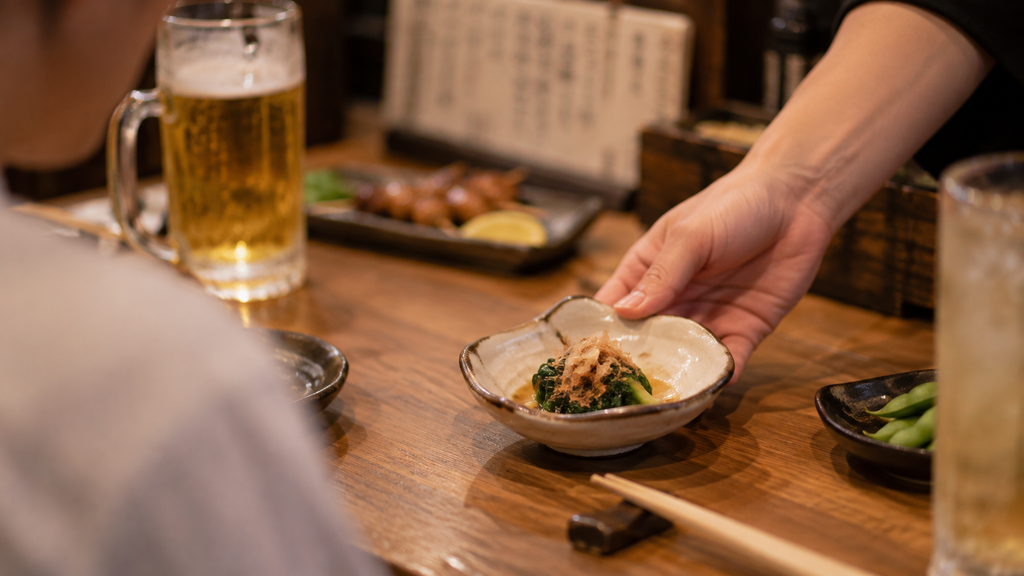
One of the most confusing parts of an izakaya visit is otoshi.
After you sit down, staff may bring a small dish even though you did not order it.
You may also notice a small charge on the bill.
This is normal.
Otoshi is a small appetizer connected with a seating or table charge.
The dish varies by restaurant. It might be vegetables, tofu, seafood, potato salad, or another small item.
Did the Restaurant Make a Mistake?
No.
If an otoshi appears automatically, it is usually part of the restaurant’s system.
Foreign visitors sometimes think they have been charged for unwanted food.
However, in many izakaya, the otoshi effectively represents the table charge.
This is why understanding the system before visiting helps avoid confusion.
Can You Refuse Otoshi?
Policies vary by restaurant.
Some establishments may not allow the charge to be removed. Others may handle requests differently.
Therefore, if this matters to you, asking before sitting down is the safest approach.
In most cases, it is simplest to treat otoshi as part of the cost of the izakaya experience.
How to Enter an Izakaya
The process is usually straightforward.
When you enter, staff may ask how many people are in your group.
A useful phrase is:
Futari desu.
“Two people.”
Change the number as needed.
The staff will then show you to a seat.
You may sit at a table, counter, private room, or low Japanese-style seating area.
How to Order at an Izakaya
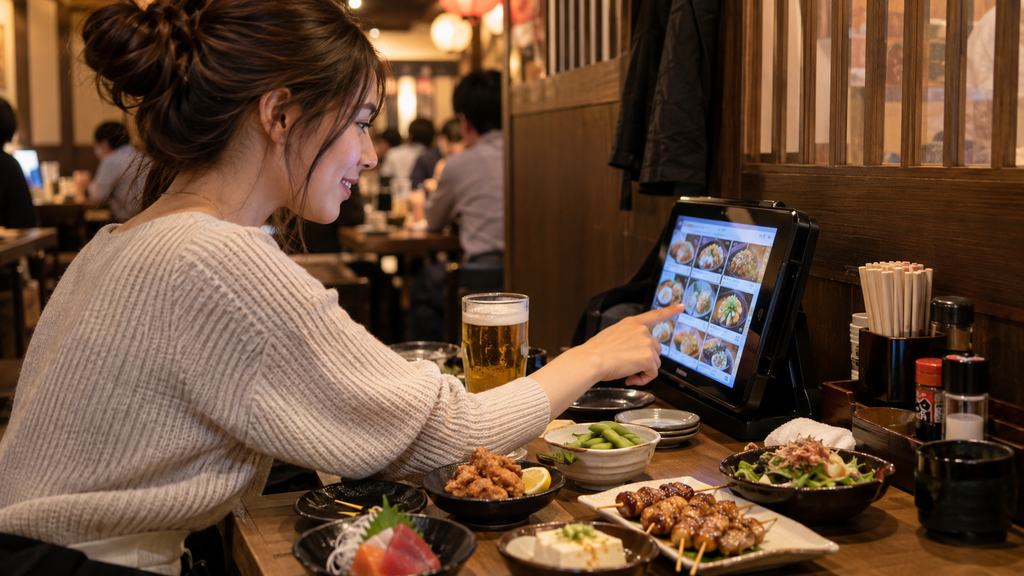
Ordering methods vary considerably.
However, there are several common systems.
Tablet Ordering
Many chain izakaya use tablets or touch screens.
This can be convenient for international visitors because some systems offer English menus.
You select dishes and drinks directly from the screen.
The order is then sent to the kitchen.
QR Code Ordering
Some restaurants provide a QR code at the table.
You scan it with your phone and order through a web-based menu.
This style has become increasingly common.
Ordering from Staff
Traditional restaurants may still take orders directly.
In that case, you can call a staff member when you are ready.
A common expression is:
Sumimasen.
It literally means something like “excuse me” and is commonly used to get a staff member’s attention.
You do not need to shout aggressively. A clear voice is usually enough.
What Should You Order First?
A simple strategy works well.
Start with drinks and two or three dishes.
Then order more as the meal continues.
There is no need to order everything immediately.
This gradual style is one of the main differences between an izakaya and a standard set-course restaurant.
Popular Izakaya Foods
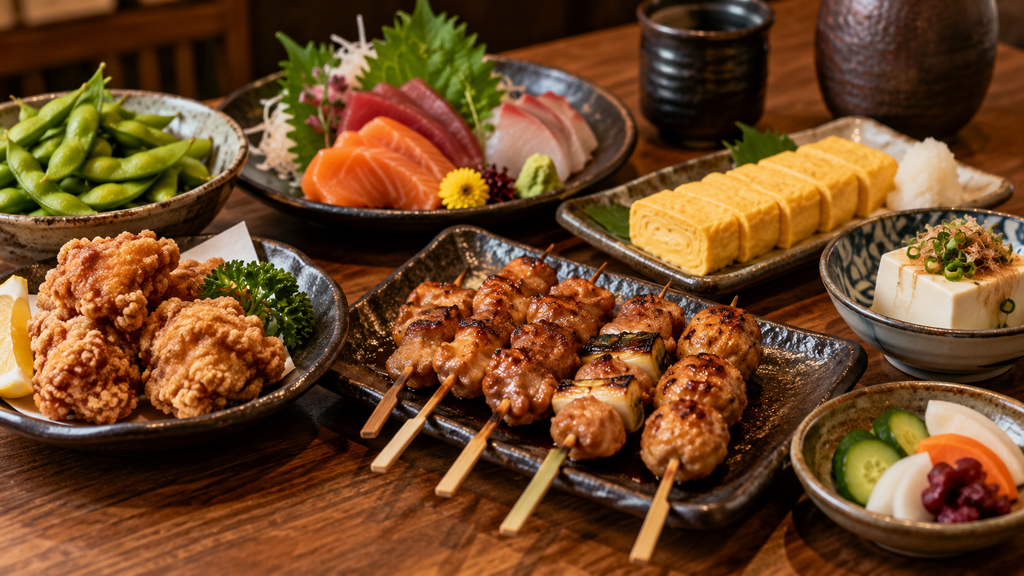
One advantage of an izakaya is the enormous variety.
Menus differ by restaurant, but several dishes appear frequently.
Edamame
Edamame are young soybeans served in their pods.
They are simple, salty, and easy to share.
For that reason, they are a common first dish while waiting for other food.
Yakitori
Yakitori is grilled chicken on skewers.
Different parts of the chicken may be available, including thigh, skin, liver, and meatball-style tsukune.
You may also be asked to choose between shio and tare.
Shio means salt seasoning. Tare is a sweet-savory sauce.
Karaage
Karaage is Japanese-style fried chicken.
It is usually juicy, crispy, and easy to share.
As a result, it is one of the safest choices for first-time izakaya visitors.
Sashimi
Many izakaya offer sashimi.
The selection depends on the restaurant and region.
Coastal areas may have especially strong seafood menus.
Remember that sashimi does not include sushi rice.
For more about the difference, see our guide to Sushi in Japan.
Dashimaki Tamago
Dashimaki tamago is a rolled Japanese omelet flavored with dashi.
It is softer and more savory than many sweet tamagoyaki varieties.
This can be a good choice for visitors who want something mild.
Grilled Fish
Grilled fish is another common izakaya item.
Mackerel, hokke, salmon, or seasonal fish may appear on the menu.
These dishes often pair well with rice or sake.
Tofu and Vegetables
Not every izakaya dish is heavy.
Cold tofu, salads, pickles, grilled vegetables, and vegetable side dishes are also common.
Therefore, it is possible to balance fried and grilled foods with lighter options.
What Do People Drink at an Izakaya?
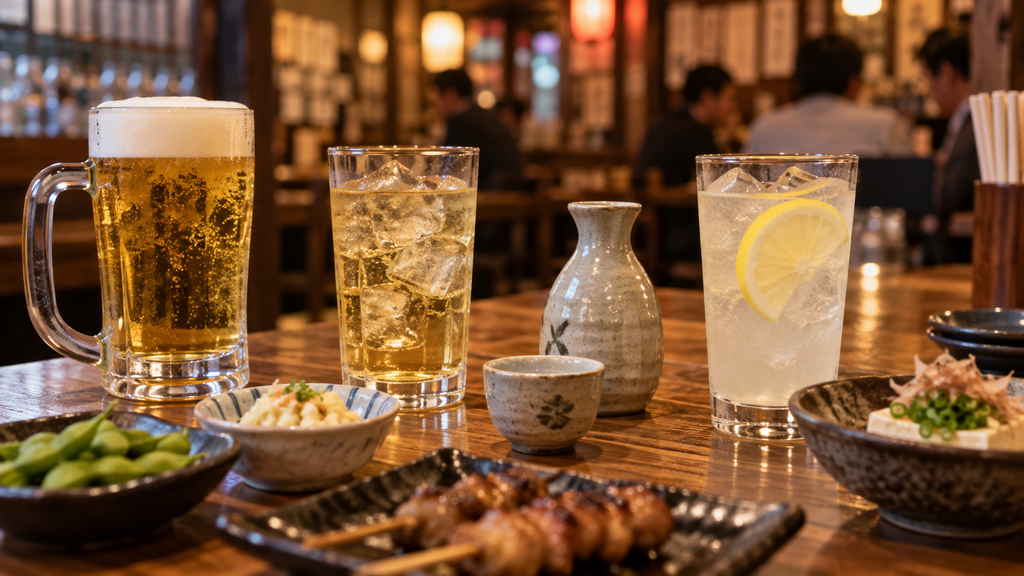
Beer is common, but it is only one choice.
Izakaya usually offer a wide range of drinks.
Beer
Draft beer is a classic first drink.
You may hear the phrase:
Toriaezu nama.
It roughly means “draft beer for now.”
The expression reflects the habit of ordering the first drink quickly before deciding what comes next.
However, there is no requirement to start with beer.
Highball
A highball usually combines whisky and soda.
It is light, fizzy, and widely available.
Sour and Chuhai
Japanese sours and chuhai combine spirits with soda and different flavors.
Lemon is especially common.
Other versions may use grapefruit, plum, or seasonal fruit.
Sake
Sake is Japanese rice-based alcoholic drink.
Depending on the restaurant, it may be served chilled, at room temperature, or warm.
There is no rule saying sake must be drunk hot.
Shochu
Shochu is a distilled spirit.
It may be made from ingredients such as barley, sweet potato, or rice.
People drink it with water, soda, hot water, or on the rocks.
Non-Alcoholic Drinks
You do not need to drink alcohol at an izakaya.
Tea, soft drinks, non-alcoholic beer, and other options are often available.
Therefore, travelers who do not drink alcohol can still enjoy the experience.
What Is Nomihodai?
Some izakaya offer nomihodai, or all-you-can-drink plans.
You pay a fixed amount and can order eligible drinks during a set time period.
Common limits might be around 90 or 120 minutes.
However, rules vary.
Check the Conditions
Some restaurants require everyone at the table to join the plan.
Others combine nomihodai with a food course.
The final order may also be required before the official end time.
Therefore, check the restaurant’s conditions before choosing the plan.
What Is Tabehodai?
Tabehodai means all-you-can-eat.
Some izakaya offer both tabehodai and nomihodai.
This can provide good value for groups. However, quality and menu variety vary widely.
For travelers mainly interested in experiencing Japanese food, ordering individual dishes may offer more flexibility.
How Much Does an Izakaya Cost?
Prices vary by location and restaurant type.
A casual chain can be relatively inexpensive. Independent restaurants or seafood-focused izakaya may cost more.
Your bill will depend on how many drinks and dishes you order.
Remember that an otoshi or table charge may also be included.
Therefore, checking menu prices before sitting down is useful if you have a strict budget.
Izakaya Etiquette for Travelers
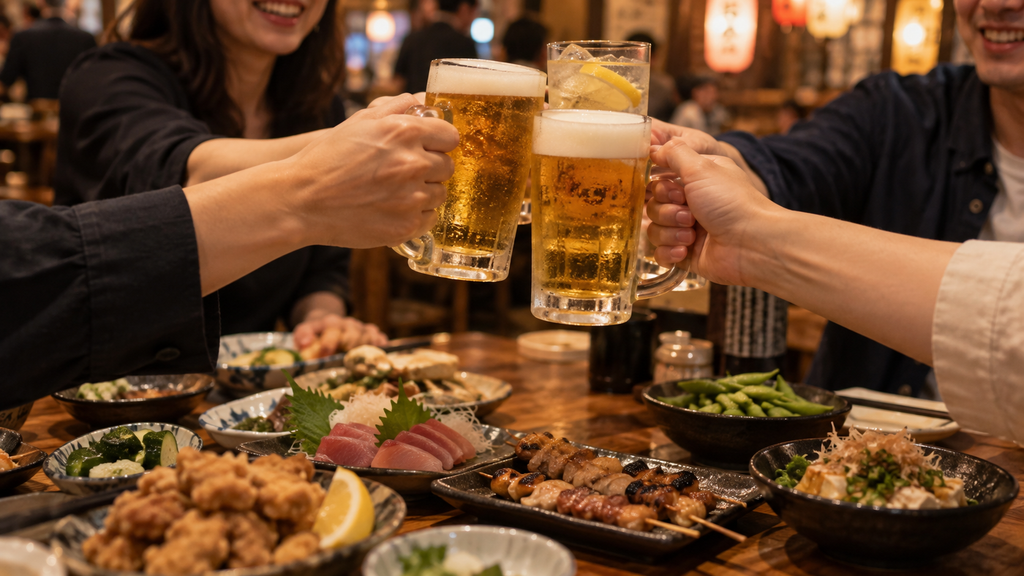
Izakaya are casual places.
You do not need to learn complicated rules.
However, a few habits can make the experience smoother.
Wait Before Starting a Group Drink
In groups, people often wait until everyone has received a drink.
Someone may then say:
Kanpai!
This means “cheers.”
After that, everyone begins drinking.
Share Dishes Considerately
Many izakaya foods are designed for sharing.
Use serving utensils when provided.
If none are available, follow the way others at the table are serving themselves.
Do Not Assume Everything Is Included
Extra dishes may carry separate charges.
Likewise, otoshi may appear automatically.
Check your bill before paying if anything is unclear.
Keep Noise Appropriate to the Restaurant
Some izakaya are lively and noisy.
Others are quiet and intimate.
Observe the atmosphere around you and adjust accordingly.
Smoking Rules
Smoking policies differ by establishment and by the type of licensed area.
Many restaurants are smoke-free or have designated arrangements. However, some smaller or qualifying establishments may still permit smoking under specific rules.
If cigarette smoke is a concern, check before entering.
This is especially useful for travelers with children or respiratory sensitivities.
Can You Visit an Izakaya Alone?
Yes.
Solo dining is common in Japan, especially at restaurants with counter seating.
A small neighborhood izakaya can be particularly comfortable for one person.
You can order one drink and several small dishes without needing a group.
Therefore, solo travelers should not feel that izakaya are only for parties.
Can Children Visit Izakaya?
This depends on the establishment.
Large chain izakaya may welcome families. Smaller late-night bars may not be suitable.
The atmosphere can also change later in the evening.
If traveling with children, family-oriented restaurants and earlier dining times are usually easier choices.
Vegetarian and Dietary Considerations
An izakaya menu may look vegetable-friendly, but ingredients can be difficult to identify.
For example, tofu dishes may use fish-based dashi.
Vegetables may also be seasoned with sauces containing seafood ingredients.
Therefore, strict vegetarians and vegans should ask before ordering.
Useful phrases include:
Niku wa haitte imasu ka?
“Does this contain meat?”
Sakana wa haitte imasu ka?
“Does this contain fish?”
For serious allergies, it is safer to prepare written information in Japanese.
Paying the Bill
When you are ready to leave, tell the staff that you would like the bill.
A common phrase is:
Okaikei onegaishimasu.
This means “The bill, please.”
Depending on the restaurant, you may pay at the table or take the bill to a register near the entrance.
Credit cards and electronic payments are increasingly common. However, smaller establishments may still prefer cash.
Therefore, carrying some yen remains useful.
Should You Tip?
Tipping is generally not expected at Japanese izakaya.
Pay the amount shown on the bill.
Good service is normally considered part of the restaurant experience rather than something requiring an additional percentage.
Izakaya Chains vs Independent Izakaya
Both are worth trying.
Chain Izakaya
Chains are often easier for first-time visitors.
They may offer picture menus, tablets, clear prices, and large selections.
Therefore, they can be a comfortable introduction.
Independent Izakaya
Small independent establishments can provide a more local experience.
Menus may focus on regional seafood, sake, grilled dishes, or seasonal ingredients.
However, English support may be limited.
For adventurous travelers, these restaurants can become some of the most memorable meals of a trip.
Izakaya and Regional Japan
Izakaya menus often reflect local food culture.
In Hokkaido, seafood and local produce may feature heavily.
In Fukuoka, you may encounter dishes connected with Kyushu cuisine.
In Osaka, casual sharing foods fit naturally into the city’s lively dining culture.
Therefore, visiting an izakaya can complement sightseeing.
You are not only eating dinner. You are also encountering regional ingredients and everyday habits.
For northern food experiences, see our Hokkaido Travel Guide for First-Time Visitors.
For one of Japan’s best-known food cities, explore our Osaka Travel Guide.
Common Mistakes First-Time Visitors Make
Most mistakes are minor.
However, knowing a few things in advance makes the evening easier.
Do not assume the otoshi is free.
Do not feel that everyone must drink alcohol.
Do not order the entire meal immediately unless you want to.
Also, do not expect every izakaya to operate in exactly the same way.
Some are modern and automated. Others are small and traditional.
That variety is part of the experience.
How to Enjoy Your First Izakaya
For a first visit, choose a restaurant with an approachable menu.
Order a drink, alcoholic or non-alcoholic.
Then choose two or three dishes.
For example, start with edamame, yakitori, and karaage. After that, add grilled fish, tofu, sashimi, or another dish that interests you.
Take your time.
Unlike a quick ramen meal, an izakaya visit is often about eating gradually while talking.
That slower rhythm is part of the culture.
FAQ
Is an izakaya only for drinking alcohol?
No. Food is an important part of the experience, and non-alcoholic drinks are widely available.
What is otoshi?
Otoshi is a small appetizer often served automatically. It is usually connected with a table or seating charge.
Do I need to tip?
No. Tipping is generally not expected.
Can I visit an izakaya alone?
Yes. Counter seating makes many izakaya suitable for solo diners.
Is an izakaya expensive?
It depends on the restaurant and how much you order. Casual chains can be relatively affordable.
What should I order first?
Edamame, yakitori, karaage, sashimi, tofu, and grilled fish are common starting points.
Can I go if I do not drink alcohol?
Absolutely. Tea, soft drinks, and non-alcoholic beverages are usually available.
What does nomihodai mean?
Nomihodai is an all-you-can-drink plan offered for a fixed period.
Final Thoughts
An izakaya is one of the best places to experience Japanese food as part of everyday social life.
It is not simply a bar.
Food, drinks, conversation, and sharing all come together.
For first-time visitors, systems such as otoshi or tablet ordering may initially seem unfamiliar. However, they become easy to understand once you know what to expect.
Start with a few dishes. Try something local. Order another plate if you are still hungry.
Most importantly, do not worry about experiencing an izakaya “perfectly.”
The point is to enjoy the food and atmosphere.
In many ways, that relaxed experience is exactly what makes izakaya culture interesting.
Related Japan Guides
Continue exploring Japanese cuisine through our Japanese Food Guide.
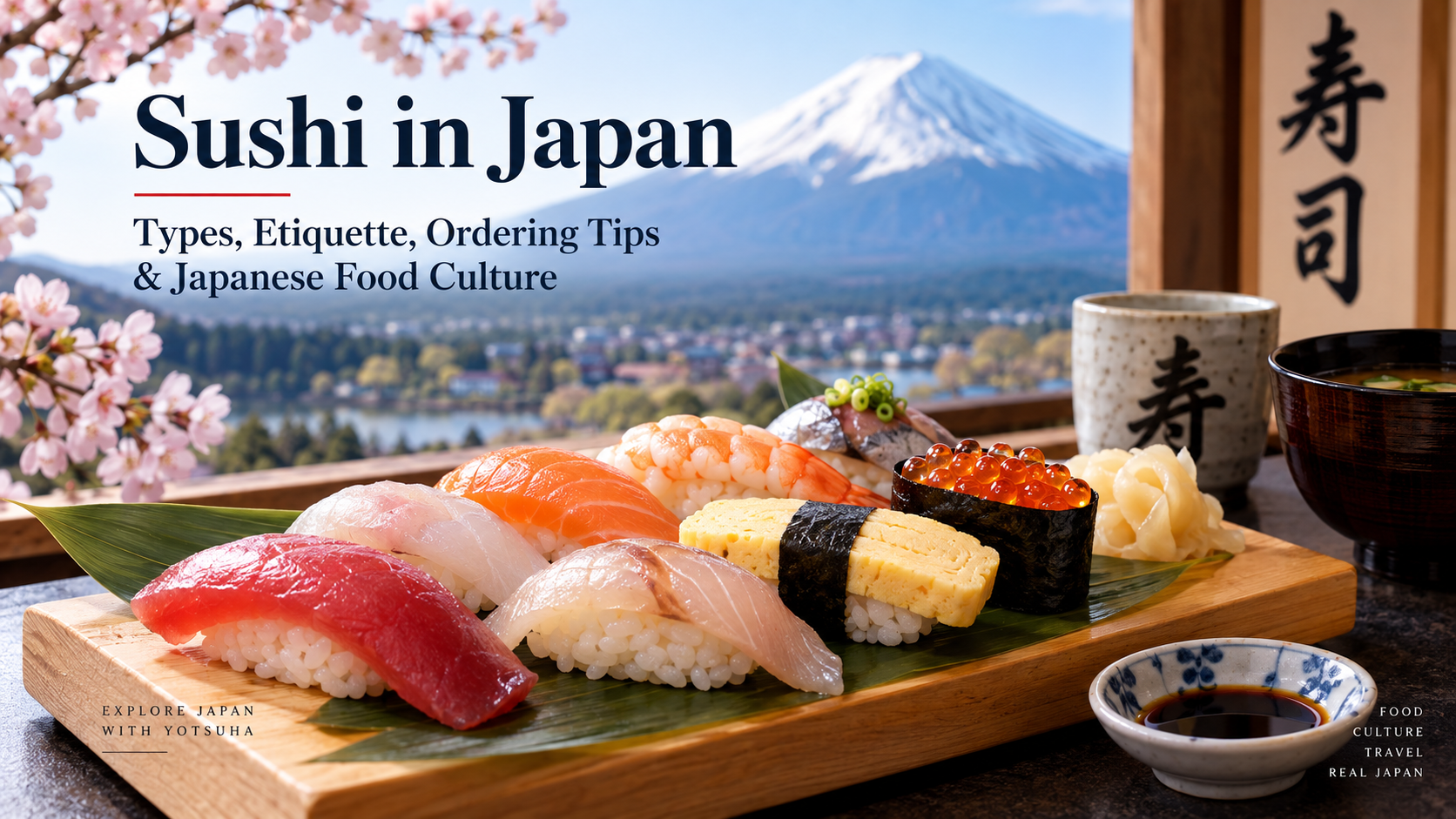
If you want to understand another classic Japanese dining experience, read Sushi in Japan: Types, Etiquette, Ordering Tips & Japanese Food Culture.
For regional food and travel ideas, explore our Japan Travel Guides.