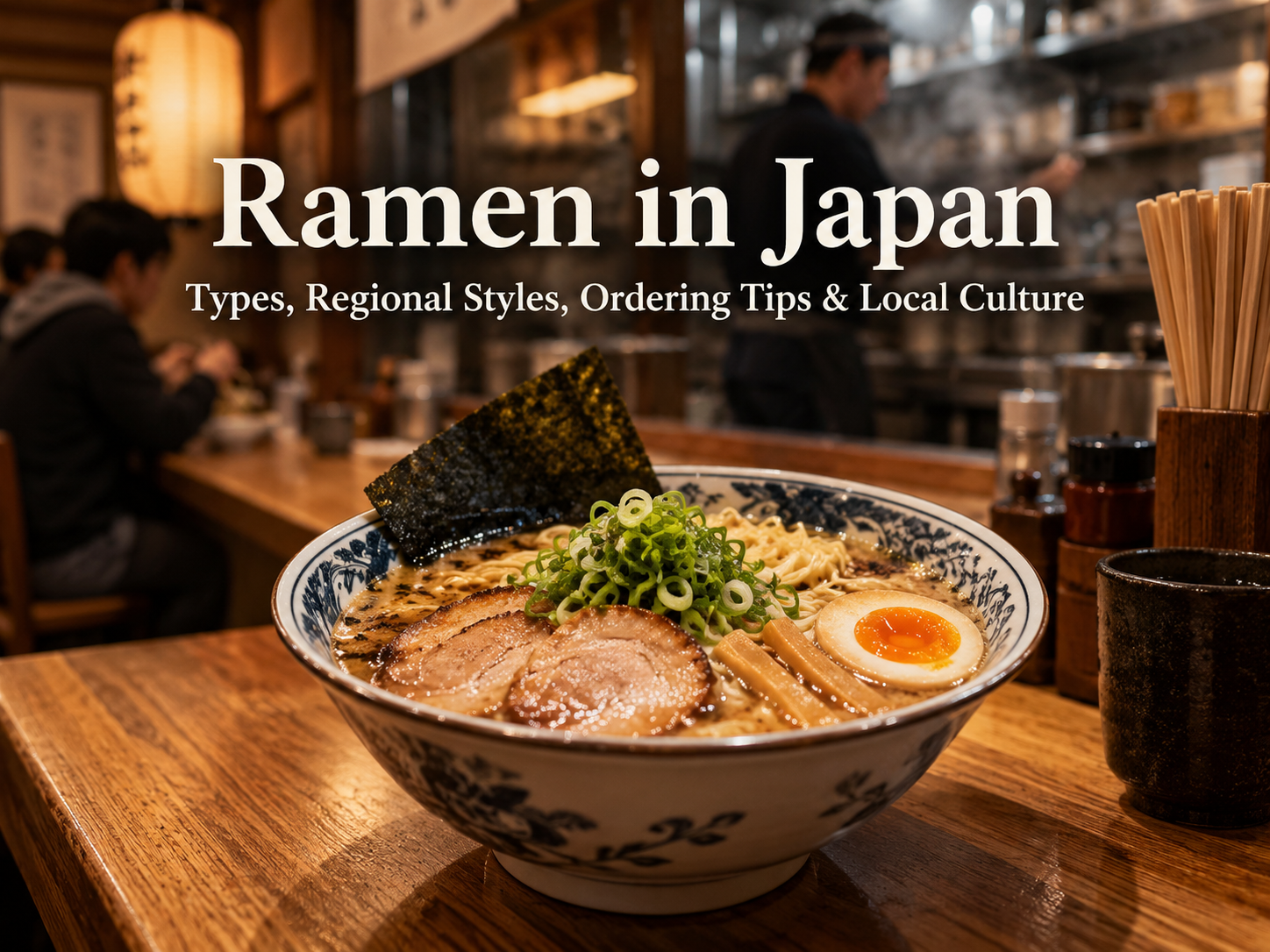
Ramen is one of the easiest foods to find in Japan, but understanding ramen is surprisingly complicated.
A bowl may look simple—noodles, soup, sliced pork, green onions, and perhaps an egg—but almost every part can change. The broth may be clear or cloudy, the noodles thick or thin, the seasoning salty or rich, and the toppings can reflect the region where you are eating.
For travelers, this variety is part of the fun. You can eat ramen in Tokyo, Sapporo, Hakata, or a small regional city and experience completely different interpretations of the same basic dish.
This guide explains the major ramen styles in Japan, regional varieties worth looking for, how to order at a ramen shop, basic etiquette, and a Japanese perspective on why people are willing to travel across the country for a single bowl.
What Exactly Is Ramen?
Ramen is generally made from wheat noodles served with a seasoned soup and toppings.
One important ingredient in many ramen noodles is kansui, an alkaline solution that helps give the noodles their distinctive firmness, elasticity, and color.
Although ramen has roots in Chinese noodle cuisine, it developed extensively in Japan and became part of modern Japanese everyday food culture.
Today, ramen ranges from inexpensive neighborhood meals to highly specialized bowls prepared by chefs who carefully control broth temperature, noodle texture, aroma oils, and seasoning.
That range is one reason ramen is difficult to describe as a single dish.
Understanding Ramen: Broth and Seasoning Are Different
One common misunderstanding is that shoyu, miso, shio, and tonkotsu are four completely separate kinds of soup.
It is more complicated than that.
Shoyu, shio, and miso usually describe the seasoning, while tonkotsu refers to a broth made primarily from pork bones.
A shop can therefore make a pork-bone broth and season it with soy sauce.
Broth can also include chicken, pork, dried fish, seafood, kombu, vegetables, or combinations of several ingredients.
This is why two bowls both labeled “shoyu ramen” can taste completely different.
Shoyu Ramen: Soy Sauce
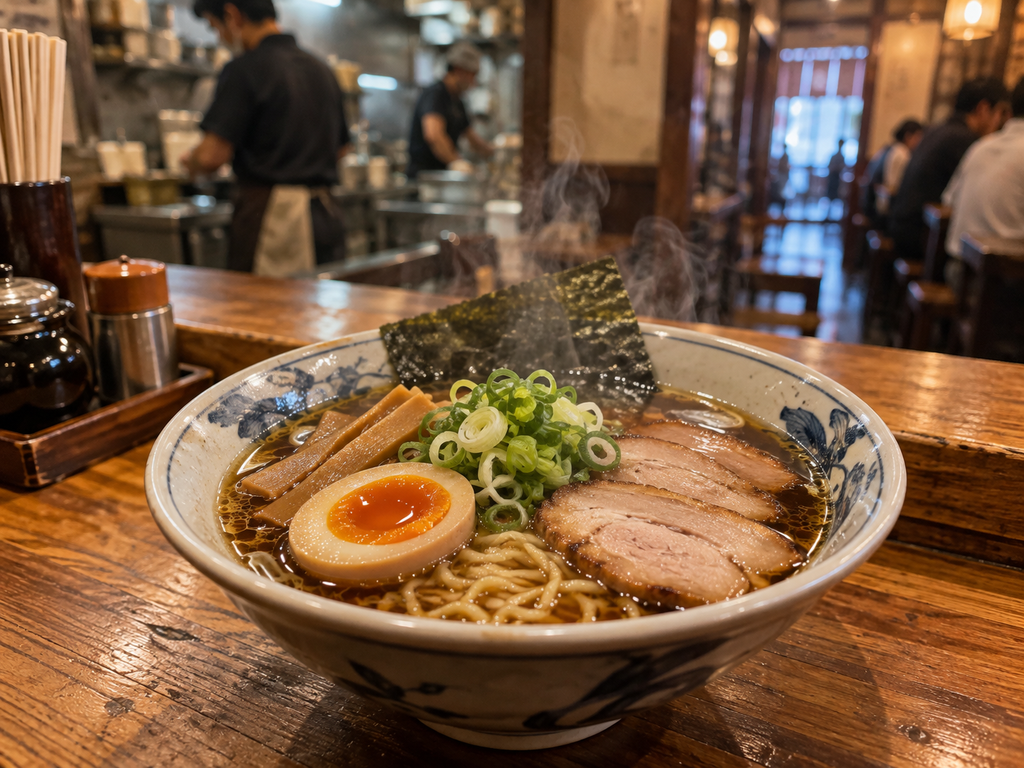
Shoyu means soy sauce.
Shoyu ramen often has a brown or amber-colored soup with a savory aroma. Chicken, pork, seafood, dried fish, or vegetables may form the underlying stock.
For a first-time visitor, shoyu ramen can be a useful introduction because the flavor is familiar without necessarily being extremely heavy.
Tokyo is often associated with traditional shoyu-based ramen, although today you can find almost every ramen style in the capital.
Do not judge shoyu ramen only by the dark color of the soup. A darker bowl can still taste surprisingly clean and delicate.
Shio Ramen: Salt-Seasoned Ramen
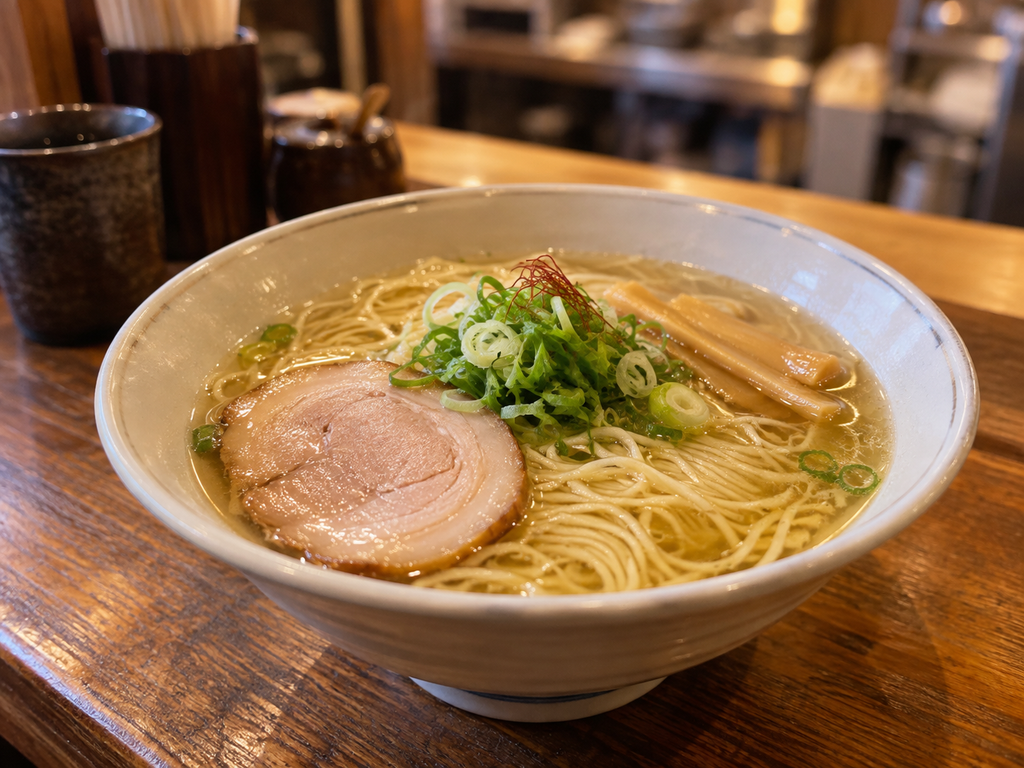
Shio means salt.
Shio ramen is usually seasoned more lightly than many richer ramen styles and is often served with a relatively clear soup.
Because the seasoning itself can be subtle, the character of the underlying stock becomes especially noticeable.
Hakodate in Hokkaido is particularly associated with shio ramen. Hokkaido’s regional ramen culture also includes Sapporo miso ramen and Asahikawa shoyu ramen. Japan’s Ministry of Agriculture notes that these styles developed with distinctive local characteristics.
If you enjoy cleaner flavors rather than thick, creamy soup, shio ramen can be a good choice.
Miso Ramen: Rich and Warming
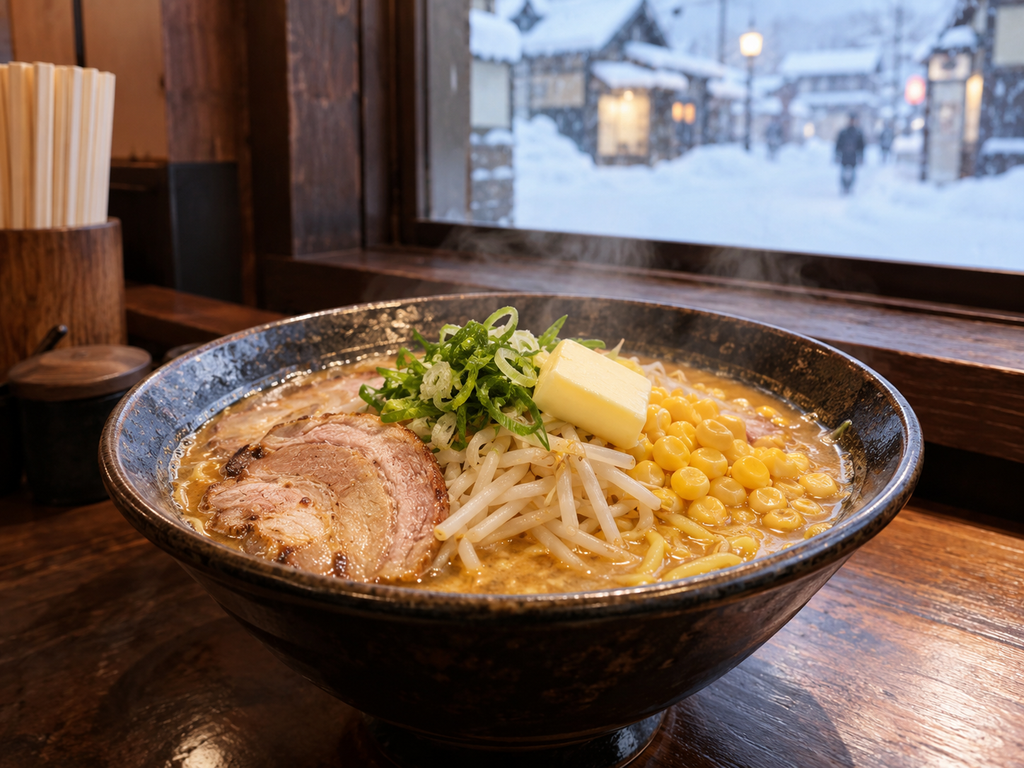
Miso ramen uses fermented soybean paste as an important part of its seasoning.
The flavor is usually richer and more robust than a delicate shio broth.
Sapporo is especially famous for miso ramen. Corn and butter are well-known additions, particularly among visitors, while vegetables and pork are also common.
The richer soup feels especially satisfying during a cold Hokkaido winter.
If food is an important part of your trip, see our Hokkaido Travel Guide for First-Time Visitors, which also covers seafood, soup curry, local produce, and other Hokkaido specialties.
Tonkotsu Ramen: Pork-Bone Broth
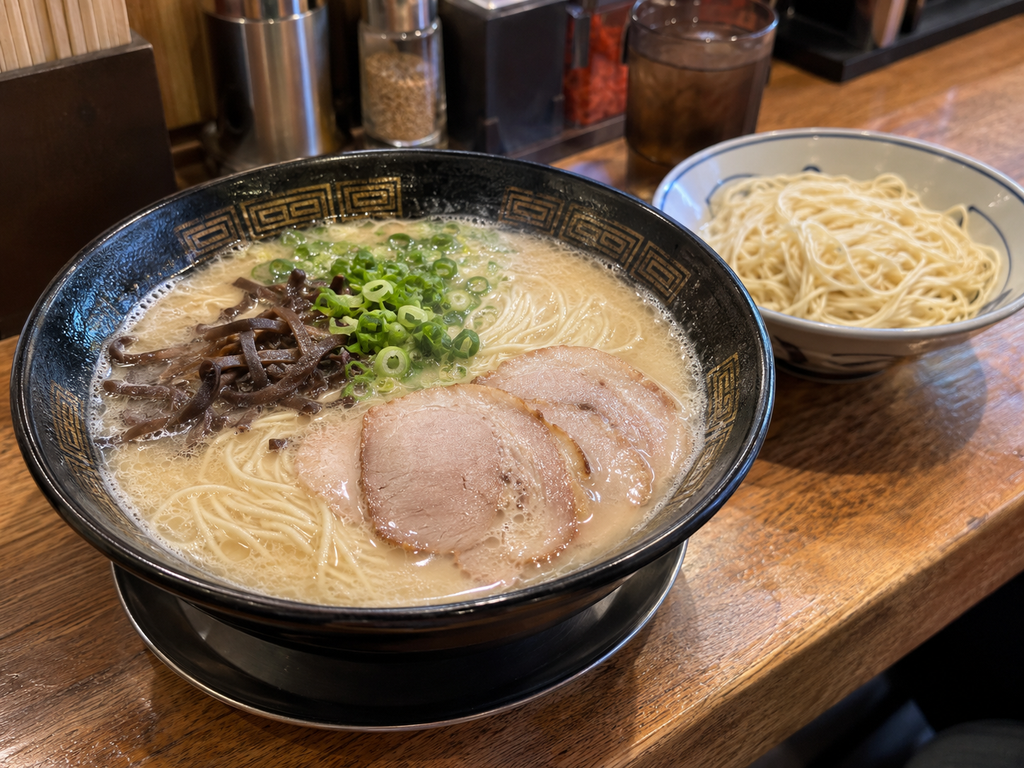
Tonkotsu means pork bone.
The broth is generally created by cooking pork bones until the soup becomes cloudy and rich. It is especially associated with Kyushu.
Hakata-style ramen from Fukuoka is probably the best-known example internationally.
Hakata ramen typically uses very thin, straight noodles. Many shops allow customers to specify how firmly the noodles should be cooked.
Another characteristic is kaedama.
Kaedama means ordering an additional portion of noodles to add to the broth remaining in your bowl.
This makes sense with Hakata-style thin noodles because they cook quickly and are often served in relatively modest portions.
JNTO identifies Fukuoka and Hakata ramen as major examples of Japan’s tonkotsu culture.
Tsukemen: Ramen You Dip Yourself
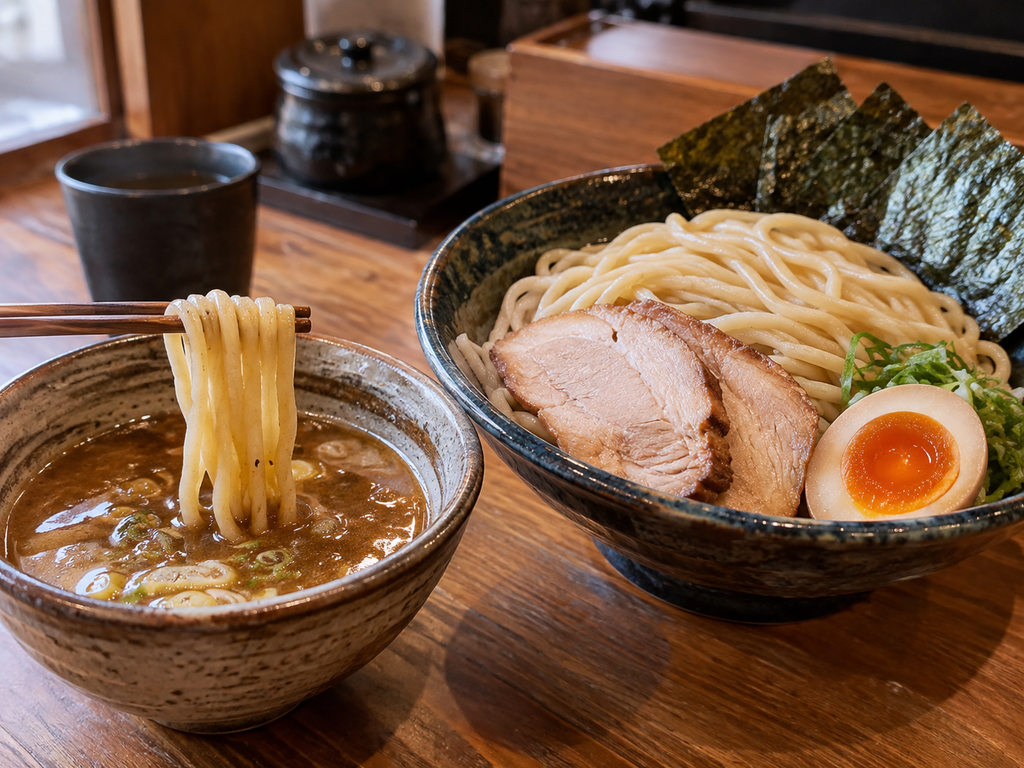
Tsukemen is different from a normal bowl of ramen.
The noodles and soup are served separately.
Instead of eating noodles directly from the soup, you pick up a small portion of noodles and dip them into a concentrated broth before eating.
The noodles are often thicker and chewier than standard ramen noodles.
For travelers who particularly enjoy noodle texture, tsukemen is worth trying because the noodles themselves become a major part of the experience.
The dipping broth can be intense, so you normally do not soak every strand for a long time.
Ramen Is Regional Food
One of the most interesting things about ramen in Japan is that traveling changes what you find.
Ramen has developed numerous local styles rather than becoming one standardized national dish.
Some famous examples include:
Sapporo — Miso Ramen
Sapporo is strongly associated with miso ramen. Rich soup works particularly well with Hokkaido’s cold climate.
Hakodate — Shio Ramen
Hakodate is known for relatively clear shio ramen.
Asahikawa — Shoyu Ramen
Asahikawa is associated with shoyu ramen. Some versions use a layer of oil that helps the soup retain heat in the city’s cold climate.
Hakata — Tonkotsu Ramen
Hakata in Fukuoka is famous for pork-bone broth and thin noodles.
Kitakata — Thick, Curly Noodles
Kitakata in Fukushima is another well-known ramen destination, with distinctive thicker, curly noodles.
There are many more.
This is why trying local ramen can be part of sightseeing rather than simply a convenient lunch.
Japanese Perspective: Ramen Is Everyday Food and a Hobby
From outside Japan, ramen can sometimes look like a special example of Japanese cuisine.
Inside Japan, it occupies a more unusual position.
Ramen can be extremely ordinary.
Someone may eat a quick bowl alone after work, during lunch, or on the way home.
But ramen can also become a hobby.
Some people travel to another prefecture specifically to visit a famous shop. Others compare broths, noodle makers, seasonal bowls, or different regional styles.
A tiny counter-only restaurant may have a loyal following even if its interior is extremely simple.
That contrast is important.
A good ramen shop does not necessarily need luxurious decoration. The attention may instead be directed toward details such as noodle firmness, broth temperature, aroma oil, toppings, and the balance between soup and seasoning.
For a visitor to Japan, ramen therefore offers an easy way to experience something that is simultaneously everyday, regional, and highly specialized.
How to Order Ramen in Japan
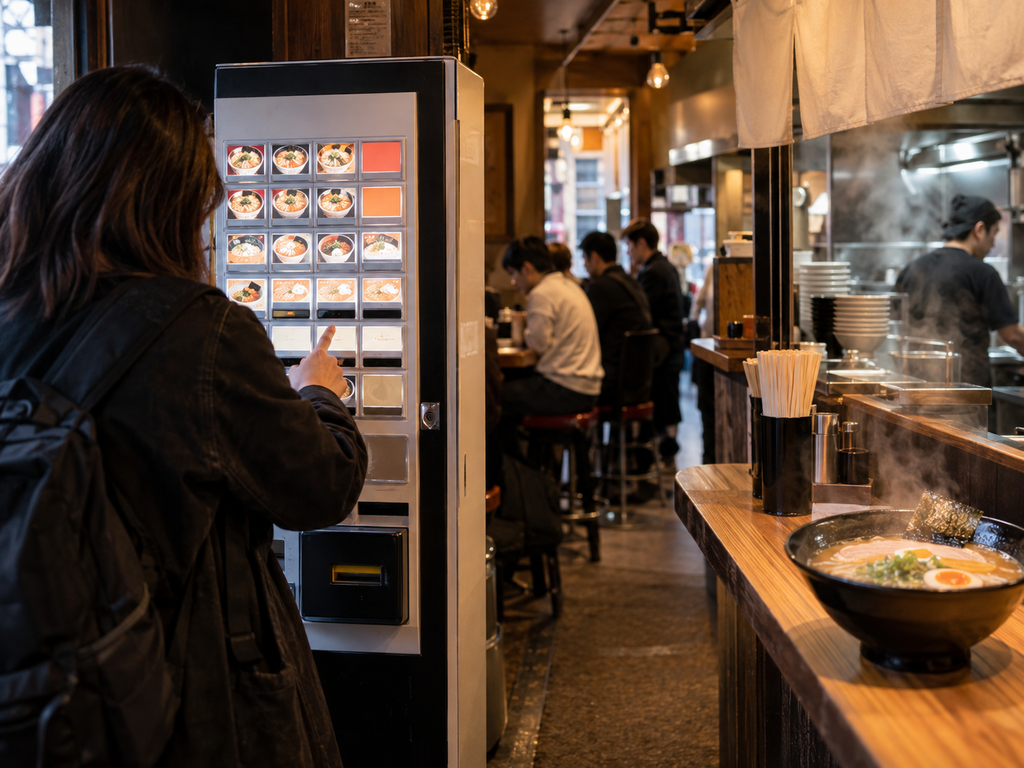
Ordering ramen can initially feel intimidating, particularly when you encounter a ticket vending machine at the entrance.
It is usually easier than it looks.
1. Look at the Menu Before Ordering
Many ramen restaurants specialize in one main style.
You may see several versions such as:
- Standard ramen
- Ramen with extra chashu
- Ramen with an egg
- Large noodles
- Extra toppings
If the shop has photos, they can be very helpful.
2. Use the Ticket Machine
At many ramen shops, you order before sitting down.
Insert cash or use the supported payment method, press the button for your meal, and receive a ticket.
Give the ticket to a staff member.
JNTO notes that ticket machines are common in ramen restaurants, although some shops still take orders directly.
3. Choose Noodle Firmness If Asked
Some restaurants—especially Hakata-style ramen shops—may ask how firm you want your noodles.
If you are unsure, choosing the standard recommendation is completely fine.
You do not need expert ramen vocabulary to enjoy the meal.
Is Slurping Ramen Required?
No.
Slurping noodles is acceptable in Japan, and you will hear many people doing it in ramen shops.
However, it is not a requirement.
You will not offend anyone simply because you eat quietly.
JNTO also notes that slurping is accepted and can make noodles easier to eat with chopsticks.
The more useful rule is simple:
eat the noodles while they are hot.
Ramen noodles gradually soften in the soup, so many ramen restaurants expect customers to eat relatively quickly.
Do You Have to Finish the Soup?
No.
You can drink all of the broth if you enjoy it, but it is perfectly acceptable to leave some soup behind.
Finishing the noodles and toppings without drinking every drop is not considered rude.
This is useful to know because some ramen soups can be quite rich or salty.
Common Ramen Toppings
Toppings vary by shop, but you may encounter:
Chashu — slices of seasoned pork.
Menma — seasoned bamboo shoots.
Negi — chopped green onion.
Ajitama — seasoned soft-boiled egg.
Nori — dried seaweed.
Kikurage — wood-ear mushrooms, particularly common with some tonkotsu styles.
Corn and butter — strongly associated with some Hokkaido ramen.
Rather than adding everything immediately, try the original soup first. You can then decide whether to add pepper, garlic, chili, sesame, or other condiments provided by the restaurant.
Can Vegetarians Eat Ramen in Japan?
Do not assume a bowl is vegetarian simply because the soup looks clear.
Shio or shoyu ramen may contain chicken, pork, bonito, sardines, or other animal-based ingredients.
Even vegetable toppings do not guarantee that the broth is vegetarian.
Vegetarian and vegan ramen restaurants have become easier to find in major tourist cities, but checking the ingredients is still important.
Useful phrases include:
Watashi wa bejitarian desu.
“I am vegetarian.”
and
Niku ya sakana wa haitte imasu ka?
“Does this contain meat or fish?”
If dietary restrictions are important, researching the restaurant before arriving is safer than relying only on the appearance of the dish.
Ramen Shop Etiquette for Travelers
Ramen restaurants are generally casual.
You do not need to know complicated etiquette.
A few habits help:
- Follow the shop’s queue system.
- Buy a ticket first if there is a vending machine.
- Do not occupy a seat while waiting for friends if the shop is busy.
- Eat while the ramen is hot.
- Avoid staying at the table for a long time after finishing when people are waiting.
- Follow staff instructions in small counter restaurants.
Popular ramen shops can have very limited seating, so turnover matters more than it would in a café.
How to Choose Your First Bowl
There is no universal “best” ramen.
Choose according to what you normally enjoy.
If you prefer lighter, cleaner flavors, consider shio.
If you enjoy soy sauce aroma and balanced savory flavors, try shoyu.
If you want something rich and earthy, choose miso.
If you prefer thick, creamy pork broth, tonkotsu is an obvious place to start.
If noodle texture interests you most, try tsukemen.
Then try a completely different style later in your trip.
Comparing two bowls is one of the easiest ways to understand how varied ramen really is.
FAQ
Is ramen always spicy?
No.
Most traditional ramen styles are not automatically spicy. Some restaurants offer spicy versions or chili condiments separately.
Is ramen expensive in Japan?
Ramen is generally considered casual food, although prices vary significantly depending on the restaurant, location, ingredients, and toppings.
Can I eat ramen alone?
Absolutely.
Counter seating is common, and eating ramen alone is completely normal in Japan.
For solo travelers, ramen restaurants can actually be among the easiest places to enter.
Is shio ramen vegetarian?
Not necessarily.
“Shio” describes the seasoning, not the entire stock. Meat or fish ingredients may still be used.
What is kaedama?
Kaedama is an additional serving of noodles ordered after you have started eating, especially associated with Hakata-style ramen.
Should I drink all the soup?
Only if you want to.
Leaving broth in the bowl is completely acceptable.
Which ramen should I try in Hokkaido?
Sapporo miso ramen, Hakodate shio ramen, and Asahikawa shoyu ramen are three famous regional styles. Hokkaido has many additional local variations as well.
Final Thoughts
Ramen is worth exploring precisely because there is no single definitive bowl.
A small shop in Tokyo may focus on delicate shoyu ramen. Sapporo may introduce you to rich miso. Hakodate offers another interpretation through shio, while Fukuoka’s ramen culture can lead you toward tonkotsu, thin noodles, and kaedama.
For travelers, that variety turns an inexpensive meal into another way of understanding regional Japan.
Instead of trying to identify the “best ramen in Japan,” try asking a different question:
What kind of ramen belongs to the place I am visiting?
That question can lead you beyond famous restaurants and toward one of the most enjoyable parts of Japanese food culture.
Related Japan Guides
Learn more about regional food and travel through the Hokkaido Travel Guide for First-Time Visitors.
Explore more articles in our Japanese Food Guide.
Plan your next destination through Japan Travel.