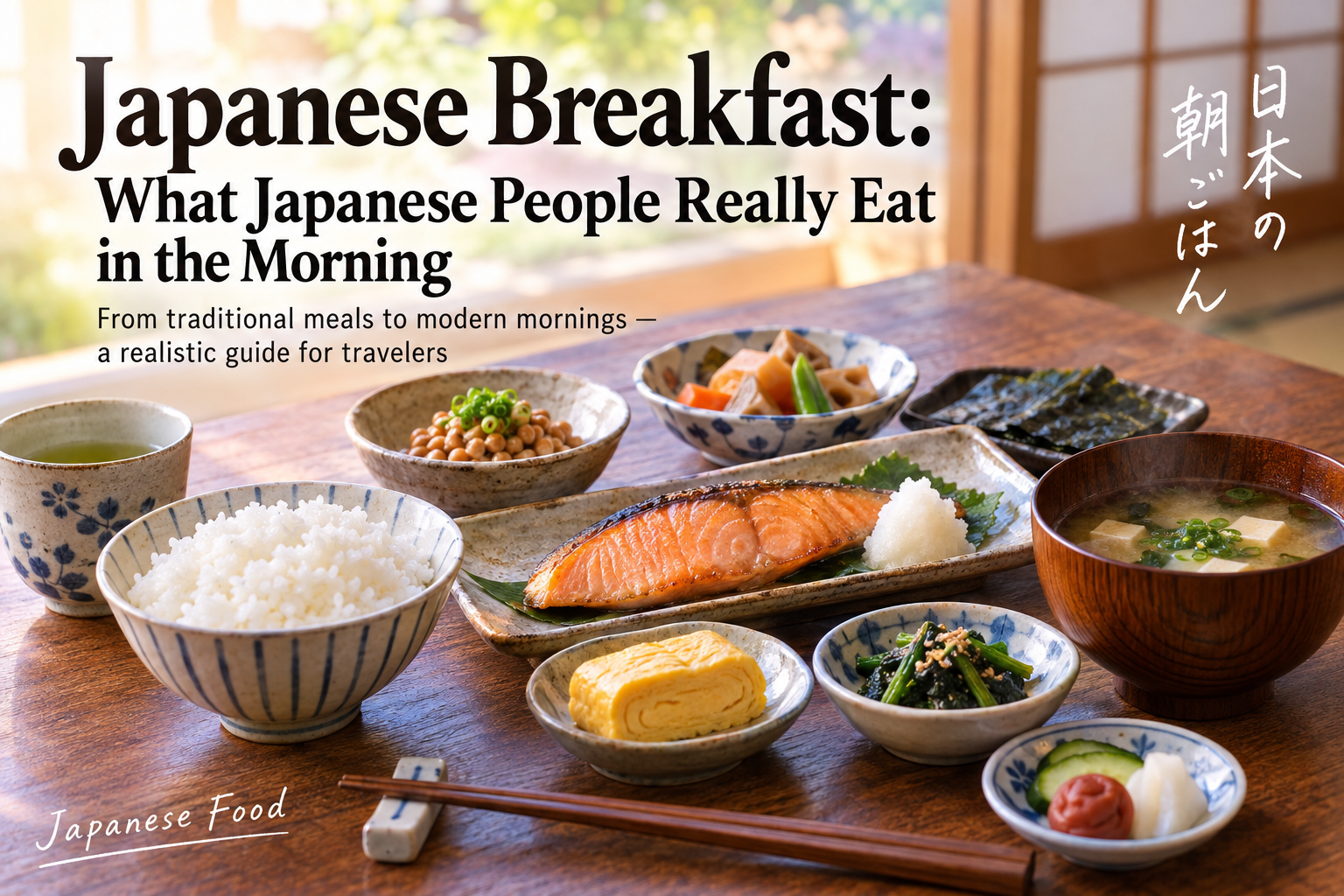
When travelers imagine a Japanese breakfast, they often picture a beautifully arranged tray filled with steamed rice, miso soup, grilled salmon, pickles, tamagoyaki, and several small side dishes.
That image is certainly real.
But it is not necessarily what every Japanese person eats every morning.
A traditional Japanese breakfast can still be found in homes, hotels, ryokan inns, and restaurants across Japan. At the same time, modern life has changed breakfast habits considerably. Many people eat something much simpler before work or school: toast and coffee, a rice ball, yogurt, cereal, or even something quickly purchased from a convenience store.
So what do Japanese people really eat in the morning?
The answer is surprisingly diverse.
What Is a Traditional Japanese Breakfast?
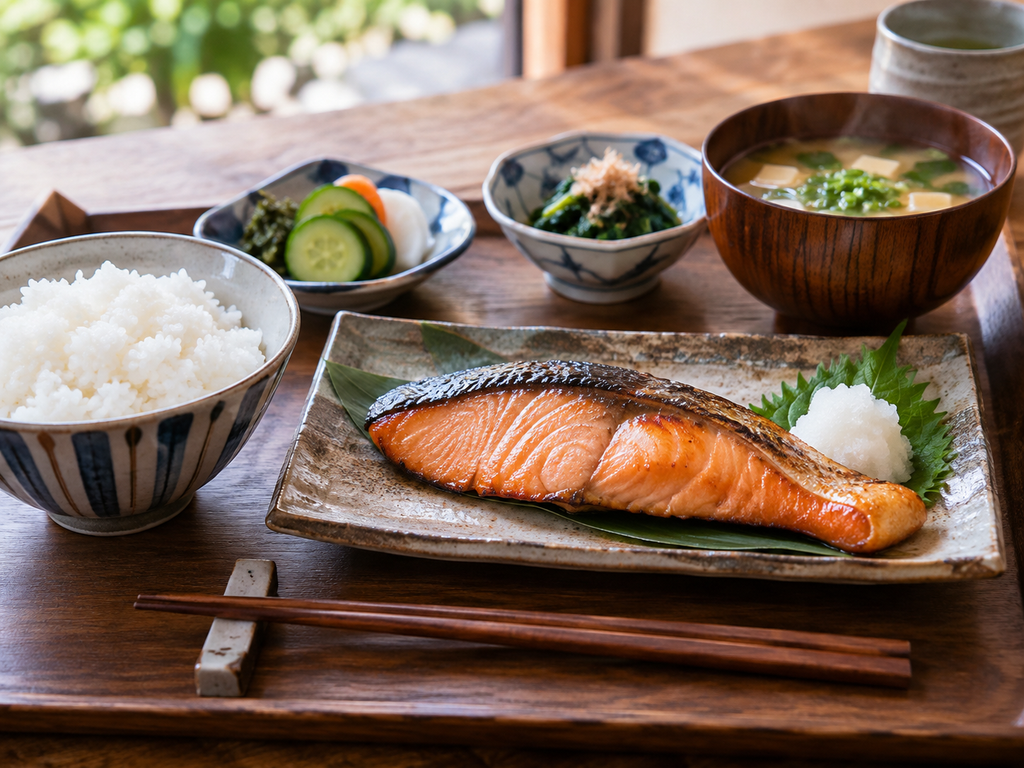
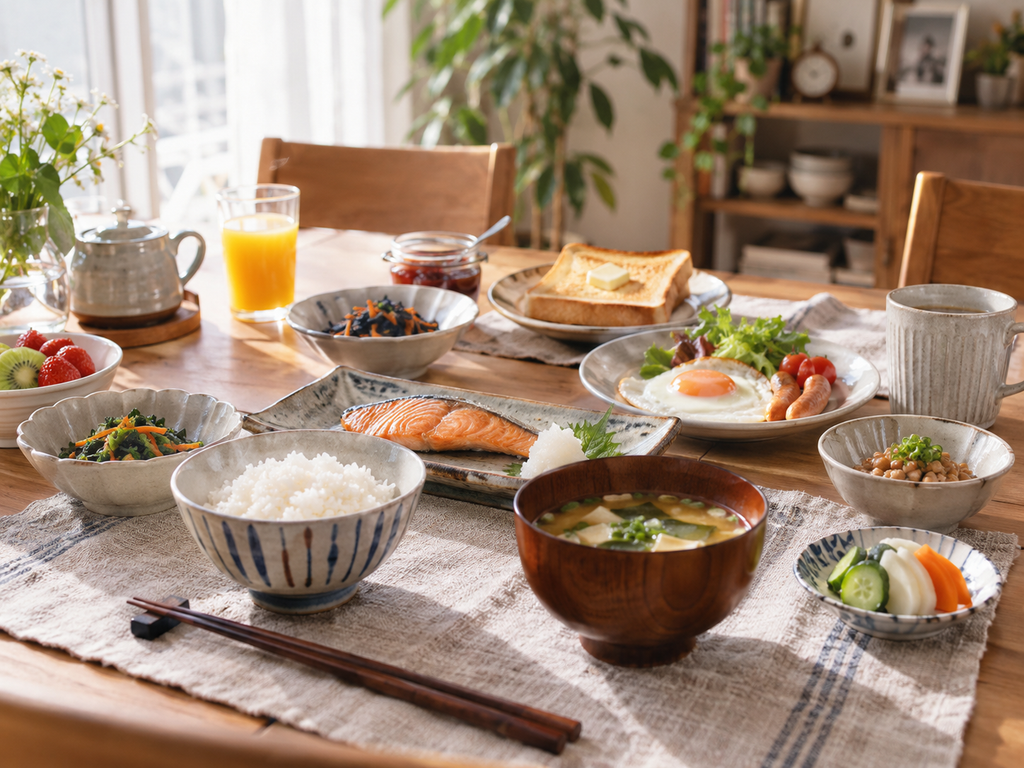
A classic Japanese breakfast follows the same general idea as a traditional Japanese meal: rice accompanied by soup and several small dishes.
A typical set might include:
- Steamed white rice
- Miso soup
- Grilled fish
- Japanese pickles
- Natto
- Tamagoyaki or another egg dish
- Nori seaweed
- Tofu or vegetables
Rather than having one large main dish, the meal is usually divided into several smaller components.
This is one of the first differences many international visitors notice.
Breakfast in many Western countries may focus on bread, cereal, eggs, or one main plate. A traditional Japanese breakfast instead combines several flavors and textures around a bowl of rice.
Sweet foods also tend to play a smaller role.
For visitors accustomed to pancakes, pastries, or sweet breakfast cereal, eating grilled fish and miso soup shortly after waking up can initially feel unusual.
In Japan, however, savory food in the morning has a long history.
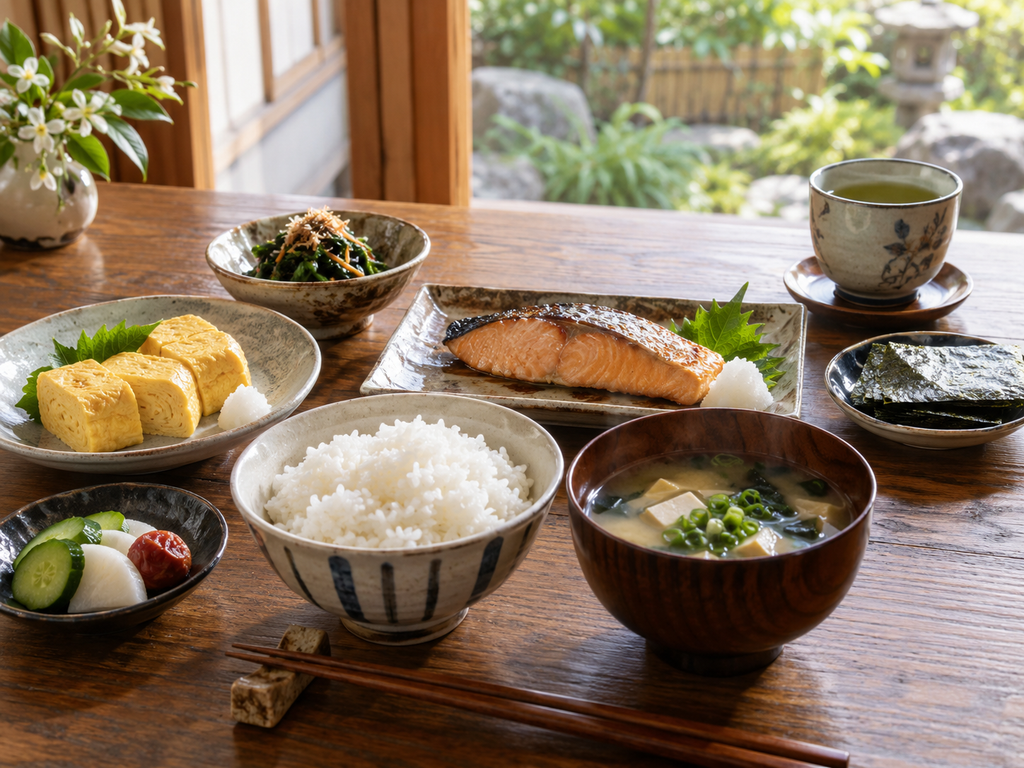
Rice: The Traditional Center of the Meal
Rice has historically been one of the foundations of Japanese meals, and breakfast is no exception.
A bowl of freshly cooked white rice can be eaten with many different toppings or side dishes.
Some people simply add nori or Japanese pickles.
Others eat rice with:
- Natto
- Raw or soft-cooked egg
- Grilled salmon
- Mentaiko
- Furikake seasoning
- Tsukemono pickles
One particularly simple breakfast is tamago kake gohan, usually abbreviated in Japan as TKG.
It consists of hot rice mixed with raw egg and soy sauce.
To someone unfamiliar with Japanese food, raw egg for breakfast may sound surprising. Eggs sold for raw consumption in Japan are handled with that style of eating in mind, and tamago kake gohan remains a familiar home meal.
Another advantage is speed.
It takes only a few minutes to prepare, making it suitable for busy mornings.
Miso Soup in the Morning
Miso soup is another familiar part of Japanese breakfast.
The ingredients vary enormously depending on the household and region.
Common additions include:
- Tofu
- Wakame seaweed
- Green onion
- Daikon radish
- Mushrooms
- Aburaage fried tofu
- Cabbage
- Potatoes
For many Japanese people, miso soup is not something reserved for restaurants.
It is everyday home cooking.
Families may make a pot containing vegetables already available in the refrigerator, meaning the recipe can change from day to day.
Instant miso soup is also widely available and makes the dish much easier to prepare on busy mornings.
Japanese Perspective
One important thing to understand about Japanese home cooking is that everyday meals are often much less elaborate than restaurant presentations suggest.
A breakfast shown in a luxury ryokan might contain seven or eight carefully prepared dishes.
At home, the same basic idea could simply become:
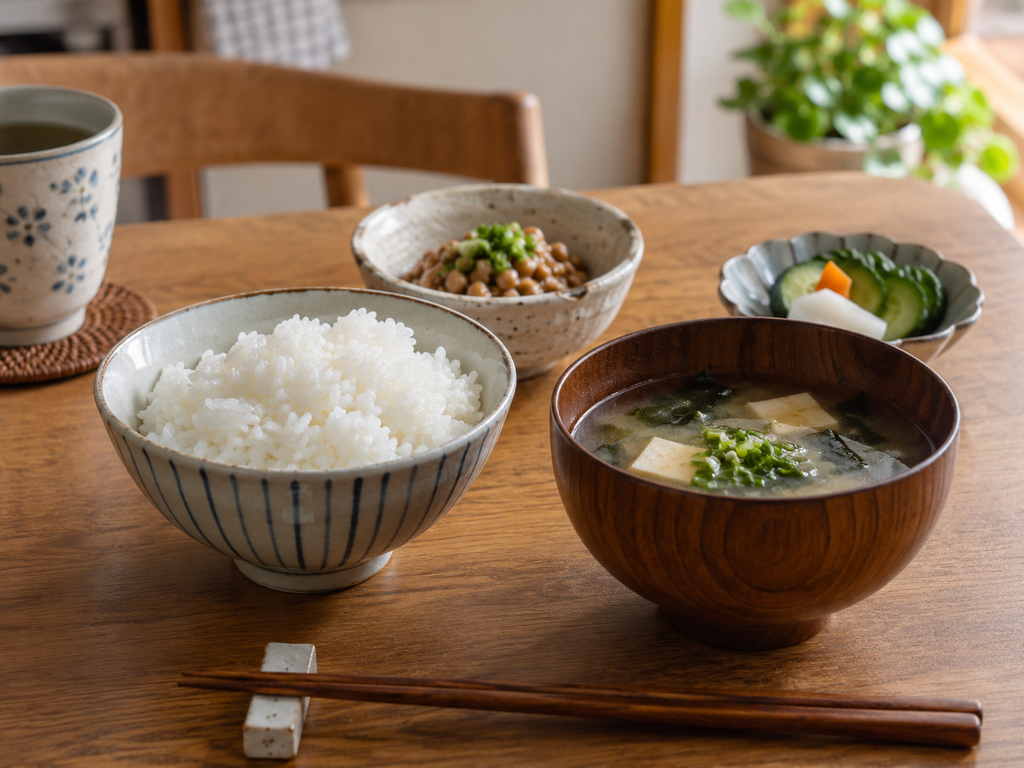
rice + miso soup + natto
The cultural structure remains recognizable even when the meal becomes extremely simple.
Natto: A Breakfast Food Visitors Never Forget
Few Japanese breakfast foods create stronger reactions among international visitors than natto.
Natto consists of fermented soybeans.
The beans develop a sticky texture and a distinctive aroma during fermentation. They are usually mixed with a small amount of soy-based sauce and mustard before being placed over rice.
Many Japanese people grow up eating natto and consider it completely ordinary.
For first-time visitors, however, the texture can be unexpected.
You will sometimes find natto at Japanese hotel breakfast buffets, making breakfast an easy opportunity to try it.
A useful approach is to mix it thoroughly before adding it to rice.
Whether you love it or dislike it, trying natto is certainly one of the more memorable Japanese breakfast experiences.
Grilled Fish for Breakfast
Another food that surprises some visitors is grilled fish.
Salmon and saba, or mackerel, are common examples.
Fish may seem more like lunch or dinner in some countries, but in traditional Japanese cuisine there is no strong rule saying that breakfast must contain special “breakfast foods.”
Rice, soup, vegetables, fish, and pickles can appear at different times of day.
Grilled fish also works particularly well with white rice.
A small portion is often enough because the salty flavor complements the relatively mild rice.
You are especially likely to encounter this style of breakfast when staying at a traditional Japanese inn.
Tamagoyaki: Japanese Rolled Omelet
Eggs are also common at breakfast.
One of the most recognizable Japanese egg dishes is tamagoyaki, a rolled omelet made by cooking thin layers of egg and folding them repeatedly.
Depending on the region and household, tamagoyaki can taste slightly sweet or more savory.
Making a beautifully shaped tamagoyaki requires some practice, so busy households may choose simpler egg dishes such as:
- Fried eggs
- Boiled eggs
- Scrambled eggs
- Tamago kake gohan
Tamagoyaki is also common in bento lunch boxes, which illustrates another feature of Japanese cuisine: foods are not always strictly divided into breakfast, lunch, and dinner categories.
Do Japanese People Really Eat This Every Morning?
Not necessarily.
This is one of the biggest misconceptions visitors can have about Japanese breakfast.
A traditional breakfast containing rice, soup, fish, vegetables, pickles, and multiple side dishes requires preparation.
Modern Japanese mornings can be just as rushed as mornings anywhere else.
Commuters have trains to catch. Children need to leave for school. Parents need to prepare for work.
As a result, many breakfasts are much simpler.
A realistic weekday breakfast might be:
- Rice and natto
- Rice and a fried egg
- Toast and coffee
- Toast and yogurt
- Yogurt and fruit
- An onigiri
- A banana and coffee
- Food purchased at a convenience store
Some people skip breakfast altogether.
The beautiful traditional breakfast still represents an important part of Japanese food culture, but it should not be mistaken for a meal every Japanese person prepares every morning.
A Personal Note from Yotsuha
My own weekday breakfast is usually simple: bread and coffee. When I am short on time, I sometimes have only a jelly drink or a similar quick energy snack. This is very different from the traditional breakfast served at a ryokan, but it reflects the reality of my everyday mornings in Japan. Of course, breakfast habits vary from person to person and from household to household.
Toast Has Become a Normal Japanese Breakfast
Bread is also firmly established in modern Japanese breakfast culture.
One of the simplest breakfasts is thick Japanese toast with butter or jam.
Japanese shokupan, or milk-style sandwich bread, is particularly popular.
It is usually extremely soft with a light, fluffy interior.
A typical home breakfast might consist of:
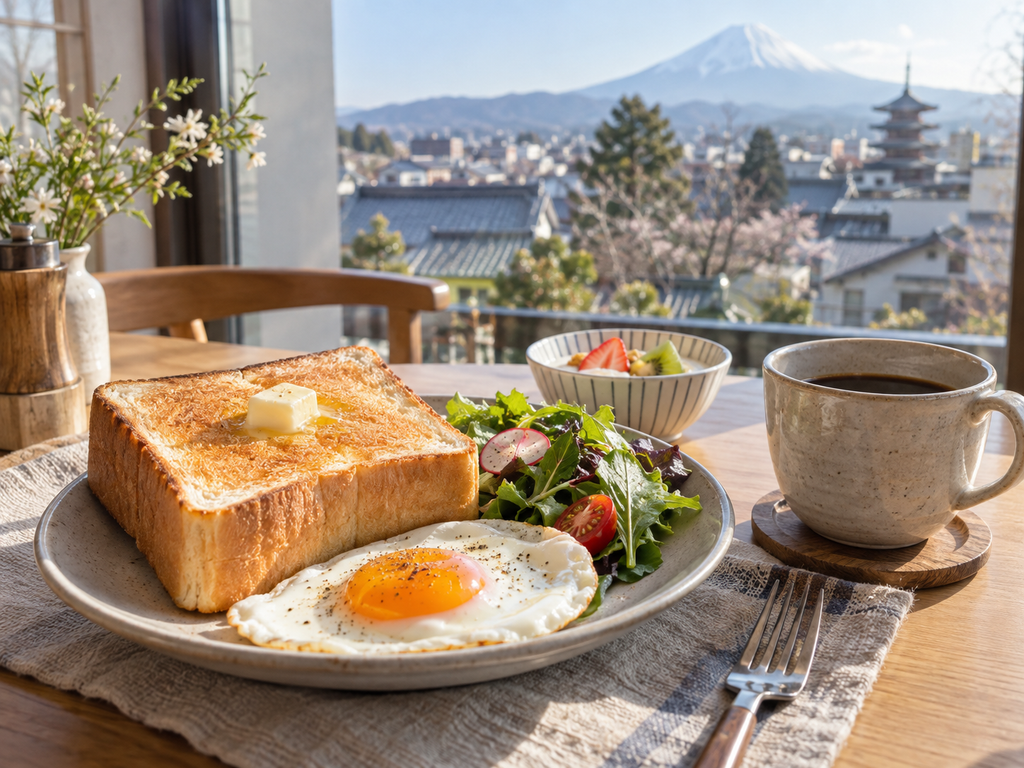
toast + fried egg + salad + coffee
This would not look especially unusual in many other countries.
Some people alternate between Japanese-style and Western-style breakfasts depending on the day.
Rice one morning and toast the next is completely normal.
The Japanese Café Morning Set
Visitors who do not want to prepare breakfast themselves should look for a Japanese café offering a morning service, often simply called “morning.”
These sets commonly include coffee together with toast and sometimes:
- Boiled egg
- Salad
- Yogurt
- Jam
- Small side dishes
Morning sets can be inexpensive and convenient.
They are particularly associated with café culture in some parts of Japan, with Nagoya especially famous for generous morning services.
For travelers, cafés provide an interesting contrast with ryokan breakfasts.
One represents formal traditional cuisine.
The other shows another side of everyday Japanese morning life.
Convenience Stores: The Realistic Traveler’s Breakfast
Japanese convenience stores—konbini—are another practical option.
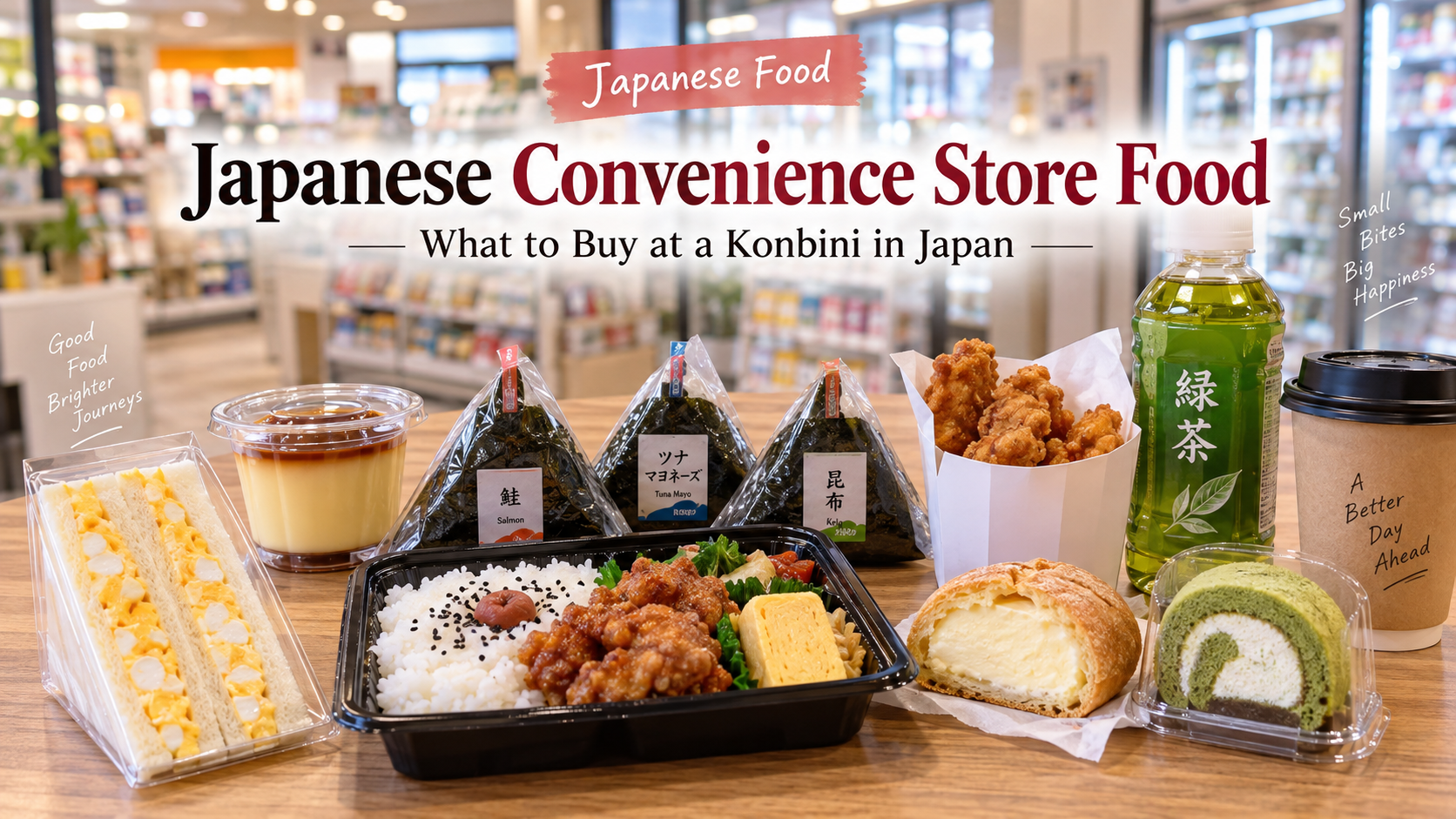
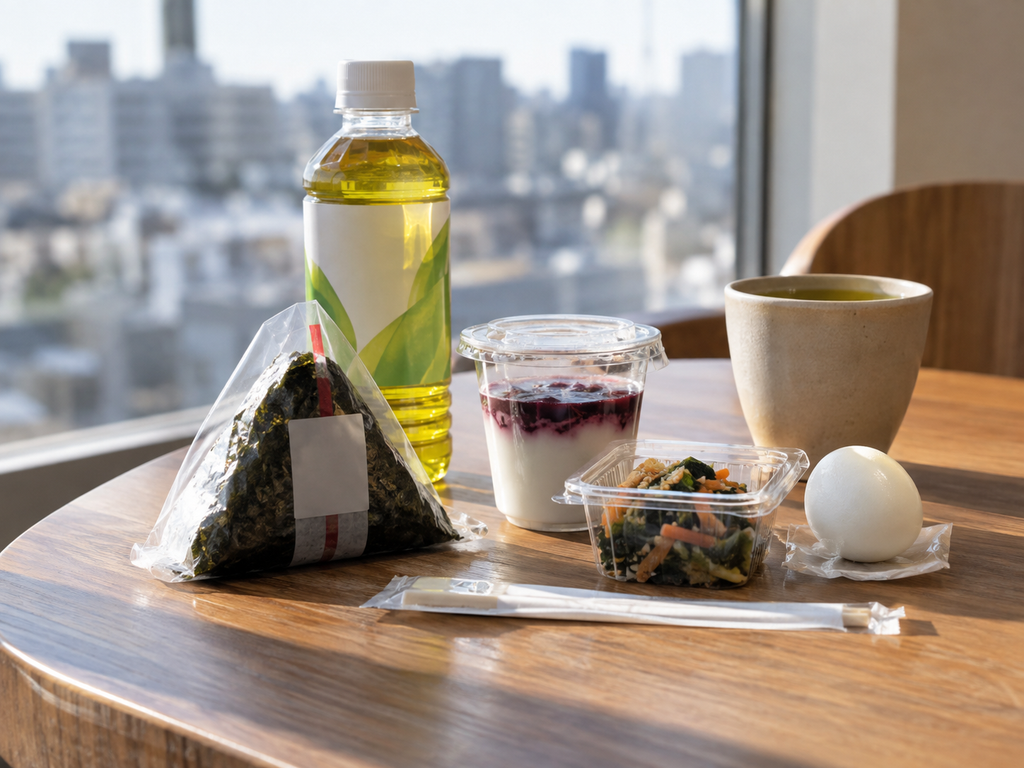
You can easily build a breakfast from items such as:
- Onigiri
- Sandwiches
- Boiled eggs
- Yogurt
- Fruit
- Salads
- Bread
- Coffee
- Tea
This is particularly useful if you need to catch an early train or start sightseeing before restaurants open.
Onigiri are especially convenient.
These triangular or round rice balls are usually wrapped in nori and filled with ingredients such as salmon, tuna mayonnaise, umeboshi, or kombu.
They are inexpensive, portable, and easy to eat.
A surprisingly realistic Japanese-style quick breakfast for a traveler might therefore be nothing more complicated than an onigiri and green tea.
Ryokan Breakfast: The Experience Travelers Should Try Once
If everyday Japanese breakfast can be simple, a ryokan breakfast sits at the opposite end of the spectrum.
Traditional inns often serve carefully arranged meals containing multiple dishes.
Depending on the region and accommodation, breakfast might include:
- Rice
- Miso soup
- Grilled local fish
- Tofu
- Egg dishes
- Pickles
- Seaweed
- Seasonal vegetables
- Regional specialties
Presentation is part of the experience.
Small plates and bowls create a meal that feels visually complex even though individual portions may be modest.
In an onsen town, breakfast after a morning bath can become one of the most memorable parts of the stay.
For first-time visitors to Japan, spending at least one night in a ryokan and trying the full Japanese breakfast is worth considering.
It allows you to experience a style of morning meal that is difficult to reproduce through convenience stores or ordinary hotels.
Japanese Breakfast at Hotels
Many Japanese hotels serve breakfast buffets containing both Japanese and Western food.
This is ideal for visitors who want to experiment.
You might take:
- Rice
- Miso soup
- Grilled fish
- Natto
and then add:
- Toast
- Sausage
- Eggs
- Yogurt
- Coffee
There is usually no requirement to choose one style exclusively.
Mixing Japanese and Western breakfast foods is completely normal at a buffet.
For travelers nervous about eating an entirely unfamiliar breakfast, this can be one of the easiest ways to try Japanese morning food gradually.
Japanese Perspective: Breakfast Shows How Japan Has Changed
Japanese breakfast is interesting because it reflects both tradition and modern life.
Rice, miso soup, fish, pickles, and natto represent food traditions that remain familiar across generations.
Toast, coffee, yogurt, convenience-store food, and quick breakfasts reflect modern lifestyles.
Neither side is somehow “more authentic.”
They are both part of contemporary Japan.
This is an important point for travelers.
Japanese culture is sometimes presented overseas as if every meal follows centuries-old traditions.
Real Japanese life is much more flexible.
A person may eat toast before work Monday through Friday and enjoy rice, miso soup, and grilled fish with their family on Sunday.
Someone who normally eats a quick breakfast at home may enjoy an elaborate traditional breakfast while staying at a ryokan.
Tradition and convenience exist side by side.
Understanding that contrast gives visitors a more realistic picture of everyday Japan.
Where Can Travelers Try a Japanese Breakfast?
There are several good options.
Ryokan
The best place for the complete traditional experience.
Japanese Hotels
Breakfast buffets often let you sample many different dishes at once.
Cafés
Look for morning sets offering toast, eggs, salad, and coffee.
Convenience Stores
Ideal when you need an inexpensive or early breakfast.
Gyudon and Japanese Fast-Food Restaurants
Some restaurant chains offer inexpensive breakfast sets featuring rice, miso soup, eggs, fish, or natto.
These can actually provide a very realistic everyday Japanese breakfast experience.
What Should First-Time Visitors Try?
If you have never eaten a Japanese breakfast before, a good starter combination is:
Rice + miso soup + grilled salmon + tamagoyaki
The flavors are relatively approachable while still representing a classic Japanese-style breakfast.
Then consider trying natto.
After that, compare the traditional meal with a completely different morning experience such as toast at a café or an onigiri from a convenience store.
Seeing both sides is more interesting than trying only one.
Breakfast Etiquette in Japan
Japanese breakfast does not require many special rules, but a few habits are useful to know.
Rice bowls are normally lifted toward the mouth rather than left on the table while leaning down to eat.
Miso soup is traditionally drunk directly from the bowl, while chopsticks are used for solid ingredients.
And as with other Japanese meals, you may hear people say:
Itadakimasu
before eating.
The expression shows appreciation for the meal and the people and ingredients involved in bringing it to the table.
Visitors are not required to say it, but understanding the phrase is another small window into Japanese food culture.
FAQ About Japanese Breakfast
What do Japanese people normally eat for breakfast?
There is no single answer. Traditional breakfasts may include rice, miso soup, fish, natto, eggs, and pickles, while modern breakfasts may consist of toast, yogurt, fruit, onigiri, or convenience-store food.
Do Japanese people eat rice every morning?
Some do, but certainly not everyone. Bread is also a normal breakfast choice in modern Japan.
Is fish really eaten for breakfast in Japan?
Yes. Grilled salmon and mackerel can be part of traditional Japanese breakfasts, especially at hotels, ryokan, and households that prefer Japanese-style meals.
Do Japanese people really eat natto for breakfast?
Yes. Natto over rice is a familiar breakfast for many people, although preferences vary considerably.
Where should tourists try a traditional Japanese breakfast?
A ryokan is one of the best places to experience a complete traditional breakfast. Japanese hotel buffets are another convenient option.
What is an easy Japanese breakfast for travelers?
Onigiri with tea, or a café morning set with toast and coffee, are easy choices when you are sightseeing.
Final Thoughts
A Japanese breakfast is much more than one fixed meal.
The classic combination of rice, miso soup, grilled fish, pickles, natto, and eggs remains an important part of Japanese food culture.
But everyday mornings also include toast, coffee, yogurt, convenience-store onigiri, and many other quick meals.
That contrast is exactly what makes breakfast in Japan interesting.
Try an elaborate ryokan breakfast at least once.
But also visit a neighborhood café or pick up an onigiri before catching an early train.
The first shows you a beautiful culinary tradition.
The second shows you how people actually live.
Together, they provide a much more complete taste of modern Japan.