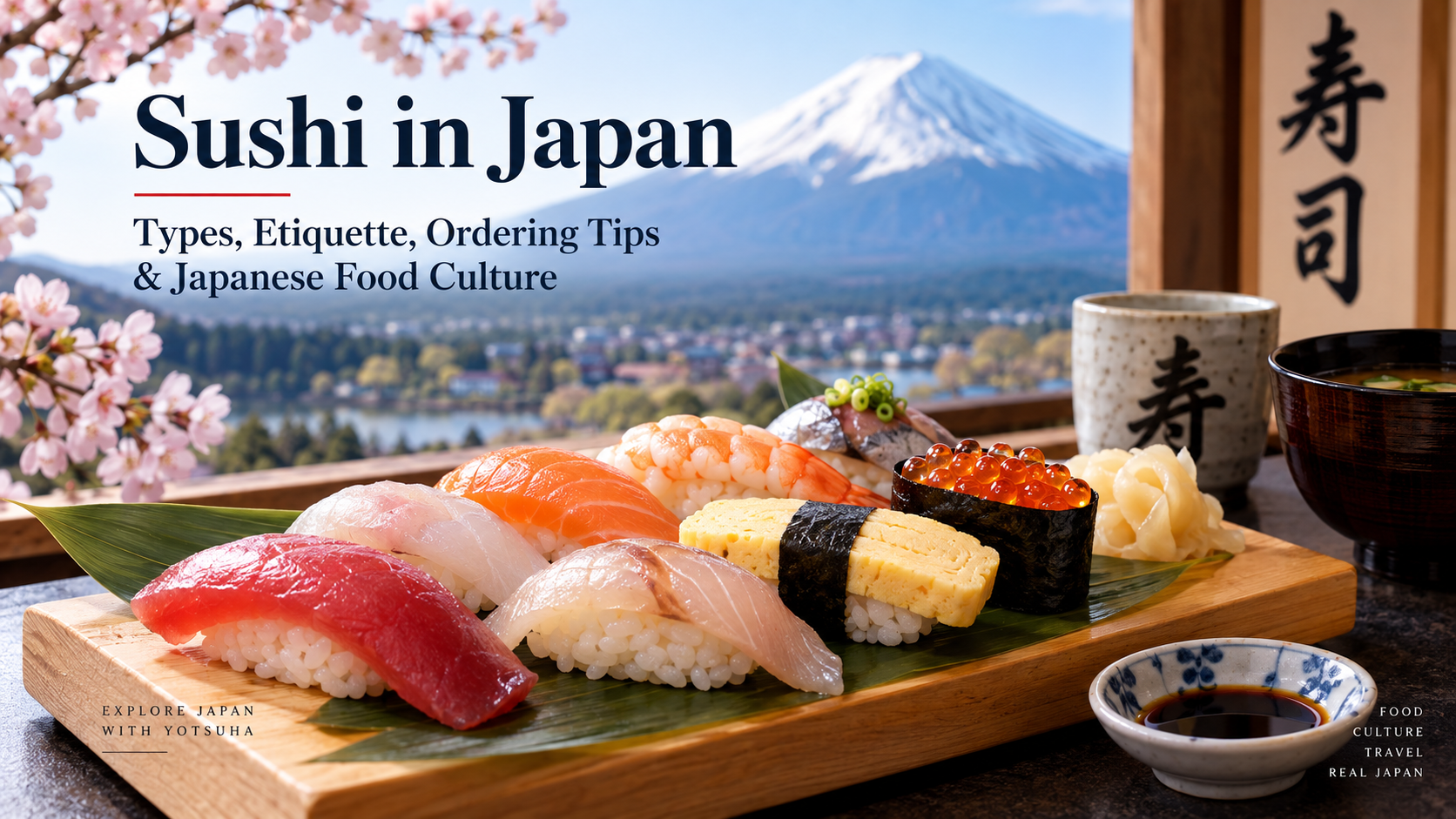
Sushi is one of Japan’s most famous foods, but eating sushi in Japan is not always the same as eating it abroad.
Many travelers arrive expecting sushi to mean only a few familiar pieces of raw fish over rice. In Japan, however, sushi is much broader. It includes elegant counter sushi, affordable conveyor-belt sushi, regional styles, takeaway sushi from department stores, and even simple everyday meals that local people enjoy without ceremony.
This is one reason sushi can be both exciting and confusing for first-time visitors.
What should you order? Is it acceptable to use your hands? Do you mix wasabi into soy sauce? Is conveyor-belt sushi a tourist experience or something Japanese people actually use?
This guide explains what sushi is, the main types to know, how to order, basic etiquette, and how sushi fits into everyday life in Japan.
What Is Sushi?
Sushi is not simply “raw fish.”
At its core, sushi is a dish built around vinegared rice, usually combined with seafood, vegetables, egg, tofu, or other ingredients.
That point matters because many visitors confuse sushi with sashimi.
- Sushi includes vinegared rice.
- Sashimi is sliced raw fish or seafood served without rice.
So while raw tuna over rice is sushi, sliced tuna on its own is sashimi.
This difference helps explain the wide variety of sushi in Japan. Some sushi contains raw fish, but some does not. You can find sushi topped with grilled eel, cooked shrimp, tamagoyaki, or even marinated vegetables.
Why Sushi Feels Different in Japan
Sushi in Japan often feels different because people pay attention to details that may be less obvious at first.
The rice temperature, the balance of vinegar and sweetness, the size of each piece, the freshness of the fish, and even the order in which pieces are served can all matter.
At high-end sushi counters, chefs may prepare each piece individually so it is eaten at the best moment.
At the same time, sushi in Japan is not always luxurious.
Many Japanese people experience sushi through practical, casual settings:
- conveyor-belt sushi chains
- supermarket sushi
- department store food halls
- local takeaway sets
- neighborhood sushi shops
That range is important.
Sushi is part of Japanese food culture not only because of famous omakase restaurants, but also because it appears in ordinary daily life.
Main Types of Sushi in Japan
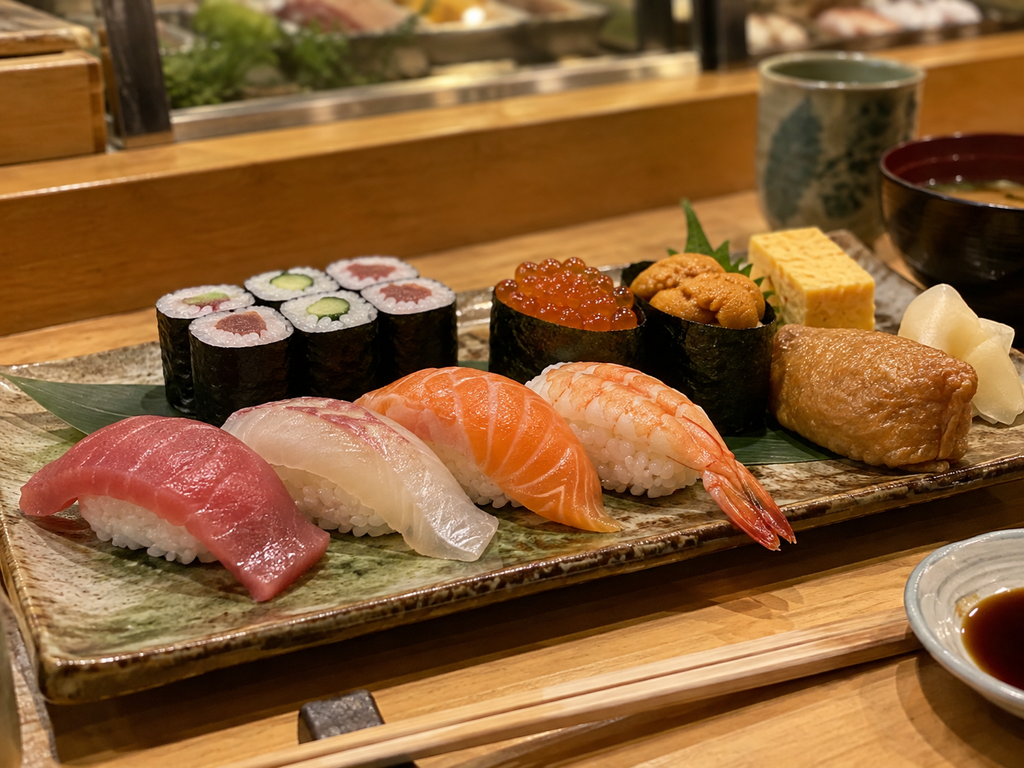
Understanding a few key styles makes restaurant menus much easier.
Nigiri Sushi
Nigiri is the style many travelers imagine first.
A small hand-formed piece of vinegared rice is topped with fish, seafood, egg, or another ingredient.
Common examples include:
- tuna
- salmon
- shrimp
- squid
- eel
- tamagoyaki
Nigiri is simple in appearance, but balance matters. Good nigiri should feel easy to pick up, hold together properly, and deliver both rice and topping in one bite.
Maki Sushi
Maki is rolled sushi.
Rice and fillings are wrapped in seaweed and cut into pieces.
Well-known fillings include cucumber, tuna, and pickled vegetables. You may also find thicker rolls with multiple ingredients.
For travelers who are unsure about raw seafood, maki can be one of the easiest places to start.
Temaki
Temaki is hand-rolled sushi shaped like a cone.
It is wrapped in seaweed and filled with rice plus ingredients such as tuna, salmon roe, vegetables, or chopped seafood.
Temaki is less formal than nigiri and often feels more casual and fun.
Chirashi Sushi
Chirashi means “scattered sushi.”
Instead of separate pieces, ingredients are arranged over a bowl or box of sushi rice.
This style is practical, colorful, and often generous, making it a good option for visitors who want variety in one meal.
Inari Sushi
Inari sushi consists of vinegared rice packed inside sweetened fried tofu pouches.
It does not contain raw fish and is one of the easier types of sushi for travelers who prefer mild flavors.
Oshizushi
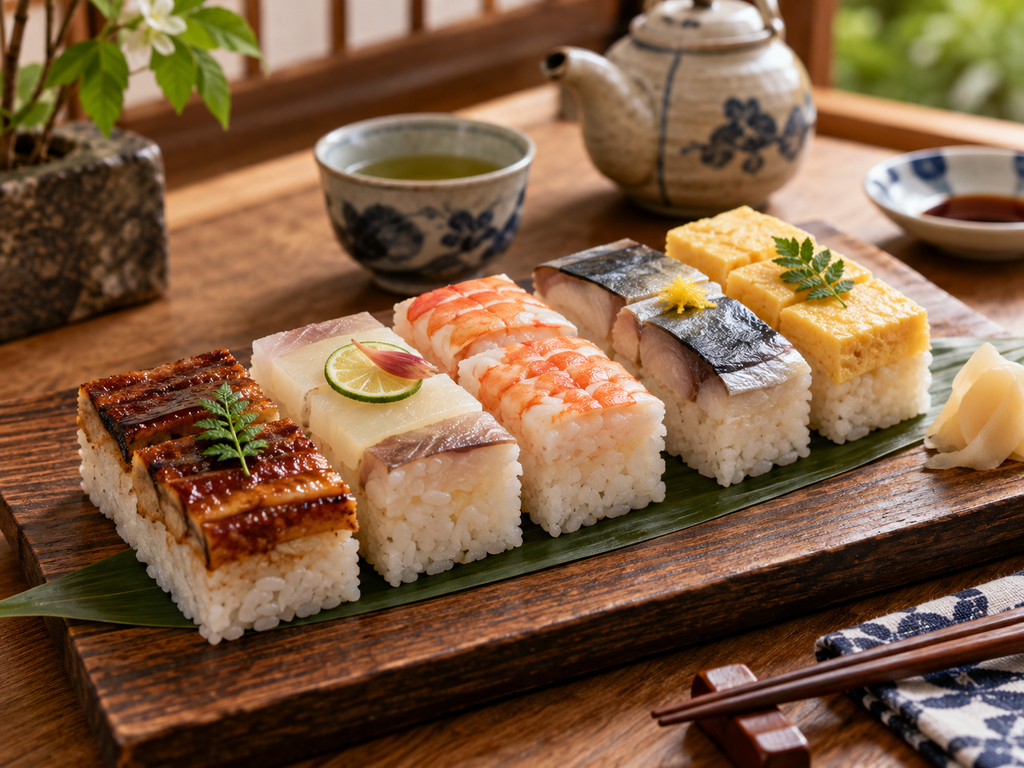
Oshizushi, or pressed sushi, is made by pressing rice and toppings into a mold and cutting the result into neat pieces.
It is especially associated with regional traditions, including Osaka and parts of western Japan.
This style is a good reminder that sushi in Japan is not limited to Tokyo-style nigiri.
Sushi Is Not Only Raw Fish
Many first-time visitors worry that sushi may be too adventurous.
In reality, Japan offers many kinds of sushi that do not require eating unfamiliar raw fish.
Cooked or approachable choices include:
- tamagoyaki sushi
- cooked shrimp
- anago (saltwater eel)
- unagi (grilled freshwater eel)
- inari sushi
- cucumber rolls
- crab salad rolls
- some seared fish options
If you are new to sushi, there is no need to begin with the most challenging ingredients.
Starting with cooked or milder items is completely normal.
Conveyor-Belt Sushi: An Easy Starting Point
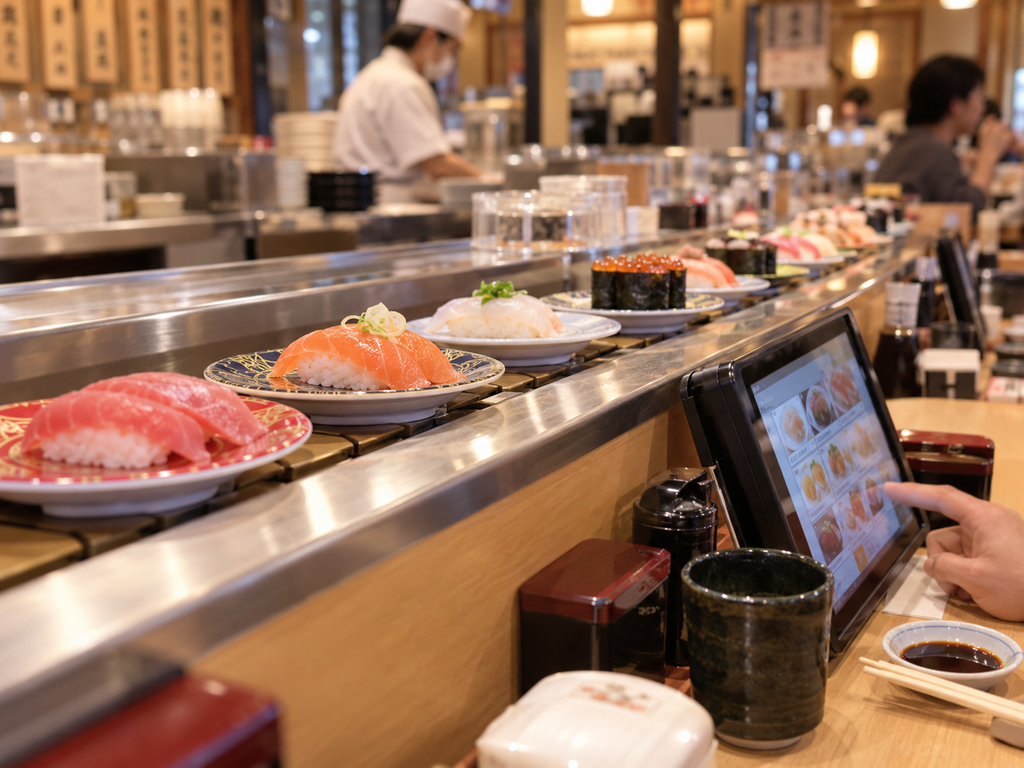
One of the best introductions to sushi in Japan is kaiten-zushi, or conveyor-belt sushi.
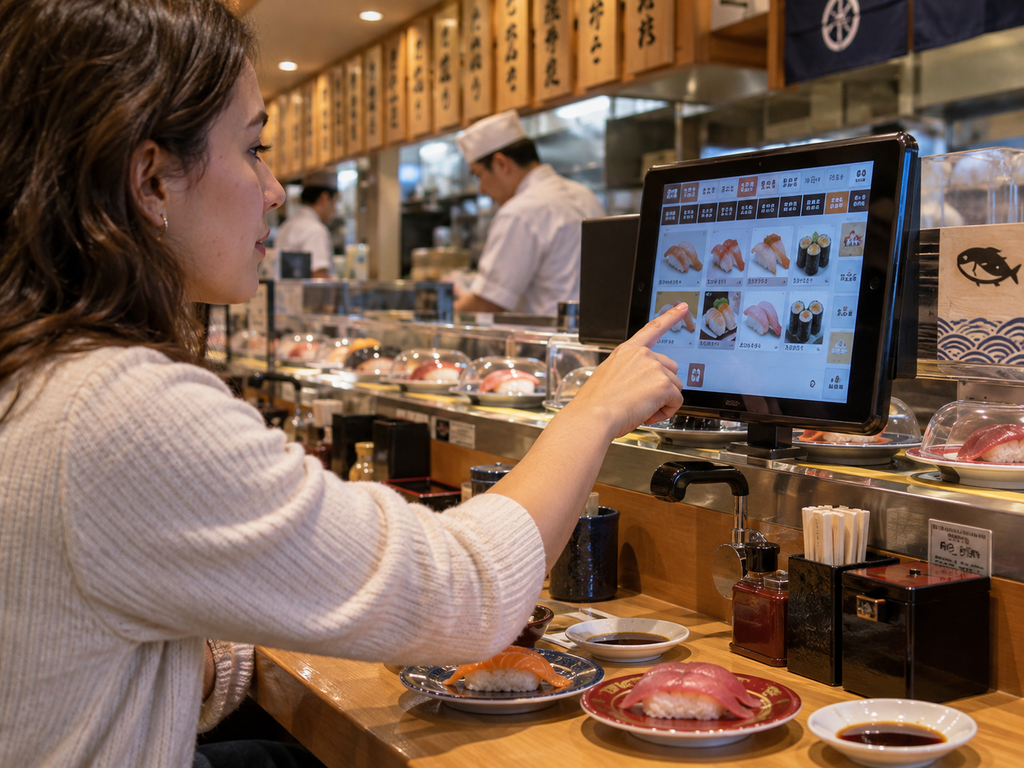
At these restaurants, plates of sushi move around the room on a belt, or you place orders through a screen and receive them directly.
For travelers, conveyor-belt sushi can be ideal because:
- prices are usually clear
- menus often include pictures
- ordering is less intimidating
- you can try many kinds in small amounts
- solo diners fit in easily
Some visitors assume conveyor-belt sushi is only for tourists or children, but many Japanese people use it as an affordable, convenient option.
It is not the same as a high-end sushi counter, but it is a genuine part of modern Japanese food culture.
Counter Sushi and Omakase
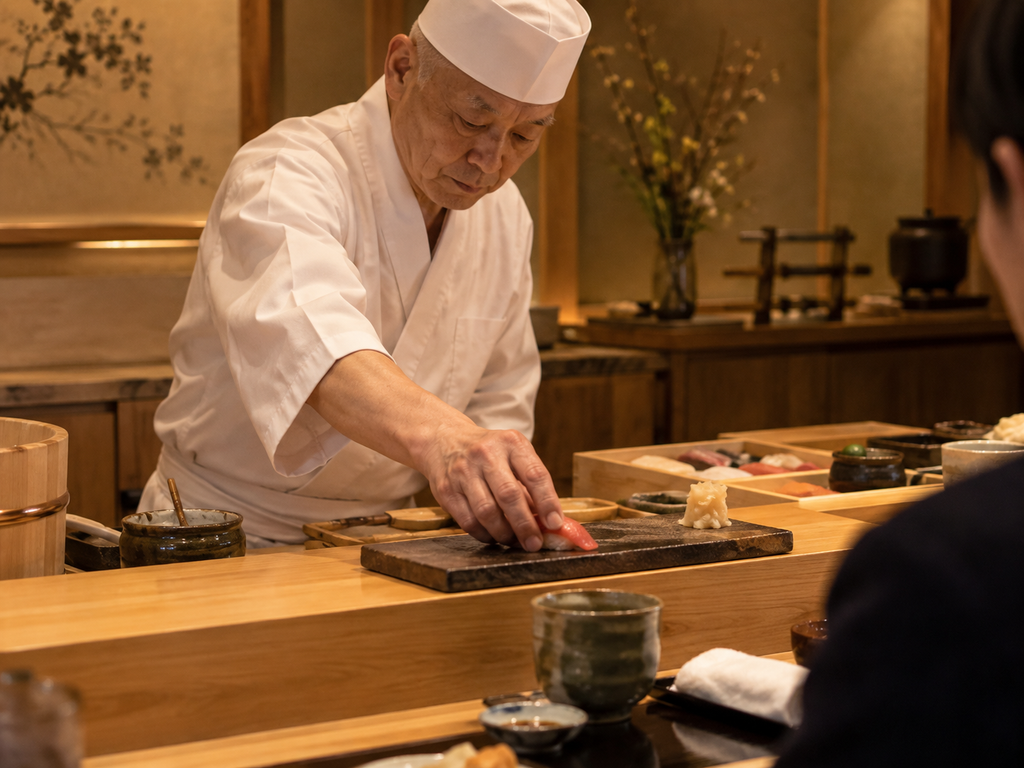
At the other end of the spectrum is counter sushi.
Here, the chef may prepare each piece individually and serve it directly to you. Some restaurants let you order freely, while others encourage omakase, meaning you leave the selection to the chef.
Omakase does not always mean extremely formal, but it usually reflects trust in the chef’s judgment and the day’s best ingredients.
For travelers, a counter sushi experience can be memorable, but it also helps to understand that not every sushi meal in Japan needs to be expensive or ceremonial.
Both high-end sushi and casual sushi belong to the same food culture.
Common Sushi Toppings and Ingredients
You may encounter the following often:
- Maguro — tuna
- Sake — salmon
- Ebi — shrimp
- Ika — squid
- Tako — octopus
- Tamago — sweet egg omelet
- Hamachi / buri — yellowtail
- Unagi — grilled freshwater eel
- Anago — saltwater eel
- Ikura — salmon roe
- Uni — sea urchin
- Hotate — scallop
If you do not know what to order, choosing a mixed sushi set is a simple option.
Regional Sushi in Japan
Sushi is often introduced as a single national food, but regional variety matters.
Tokyo is strongly associated with Edomae sushi, a style that historically developed using techniques such as marinating, curing, or simmering seafood.
Osaka has traditions connected to oshizushi, or pressed sushi.
In Hokkaido, local seafood and freshness are major attractions, which can make sushi a highlight of the trip.
In some regions, local fish and preparation styles matter more than globally famous items like tuna or salmon.
This is one reason sushi can become part of travel itself.
A sushi meal in Tokyo may feel very different from a seafood-focused meal in Hokkaido or a regional style encountered in western Japan.
If you are planning a food-focused trip, you may also enjoy our Hokkaido Travel Guide for First-Time Visitors and our Tokyo Travel Guide: Neighborhoods, Food and Japanese Culture.
Japanese Perspective: Sushi Is Special, But Not Always Formal
Outside Japan, sushi is sometimes treated as the ultimate symbol of Japanese cuisine.
In Japan, the picture is more balanced.
Sushi can absolutely be a special meal for celebrations, family gatherings, or a trip to a respected restaurant.
But sushi can also be surprisingly ordinary.
People buy sushi at supermarkets, eat conveyor-belt sushi with friends, bring takeaway sushi home, or choose a sushi lunch set during a busy day.
That everyday side is important because it shows how Japanese food culture often combines quality with practicality.
In other words, sushi in Japan is not only about luxury.
It is also about seasonality, convenience, variety, and the enjoyment of ingredients in many different settings.
How to Order Sushi in Japan
Ordering sushi does not need to be stressful.
1. Decide What Kind of Restaurant You Are In
The experience changes depending on the place.
- Conveyor-belt sushi: casual, easy, often touch-screen ordering
- Standard sushi restaurant: order from a menu or ask staff
- Counter sushi: chef may serve directly or guide your choices
Once you understand the type of restaurant, the meal becomes much easier to navigate.
2. Start with a Set If You Are Unsure
If the menu feels overwhelming, ordering a mixed set is often the best option.
This lets you try several pieces without having to choose everything individually.
3. Use Pictures or Simple Japanese Words
Many restaurants display photos, models, or bilingual menus.
A few useful words include:
- osusume — recommendation
- omakase — chef’s choice
- nigiri — hand-pressed sushi
- maki — rolled sushi
You do not need advanced Japanese to enjoy sushi.
4. Do Not Overorder at First
Because sushi is served in small portions, it can be tempting to order too much immediately.
It is usually better to begin with a set or a few pieces and then add more.
Sushi Etiquette for Travelers
Sushi etiquette is often exaggerated online.
You do not need to behave perfectly to enjoy a meal in Japan.
A few simple points are enough.
Is It Okay to Eat Sushi with Your Hands?
Yes.
Nigiri sushi can be eaten with either hands or chopsticks.
Using your hands for nigiri is acceptable, especially in more traditional settings.
Should You Dip the Rice in Soy Sauce?
No.
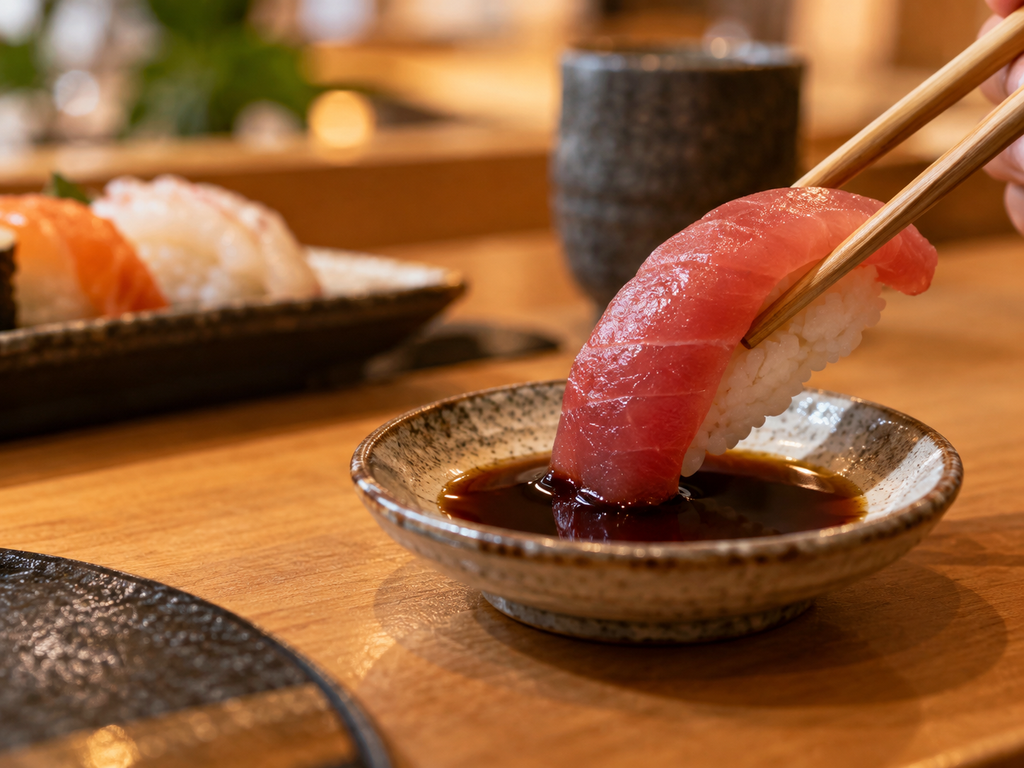
If possible, dip the fish side lightly into soy sauce rather than soaking the rice.
Too much soy sauce can overpower the sushi and may cause the rice to fall apart.
Should You Mix Wasabi into Soy Sauce?
In casual places, no one will panic if you do.
But in many sushi settings, especially when the chef has already balanced the piece, it is better to avoid turning soy sauce into a wasabi mixture.
If extra wasabi is needed, add a little directly to the sushi.
Do You Eat Sushi in One Bite?
Ideally, many pieces of nigiri are meant to be eaten in one bite.
That is not always possible for every person, but it helps preserve the balance of rice and topping.
Is Slurping Relevant?
Unlike ramen, slurping is not really part of sushi etiquette.
The main goal is simply to eat neatly and avoid overhandling delicate pieces.
What to Drink with Sushi
Green tea is a classic choice, especially in casual sushi restaurants.
Other common pairings include:
- water
- miso soup on the side
- beer
- sake
You do not need alcohol to enjoy sushi, and many people simply choose tea.
Sushi for Travelers with Dietary Preferences
Sushi is not automatically vegetarian or vegan.
Even if a piece does not contain meat, seasonings or fillings may still include seafood ingredients.
Vegetarian-friendly choices may include:
- cucumber rolls
- natto rolls
- avocado rolls
- inari sushi
- some vegetable maki
However, it is still wise to confirm ingredients.
Travelers who do not eat raw fish also have many options, including cooked shrimp, egg, eel, or vegetable rolls.
Is Sushi Expensive in Japan?
Not always.
This is one of the most surprising things for many visitors.
In Japan, sushi can range from budget-friendly conveyor-belt meals to premium omakase experiences.
That means sushi is more flexible than many travelers expect.
You can enjoy it according to your budget rather than assuming every sushi meal must be expensive.
How to Choose Your First Sushi in Japan
If it is your first time, keep it simple.
A good beginner approach is:
- start at conveyor-belt sushi or an approachable local restaurant
- order a mixed set
- add one or two items you are curious about
- compare cooked and raw options
- focus on enjoying the rice as well as the topping
The goal is not to prove that you can eat the most unusual ingredient.
The goal is to understand why sushi in Japan feels so balanced and varied.
FAQ
Is sushi in Japan always expensive?
No. Prices range from affordable conveyor-belt sushi to high-end omakase restaurants.
What is the difference between sushi and sashimi?
Sushi includes vinegared rice. Sashimi is sliced raw fish or seafood without rice.
Can I eat sushi with my hands?
Yes. Nigiri sushi can be eaten with either hands or chopsticks.
Is conveyor-belt sushi authentic?
Yes. It is a genuine and widely used part of modern Japanese food culture.
Do I need to know Japanese to order sushi?
No. Many restaurants have pictures, touch screens, or simple menus that make ordering easy.
Is all sushi raw?
No. Many kinds of sushi use cooked ingredients, egg, tofu, or vegetables.
Which city is best for sushi in Japan?
There is no single answer. Tokyo is famous, but Hokkaido, Osaka, and many coastal regions also offer excellent sushi experiences.
Final Thoughts
Sushi in Japan is worth exploring because it is both famous and surprisingly diverse.
It can be casual or refined, quick or leisurely, familiar or unexpected.
For travelers, sushi is not just something to “check off” as a famous Japanese food. It is one of the clearest ways to experience how Japanese people value freshness, balance, seasonality, and presentation.
Instead of asking only where to find the “best sushi,” it may be more useful to ask:
What kind of sushi fits the place, budget, and experience I want in Japan?
That question leads to a much richer experience than simply chasing a famous name.
Related Japan Guides
Planning a broader food journey? Explore our Japanese Food Guide.
If you are visiting the capital, read our Tokyo Travel Guide: Neighborhoods, Food and Japanese Culture.
For seafood and northern food culture, see our Hokkaido Travel Guide for First-Time Visitors.