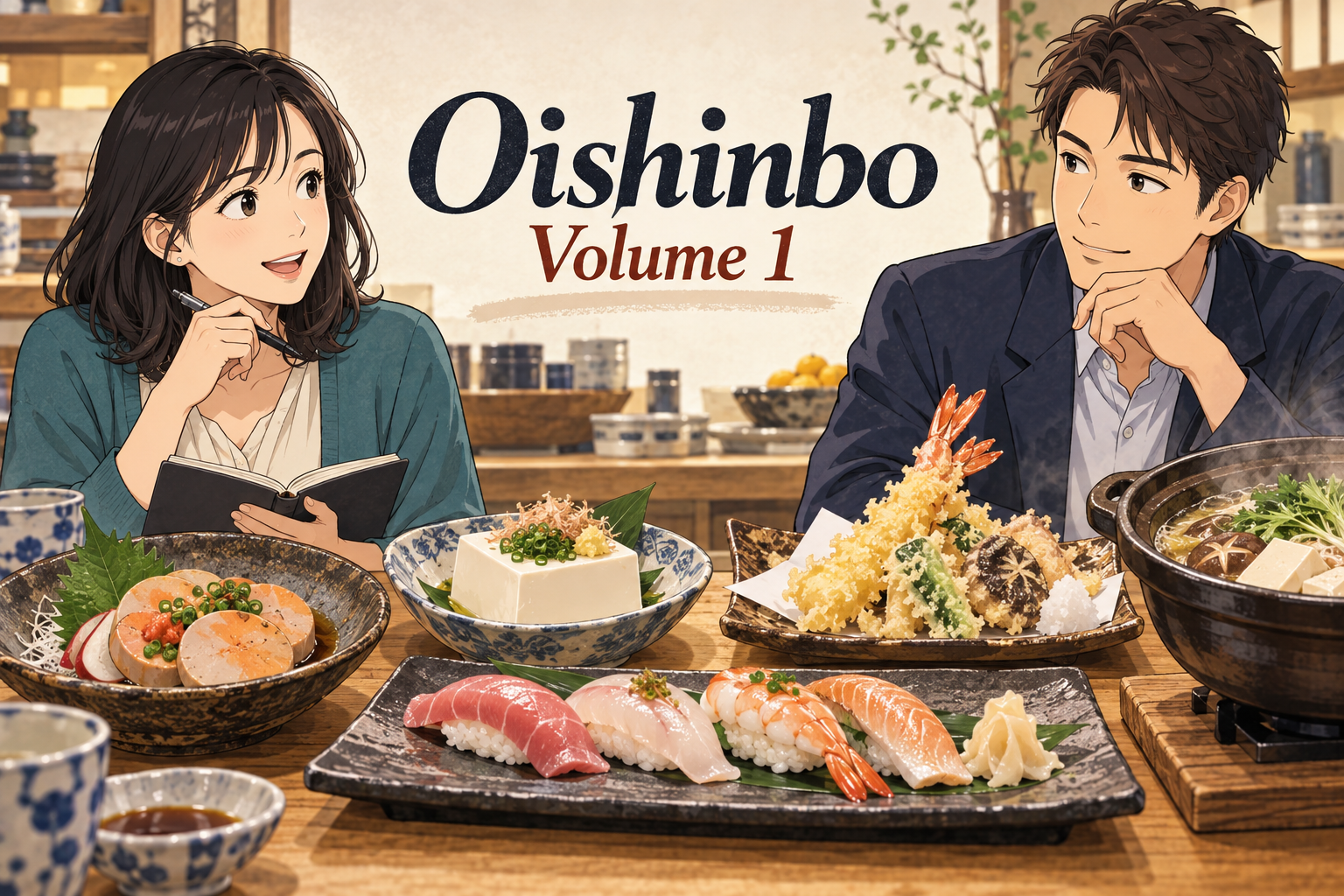
Oishinbo Volume 1 turns ordinary ingredients, cooking sounds, and personal memories into drama. A piece of tofu or the sound of tempura frying can reveal how a character thinks about food.
This article looks at the original Japanese Volume 1, written by Tetsu Kariya and illustrated by Akira Hanasaki. Rather than summarizing every chapter, I focus on its foods and ideas, especially ankimo and tempura. English-language readers should note that the Oishinbo: A la Carte books are thematic selections, not matching numbered volumes.
Spoiler note: This guide discusses foods and themes from Volume 1 but avoids a scene-by-scene account and major resolutions.
Image note: The illustrations on this page are original images created for this website. They do not reproduce manga panels, characters, or cover art.
Oishinbo Volume 1 at a Glance
- Japanese title: 美味しんぼ 1
- Story: Tetsu Kariya
- Art: Akira Hanasaki
- Publisher: Shogakukan
- Japanese ISBN: 9784091807519
- Main focus of this article: the original Japanese first volume
Volume 1 introduces the idea that food should be judged with attention rather than by price, reputation, or appearance alone. It also begins the “Ultimate Menu” project, allowing the series to examine ingredients, technique, restaurants, and everyday meals.
No expert knowledge is required. Its strongest moments begin with a simple question: What makes one version of a familiar food better than another?
Why Volume 1 Works as Food Drama
Oishinbo can create drama from plain food. A disagreement about tofu or soup becomes one about skill, care, status, or memory.
The volume asks readers to slow down. Water, condition, timing, and even sound matter. Its explanations can be forceful, but their engaging quality comes from the habit of looking closely.
My broader Oishinbo manga guide introduces the entire series. This article focuses only on what the first Japanese volume communicates through food.
Tofu and Water: Beginning with the Basics
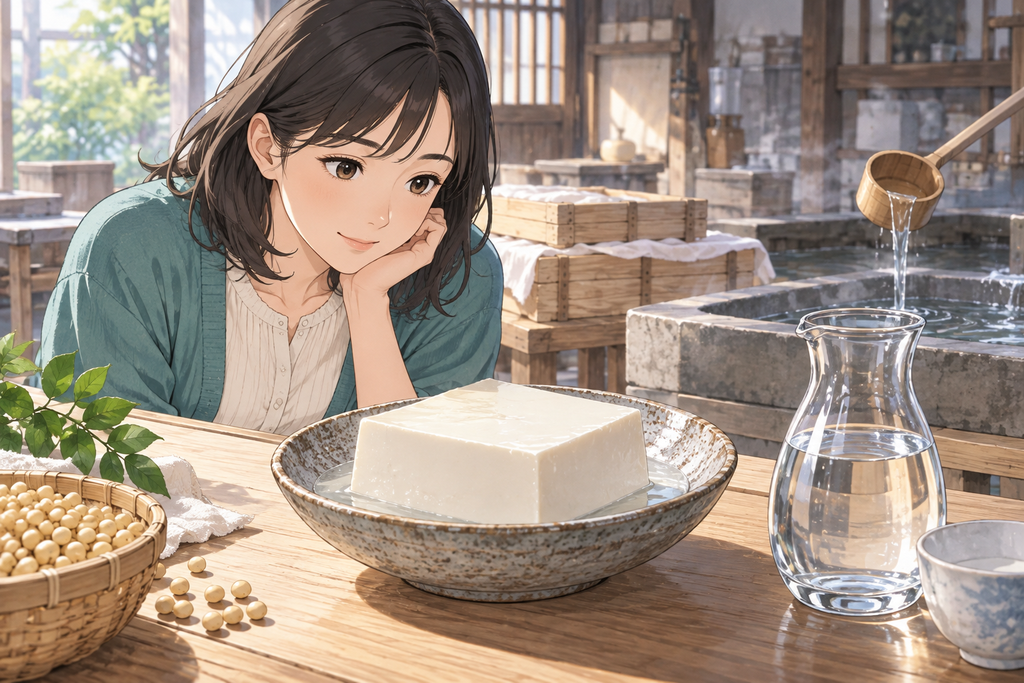
Tofu is an ideal starting point. It appears simple, yet its flavor and texture depend on ingredients and handling. Its mild taste leaves little room to hide poor quality behind strong sauce.
The discussion of tofu and water establishes a central idea: a basic ingredient is not unimportant. Water may be invisible in a finished dish, but it affects preparation and flavor.
For visitors, a neighborhood tofu shop or modest set meal may reveal as much about daily food culture as an expensive restaurant. Simplicity often makes careful work easier to notice.
Ankimo: The Food That Stayed with Me
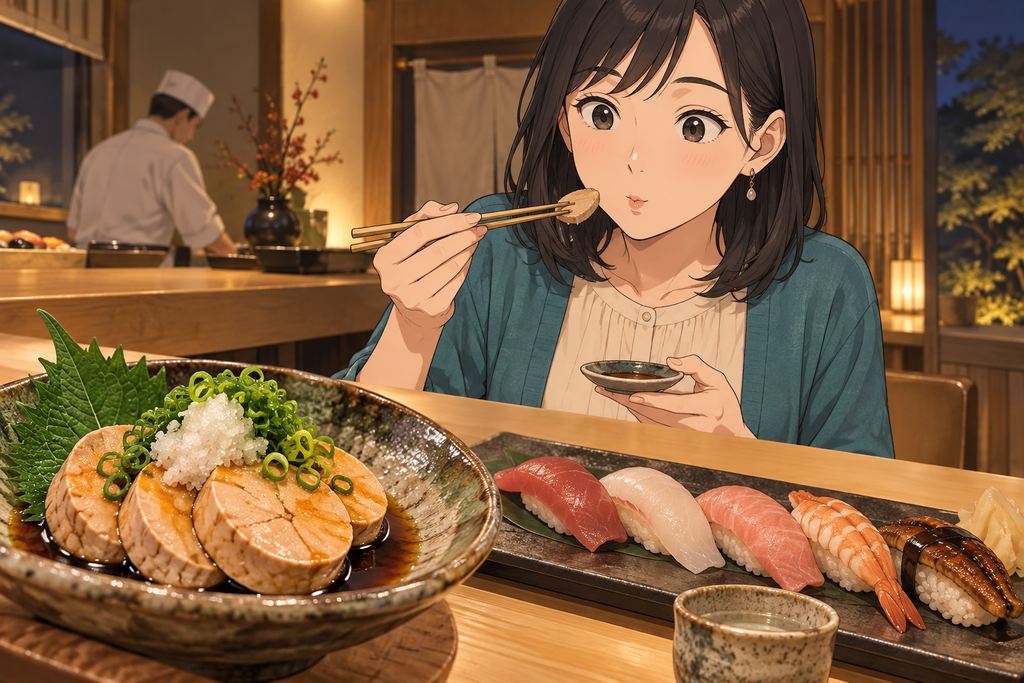
Ankimo is monkfish liver, often steamed, sliced, and served with a citrus-based sauce such as ponzu. Its rich, smooth character is sometimes compared with pâté, although it remains a distinct Japanese dish.
For me, ankimo is the most memorable food here. Reading Volume 1 is what made me like ankimo. The story made it feel worth noticing rather than merely unusual and encouraged me to appreciate it on its own terms.
That is one pleasure of food manga. We cannot taste a page, but a story can create curiosity before the first bite and change how we perceive a real dish.
It also supports a recurring theme: prestige is not the same as quality. Names and prices shape expectations, but judgment should return to how food was selected, prepared, served, and tasted.
Nigiri Sushi: Balance Instead of Toppings Alone
Nigiri is a balance between neta, the topping, and shari, the seasoned rice. Temperature, texture, portion, and timing all affect the bite.
The volume again challenges status-based thinking: a luxurious ingredient does not guarantee satisfying sushi. Preparation and balance may matter more than a label.
For practical information, see my guide to sushi types, etiquette, and ordering in Japan. Manga can inspire curiosity; a current guide is better for restaurant customs.
An Everyday Meal Deserves Attention Too
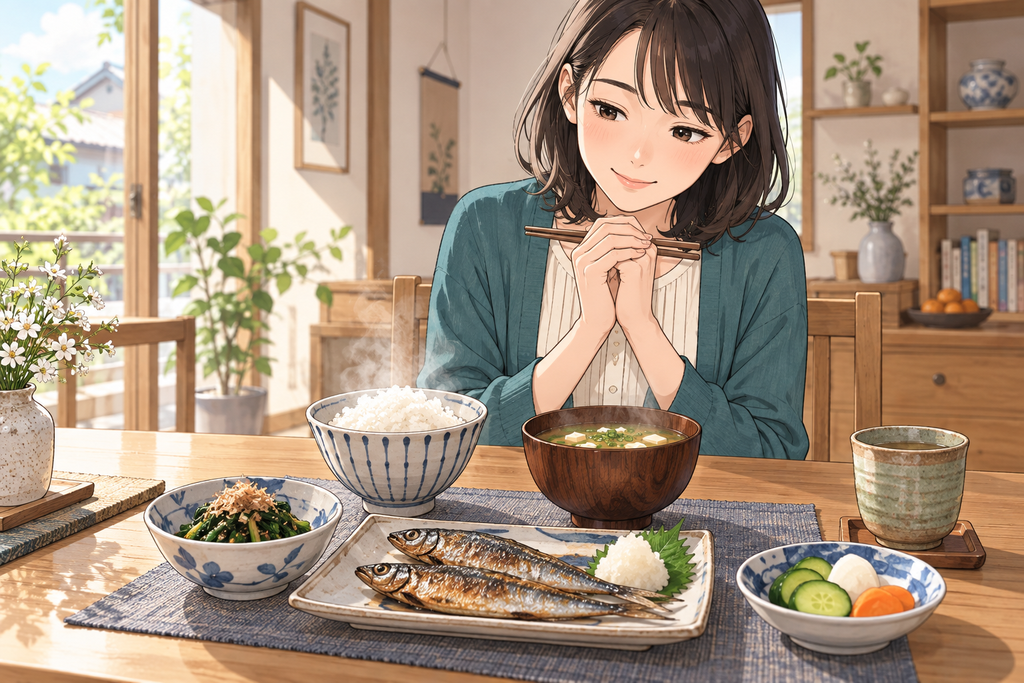
Early Oishinbo treats everyday meals as seriously as luxury cuisine. Rice, miso soup, and small side dishes are part of daily life, and their quality depends on small choices.
A simple meal may include dried fish, pickles, tofu, or seasonal vegetables. Combinations vary by household, region, and routine; no single breakfast represents everyone in Japan.
Japanese food is broader than sushi, ramen, and famous restaurants. Convenience-store meals, home curry, regional dishes, and breakfasts all belong to the story. Explore more in the Japanese Food category.
Tempura: Listening to Food
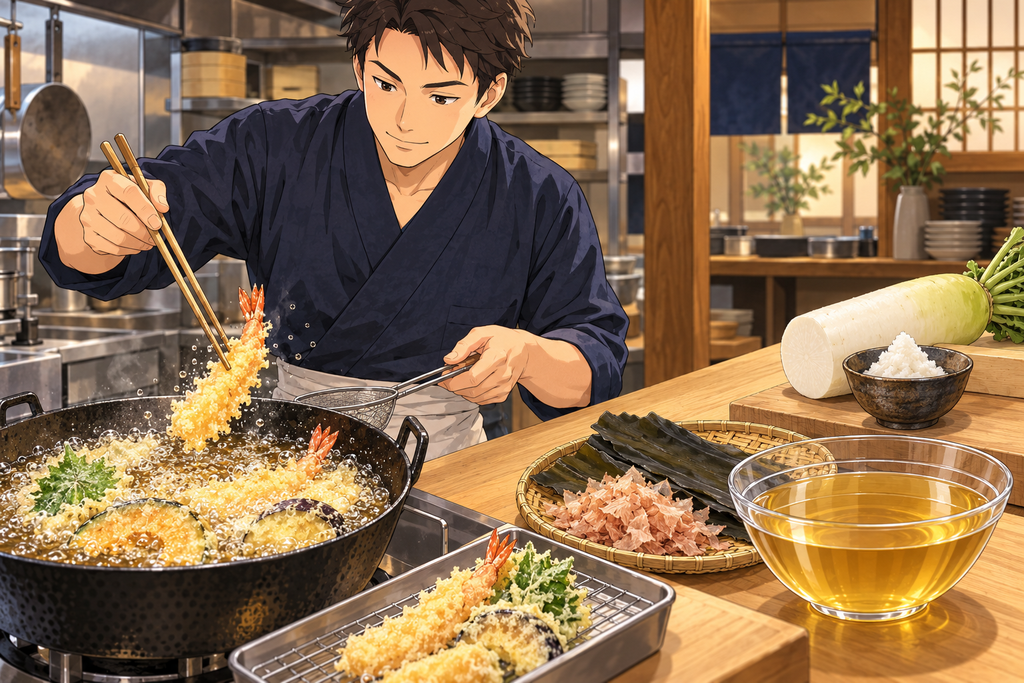
The tempura scene also made a strong impression on me. I was fascinated by the idea that the sound of frying can change—or at least reveal—how delicious the tempura will be. A manga made taste vivid through a sound the reader can only imagine.
Tempura depends on control. Batter, oil temperature, moisture, and frying time affect whether the result is light and crisp. Sound can give a cook information as moisture changes during frying.
The scene asks readers to supply missing sensations. There is no aroma, heat, or crunch on the page, yet the drawn action and imagined sound make the food immediate. Oishinbo turns technique into storytelling.
It is not a cooking manual: safe frying requires a suitable recipe, equipment, temperature control, and care around hot oil. Its value is the reminder that cooking involves listening as well as looking and tasting.
Dashi, Daikon, and Butter: The Choices Behind Flavor
Other ingredients continue the pattern. Dashi supports many Japanese dishes. Daikon changes with the part used and preparation method. Butter shows how storage, freshness, and handling influence a familiar ingredient.
These examples reveal cooking’s invisible decisions: selecting ingredients, controlling heat, judging timing, and balancing seasoning.
The manga presents conclusions confidently. I prefer to treat them as invitations to ask why a cook made a choice, compare versions, and notice my own response.
Mizutaki: When Taste Meets Memory
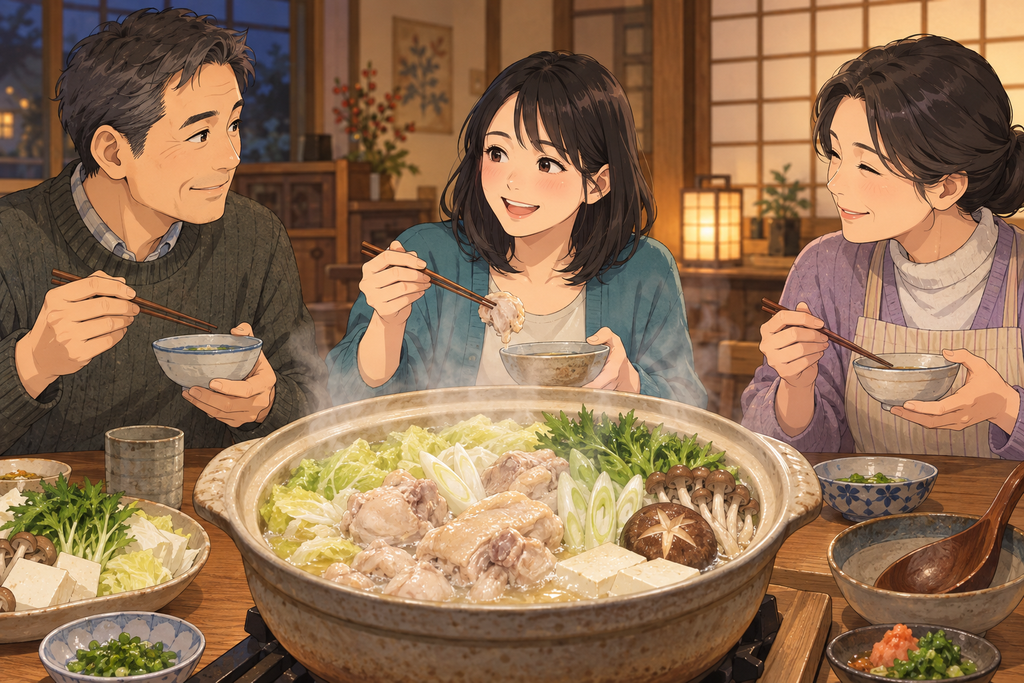
Mizutaki is a shared hot-pot dish often made with chicken and vegetables. Its meaning includes more than flavor: warmth, company, and memories of earlier meals can affect the experience.
The material shows a limit of purely technical judgment. Food can carry family history and emotional meaning, so two people may taste the same dish differently.
Quality still matters, but food arguments are rarely about technique alone. A carefully prepared dish may not match a cherished memory, while an imperfect one may comfort us deeply.
A Japanese Perspective: Care Is Not Limited to Luxury
The volume’s most valuable cultural idea is not that Japanese cuisine follows fixed rules. It is that everyday food deserves attention.
Meals differ by region, generation, household, budget, and schedule. Traditions change, so one manga volume cannot represent how everyone in Japan eats or thinks.
The book offers a perspective: look beyond price, notice season and preparation, and respect the work behind a dish. Travelers may begin asking where ingredients come from or why a local dish developed.
For reliable regional context, the Ministry of Agriculture, Forestry and Fisheries provides an English Our Regional Cuisines database covering the origins, history, and recipes of prefectural foods.
What Modern Readers Should Read Critically
Oishinbo is entertainment and commentary, not a current scientific, medical, or food-safety authority. Statements may reflect their period, the author’s argument, or dramatic conflict.
For nutrition, allergies, illness, and safe preparation, check current official guidance. Restaurant details and practices also change.
Critical reading lets us enjoy the questions without treating every conclusion as universal. The book succeeds when it makes us compare, taste, and learn more.
Japanese Volume 1 and the English Edition Are Different
The original Japanese books follow a numbered sequence. The official English Oishinbo: A la Carte releases from VIZ Media are thematic selections from the larger series.
Therefore, the English Japanese Cuisine book is not a direct, cover-to-cover translation of Japanese Volume 1. Both formats are useful but offer different experiences.
- Choose Japanese Volume 1 if you want the original beginning and can read Japanese.
- Choose an English A la Carte volume if you want officially translated stories organized by food theme.
- Check the title, publisher, language, and ISBN before ordering so that you know which edition you are buying.
Who Will Enjoy This Volume?
Volume 1 suits readers who enjoy food culture, cooking details, restaurant debates, or manga that finds larger values in everyday subjects.
Its tone can be argumentative and categorical, so critical readers will find plenty to discuss.
I remember it because it made me like ankimo and showed how frying sounds could communicate deliciousness. Food manga can create interest before the first bite and draw attention to overlooked sensations.
Where to Buy
If you want to read the original first volume, confirm that the listing is for 美味しんぼ 1, in Japanese, with the correct publisher and ISBN. Product listings and availability may change.
Check the current Amazon listing for Oishinbo Volume 1
As an Amazon Associate I earn from qualifying purchases. This does not change the price you pay.
Frequently Asked Questions
Is this article about the original Japanese Volume 1?
Yes. It focuses on the first numbered Japanese volume published by Shogakukan, not an English thematic collection.
Is Oishinbo available in English?
Yes, selected stories have been officially published in English in VIZ Media’s Oishinbo: A la Carte series. The English books are organized by themes and do not reproduce the Japanese volumes in the same chronological order.
Do I need to know Japanese cuisine before reading it?
No. The stories explain their arguments through food and conflict. Some background knowledge helps, but curiosity is enough to begin.
What food stood out most in Volume 1?
For me, it was ankimo. Reading this volume is what made me like it. I was also impressed by the tempura scene and the way imagined frying sounds made the food feel more vivid.
Can I use the manga as a cooking or food-safety guide?
No. It can inspire curiosity, but readers should use current recipes and official guidance for cooking temperatures, allergies, nutrition, and food safety.
Where should I continue after Volume 1?
Japanese readers can continue with the numbered original volumes. English readers can choose an A la Carte volume based on a food theme that interests them. For a broader introduction first, read my complete Oishinbo manga guide.
Related Guides
- Oishinbo Manga Guide: A Taste of Japanese Food Culture
- Japanese Food Articles
- Manga Reviews
- Sushi in Japan: Types, Etiquette, and Ordering Tips