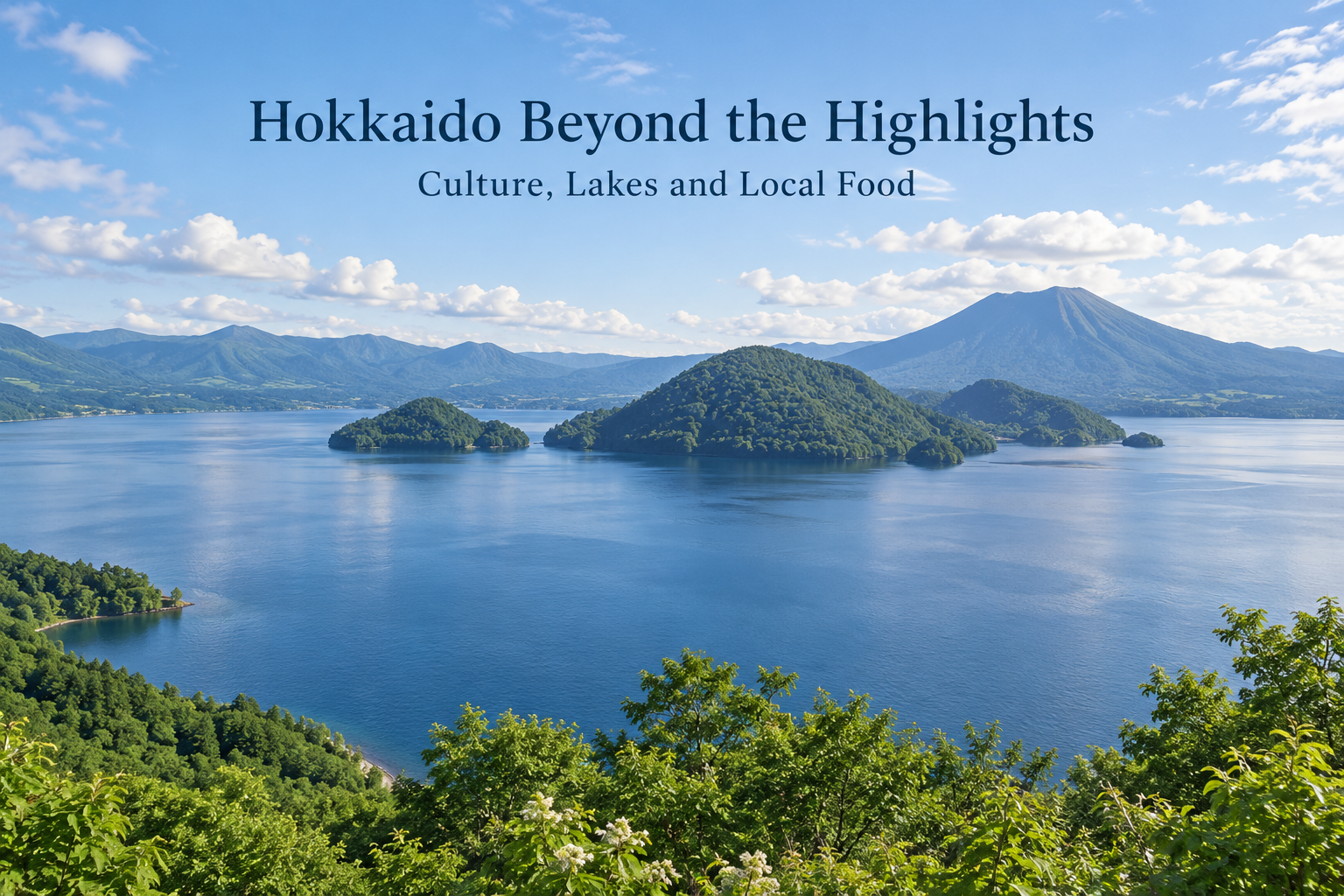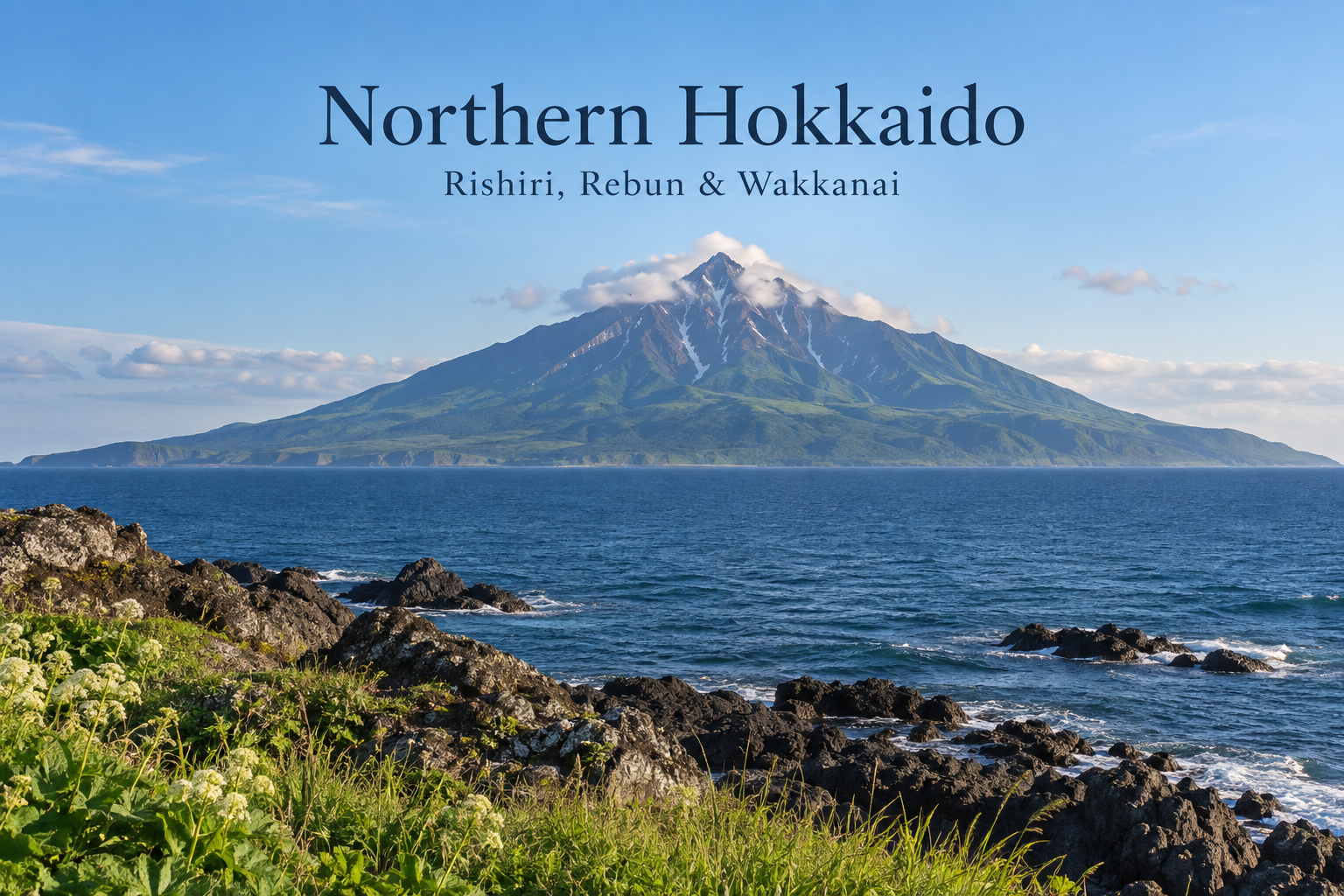
In Hokkaido’s far north, a journey can revolve around a mountain appearing through cloud, a narrow trail above the sea or a quiet meal after the ferry arrives. Wakkanai, Rishiri Island, Rebun Island and the Sarobetsu wetlands offer a rewarding reason to return to Japan’s northern island.
This northern Hokkaido travel guide focuses on destinations and food traditions beyond our previous Hokkaido articles. Here, the pleasure lies in spending time within one connected region: watching the weather, walking at your own pace and learning what the surrounding sea brings to the table.
For the broader introduction to the island, start with our Hokkaido Travel Guide for First-Time Visitors. For this trip, make Wakkanai and the offshore islands the focus, with enough room in your schedule to enjoy them properly.
Images are original illustrations inspired by the destinations and dishes described. They are not documentary photographs or exact records of particular viewpoints.
Northern Hokkaido at a Glance
| Place | Main appeal | Planning suggestion |
|---|---|---|
| Wakkanai and Cape Soya | Coastal scenery and a convenient island gateway | Allow an arrival night and time before departure |
| Sarobetsu Wetland | A boardwalk through open peatland | Plan a mainland half-day outing, plus transport |
| Rishiri Island | Mountain views, forest walks and coastal exploration | Stay two nights for one full day |
| Rebun Island | Coastal trails and seasonal wildflowers | Stay two nights if walking is a priority |
With four or five days, choose one island. A trip including both islands and a mainland outing is more comfortable with about a week. These are suggested durations, not guaranteed transport connections.
1. Wakkanai and Cape Soya: Begin Beside the Northern Sea
Wakkanai is a useful place to settle into the trip before taking a ferry. Choose accommodation with a practical route to the terminal, find somewhere for dinner and give yourself time to understand the next day’s departure arrangements.
Cape Soya marks the northern tip of Hokkaido’s main island. The visit is as much about the open sea and exposed coastal setting as the familiar northernmost-point monument. Take a windproof layer even when the city feels comfortable.
The cape is outside central Wakkanai, so treat it as a separate excursion. Check the outward and return bus services together, or arrange a car or sightseeing transfer. A short time at the monument can be enough; the surrounding coastal journey adds much of the interest.
If you arrive late, keep the first evening simple. A local meal and an early night are a better foundation for an island trip than trying to fit a distant viewpoint between an airport transfer and dinner.
2. Sarobetsu Wetland: Explore a Landscape at Ground Level
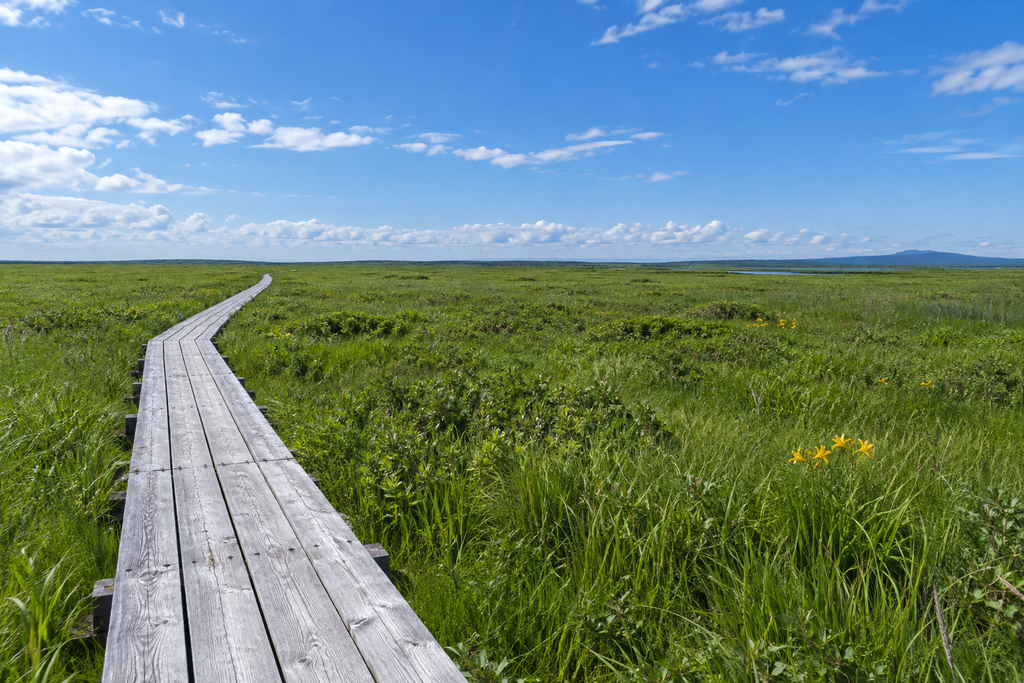
Sarobetsu offers a different kind of outdoor experience from a mountain climb. Begin at the Sarobetsu Wetland Center in Toyotomi, then follow the roughly one-kilometer boardwalk loop through the peatland.
The scale becomes clearer as you walk: low vegetation, a broad horizon and little to interrupt the sky. Early summer can bring yellow daylilies and cotton grass, while a clear day may reveal Mount Rishiri in the distance. Flowers and visibility depend on the conditions, so avoid planning around a guaranteed scene.
Read the center’s displays before heading outside. Understanding how accumulated plant material forms peat makes an apparently simple stretch of grass far more interesting. Stay on the boardwalk to protect the ground and plants around it.
The wetland is on Hokkaido’s mainland, separate from the island ferry routes. Arrange the final connection to the center and your return journey in advance. A regional train stop alone does not take you to the boardwalk entrance.
3. Rishiri Island: Enjoy the Mountain Without Climbing It
Mount Rishiri gives the island its unmistakable outline. You can appreciate that presence from the coast and lower viewpoints without planning a summit ascent.
Himenuma Pond is a good place to start. A short walking circuit passes through woodland around the water, with the mountain reflected on calm, clear days. Cloud may hide the summit, but the forest setting still makes the stop worthwhile.
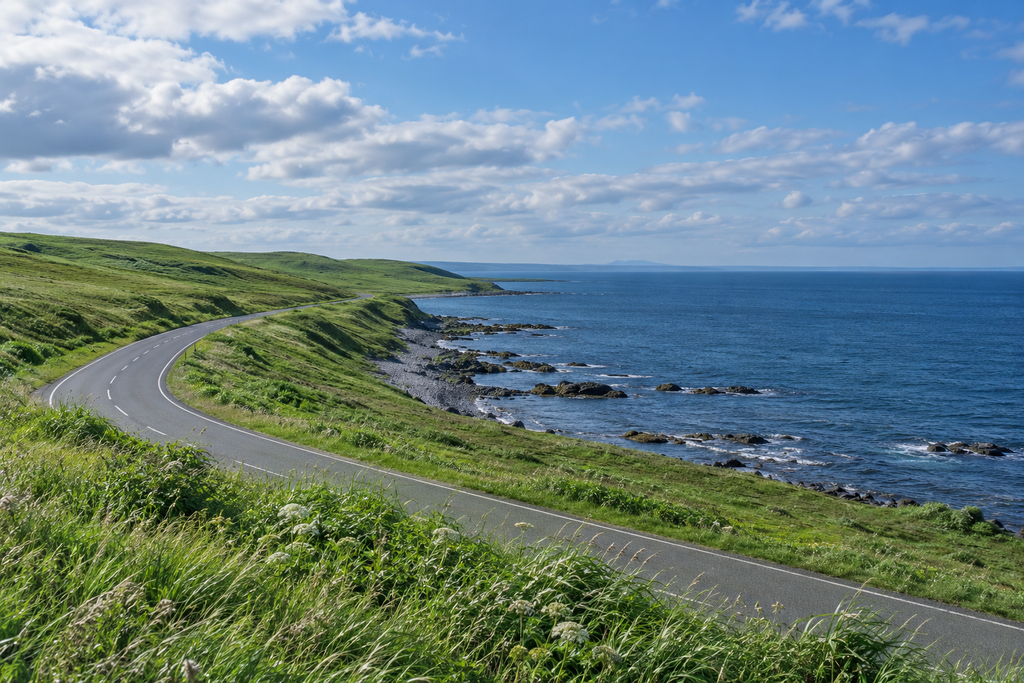
Build a day around a few lower-level stops and time along the coast. Distances between sights mean you should decide how you will travel before arriving: check local buses, book a sightseeing service or arrange a rental vehicle. Cycling may suit some travelers, but wind and the length of your chosen route matter.
A summit climb is a separate undertaking requiring appropriate experience, equipment and current trail information. Do not add it casually to a ferry day. If the mountain is the main reason for coming, reserve enough nights to respond to weather changes.
For a first visit, two nights create a useful rhythm: arrive and settle in, spend a full day exploring, then continue onward without rushing through every stop.
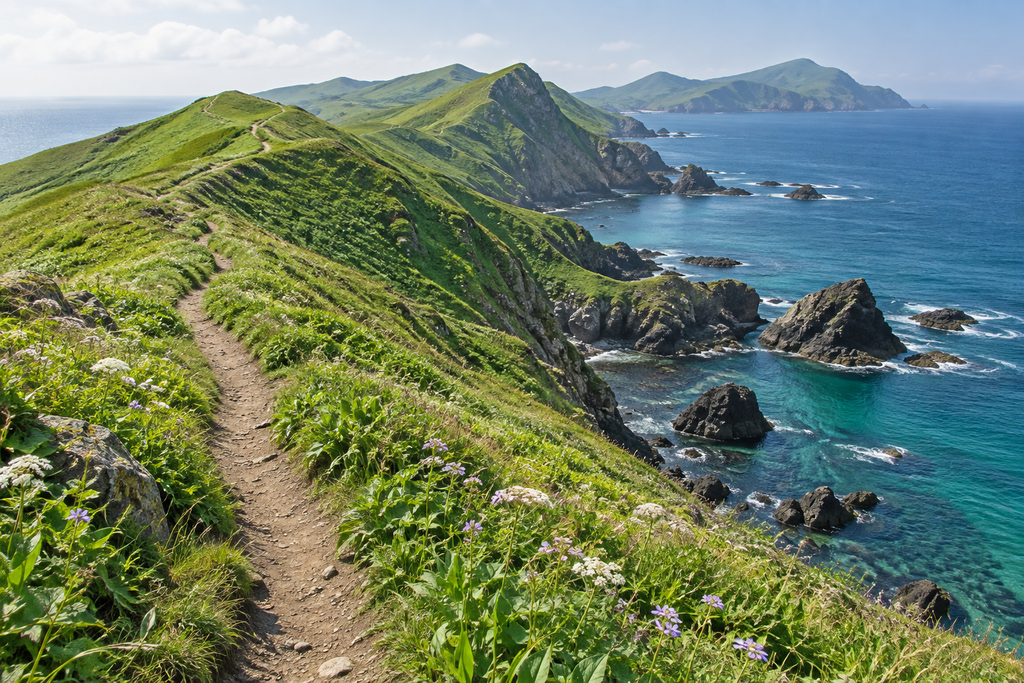
4. Rebun Island: Choose a Coastal Walk That Fits Your Day
Rebun is particularly appealing if you enjoy walking through open landscapes. Coastal slopes, sea views and seasonal alpine plants give the island a different character from Rishiri’s central mountain.
The Momoiwa Observatory area is one option to investigate. Before choosing your walk, distinguish a visit to a viewpoint from completing a longer trail. Confirm the route length, gradients, start and finish points, and how you will return to your accommodation.
Low elevation does not guarantee easy conditions. The official trail guidance warns that strong wind and dense fog can occur even on these lower hills. Wear suitable shoes, carry a weatherproof layer and follow current local advice. If visibility deteriorates, shorten the plan rather than pressing on for a photograph.
Wildflowers are an added pleasure, not a promise that every slope will be in bloom. Stay on marked trails, leave plants untouched and avoid blocking narrow paths while taking pictures.
Japanese Perspective: A Landscape Is Also a Place of Work
Around the islands, attractive coastal scenes sit beside fishing activity and everyday life. Harbors, equipment and shorefront work areas deserve the same respect you would give someone’s workplace at home.
Ask before photographing people at close range. Keep clear of loading areas and avoid treating an open space beside the shore as permission to enter. This approach helps a visitor see the islands as communities, with the scenery forming part of their daily setting.
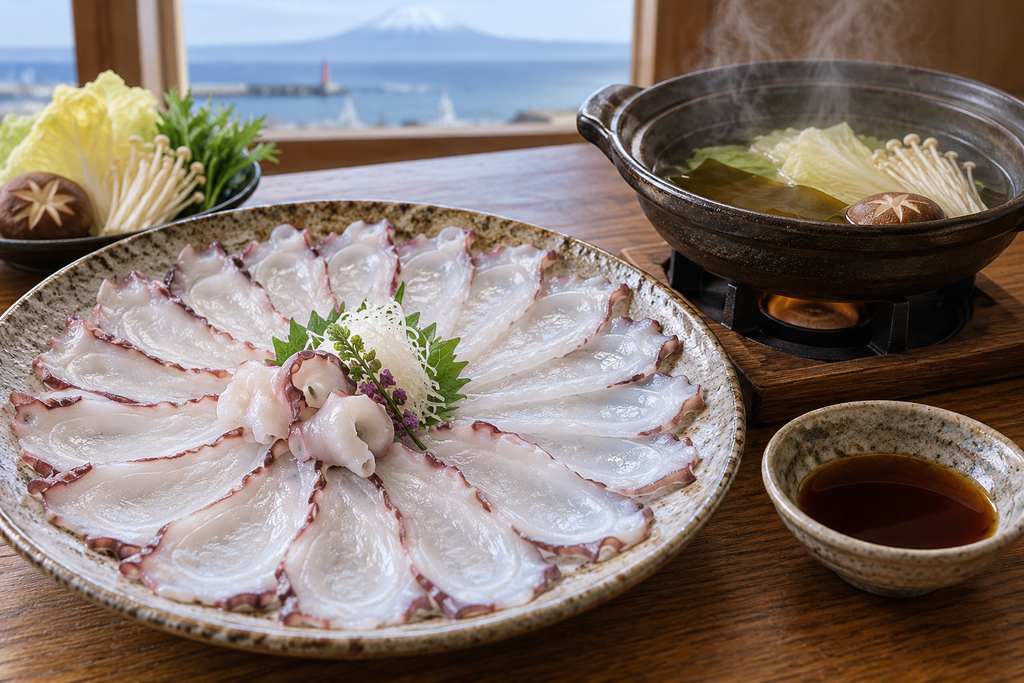
5. Wakkanai Tako Shabu: A Different Way to Enjoy Octopus
For a meal tied to Wakkanai, look for tako shabu. Thin slices of giant Pacific octopus are cooked in a hot pot, commonly with kombu broth, then enjoyed with dipping sauces.
The presentation is part of the appeal: delicate slices on a platter, a steaming pot and sauces that let you adjust each mouthful. Follow the restaurant’s instructions for cooking and serving rather than assuming the slices are intended to be eaten raw.
This is a useful meal to plan for a mainland evening, when you are free from an immediate ferry connection. Confirm that the restaurant offers it on your date and whether advance ordering is needed. Regional specialties are not necessarily on every menu.
If you have dietary restrictions, ask about the broth and sauces as well as the octopus. A description such as “kelp broth” does not by itself explain every ingredient in the finished dish.
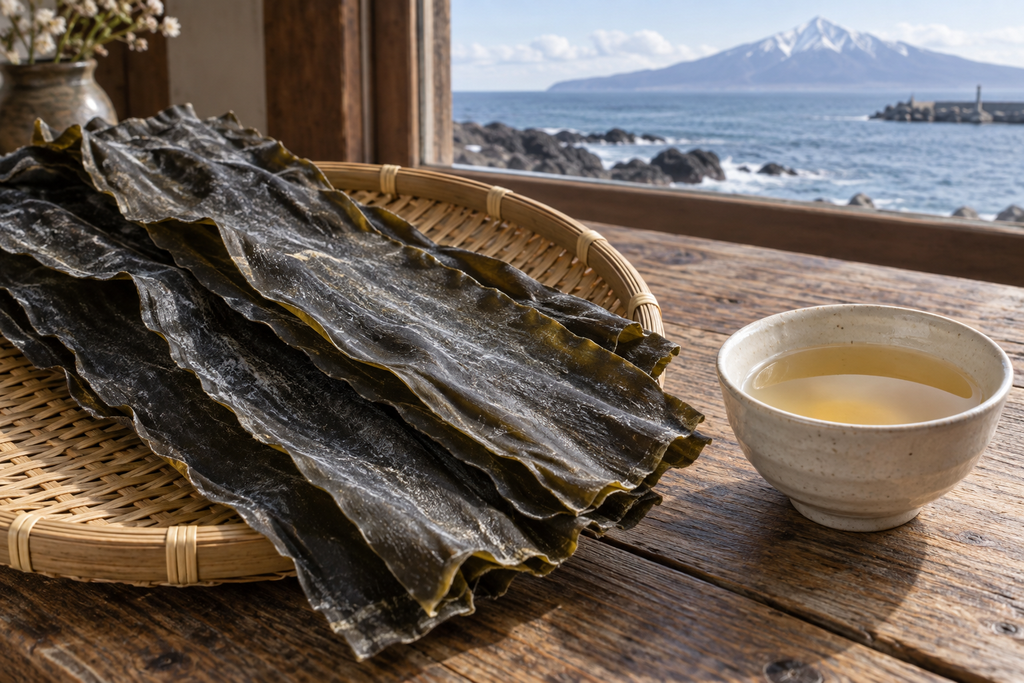
6. Rishiri Kombu: Discover the Ingredient Behind the Broth
Rishiri kombu is an edible kelp valued for the clear, flavorful stock it produces. Looking for it gives a food-focused traveler something to explore beyond a large seafood platter.
In a shop, ask where the kelp was produced and how the seller recommends using it. A small pack for cooking can be a thoughtful souvenir, especially if you collect a simple preparation suggestion with it.
If a menu identifies Rishiri kombu in a soup or broth, pay attention to that part of the meal before adding condiments. The interest is often in the gentle savory depth rather than an intense seaweed flavor.
Japanese Perspective: Learn to Notice Dashi
Dashi means a cooking stock that forms the base of many Japanese dishes. Kombu is one ingredient used to make it. Appreciating the broth helps explain why a modest bowl can receive so much attention: the main visible ingredient tells only part of the story.
Stocks may combine several ingredients, including fish products. If you need a vegetarian meal, ask about the complete preparation rather than relying on the presence of kombu alone.
How to Get There and Move Between the Islands
Wakkanai can be approached by air or rail. JR Hokkaido’s Soya service links Sapporo and Wakkanai, while Sarobetsu services connect Asahikawa and Wakkanai. Check the JR Hokkaido train guide and reserve seats; these limited express services use reserved seating throughout.
Heart Land Ferry links Wakkanai with Oshidomari on Rishiri and Kafuka on Rebun. Direct crossings generally take about one hour forty minutes to Rishiri and one hour fifty-five minutes to Rebun. Services between the islands also operate, with routes and frequency varying by season.
Check the operator’s dated timetable and operating information before booking. Rishiri has both Oshidomari and Kutsugata ports, so match the port on your ticket with your transfer arrangements. Do not assume every island connection uses the same terminal.
If taking a vehicle, confirm ferry capacity and the rental company’s conditions. Otherwise, organize transport separately on each island. A mainland rental car is not essential for the entire trip.
A Relaxed Seven-Day Northern Hokkaido Itinerary
| Day | Suggested plan | Overnight |
|---|---|---|
| 1 | Arrive in Wakkanai; check the next ferry and enjoy a local dinner | Wakkanai |
| 2 | Ferry to Rishiri; settle in and take a short outing | Rishiri |
| 3 | Full day for lower viewpoints, Himenuma and the coast | Rishiri |
| 4 | Ferry to Rebun; organize the following day’s walk | Rebun |
| 5 | A suitable coastal walk, chosen around current conditions | Rebun |
| 6 | Return to Wakkanai; an optional nearby outing if time permits | Wakkanai |
| 7 | Depart, or visit Cape Soya or Sarobetsu if your onward timing allows | — |
For a proper Sarobetsu visit, an additional mainland night is preferable. If your departure is early, leave day seven entirely for travel. Choosing one island allows you to shorten the trip or spend more time on the mainland.
Returning to Wakkanai before your departure day provides some flexibility, but a single spare night cannot guarantee protection against prolonged ferry disruption. Keep important onward connections conservative and review cancellation terms before booking.
When to Visit and What to Book First
For walking and seasonal flowers, early to midsummer is a useful starting point. Flowering varies by species and year. Later summer can still suit coastal exploration, while autumn requires closer attention to shortening days and seasonal services.
Winter is a different trip, with fewer sightseeing options and more demanding conditions. The walking itinerary above is intended for the warmer months when the relevant paths and services are operating.
Book island accommodation, transport and any guided activity together. Ask about meals, pickup arrangements and luggage storage. A small inn with dinner included can simplify an evening when you would otherwise need another transfer to a restaurant.
Bring sturdy footwear, layers and rain protection even in summer. Plan each walking day around the forecast rather than around the order in which attractions appear in a guide.
FAQ: Planning a Northern Hokkaido Trip
Should I choose Rishiri or Rebun?
Choose Rishiri for its mountain-centered scenery and a varied lower-level sightseeing day. Choose Rebun if coastal walking is your main interest. Both reward an overnight stay; neither requires completing its hardest hike.
Can I see both islands in one day?
The transport would dominate the visit, and the plan would depend heavily on the timetable. Choose one island for a short stay and leave both for a trip with several nights.
Can I travel without driving?
Yes, with advance planning. Combine rail or flights, ferries and local transport or arranged excursions. Confirm the final connection to each attraction rather than assuming a bus stops at every entrance.
Is Sarobetsu on an island?
No. The wetland is on Hokkaido’s mainland. Plan it as a separate excursion before or after your island stay.
Do I need to climb Mount Rishiri?
No. Lower walks and coastal viewpoints provide plenty of ways to enjoy the island. A summit attempt needs a separate plan suited to your experience and the conditions.
What if a ferry is canceled?
Check the operator’s updates, contact your accommodation and adjust onward bookings. Keep essential items with you and retain flexibility in the mainland portion of the trip. A same-day international connection after an island ferry leaves very little room to recover.