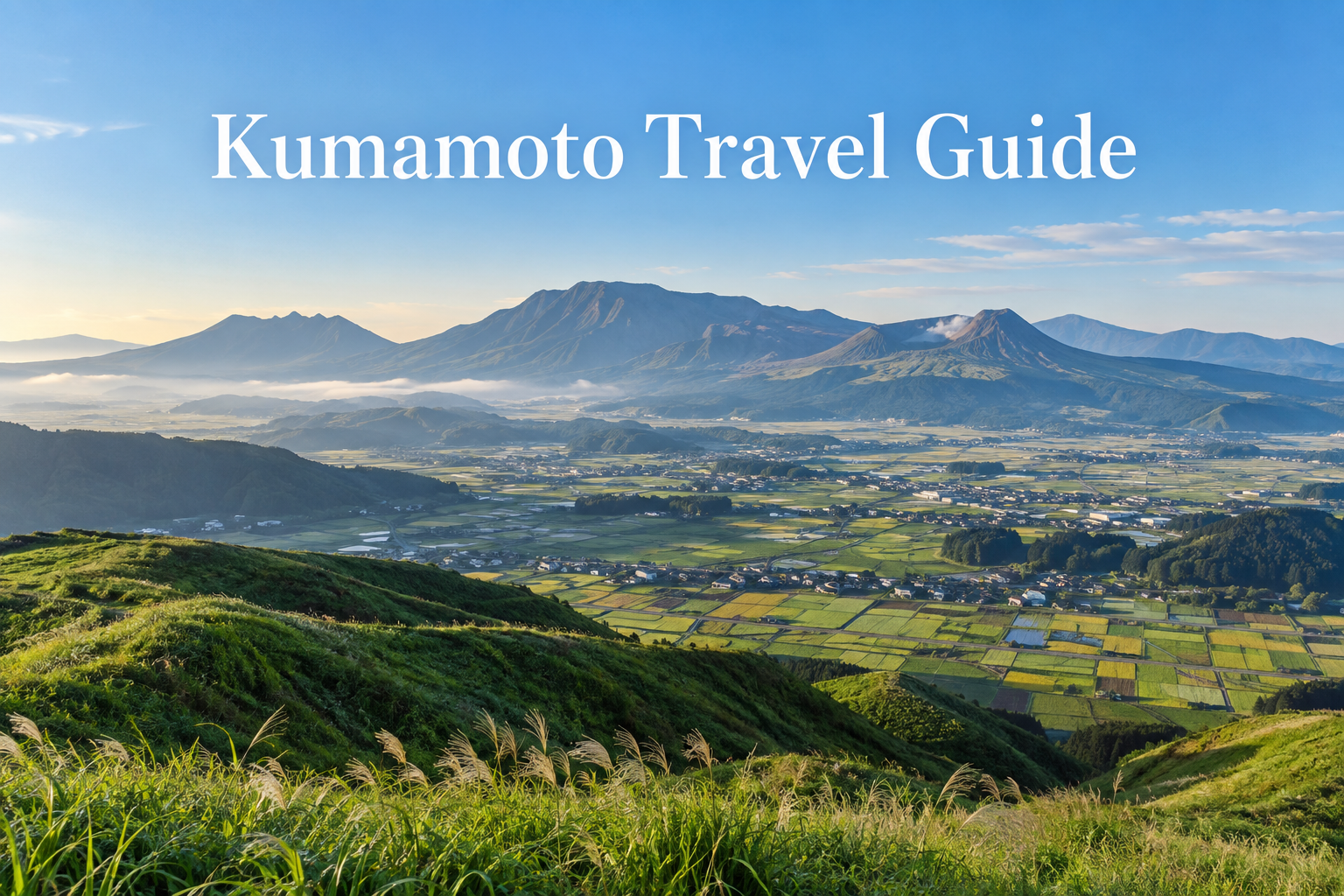
Kumamoto brings several different versions of Kyushu into one trip. In the city, a dark-roofed castle rises above stone walls and busy tram streets. Inland, Aso opens into broad grasslands, farming settlements and volcanic mountains. Farther into the hills, Kurokawa Onsen invites you to slow down; to the southwest, Amakusa offers fishing villages and sea views.
The most rewarding approach is to choose a manageable route. Allow four days for Kumamoto City, Aso and a mountain hot-spring stay, then add time for Amakusa if the coast appeals to you. Distances and rural transport matter more here than a map first suggests.
This Kumamoto travel guide combines the main sights with Japanese perspectives on restoration, working landscapes and shared bathing culture.
Image note: The images in this guide are original illustrations with a photographic appearance. They are inspired by the destinations, rather than documentary photographs of current conditions or specific accommodation.
1. Kumamoto Castle: History That Is Still Being Repaired
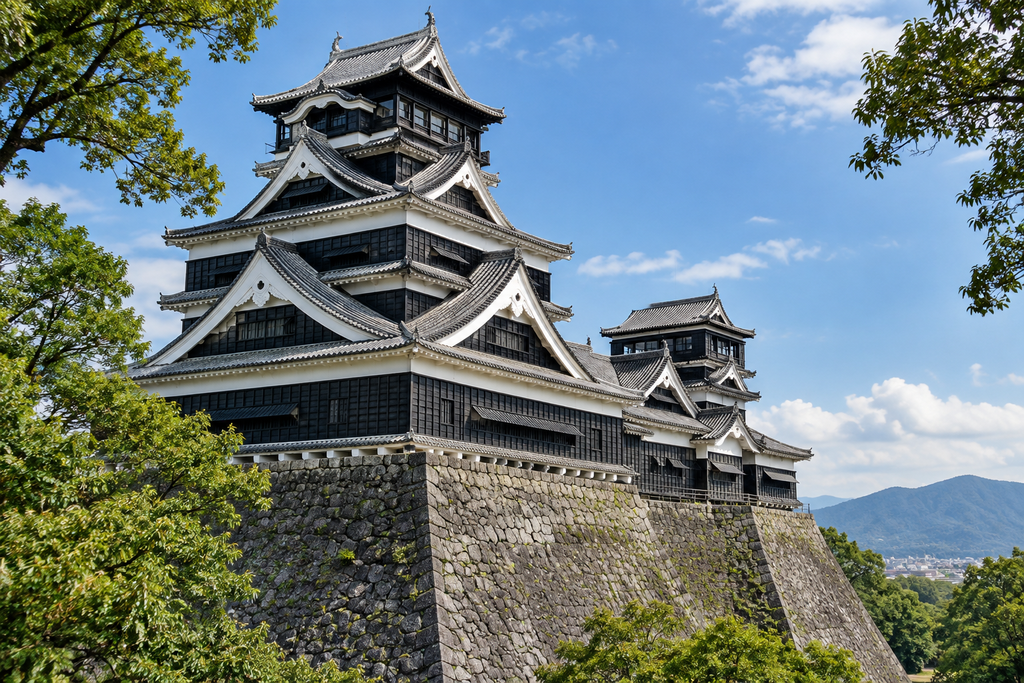
Kumamoto Castle is an excellent introduction to the region. Associated with the warrior lord Kato Kiyomasa, it was developed into a major fortress in the early seventeenth century. Its steep stone defenses and layered roofs help explain why castles were expressions of political authority as well as military buildings.
Look carefully at what you are seeing. The main keep is a modern reconstruction, subsequently repaired after the 2016 earthquakes; surviving historic structures and reconstructed buildings coexist across the grounds. The keep reopened in 2021, while restoration elsewhere continues.
Allow around two to three hours for the exhibitions, approved walking route and views. Check the castle’s official visitor information for the entrance and areas available on your date. Nearby Sakura-no-Baba Josaien is a convenient place to pause for lunch or browse regional products.
Japanese Perspective: What Restoration Means
A repaired castle can remain deeply meaningful even when its materials are not all original. In Kumamoto, the site connects local history with the patient work of rebuilding. Looking at explanations of the repairs adds another layer to the visit: heritage is something people actively maintain, not simply inherit.
Give the work areas the same respect as the completed buildings. Stay on the visitor route and avoid treating restricted sections as shortcuts to a better photograph.
2. Suizenji Jojuen: A Garden for Looking Slowly
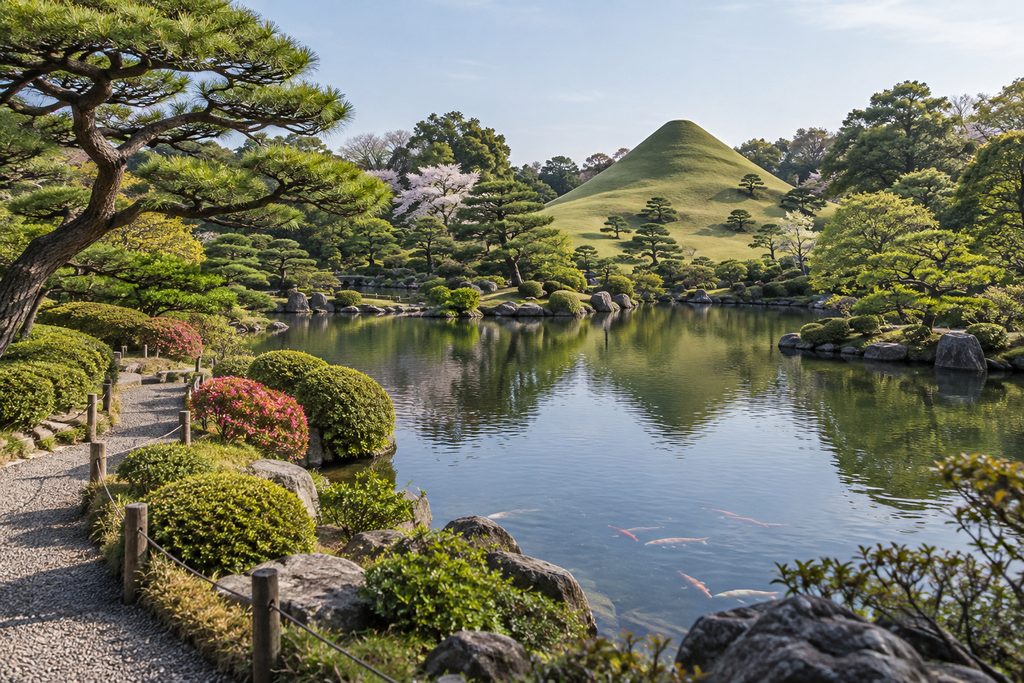
Suizenji Jojuen offers a quieter change of pace. Created under the Hosokawa family in the seventeenth century, this strolling garden centers on a spring-fed pond. Curved paths reveal clipped trees, reflections and a carefully formed mound representing Mount Fuji.
Plan roughly an hour, or longer if you want a relaxed tea break. Follow the designated paths rather than walking onto the shaped lawns. The city tram makes the garden a practical partner to a castle visit without renting a car.
Japanese Perspective: A Landscape in Miniature
Japanese gardens sometimes suggest famous places through selected shapes and arrangements. The miniature Fuji is not meant to compete with the mountain’s scale. It asks the viewer to recognize an association and enjoy how it fits into a smaller scene.
Walk around the pond before deciding on your favorite view. A tree, a reflection or a change in the path can alter the balance of the garden more than you expect.
3. Aso: Grasslands, Caldera Views and a Living Volcano
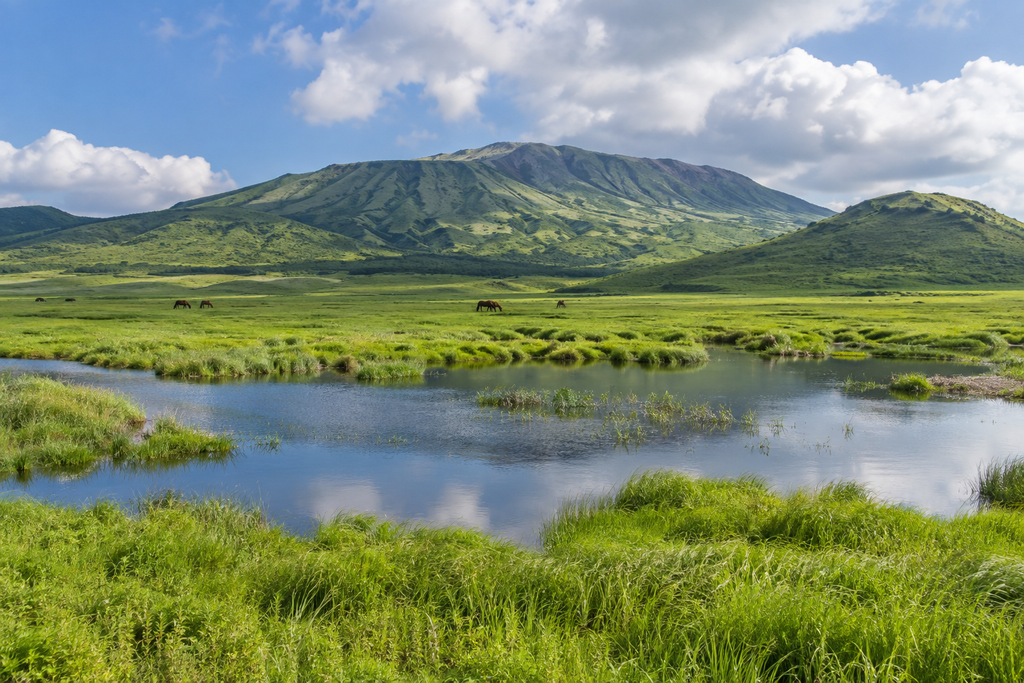
Aso is much more than a single summit. Its vast caldera contains communities, roads and farmland, while volcanic peaks rise within it. Kusasenri provides accessible grassland scenery, and the Aso Volcano Museum can help make sense of the landscape. Daikanbo is another option for broad caldera views when visibility and road access allow.
Give Aso a full day and keep the schedule flexible. Fog can hide distant mountains, and a museum visit or a meal in town may be more rewarding than driving from one obscured viewpoint to another. Bring a windproof layer even when Kumamoto City feels warm.
Access update, checked September 10, 2026: A September 2 notice from Michi no Eki Aso reports that Nakadake Crater remains closed under volcanic alert level 2, while Kusasenri is outside the restricted zone. This guide does not assume crater access. Check the Aso visitor update and official crater restriction information before travel and again on the day. Follow local barriers and instructions.
Japanese Perspective: Grasslands Are Working Landscapes
Aso’s open hills are partly sustained through grazing, grass cutting and controlled burning known as noyaki. Their beauty reflects a long relationship between people and the land. These practices also help preserve grassland habitats.
Treat fields as managed land. Use public paths, leave gates alone and keep a respectful distance from livestock. A fence-free view does not automatically mean unrestricted access.
4. Kurokawa Onsen: Make Time for a Ryokan Stay
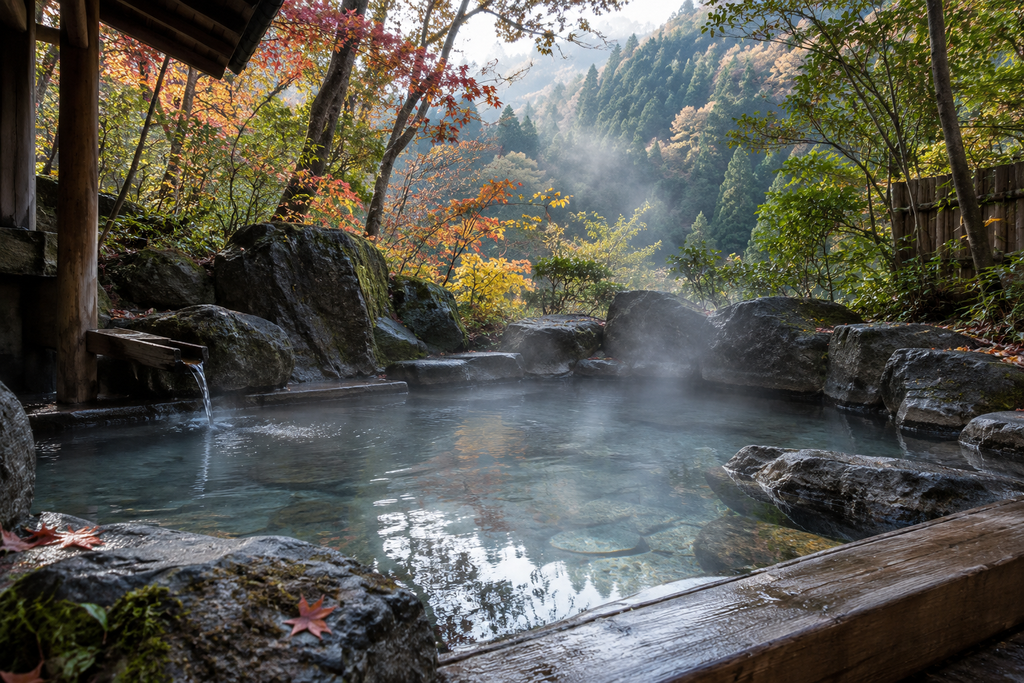
Kurokawa Onsen is a small mountain hot-spring town where the main pleasure is often the time between activities. Check into a ryokan, take a bath, enjoy dinner and step outside for a short walk if conditions permit.
An overnight stay avoids turning the visit into a rushed stop between buses. Check whether dinner and breakfast are included and arrive before the inn’s requested check-in deadline. Dietary requests should be discussed when booking, since a small kitchen may not be able to make changes on arrival.
Kurokawa’s bathing-pass system lets visitors try participating baths. Use the ryokan association’s bathing information to confirm which facilities are accepting day visitors. Opening times, included options and bath arrangements vary.
Japanese Perspective: Sharing a Quiet Space
Wash and rinse before entering a communal bath, keep your towel out of the water and leave phones and cameras in the changing area. Bathing is usually without swimwear unless the facility specifies otherwise.
Tattoo policies and private-bath options differ between inns. Ask your chosen property directly rather than assuming a rule applies to the whole town. A reserved private bath can be a comfortable introduction if communal bathing feels unfamiliar.
5. Amakusa: Sea Views and Hidden Christian Heritage
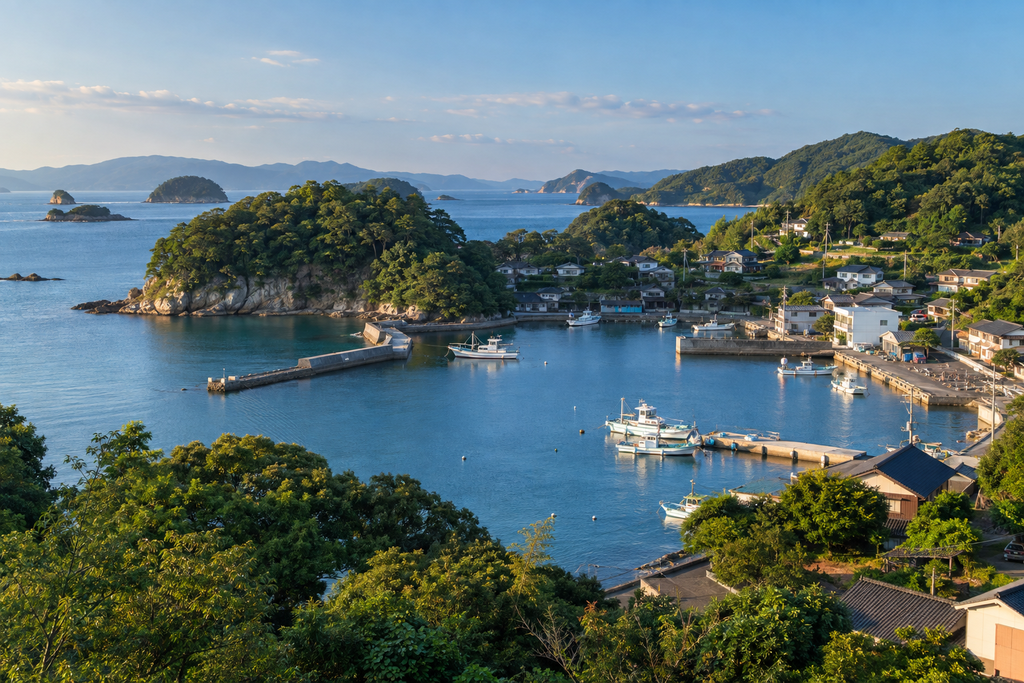
Amakusa rewards a separate coastal stay. The region spreads across islands and peninsulas, with winding roads, small harbors and viewpoints that encourage a slower pace. Connecting bridges make road travel possible across much of the main island route, but they do not make every destination close together.
Sakitsu Village adds historical depth. It is a component of the UNESCO-listed Hidden Christian Sites in the Nagasaki and Amakusa Region, preserving evidence of how communities maintained their faith during the prohibition of Christianity. The present church belongs to a later period; the village’s significance extends beyond that single building.
Read the heritage site’s explanation of Sakitsu before visiting. Respect worship, local homes and photography restrictions, and confirm any visitor arrangements in advance.
Dolphin-watching trips are another possibility in the Itsuwa area. Choose an operator that explains its wildlife approach, follow the crew’s instructions and remember that sightings and departures depend on animals and sea conditions.
Japanese Perspective: A Village Is Not a Stage Set
In Sakitsu, religious history sits within an ordinary working community. Keeping your voice down, avoiding doorways and asking before photographing residents helps preserve the experience for both visitors and the people who live there.
Allow at least one night for an Amakusa extension; two nights make a broader coastal route more comfortable.
6. What to Eat in Kumamoto
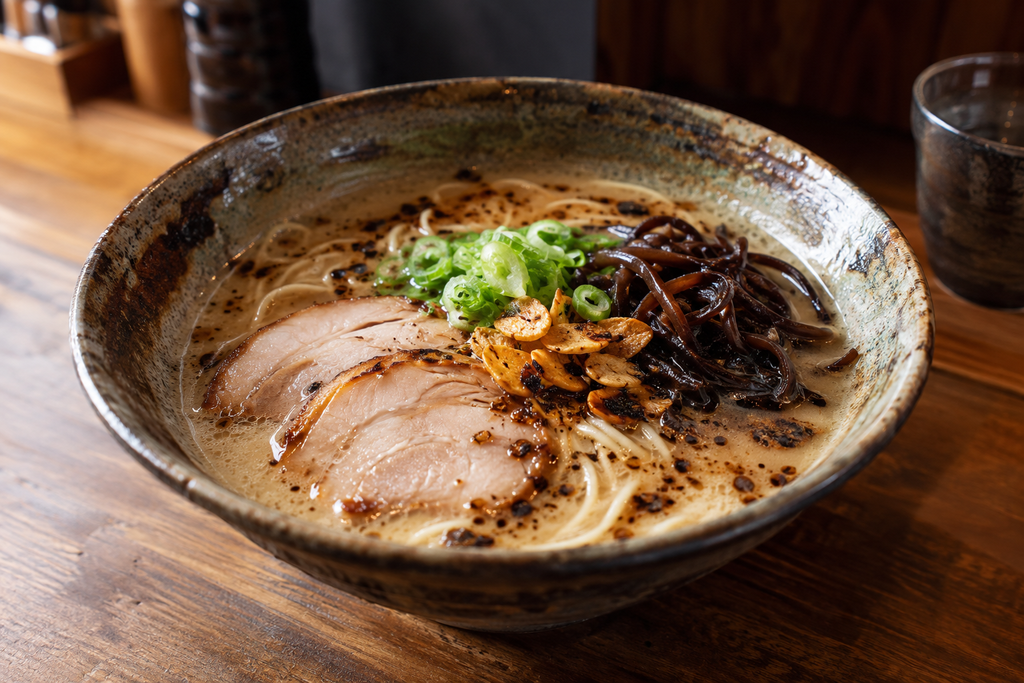
Start with Kumamoto ramen, often featuring pork-based broth and a distinctive roasted-garlic character. Shops differ in richness, noodles and toppings, so it is worth choosing a bowl that suits your appetite rather than hunting for a single supposedly definitive version.
In Aso, look for akaushi beef dishes. A rice bowl or grilled serving offers a straightforward way to try a regional ingredient. For a more homely meal, dagojiru combines dumplings with vegetables in a warming soup.
Other local flavors include karashi renkon, lotus root filled with mustard miso, and ikinari dango, steamed dumplings commonly made with sweet potato and sweet bean paste. Around Amakusa, ask about seasonal seafood.
Japanese Perspective: Local Food Can Be Everyday Food
Regional cooking is not limited to elaborate restaurant meals. A dumpling from a small shop or a simple bowl of soup can reveal just as much about local ingredients and habits.
Vegetarian and vegan travelers should check stocks and seasonings, not just visible toppings. Fish broth and animal ingredients may appear in dishes that look vegetable-based. Carry a clear Japanese explanation of your dietary requirements.
Practical Information for Your First Visit
Getting There and Getting Around
Kumamoto sits on the Kyushu Shinkansen route linking Hakata and Kagoshima-Chuo. Aso Kumamoto Airport has ground connections toward the city and other destinations; consult the airport access page for your route.
Rail update, checked September 10, 2026: JR Kyushu is displaying notices about service restoration from September 18 and a temporary Shinkansen timetable. Check JR Kyushu’s current notices and journey search for your actual date rather than relying on a normal-service journey time.
Within Kumamoto City, trams and walking cover the main sights. For Aso and Kurokawa, build your route around confirmed train and bus connections, including the final departure. A car gives greater flexibility for viewpoints and Amakusa, but mountain weather and road restrictions still affect plans.
Where to Stay
Stay near Kumamoto Station for rail convenience or around the central shopping and castle area for restaurants and evening walks. An Aso-area stay reduces backtracking for countryside sightseeing. Choose Kurokawa for a ryokan experience, and add a separate Amakusa base for the coast.
Best Seasons
Spring and autumn often suit mixed city and countryside trips. Cherry blossoms and autumn colors vary by elevation and year. Summer brings lush Aso grasslands, but also heat, heavy rain and possible typhoon disruption. Winter can make an onsen stay appealing, though mountain roads may be icy or snowy.
Reserve early for Golden Week, Obon and holiday weekends. Carry some cash for small businesses, and leave room in your budget for rural transfers and accommodation meals.
A Manageable Four-Day Kumamoto Itinerary
This is a planning framework, subject to confirmed transport and local access.
- Day 1 — Kumamoto City: Arrive, visit Kumamoto Castle if time allows, then eat downtown. If arrival is late, move the castle to the next morning.
- Day 2 — Garden and Aso transfer: Visit Suizenji Jojuen, then travel to your Aso-area accommodation. Keep the afternoon light rather than forcing several viewpoints into a transfer day.
- Day 3 — Aso and Kurokawa: Explore Kusasenri and the museum, or another accessible viewpoint. Continue to Kurokawa only with a workable connection; a car makes this combination easier. Arrive in time for dinner.
- Day 4 — A slow morning and onward travel: Enjoy breakfast and a final bath, then take your prearranged connection onward. Avoid a tight flight connection after a rural bus journey.
Using public transport? If the Day 3 sightseeing-to-ryokan connection is awkward, add a night or choose either Aso or Kurokawa. Add two or three days for Amakusa, including the transfer back toward the coast.
Frequently Asked Questions
Is Kumamoto worth visiting on a first trip to Japan?
Yes, especially if you want to combine history, countryside and hot springs. It fits naturally into a Kyushu itinerary and benefits from more than a quick castle stop.
How many days do I need in Kumamoto?
Four days is a useful starting point for the city, Aso and Kurokawa with suitable transport. Allow extra time for Amakusa or a slower journey by bus.
Can I visit Aso when the crater is closed?
Often yes: crater restrictions do not necessarily close the whole Aso region. Check the specific places and roads you plan to use; this itinerary emphasizes scenery outside the crater area.
Do I need a rental car?
No for the city. Rural areas require more planning without one. Confirm every connection before reserving accommodation that is difficult to reach from a station or bus stop.
Can I use Kurokawa’s baths without staying overnight?
Participating inns accept day visitors at designated times. Check the day’s availability, entry conditions and bathing-pass details with the association or inn.
Is Amakusa an easy half-day trip from Kumamoto City?
It is better treated as a longer excursion or overnight extension. Travel between coastal sights takes time, particularly if you want Sakitsu and dolphin watching in the same trip.
Explore More of Kyushu
Kumamoto lies at the heart of Kyushu, making it a natural base for continuing toward hot-spring country, sacred mountain landscapes and southern volcanic scenery.
Oita Travel Guide
Continue northeast toward Beppu and Yufuin for geothermal landscapes, onsen traditions and historic countryside.
Read next: Oita Travel Guide: Beppu Hot Springs, Yufuin and a Deeper Side of Kyushu
Miyazaki Travel Guide
Head east toward Takachiho for dramatic gorge scenery, mythology, shrines and the Pacific landscapes of Miyazaki.
Read next: Miyazaki Travel Guide: Takachiho, Coastal Shrines and Local Flavors
Kagoshima Travel Guide
Travel south toward Kagoshima for Sakurajima, volcanic hot springs, samurai-era history and access to southern islands.
Read next: Kagoshima Travel Guide: Sakurajima, Onsen and Island Forests
Discover more through our Kyushu & Okinawa Travel Guides.