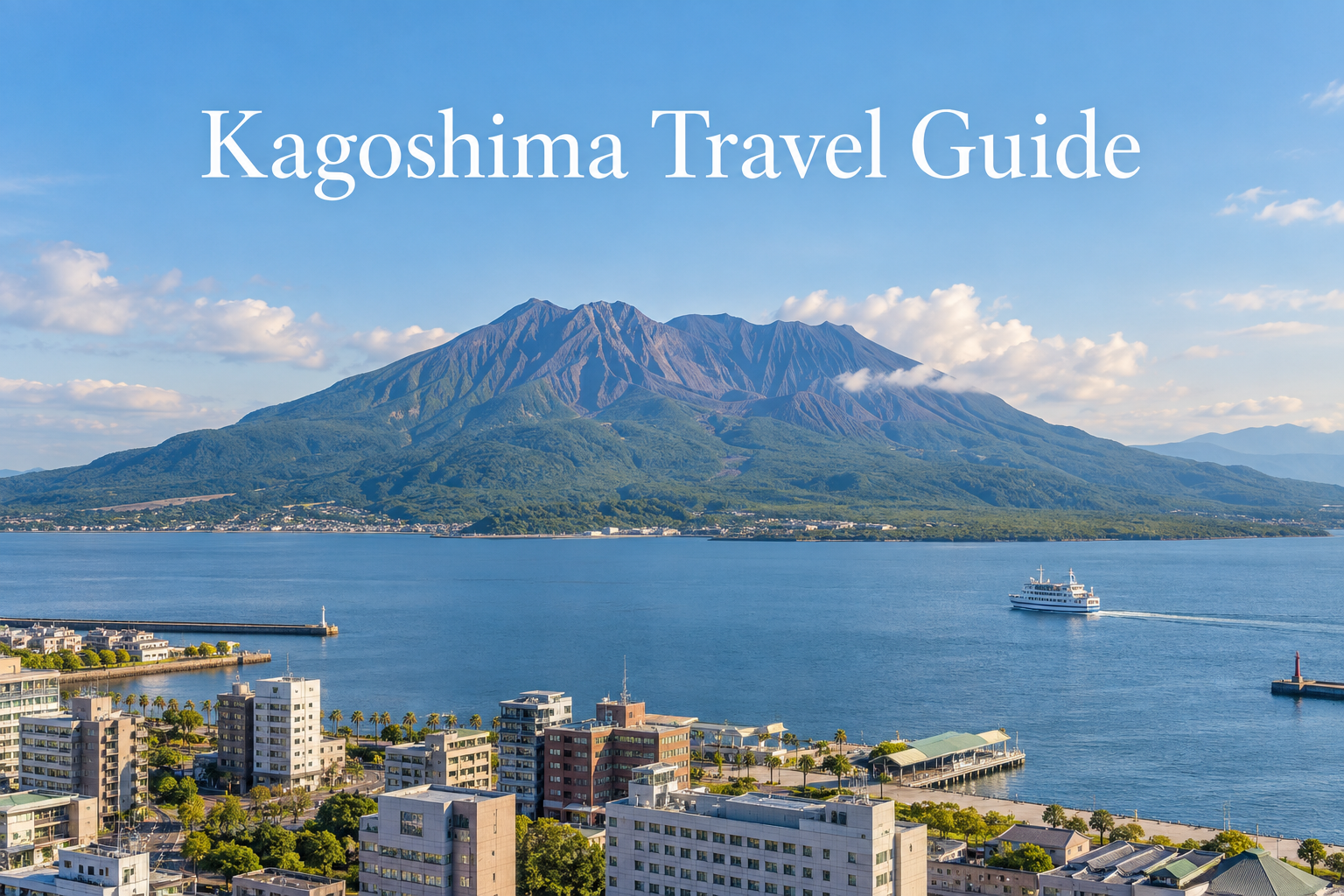
In Kagoshima, the landscape is difficult to ignore. Sakurajima rises across the bay from the city, visible between buildings and from the waterfront. Farther south, geothermal heat warms the sand at Ibusuki. Inland, Kirishima brings forested shrine grounds and hot-spring stays; offshore, Yakushima offers an entirely different world of moss, rain and old cedar trees.
Kagoshima also rewards curiosity about history and everyday food. Sengan-en introduces the powerful Shimadzu family, while a meal of kurobuta pork or a bowl of shaved ice gives the journey a more familiar rhythm.
This Kagoshima travel guide helps you choose a realistic first route. Start with three or four days on the mainland, then add a separate island stay if Yakushima is a priority. Trying to fit every area into a short break would leave more time for transfers than exploration.
1. Sakurajima: A Volcano Across the Water
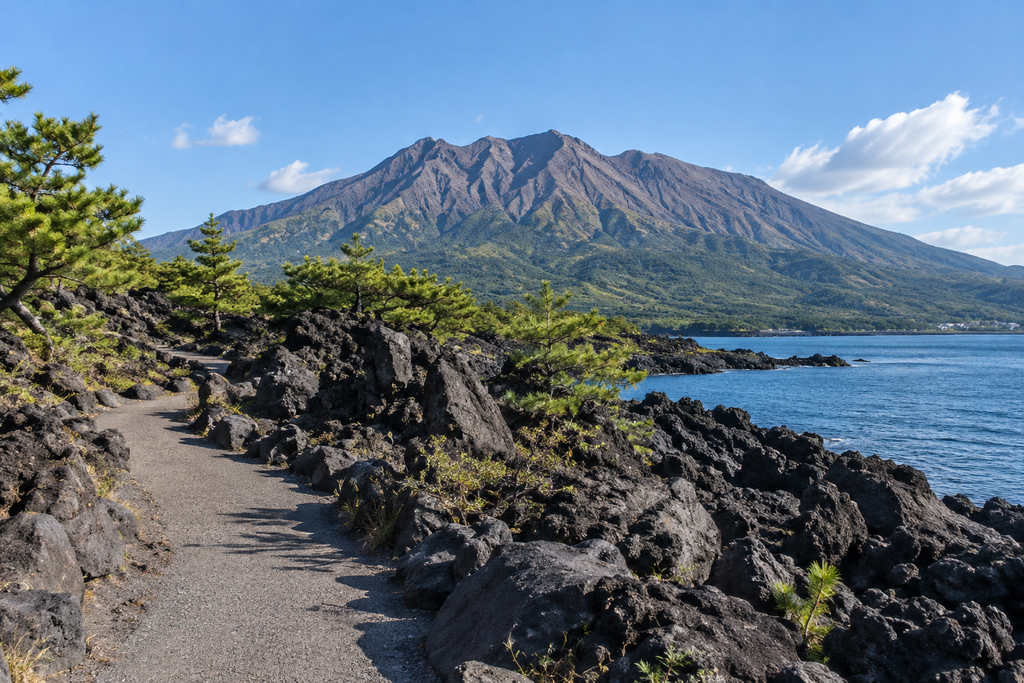
Sakurajima is the natural starting point for understanding Kagoshima. The ferry crossing from the city is short, and the journey itself gives you time to watch the mountain grow larger across the water.
Begin near the port at the Sakurajima Visitor Center, where exhibitions explain the volcano and its surroundings. A walk along an open section of the lava shoreline offers a close view of the rough rock and the plants growing through it. Add a designated observation point if local transport and access allow.
Allow half a day for an unhurried introduction. Seeing several widely separated viewpoints requires more time than the ferry crossing suggests. Check the visitor center’s information and local travel and safety updates before setting out.
Japanese Perspective: Living Beside an Active Volcano
Sakurajima is also a place of homes, work and ordinary routines. For residents, volcanic activity is not simply a dramatic sight. Wind direction, ash and local instructions have practical consequences.
Follow that matter-of-fact approach as a visitor. Use designated sightseeing areas, respect restrictions and check ash and weather information. This is not a summit-hiking recommendation, and a clear sky does not override a closed route.
2. Sengan-en: Gardens and the History of Satsuma
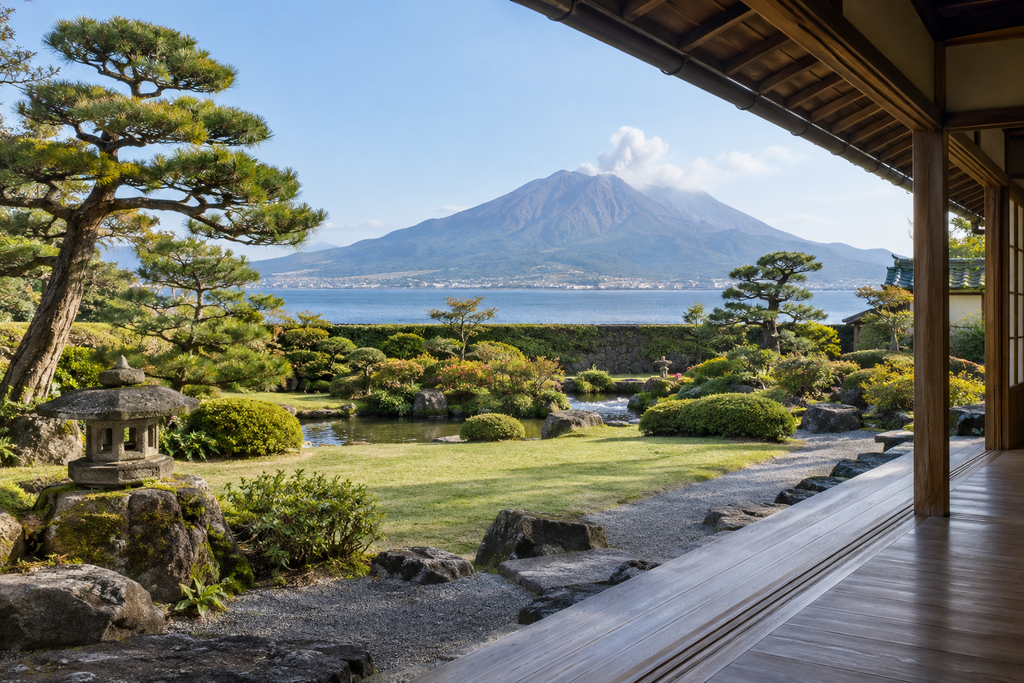
Sengan-en combines a beautiful setting with a useful introduction to regional history. Established in 1658 by Shimadzu Mitsuhisa, it was a residence and garden associated with the family that ruled the Satsuma domain.
The view across the bay is part of its appeal, but leave time for the historical interpretation too. The surrounding heritage facilities explain the Shimadzu family and the industrial experiments that helped connect Kagoshima to Japan’s nineteenth-century transformation.
Plan around two hours, longer if you enjoy museums and architecture. Check the official suggested courses and ticket inclusions before deciding which areas to visit. Consult the access page for current rail and bus options, including Sengan-en Station.
Japanese Perspective: Regional History Adds Detail to National History
The phrase “samurai Japan” can hide major differences between regions. Learning about Satsuma gives names, places and local interests to a period that otherwise feels abstract.
Sengan-en is especially useful for seeing that a warrior family’s story also involved gardens, diplomacy, technology and trade. Let the exhibitions complicate the familiar image of samurai rather than reducing the visit to armor and battles.
3. Ibusuki: Try a Sand Bath by the Sea
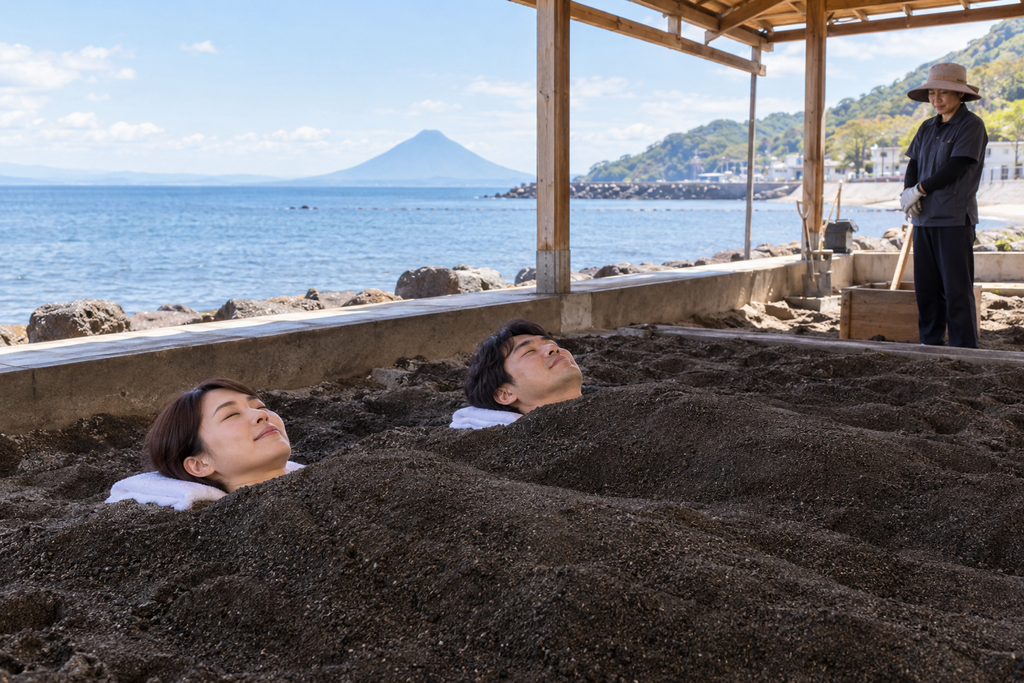
Ibusuki, south of Kagoshima City on the Satsuma Peninsula, is known for sunamushi, bathing in sand warmed by geothermal heat. At an operating facility, visitors change into the designated clothing and staff cover the body with warm sand while the head remains exposed.
The experience is different from soaking in an ordinary hot-spring pool: the weight and warmth of the sand are part of it. Follow the staff’s instructions about positioning and time rather than treating a longer session as better.
Sunamushi Kaikan Saraku provides official information about its experience and current arrangements. Check admission conditions and any health-related restrictions directly with the facility before visiting. This is a travel experience, not a promised medical treatment.
Japanese Perspective: Follow the Local Bathing Routine
Bathing customs are easier to understand when you let staff guide each stage. Ask where to change, what to wear and how to rinse afterward. Be mindful of other visitors’ privacy and follow photography rules.
Allow time for changing and washing as well as the sand bath itself. Ibusuki can be a day trip, but an overnight stay makes it easier to enjoy the coast and a relaxed dinner without watching the clock.
4. Kirishima: Shrine Forests and a Hot-Spring Stay
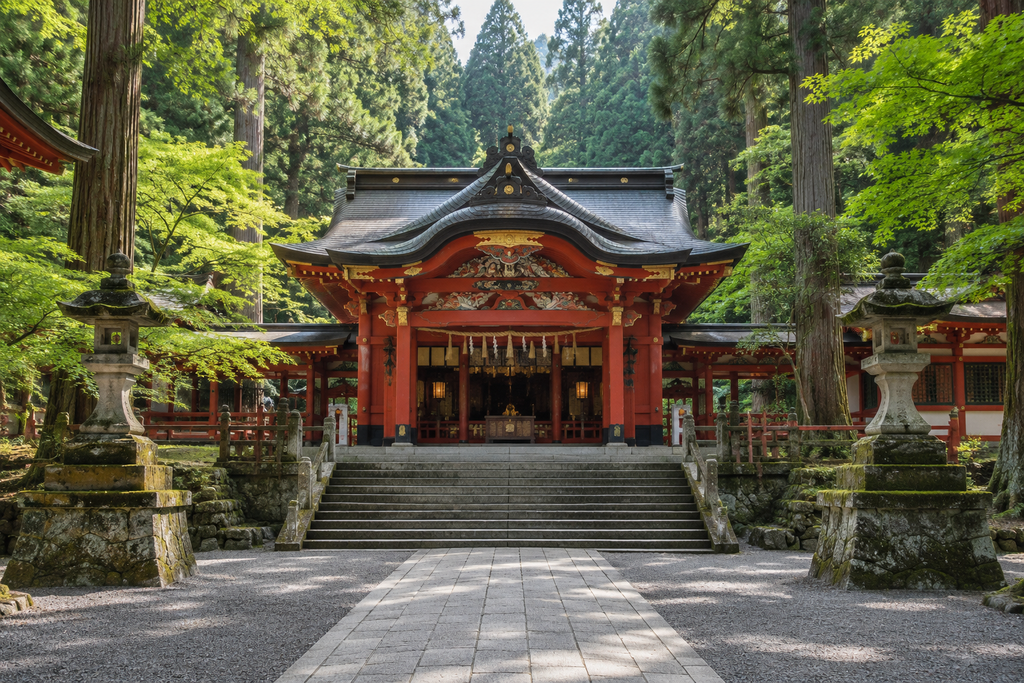
Kirishima offers a mountain-side contrast to Kagoshima’s waterfront. Kirishima Jingu’s richly colored buildings stand among tall trees, and the wider area has numerous hot-spring accommodations.
The shrine is associated with Ninigi-no-Mikoto, a deity in Japanese mythology. Understanding this as religious tradition, rather than documented historical biography, helps overseas visitors appreciate the setting without confusing different kinds of evidence.
Kirishima Jingu Station and the shrine are not the same location. Plan the onward bus or taxi, and do the same for your accommodation. A car can make a multi-stop visit easier, but a shrine visit and a ryokan stay are enough for a rewarding day.
Japanese Perspective: Leave Space for the Stay Itself
A ryokan visit often works best when dinner, breakfast and bathing are treated as part of the trip. Confirm meal inclusions, dietary requests and the arrival deadline when booking.
For communal baths, wash before entering, keep towels out of the water and leave phones in the changing area. Tattoo policies and private-bath options vary by property. If you want to hike in Kirishima, separately check the specific trail, weather and volcanic restrictions; a shrine visit does not establish that mountain routes are open.
5. Yakushima: Make the Forest an Island Journey
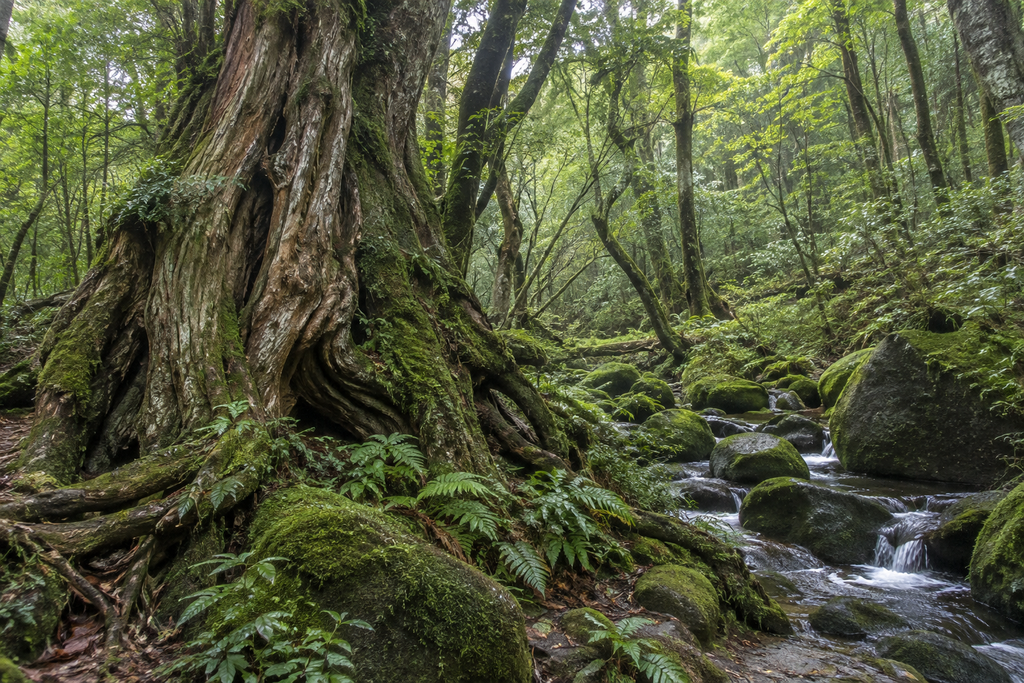
Yakushima belongs to Kagoshima Prefecture, but it deserves its own travel plan. Flights and sea services connect it with the mainland, and weather can affect both. Allow at least three nights if the island is a major part of your trip, with flexibility around onward connections.
The island’s protected forests include old Japanese cedars and landscapes that change with elevation. Choose your walk carefully. Yakusugi Land has routes of different lengths, while Shiratani Unsuikyo also requires selecting a suitable course and checking conditions. Neither name alone tells you how demanding your day will be.
The Jomon Sugi trek is a long, strenuous outing, not a casual detour. Use the Yakushima World Heritage Conservation Center’s route guidance and the town’s trail information when choosing. A local guide can help match the route to your experience.
Japanese Perspective: Enjoyment and Care Belong Together
The most memorable forest visit need not involve reaching the most famous tree. Looking closely at roots, water and smaller plants can be just as rewarding.
Stay on designated paths, avoid stepping onto moss and roots for photographs, carry out litter and never feed wildlife. Bring proper rain gear and footwear. Turn back when conditions require it, even if the planned destination is close.
Yakushima is not the whole of Kagoshima’s island world. Other islands deserve separate research and travel time rather than being treated as nearby add-ons to this route.
6. What to Eat in Kagoshima
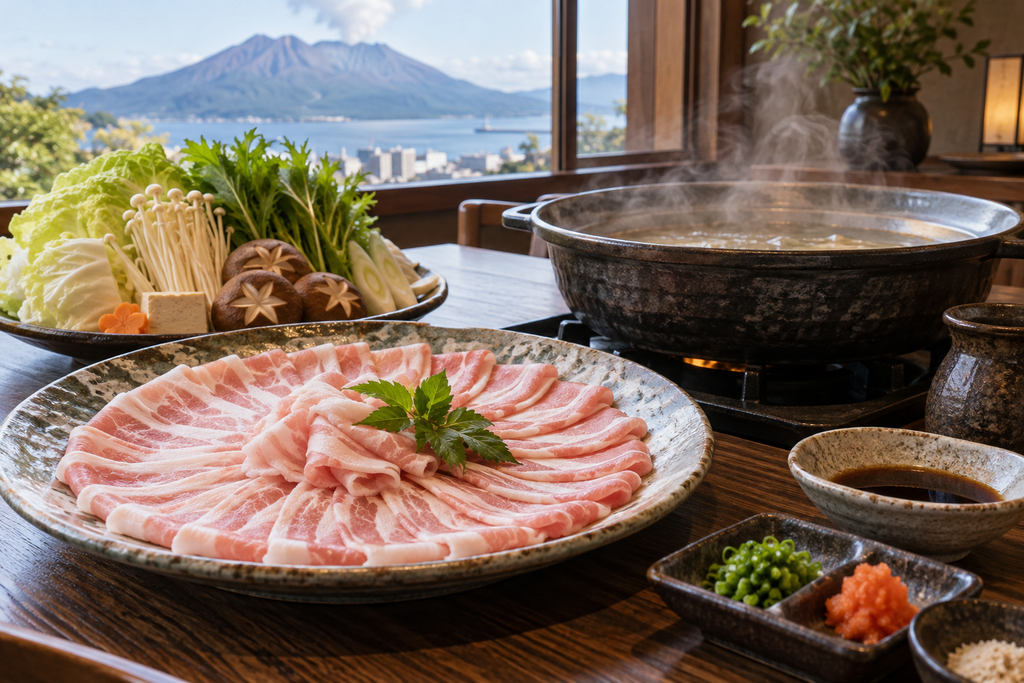
Kurobuta pork is a good introduction to Kagoshima’s food. Shabu-shabu highlights thin slices cooked in hot broth, while tonkatsu offers a crisp, substantial alternative. Ask the restaurant how its set is served if the ordering system is unfamiliar.
For dessert, look for shirokuma: shaved ice commonly served with condensed milk, fruit and sweet beans. Portions can be generous, so check before ordering one after a large meal. Central Kagoshima, including the Tenmonkan area, is a practical place to explore restaurants between sightseeing days.
Japanese Perspective: A Shared Meal Has Its Own Rhythm
With shabu-shabu, the cooking is part of the meal. Follow the restaurant’s guidance, use the provided utensils appropriately and let everyone enjoy the pot at a comfortable pace.
Travelers with dietary restrictions should check broth, sauces and side dishes as well as the main ingredient. A vegetable-looking accompaniment may contain fish stock. Tell a restaurant clearly what you cannot eat, ideally before a fixed meal is prepared.
Practical Information for Your First Visit
Getting There and Around
Kagoshima-Chuo is the city’s main Shinkansen station. Kagoshima Airport is outside the city center, so allow time for the ground transfer. Check JR Kyushu’s current notices and route search and the official Kagoshima transport guide for your dates, particularly during service disruptions.
Within the city, trams, buses and walking cover many sights. The Sakurajima ferry leaves from the waterfront rather than Kagoshima-Chuo Station. Rail serves Ibusuki and Kirishima Jingu Station, but local connections determine what you can comfortably combine.
For Yakushima, check the actual arrival port or airport before choosing accommodation. A sea-service ticket, island bus ticket and rental car are separate planning decisions. Do not assume mainland rail passes cover these transfers.
Where to Stay
Stay near Kagoshima-Chuo for rail convenience or near Tenmonkan for restaurants and evenings in town. Choose Ibusuki for a coastal hot-spring stay and Kirishima for a mountain ryokan experience. On Yakushima, pick a base according to your arrival point and planned activities rather than price alone.
Best Seasons and What to Pack
Spring and autumn are useful starting points for mixed mainland sightseeing. Summer can bring heat, heavy rain and typhoon disruption. Winter is generally milder near the coast, while mountain areas can be cold or icy. Yakushima requires rain preparation in every season.
Bring walking shoes, rain protection and layers for changes in elevation. Keep some cash for small businesses and local facilities. Reserve early around Golden Week, Obon and holiday weekends, and check dinner arrangements at rural accommodation.
A Manageable Four-Day Mainland Itinerary
- Day 1 — Kagoshima City: Arrive, settle in and visit Sengan-en if time allows. Otherwise move it to the next available half-day. Enjoy a regional dinner downtown.
- Day 2 — Sakurajima: Take the ferry, visit the center and explore an approved coastal walk or viewpoint. Return with time for a relaxed evening.
- Day 3 — Choose Ibusuki or Kirishima: Head south for a sand bath and coastal stay, or inland for Kirishima Jingu and a ryokan night. Confirm transport and arrive before dinner.
- Day 4 — A slow morning and onward travel: Enjoy breakfast and one nearby activity, then take your planned connection onward. Avoid relying on a tight rural transfer for an early flight.
Want both Ibusuki and Kirishima? Add at least one day and account for the transfer between them. For Yakushima, add a separate three-night stay and suitable travel time. Keep a buffer before an important flight because island services depend on weather.
Frequently Asked Questions
Is Kagoshima worth visiting on a first trip to Japan?
Yes, especially as part of a Kyushu itinerary. It offers a strong mix of landscapes, history, regional food and hot springs without requiring a different hotel every night.
How many days do I need?
Three or four days suits the city, Sakurajima and one mainland side trip. Add time for both Ibusuki and Kirishima, and treat Yakushima as a separate multi-night extension.
Can I visit Sakurajima independently?
Yes, when services and designated visitor areas are operating. Check local restrictions and transport first. Independent sightseeing does not include approaching the active craters.
Are Ibusuki sand baths the same as regular onsen?
No. Staff cover your clothed body with naturally heated sand, leaving your head exposed. Follow the facility’s instructions and check its admission conditions before participating.
Do I need a car?
Not for the basic city and Sakurajima visit. A car helps with rural combinations, but rail and buses can work if you select fewer stops and confirm connections.
Is Yakushima suitable for visitors who do not want a long trek?
Yes, provided you choose a suitable short route or other island activity. Confirm the exact course, surface and conditions; avoid treating every forest walk as equally easy.
Explore More of Southern Kyushu
Kagoshima is both a destination and a gateway to deeper southern Japan. Continue toward neighboring volcanic landscapes or leave the mainland for the ancient forests of Yakushima.
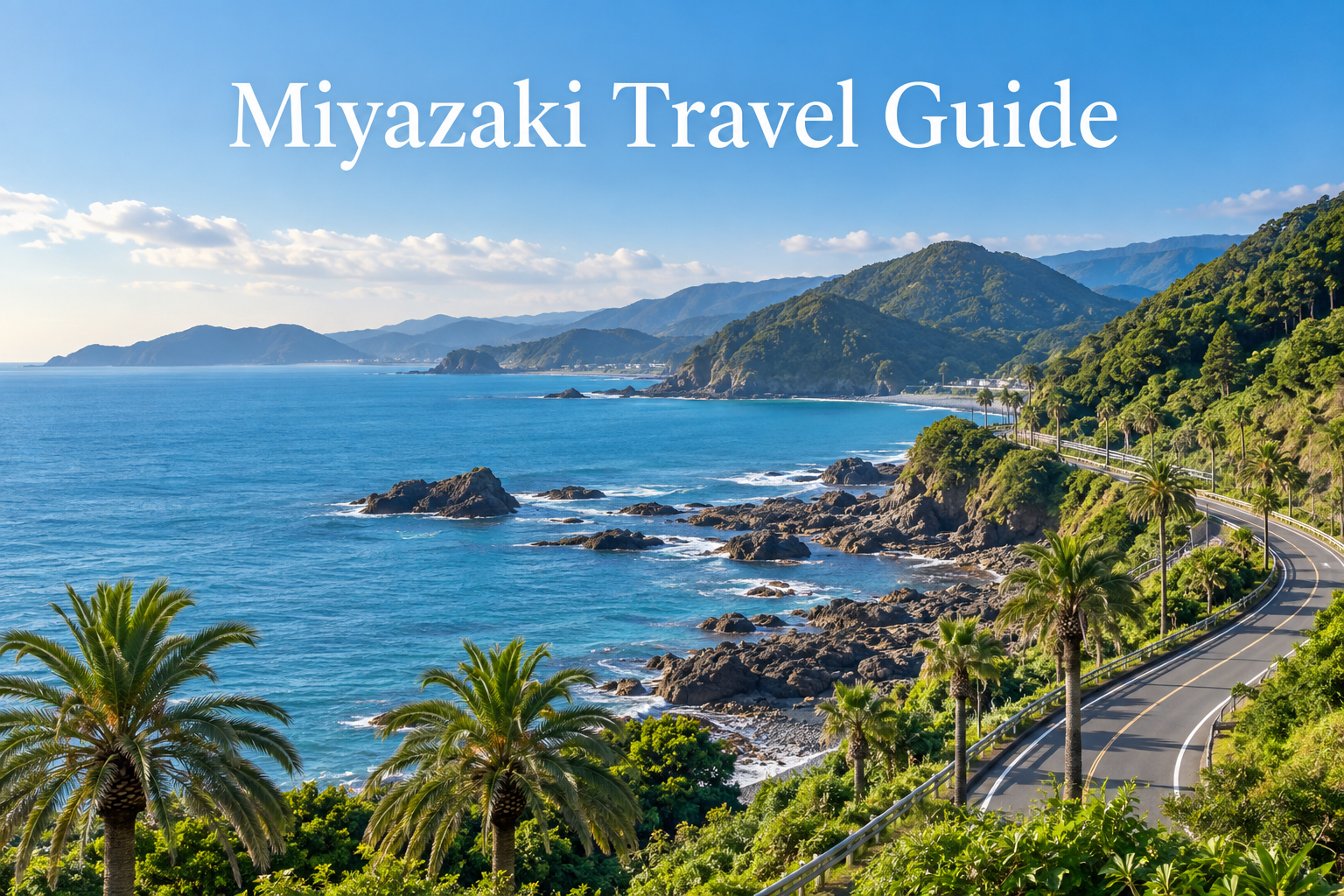
Miyazaki Travel Guide
Travel east toward Miyazaki for Takachiho, Aoshima, coastal shrines and subtropical Pacific landscapes.
Read next: Miyazaki Travel Guide: Takachiho, Coastal Shrines and Local Flavors
Kumamoto Travel Guide
Head north toward Kumamoto for castle history, the vast volcanic landscapes of Aso and peaceful mountain onsen.
Read next: Kumamoto Travel Guide: Castles, Aso Landscapes and Peaceful Onsen
Yakushima Travel Guide
Extend your Kagoshima journey to Yakushima for moss-covered forests, ancient cedar trees, waterfalls and multi-day nature experiences.
Read next: Yakushima Travel Guide: Forest Walks, Where to Stay and a 4-Day Itinerary
Explore more destinations through our Kyushu & Okinawa Travel Guides.