Introduction
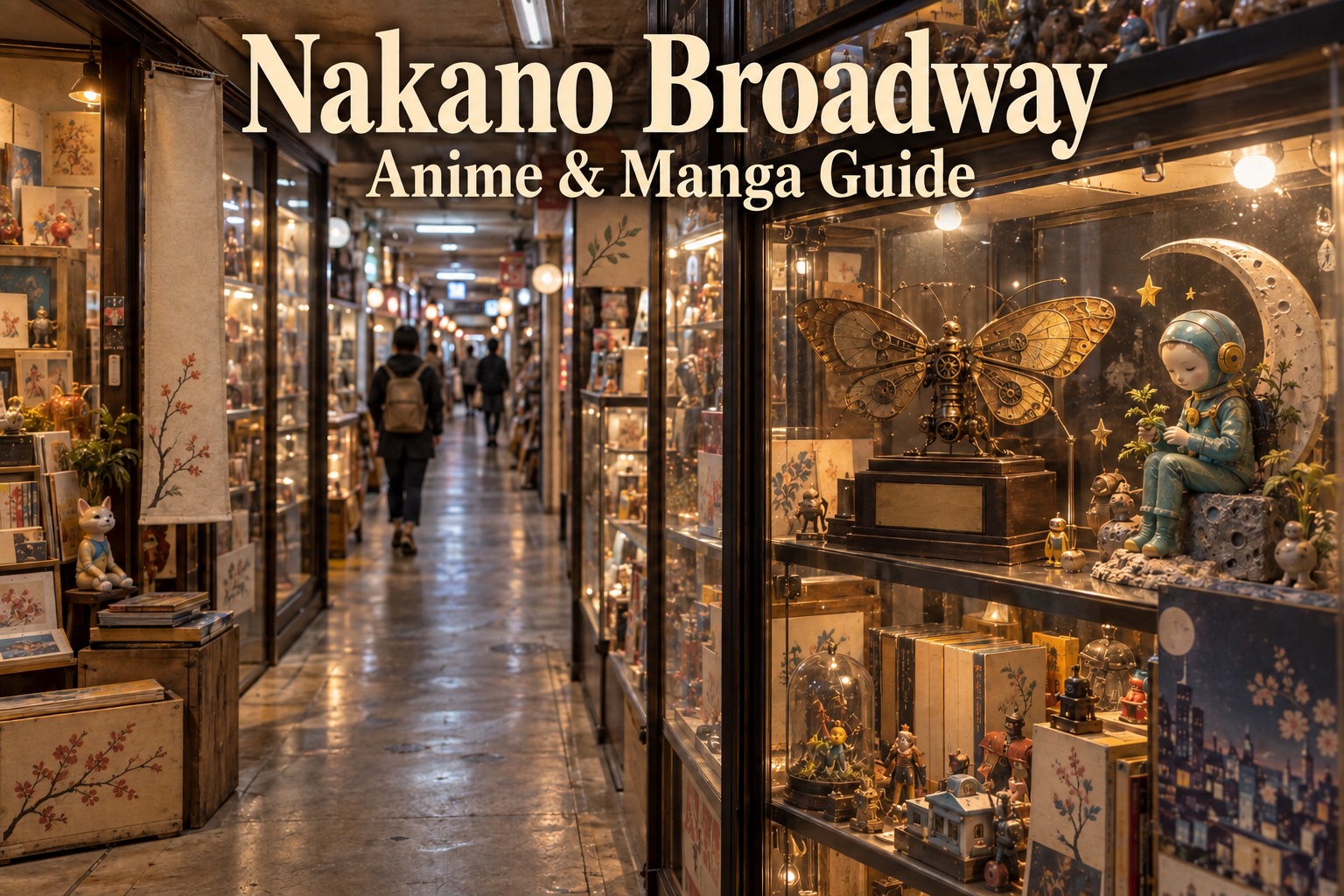
At Nakano Broadway, your best discovery may be something you had forgotten existed: a character keychain from an older series, a manga edition with unfamiliar cover art, or a toy that makes you stop and look twice.
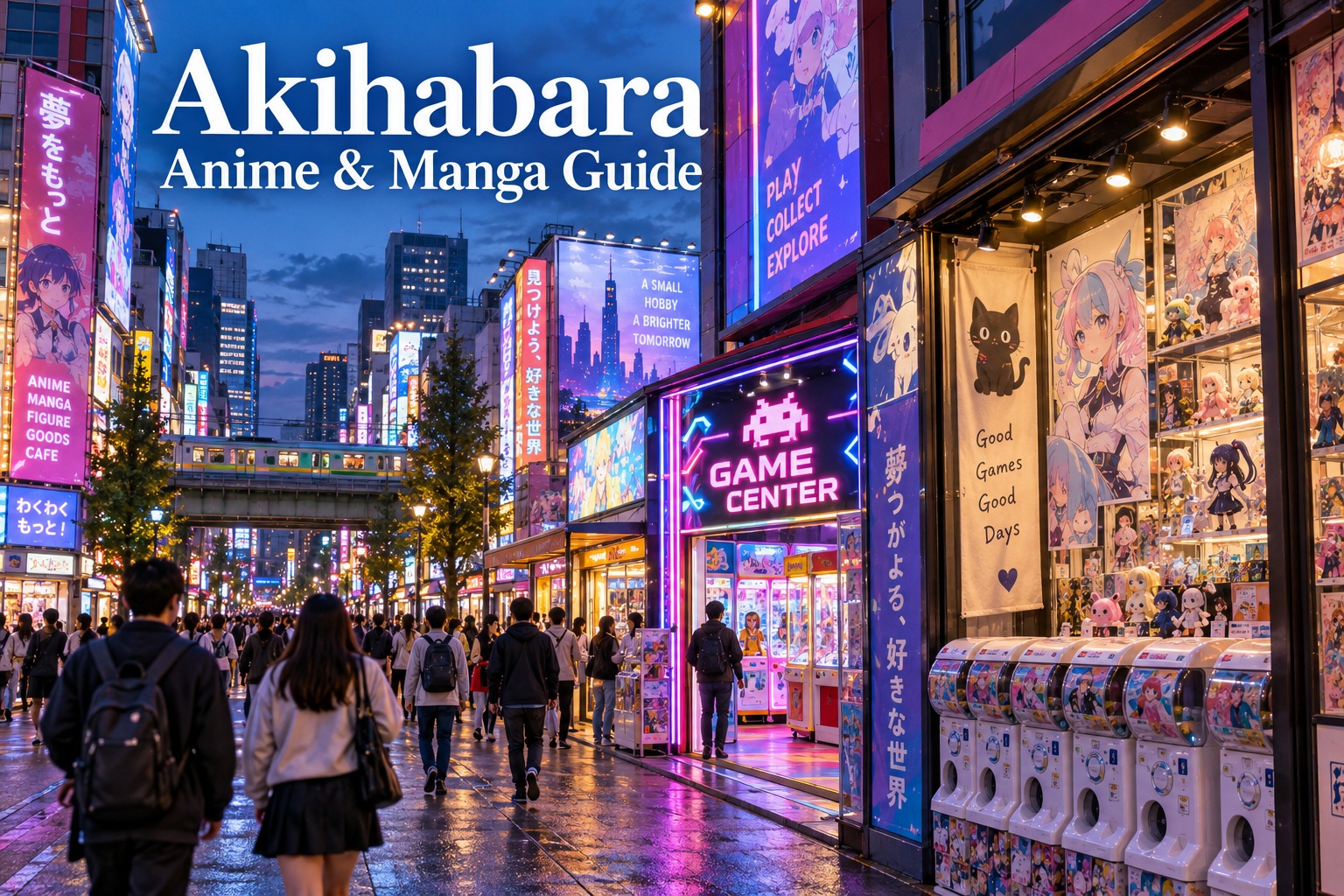
This is Tokyo shopping at a collector’s pace. Compared with Akihabara’s bright streets and mix of entertainment, Nakano invites you to examine cabinets, read condition labels, and follow small specialist interests. It can feel more subdued, although popular aisles still get busy.
This Nakano Broadway guide explains what to search for, how to explore, and how to judge secondhand purchases. Bring a short wish list, a spending limit, and room for an unexpected find.
What Is Nakano Broadway?
Nakano Broadway is a shopping complex north of Nakano Station, reached through the covered Nakano Sun Mall shopping street. It opened in 1966 and combines hobby retail with everyday shops, food, services, and other businesses. Its retail directory covers B1 through 4F.
Its collecting culture developed over decades. Mandarake’s corporate history distinguishes its used-manga business, operating since 1980, from the company’s establishment in 1987. The growth of specialist shops helped make Broadway a destination for enthusiasts.
Think of it as many individual shops sharing a building. Product selections, opening times, payment arrangements, and returns policies can differ across the corridor. That variety is part of the appeal—and the reason a little orientation helps.
Why Anime and Manga Fans Should Visit
Nakano is particularly rewarding when your interests extend beyond current releases. You may encounter older anime figures, discontinued character goods, vintage toys, secondhand manga, and out-of-print books. Tokyo’s official tourism guide highlights these collecting interests.
The opportunity is variety across time, not guaranteed rarity. A modest badge can be more meaningful than an expensive display piece if it belongs to your favorite series. Newer goods also circulate through resale shops, so do not exclude Nakano simply because you follow recent anime.
How to Get to Nakano Broadway
From Shinjuku or Tokyo Station
From Shinjuku, take a JR Chuo Line service that stops at Nakano. From Tokyo Station, the Chuo Line also provides a direct option. Check the departure board and stopping pattern; do not board solely because the line name looks familiar. Allow extra time for finding platforms and station exits.
Nakano also has JR Chuo-Sobu local and Tokyo Metro Tozai Line services. It is a different station from Shin-Nakano. Use a current journey planner for your actual departure point rather than relying on a fixed fare or journey time.
From Nakano Station Through Sun Mall
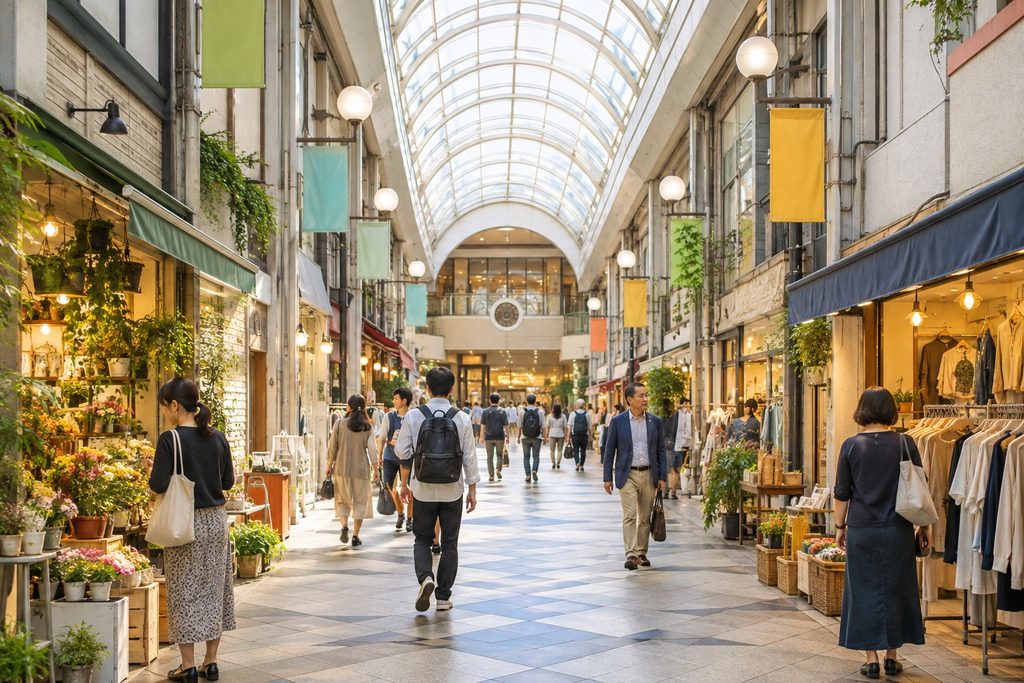
Follow signs toward the north side of Nakano Station, then walk north through Nakano Sun Mall. Broadway is at the far end of this covered shopping street. The building’s official access page gives approximately five minutes from the station’s North Exit. Follow current signs if construction alters the immediate station route.
Save this address: 5-52-15 Nakano, Nakano-ku, Tokyo. Sun Mall is the approach, not the whole destination; keep going until you reach Broadway itself.
How to Explore Nakano Broadway
Start with a Quick Survey
Check the directory before committing to a shop. Most hobby browsing is concentrated on 2F–4F, while B1 and 1F include more everyday shopping and food. These are priorities, not exclusive zones.
Use this sequence for a first visit:
- Orient: Identify stairs, elevators, restrooms, and two target categories.
- Survey: Walk the relevant corridors on 2F, 3F, and 4F without stopping at every cabinet.
- Record: Note promising items, prices, shop names, floors, and cabinet numbers.
- Compare: Revisit the strongest candidates and ask about their condition.
- Decide: Buy after a break, leaving time for packing and any tax-free procedure.
Take photographs only when permitted; written notes work well. Include the precise shop or department name, since “the figure upstairs” will not help you retrace your steps.
Give Small Shops Time
A small frontage can conceal a tightly focused selection. Look at lower shelves and cabinet corners without blocking other shoppers. Ask staff to retrieve items behind glass rather than opening cabinets yourself.
You do not have to complete every floor. If vintage manga is your priority, spend the saved time checking editions instead of browsing unrelated toys. Remember that an item may sell while you compare; a second look is useful, but availability is never guaranteed.
If searching through specialist stores feels overwhelming, a guide familiar with your interests may help you choose where to look and ask better questions.
Mandarake and Specialist Shops
Understand Mandarake’s Layout
Mandarake Nakano is an anchor for the complex, but it is spread across separately named departments. Its current directory lists shops on 1F–4F, with many specialist departments upstairs; published shopping hours are noon–8 p.m.
Ask for the department handling your category: manga, toys, figures, anime materials, posters, character goods, or idol-related collectibles. Do not assume every Mandarake doorway offers the same products. A staff referral can be more useful than checking unrelated cases at random.
Look Beyond One Retailer
Lashinbang Nakano, on 2F, provides another starting point for figures and pre-owned character merchandise. Its official English directory lists 11 a.m.–8 p.m., major payment cards, and tax-free availability.
The building’s directory also lists Nakano Factory on 2F for figure sales, buying, and rental showcases. It illustrates another browsing format: merchandise organized in small display cases. Ask the shop how purchasing, condition checks, and returns work for the specific case.
Use these as orientation points, then investigate smaller specialists in the current directory. A worthwhile visit combines recognizable retailers with shops you discover yourself. No named store can promise the exact item on your wish list.
Rare Anime Collectibles: What Might You Find?
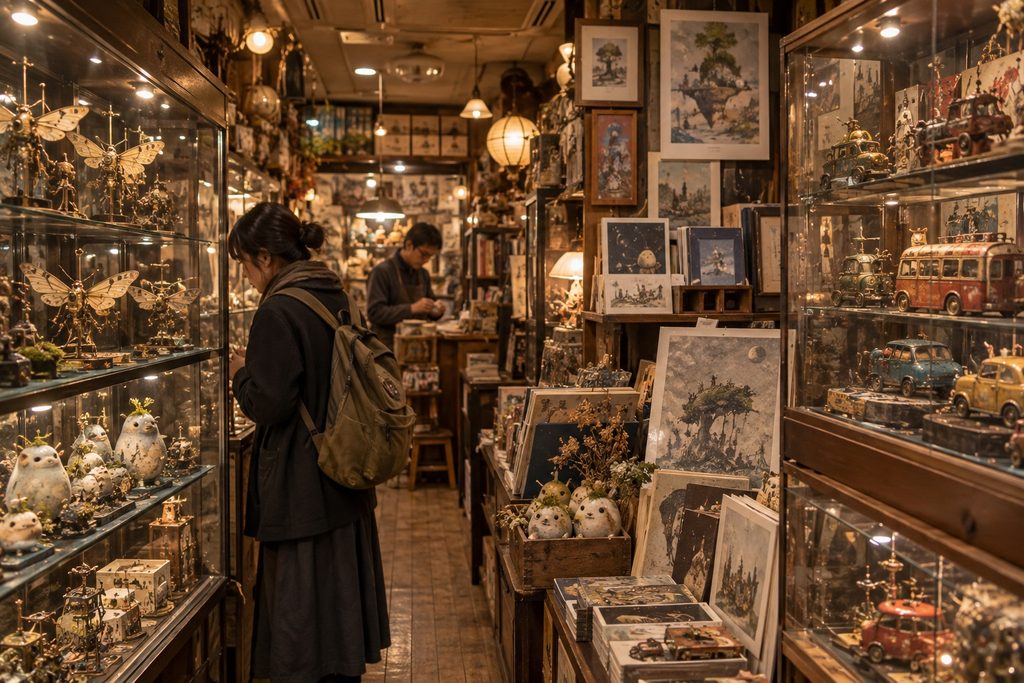
Potential discoveries include older character goods, promotional items, discontinued figures, event merchandise, and toys from earlier releases. Availability follows what reaches the resale market, so the selection changes as items are bought and sold.
Before paying a premium, identify what makes this particular version different. Is it a first release, a later reissue, an alternate color, or an edition with a specific bonus? An old-looking box is not proof of age, and a price tag is not evidence of scarcity.
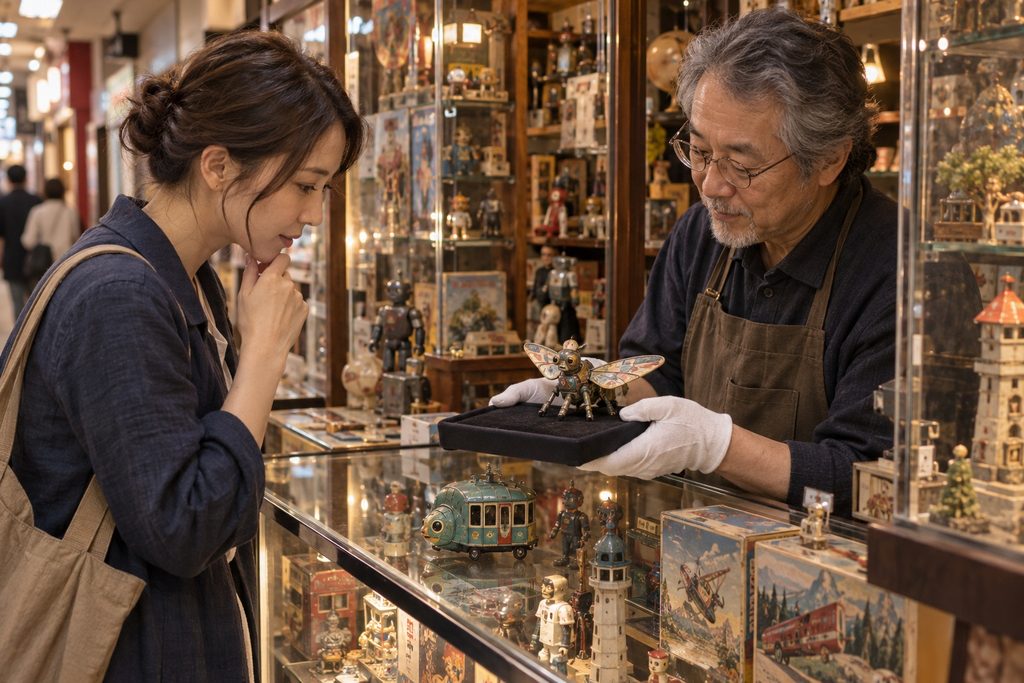
For expensive pieces, ask about manufacturer markings, provenance, repairs, and any replacement parts. If authenticity or edition details remain unclear, pause the purchase. You do not need to turn an unfamiliar object into an instant collecting specialty simply because you found it in Japan.
Anime Figures and Secondhand Figures
Separate three questions: Has it been owned before? Has it been opened? What condition is it in? An unopened figure can be secondhand, while an opened figure may have been carefully displayed. Neither description guarantees completeness or freedom from age-related damage.
Inspect the base, small accessories, exposed paintwork, joints, and delicate projections. Ask about fading, scratches, stickiness, repairs, and missing parts. Check box wear separately: it may matter greatly to one collector and very little to another.
Mandarake publishes its own condition-rating guidance, but a rating does not replace the specific item’s notes. Do not treat grades used by different retailers as interchangeable. Ask whether staff can show an opened item and what can be checked without breaking a seal.
At home, plan a stable display location away from direct sunlight. A suitably sized case can reduce dust, but check the internal dimensions against the base and tallest accessory before buying.
Buying Used Manga and Out-of-Print Manga
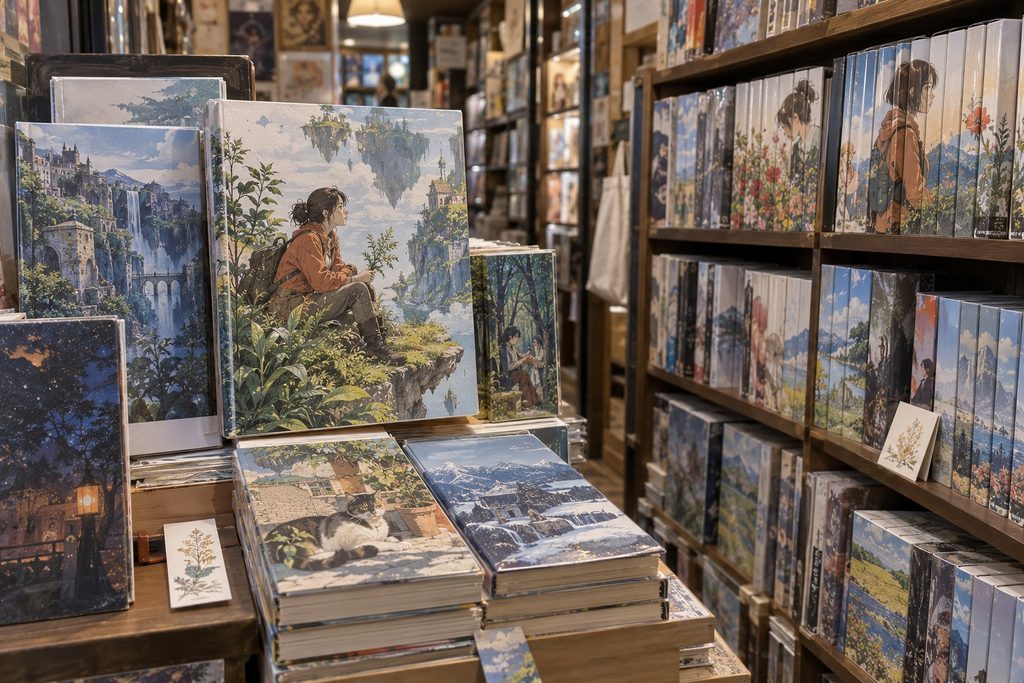
Expect Japanese-language manga to dominate. A familiar English series title on a cover or display does not establish the language inside. Ask before purchasing for someone who needs an English translation.
For used books, examine page edges, binding, stains, fading, writing, and odors where inspection is allowed. Ask staff before opening protected copies. A collector edition may be missing its dust jacket, paper advertising band, insert, or other original extra.
For a set, confirm the volume range, edition, and whether it is complete. A numbered bundle may be a partial run. Reissues can divide the same story differently, making volume-for-volume comparisons misleading. Check publication details if a first printing matters to you.
Out of print does not automatically mean expensive or impossible to replace. Compare the edition and condition, and consider whether you want a reading copy or an archival collectible. Several books also become heavy surprisingly quickly.
Once home, use covers that fit the actual book dimensions and storage that supports the volumes without squeezing them. Japanese manga sizes differ; a sleeve designed for an American comic may be a poor fit.
This article contains affiliate links. If you purchase or book through them, we may earn a commission. As an Amazon Associate I earn from qualifying purchases.
Retro Toys and Vintage Japanese Pop Culture
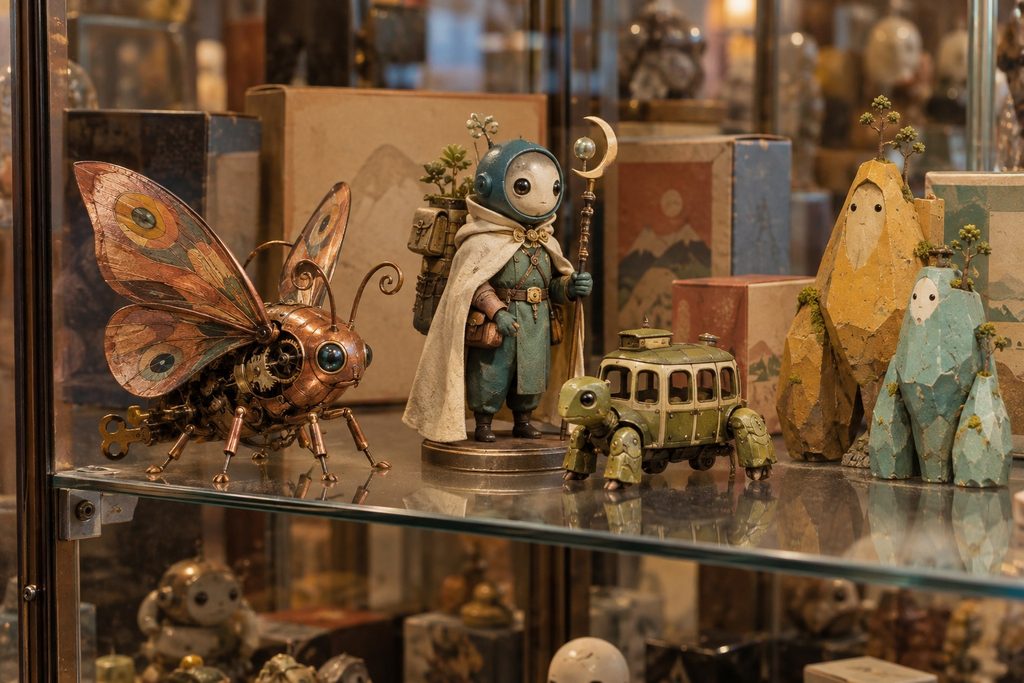
Broaden your search beyond animation. Older television merchandise, miniature vehicles, advertising characters, toys, and idol memorabilia can reveal interests that mainstream anime shops do not emphasize.
You may hear Showa and Heisei, Japanese era names corresponding to 1926–1989 and 1989–2019. These broad labels provide context, not a precise manufacturing date. A newly made retro-style toy can resemble something much older.
Look at design details, packaging, and intended use. Was an object sold as a toy, included as a promotional extra, or created for display? Asking these questions turns a shopping stop into a closer look at everyday Japanese pop culture. Older toys should not automatically be treated as suitable playthings for children.
How to Avoid Overpaying
Compare like with like before comparing prices. Record the manufacturer, version, size, included accessories, and condition—not merely the character name.
| Comparison | Why it changes the decision |
|---|---|
| Boxed versus loose | Packaging may affect protection, completeness, and collector appeal |
| Complete versus missing parts | A low price can conceal an unsuitable display or play item |
| Original release versus reissue | Similar designs may belong to different editions |
| Asking price versus completed sale | An unsold listing does not prove market value |
| Local versus online total | Shipping, fees, taxes, and condition can differ |
Set a maximum you are comfortable paying before entering the shop. Compare other cases when possible, and confirm whether the displayed price includes tax. Do not assume a collector shop bargains over prices.
If the item would absorb most of your travel budget, take a break. Scarcity is not the same as personal value. Walking away from an uncertain purchase is a successful shopping decision too.
How to Check Secondhand Anime Goods
Use this checklist before paying:
- Identity: Confirm the manufacturer, series, version, and size.
- Packaging: Check box corners, window damage, seals, and inserts.
- Completeness: Ask about stands, accessories, instructions, and replacement pieces.
- Appearance: Inspect fading, paint wear, cracks, scratches, and stains.
- Function: Ask whether moving or electronic parts have been tested.
- History and terms: Clarify repairs, disclosed defects, and the return policy.
Useful label vocabulary follows. These are translations, not a universal grading system; ask which part of the item a note describes.
| Japanese label | Meaning to check |
|---|---|
| 中古 | Pre-owned / secondhand |
| 未開封 | Unopened; not automatically inspected inside |
| 開封済 | Opened |
| 箱イタミ | Box damage or wear |
| 欠品 | Missing item or component |
| ヤケ | Fading or discoloration |
| キズ | Scratches or marks |
| ジャンク | Junk / as-is; ask what is wrong and assume no promised functionality |
Point to the label and ask: “Could you explain the condition?” Another useful question is: “Are all the original accessories included?” Do not break a seal to investigate. For a costly purchase, request a clear explanation before making your decision.
What to Buy at Nakano Broadway
Choose something that suits your collection and your journey home.
| Souvenir | Main consideration |
|---|---|
| Anime figures or retro toys | Fragility, completeness, and box size |
| Vintage character goods | Edition, authenticity, and condition |
| Manga | Language, weight, and volume range |
| Acrylic stands and keychains | Included base or fittings; easy luggage fit |
| Posters and paper collectibles | Creases, dimensions, and protective transport |
| Small collectibles | Manageable size, but still check missing parts |
For gifts, ask whether the recipient prefers a specific character or a general Japanese design.
Bringing Collectibles Home
Measure your luggage space before purchasing a large box. Keep original inserts when useful, cushion fragile items, and avoid pressure on thin accessories. Carry-on transport may help you monitor delicate purchases, but your airline’s size, weight, and restricted-item rules still apply.
If shipping is necessary, obtain a quote before buying. Mandarake’s published guidance mentions international shipping for in-store purchases, handled separately from its tourist tax-free procedure; ask staff about your destination and item. Do not assume every independent shop can ship overseas.
Japan Post requires appropriate customs information for goods and has destination-dependent restrictions. Check current service availability and declare contents and value accurately. Your home country’s customs allowances and import charges are separate from Japan’s tax treatment. Keep receipts accessible and confirm the rules with your destination’s customs authority.
Nakano Broadway vs Akihabara
These are useful planning tendencies, not exclusive categories. Both places sell newer and older merchandise.
| Planning priority | Akihabara | Nakano Broadway |
|---|---|---|
| Main experience | A district of shops and entertainment | A concentrated specialist shopping complex |
| Merchandise emphasis | Current fandoms plus broad hobby selections | Secondhand, older, and collector-focused finds |
| Between shops | Arcades, gachapon, themed cafes, electronics | More cabinet browsing and specialist comparisons |
| Best pace | Mix shopping with activities | Leave time for examining individual objects |
| Particularly rewarding for | A varied first anime outing | A specific collecting interest or curiosity about older goods |
For a guided visit covering both interests, check the actual route rather than assuming “Tokyo anime tour” includes Nakano.
Nakano Broadway vs Ikebukuro
Choose Nakano when you want to investigate older releases, secondhand collectibles, and small specialist selections. Ikebukuro is a strong alternative for character goods and contemporary fandom shopping, including the otome-related retail scene around Otome Road. These interests overlap, and neither destination is limited to one kind of fan.
Japanese Perspective: Why Nakano Feels Different from Akihabara
From a Japanese perspective, Nakano Broadway can feel like a place where personal enthusiasms have accumulated over time. Many collectors may recognize it as somewhere to pursue a particular interest, rather than as a purpose-built anime attraction.
For some local fans, searching is part of the pleasure: comparing a small variation, recognizing old packaging, or rediscovering an object from childhood. The building’s mix of ordinary businesses and hobby shops reinforces that feeling.
The established buy-and-sell model gives merchandise another life after its first owner. It also helps older fandoms remain visible beside newer releases. This does not mean Japanese secondhand goods are uniformly pristine; condition is something to assess, not assume.
An overseas visitor may arrive looking for “Japanese anime culture.” Another shopper may want one missing accessory. Both approaches belong here. Leave space for interests you do not immediately recognize, and treat shoppers as people enjoying their day rather than subjects for candid photographs.
First-Time Visitor Tips
Timing, Payments, and Etiquette
Aim for noon or early afternoon. Building access hours do not mean every retailer is open. Mandarake lists noon opening, while Lashinbang’s published opening is 11 a.m.; smaller shops set their own schedules. Recheck priority stores before traveling.
Weekdays can make slow browsing easier; weekends and special sales may bring queues. Carry cash as well as a card. Lashinbang’s Nakano listing includes Visa and Mastercard, but do not extend that policy to every shop.
Leave large luggage at your accommodation if possible. Keep bags close in narrow aisles, ask before photography, and follow signs around age-restricted sections. Eat and drink in designated areas rather than over merchandise. Plan a seated break before tiredness starts influencing purchases.
Tax-Free Shopping: Check Your Purchase Date
Bring your original passport and ask about eligibility before paying. Mandarake’s current guidance directs Nakano customers to its 4F Service Counter, listed as open until 7:30 p.m., for its own qualifying purchases. This is not a mall-wide counter for unrelated retailers. Confirm the day’s process with staff.
For purchases from November 1, 2026, Japan changes to a refund method: eligible travelers pay tax-inclusive prices, complete the required departure customs procedure within 90 days, and receive the refund through the shop or its provider. Official guidance places that procedure before baggage check-in. Do not plan around an immediate airport cash refund.
How Long Should You Spend at Nakano Broadway?
1–2 Hours
Enough for a first impression and one or two categories. Survey the upper shopping floors, browse your main interest, and avoid a complicated high-value purchase if time is tight.
Half a Day
Around three to four hours suits many first-time anime and manga fans. It allows orientation, several shops, a break, and a second look at shortlisted items.
4–6 Hours or More
Useful for focused collectors comparing editions or searching multiple categories. Contact shops about unusually specific requests in advance, while accepting that stock can change.
Suggested Half-Day Nakano Itinerary
This four-hour plan includes an early lunch so your main browsing begins after noon.
| Time | Activity | Purpose |
|---|---|---|
| 11:30 | Nakano Station and Sun Mall | Find your bearings and have lunch |
| 12:15 | Enter Broadway and check directories | Identify your two main categories |
| 12:30 | Survey the relevant upper floors | Record promising shops and items |
| 13:00 | Browse figures, manga, or vintage goods | Compare versions and condition |
| 14:00 | Cafe break | Review your shortlist and budget |
| 14:30 | Return to selected shops | Ask questions and make purchases |
| 15:30 | Finish, pack carefully, or explore nearby streets | Leave flexibility rather than rushing |
If you add another anime district, reduce shopping ambitions accordingly.
Is Nakano Broadway Worth Visiting?
Yes, particularly if vintage merchandise, used figures, older manga, or collector shopping interests you. Visiting Akihabara does not duplicate the patient, object-by-object browsing that can make Nakano rewarding.
If you mainly want games, capsule machines, and themed entertainment, you may prefer more time in Akihabara.
FAQ
Is Nakano Broadway worth visiting for anime fans?
It is particularly worthwhile for older series, secondhand goods, and collecting. Enjoying the search matters more than arriving with a guaranteed shopping list.
Is Nakano Broadway better than Akihabara?
Neither is universally better. Choose Nakano for specialist collecting and Akihabara for a broader mix of shopping and entertainment. Both carry overlapping merchandise.
How long should I spend at Nakano Broadway?
Allow one to two hours for a sample, three to four for a relaxed first visit, and longer for detailed collector shopping.
Does Nakano Broadway sell rare anime figures?
Specialists may have discontinued or unusual figures, but inventory changes. Verify the manufacturer, edition, and condition before accepting a premium price.
Are all items secondhand?
No. The complex contains different businesses and merchandise types. Within resale shops, unopened goods can still be pre-owned; read each item’s description.
Can I find English manga?
Do not count on it. Japanese editions predominate. Contact a retailer about a specific title and language before making a special trip.
What time should I visit?
Noon or early afternoon is a practical choice for hobby shopping. Individual shops have different hours, and special events or closures can change access.
Can I use credit cards?
Some retailers accept major cards, including Lashinbang’s listed Nakano shops. Acceptance varies; carry cash and ask before committing to a large purchase.
Conclusion
Nakano Broadway rewards a slower kind of curiosity. The pleasure comes from finding something you did not expect, understanding it, and deciding whether it belongs in your collection.