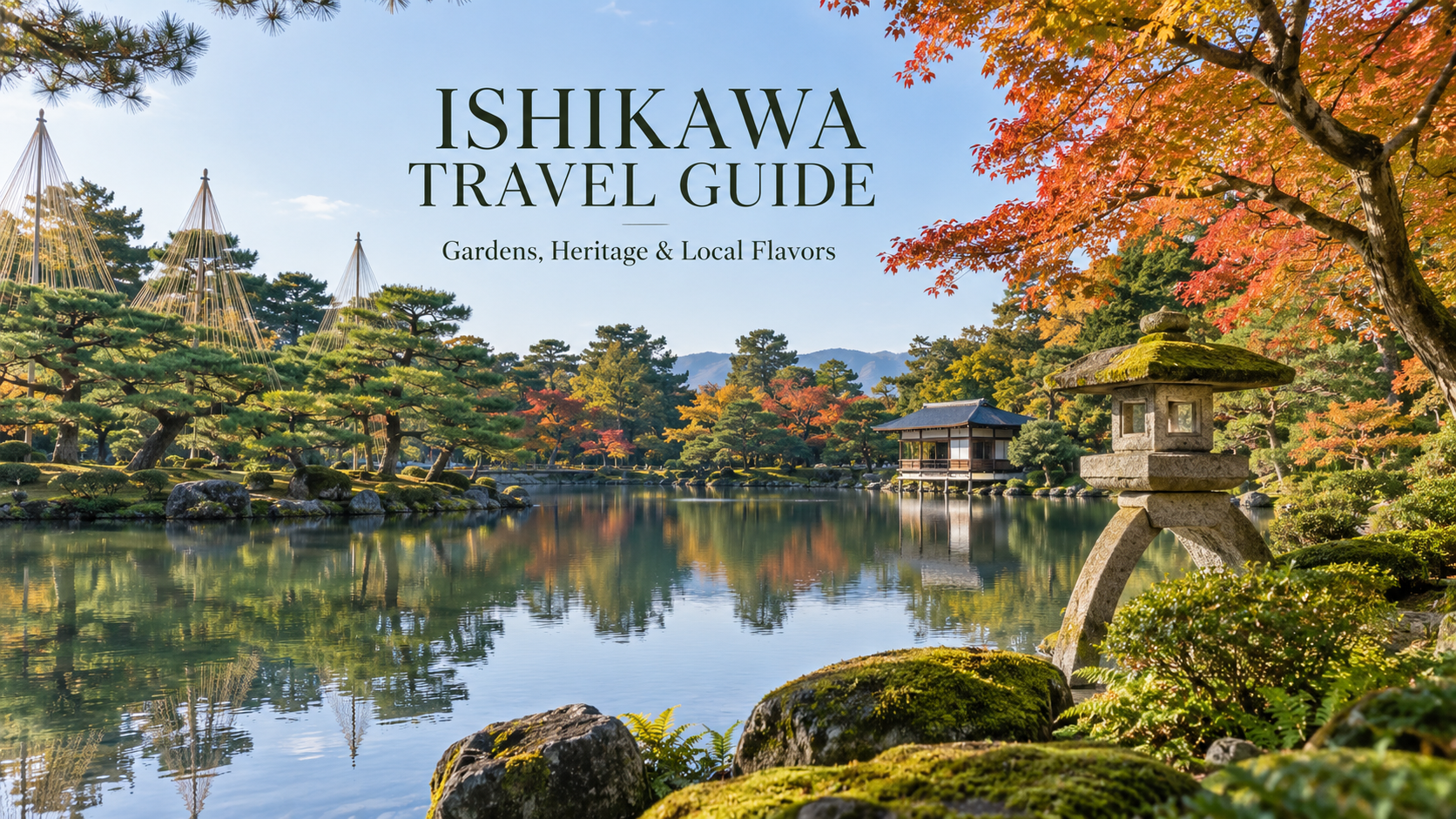
Ishikawa invites you to look closely. A garden path reveals a different view around each bend, wooden latticework filters the light along a historic street, and a beautifully decorated bowl becomes part of the pleasure of lunch.
Kanazawa is the best-known starting point, but the prefecture also includes the hot-spring towns of Kaga and the coastal communities of Noto. Each deserves its own pace and planning.
This Ishikawa travel guide focuses on a comfortable first visit: gardens, historic neighborhoods, regional food, and time to understand the craftsmanship behind what you see.
Images are original illustrations inspired by Ishikawa. They convey regional atmosphere and are not documentary photographs or exact reproductions of individual locations.
Why Visit Ishikawa?
Ishikawa lies in Hokuriku, on the Sea of Japan side of the broader Chubu region. It suits travelers who enjoy cultural sightseeing alongside good food and a slower evening.
Kanazawa brings several interests together within one city. You can combine a garden, a preserved neighborhood, and a regional meal without needing to change hotels every night.
For a first trip, spend two days in Kanazawa and add a day or overnight stay in Kaga. Treat Noto as a separately planned extension, using current local information rather than an older sightseeing checklist.
1. Kenrokuen: A Garden That Rewards a Slow Walk
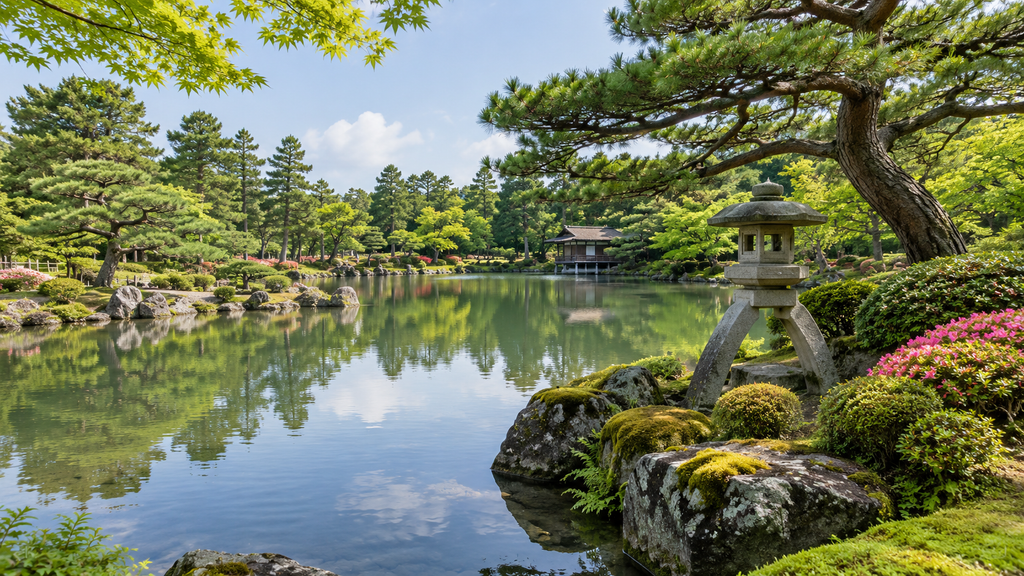
Kenrokuen is an expansive strolling garden beside Kanazawa Castle. Ponds, carefully tended trees, stone features, and changing elevations create a sequence of views rather than a single scene.
Allow time to wander beyond the most photographed spots. Look at a pine tree from different angles, pause beside the water, and notice how the planting frames what lies beyond it.
Pair the garden with the neighboring castle park if your energy and schedule allow. You do not need to rush through every paid attraction nearby to enjoy this part of Kanazawa.
Check the official Kenrokuen visitor page for seasonal information and access details.
Japanese Perspective: Beauty Can Begin with Practical Care
The conical ropes seen around some trees in the colder months are called yukitsuri. They help support branches against the weight of heavy snow.
Their striking appearance comes from a practical job. Seeing them as evidence of care, rather than decoration alone, adds another layer to the garden experience. The landscape visitors admire depends on skilled work throughout the year.
2. Higashi Chaya: Understand the Streets Behind the Photograph
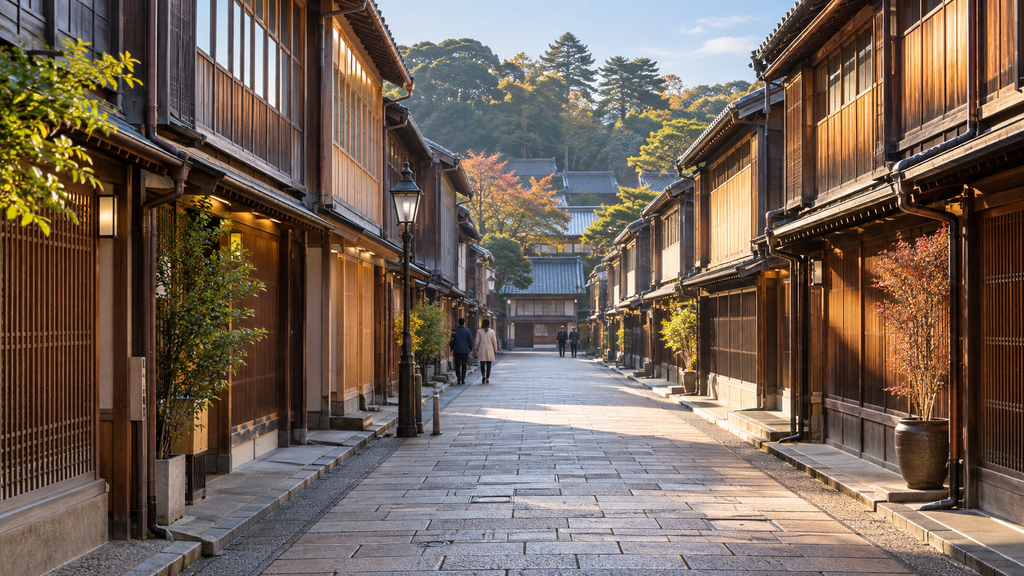
Higashi Chaya is known for its wooden buildings, refined latticework, and historic entertainment culture. Walking here is an opportunity to appreciate the rhythm of a street as much as individual facades.
Browse an open shop, stop for tea, or visit a building that welcomes the public. Check admission and opening arrangements before assuming you can enter a particular property.
A short walk toward the Asano River can give your visit a change of scene. Avoid filling the entire day with similar photographs; one thoughtful stop inside often adds more than another circuit outside.
Japanese Perspective: “Teahouse” Has a Specific History
In this context, a chaya is historically associated with entertainment by geisha, including music and dance. It does not simply mean an ordinary cafe serving tea.
Do not assume every traditional building accepts walk-in visitors for a performance. If you would like to experience the performing arts, book an advertised visitor program and follow its rules.
The district remains a working neighborhood. Keep entrances clear and ask before photographing people or interiors.
3. Nagamachi: See a Different Side of Historic Kanazawa
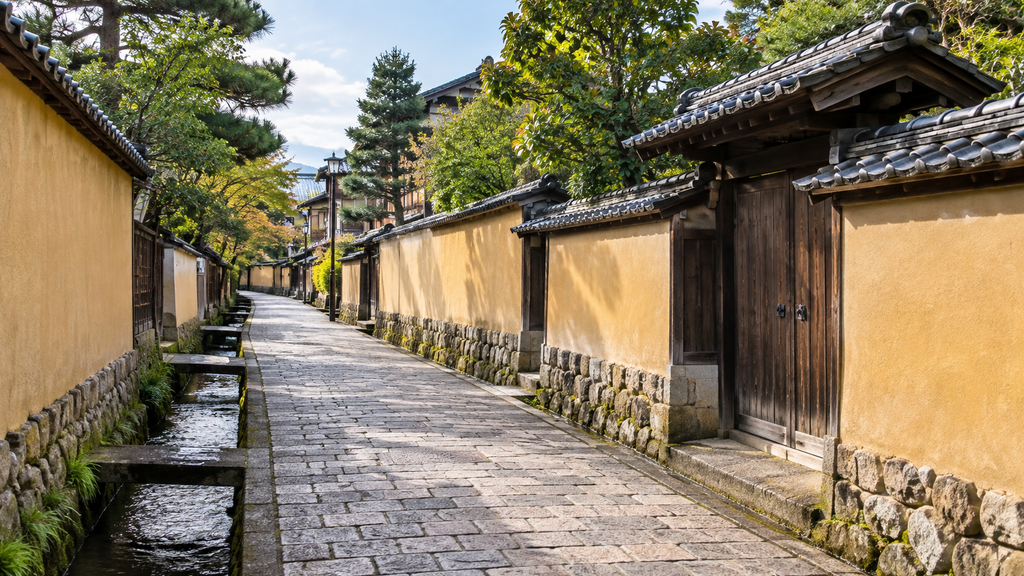
Nagamachi offers a quieter architectural contrast to the teahouse districts. Earthen walls, tiled edges, gates, and narrow lanes shape the streetscape of this former samurai residential area.
Walk slowly enough to notice the boundaries between public street and private space. Where a residence or garden is open to visitors, check its individual hours and admission details.
This area works well as part of a day that also includes shopping or a craft visit. Give yourself room for a cafe break, especially after a morning of walking.
Japanese Perspective: Samurai History Includes Domestic Life
Samurai history is often introduced through battles and armor. A residential district encourages different questions: how households were arranged, how status appeared in architecture, and how gardens related to daily life.
You do not need to imagine the streets as a film set. Reading the interpretation at an open residence can provide a more grounded understanding of the people who once lived here.
4. Kaga Onsen: Leave Room for a Quiet Evening
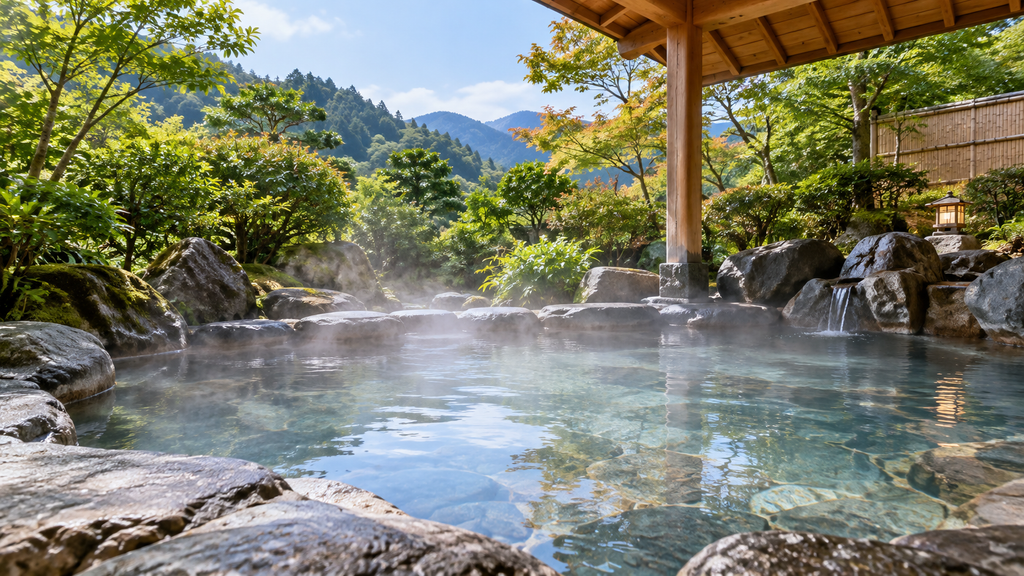
Kaga Onsen encompasses several hot-spring towns, including Yamashiro, Yamanaka, Katayamazu, and Awazu. Choose one town and accommodation that match the experience you want.
Yamanaka suits travelers interested in a town walk and the nearby Kakusenkei Gorge. Check local conditions before choosing a riverside route. Other towns offer different settings, so compare the location as carefully as the room photographs.
An overnight ryokan stay gives you time to settle in, bathe, and enjoy dinner without watching the clock for a return train.
Confirm what the room plan includes. Dinner, breakfast, private bathing, and station transfers may depend on the booking.
Japanese Perspective: The Shared Bath Has Its Own Rhythm
Wash and rinse before entering the soaking bath, keep towels out of the water, and follow the facility’s instructions. Keep conversation considerate and leave phones in the changing area.
If communal bathing feels unfamiliar, ask about a private bath. Tattoo policies and private-bath availability vary by property, so check directly before booking.
Arriving by the requested check-in time also helps the inn prepare and serve your meal as planned.
5. Kutani Ware and Gold Leaf: Meet Ishikawa Through Its Crafts
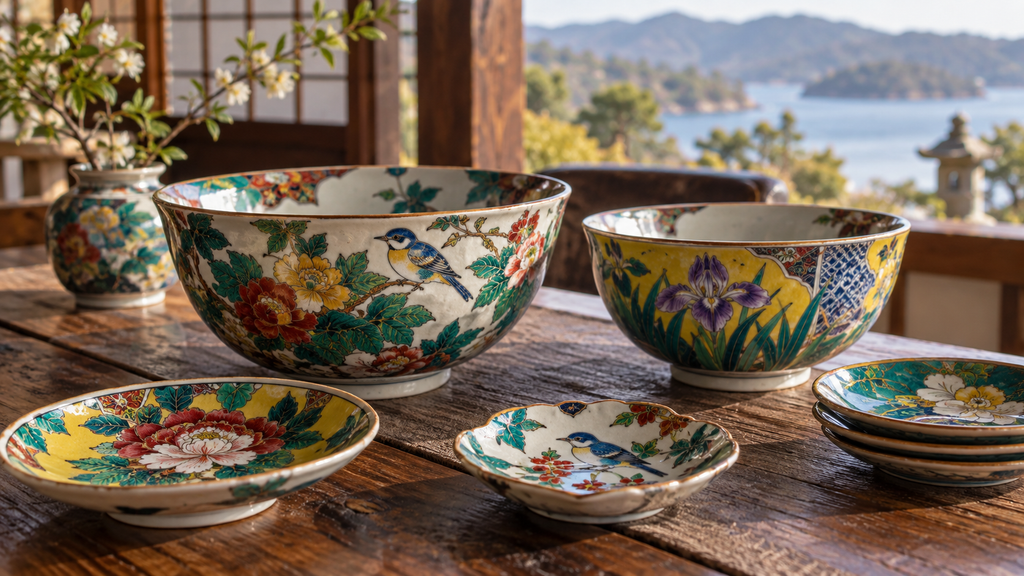
Ishikawa’s craft traditions give you a reason to spend time indoors as well as outside. Kutani ware is known for richly colored decoration, while Kanazawa’s gold-leaf craft appears in objects ranging from traditional interiors to contemporary designs.
Visit a museum, browse a specialist shop, or book a suitable workshop. The Kutani-yaki Art Museum in Kaga is one place to begin learning about the ceramics.
A hands-on experience can be rewarding, but confirm the language support, duration, and collection or shipping arrangements before paying.
Japanese Perspective: A Useful Object Can Carry a Travel Memory
When choosing a bowl or plate, ask how it is intended to be used and cleaned. Its size and shape matter as much as the painted surface.
A small piece that becomes part of your daily meals may remind you of Ishikawa more often than an object kept in its box. If a maker or shop explains the technique, note their name so the story stays attached to the purchase.
What to Eat in Ishikawa
Jibuni: A Regional Dish Worth Seeking Out
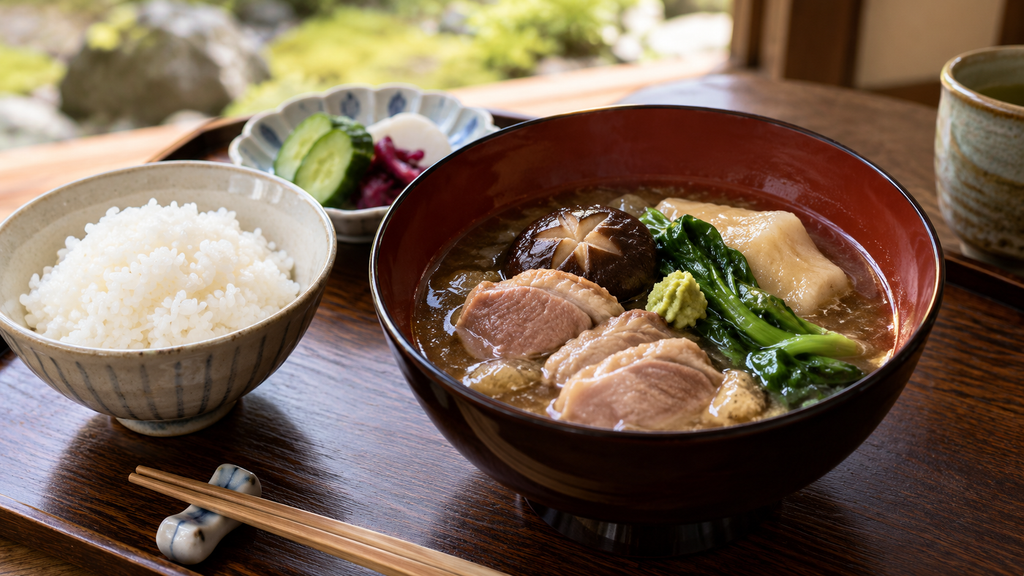
Jibuni is a Kaga-style dish featuring duck or sometimes chicken, vegetables, and wheat gluten in a lightly thickened broth. Wasabi can provide a contrasting accent.
It is a useful choice when you want to try a regional cooked dish alongside Ishikawa’s better-known seafood. Recipes and presentation differ between restaurants.
Seafood and Market Meals
Kanazawa’s Omicho Market is a familiar starting point for exploring food shops and restaurants. Choose a place according to your appetite and budget, and check the displayed price before ordering.
Ask what is seasonal rather than expecting every celebrated fish or crab dish to be available throughout the year. A simple lunch can be just as satisfying as an elaborate set menu.
Tea, Sweets, and the Tableware Around Them
Leave time for tea with wagashi, Japanese confectionery. Notice the sweet’s shape, the bowl, and how they are presented together.
This is another way to connect Ishikawa’s food and craft culture. The vessel is part of the experience, even when the meal itself is modest.
Explain allergies or dietary requirements before ordering. Jibuni commonly includes wheat, and vegetable dishes or noodle broths may contain fish stock.
Planning a Visit to Noto
Noto is an important part of Ishikawa’s identity, with coastal communities, crafts, and rural landscapes. Following the 2024 Noto Peninsula earthquake, tourism recovery has progressed unevenly across the area.
The prefecture’s official Noto recovery tourism page highlights reopened businesses, experiences, and suggested visits. Use these updates to choose places actively welcoming travelers.
Confirm accommodation, road access, and transport directly for your dates. A reopened attraction does not automatically mean every nearby service has resumed.
Support local businesses through ordinary purchases and stays, and respect closures and private recovery work. Add Noto only when you can give the journey enough time; it is not a quick extra stop between Kanazawa and Kaga.
Best Time to Visit Ishikawa
| Season | Good reasons to visit | Planning note |
|---|---|---|
| Spring | Garden walks and blossoms | Flowering dates vary; popular periods can be busy. |
| Summer | Green gardens and cultural visits | Allow breaks from heat and carry rain protection. |
| Autumn | Foliage and comfortable walking days | Check local color reports instead of relying on fixed dates. |
| Winter | Seasonal food, hot springs, and yukitsuri | Snow is not guaranteed; slippery paths and delays are possible. |
For a first visit, choose the season that matches your main interest and keep an indoor option available. Museums, crafts, and a relaxed meal make a useful rainy-day plan.
Getting to and Around Ishikawa
Kanazawa is connected to Tokyo by the Hokuriku Shinkansen. Rail journeys from Kyoto or Osaka commonly involve the Limited Express Thunderbird and a transfer at Tsuruga to the shinkansen.
Kaga Onsen Station is also on the shinkansen line, but the hot-spring towns require onward transport. Confirm the bus, taxi, or inn shuttle before arrival.
Within Kanazawa, combine walking with buses or taxis. The station and major historic neighborhoods are spread out enough that you should check the map before planning to walk everywhere.
Stay near the station for convenient arrivals and departures, or choose a central location close to your preferred sightseeing. Carry some cash for smaller establishments and check luggage storage before your first outing.
Travelers with limited mobility should ask about garden routes, steps in historic buildings, and bathing access at their selected accommodation.
A Relaxed Three-Day Ishikawa Itinerary
Day 1: Kenrokuen and the Castle Area
Arrive in Kanazawa, store your luggage, and explore the garden and surrounding area. If arriving late, save the garden for the next morning and begin with a local dinner.
Day 2: Historic Streets and Crafts
Visit Higashi Chaya, then choose Nagamachi or a prebooked craft experience for the afternoon. Make time for tea rather than trying to enter every attraction.
Day 3: Kaga Onsen
Travel to your chosen hot-spring town. Enjoy a town walk or a craft museum before checking into an inn.
If you must depart the same day, book a day-use bath only after confirming its hours and your onward connection. With four days, stay overnight and leave after breakfast for a more comfortable pace.
Plan Noto as an additional extension using current local guidance.
Frequently Asked Questions
Is Ishikawa the same as Kanazawa?
No. Kanazawa is the prefectural capital. Ishikawa also includes Kaga, Hakusan, Noto, and other communities.
How many days should I spend in Ishikawa?
Two days suit a focused Kanazawa visit. Three or four days give you more room for Kaga and an overnight hot-spring stay.
Can I visit without a rental car?
Yes. Kanazawa is practical by public transport and on foot. Rural destinations need more detailed connection planning.
Is Kenrokuen worth visiting outside cherry blossom season?
Yes. Its appeal includes trees, water, garden design, and seasonal changes throughout the year.
Can first-time visitors use an onsen?
Yes. Read the bathing instructions, confirm the property’s rules, and consider a private bath if you prefer more privacy.
Can I visit Noto now?
Some businesses and attractions welcome visitors, while conditions vary by location. Check the official recovery tourism information and contact your chosen providers for your travel dates.
Explore More of Chubu
Ishikawa’s gardens, historic streets, crafts and seafood provide an excellent introduction to Japan’s Hokuriku region. Continue your journey east toward the mountains or south toward traditional villages.
Toyama Travel Guide
Travel east from Kanazawa to discover Toyama Bay seafood, mountain scenery, traditional craftsmanship and the spectacular Tateyama Kurobe Alpine Route.
Read next: Toyama Travel Guide: Mountains, Heritage, and Coastal Flavors
Gifu Travel Guide
Head toward the mountains for Takayama, Shirakawa-go and Gero Onsen, combining historic streets, traditional architecture and hot-spring culture.
Read next: Gifu Travel Guide: Mountain Towns, Heritage, and Local Flavors
Nagano Travel Guide
Continue deeper into central Japan for Matsumoto, alpine landscapes, temple towns and the historic streets of the Kiso Valley.
Read next: Nagano Travel Guide: Mountains, Heritage, and Local Flavors
Explore more destinations through our Chubu Travel Guides.