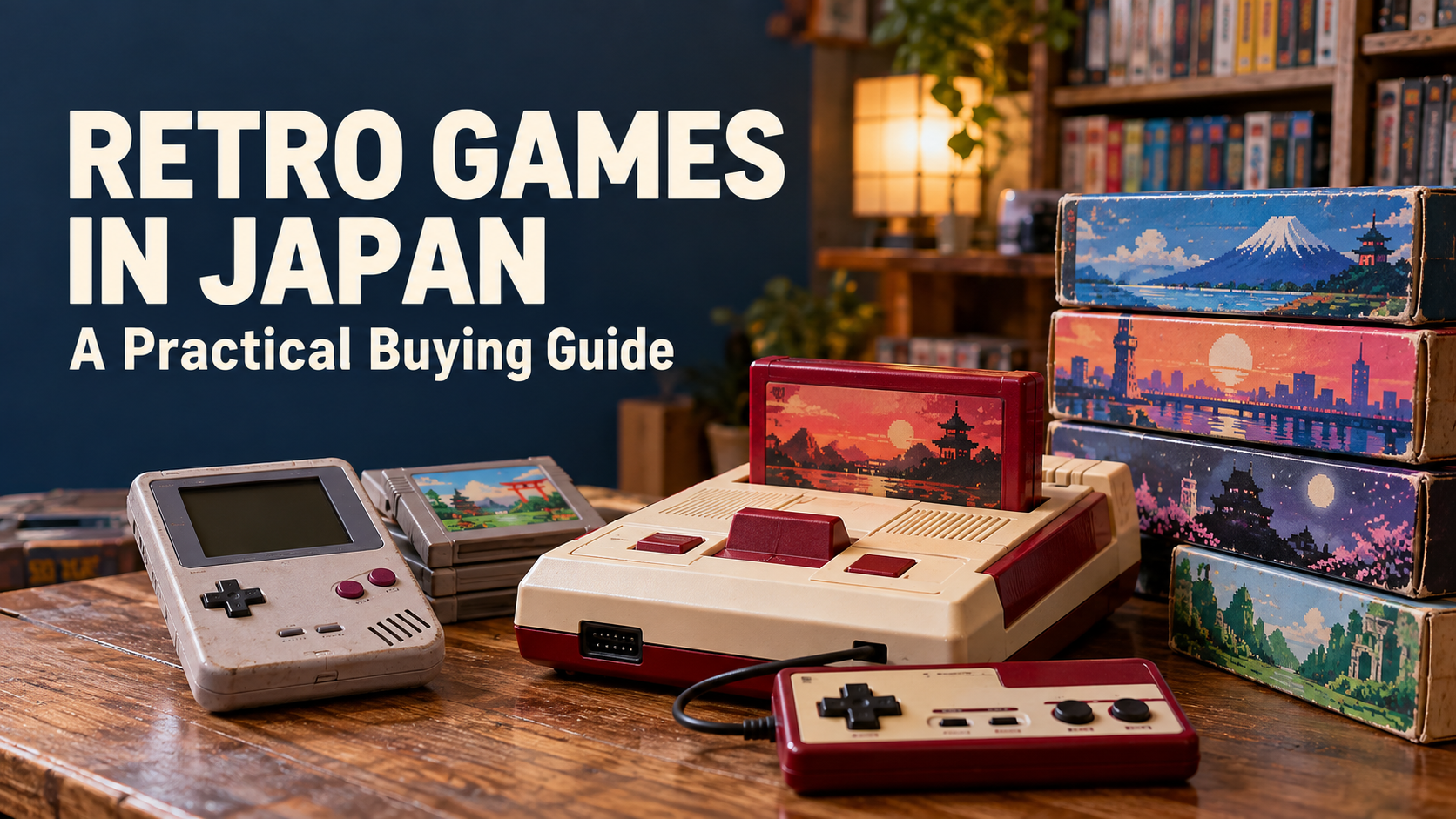
A Japanese game box can be a wonderful souvenir: familiar characters, unfamiliar cover art, and a small piece of gaming history that fits into your suitcase. The important question is what you want to bring home—a game to play, an edition to collect, or a console you are prepared to maintain.
Buying retro games in Japan becomes easier once you decide that first. This guide covers places to browse in Tokyo and Osaka, how to compare used copies, and the compatibility checks that matter before you pay.
For a first trip, our recommendation is to choose three target games for one platform, set a maximum price for each, and leave room for one unexpected discovery.
Start with a Shopping List You Can Use in the Store
Save the Japanese title, a cover image, the platform, and the specific edition you want. If you intend to play the game, also save your console’s model number and the region in which it was sold.
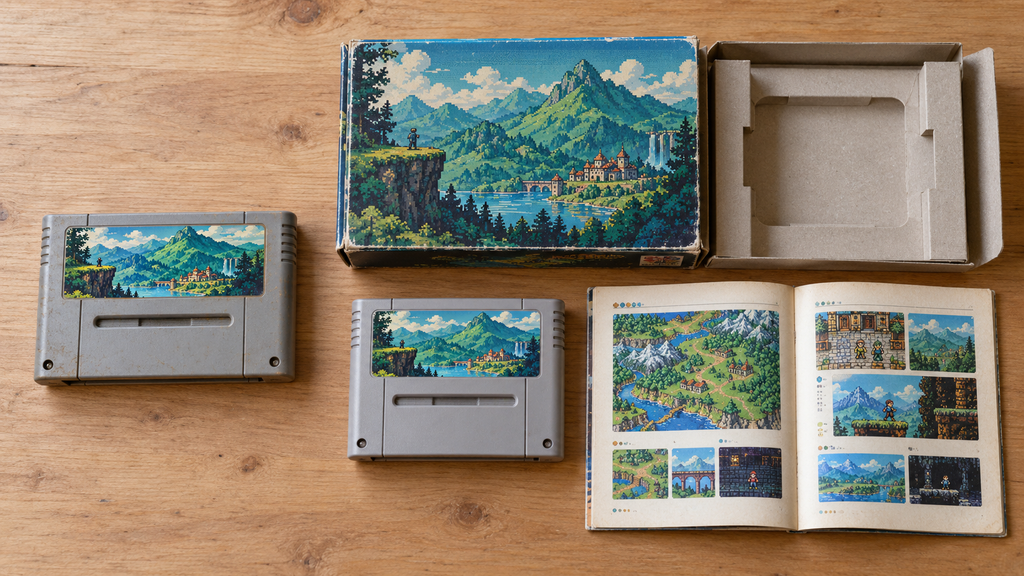
Decide what “complete” means to you. A cartridge alone, a copy with its original box and manual, and a special edition with extra items are different purchases. Ask which components are actually included; a box in a display cabinet does not answer that by itself.
Use this simple decision guide:
| Your goal | Prioritize | Check before paying |
|---|---|---|
| Play an old favorite | Working condition and compatibility | Language, region, save function, required accessories |
| Collect a Japanese edition | The exact release and its contents | Original packaging, manual, damage, replacement parts |
| Buy a first retro console | A usable setup at home | Power supply, display connection, controller, testing history |
| Find a small souvenir | Something meaningful within your budget | Whether you are happy owning it even if you cannot play it |
Where to Buy Retro Games in Japan
Build your route around the city you are already visiting. A store is a place to investigate, not a promise that a particular game will be available.
Akihabara, Tokyo: Super Potato
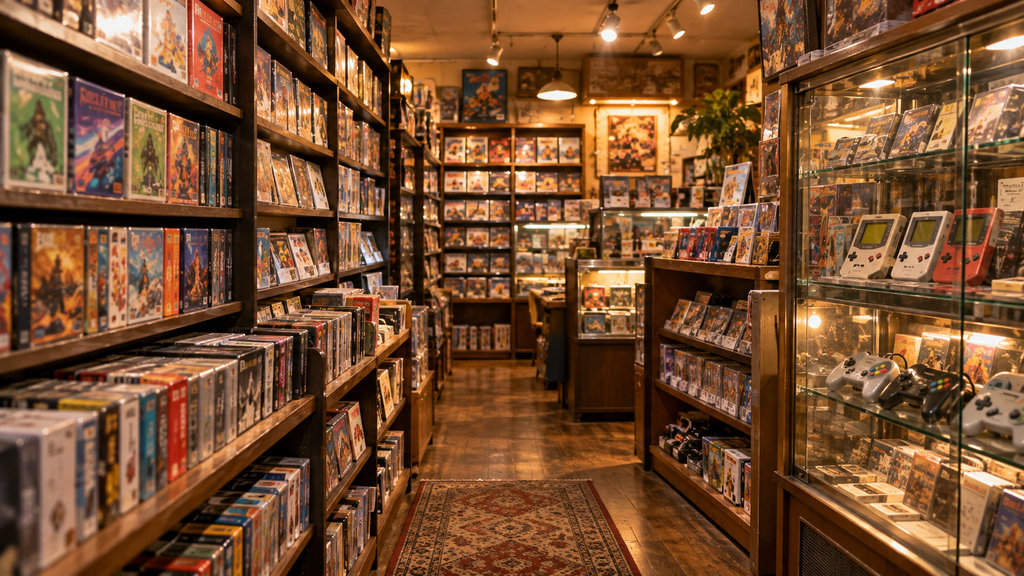
Super Potato Akihabara lists a broad selection of older Nintendo, Sega, PlayStation, and other systems. Its shop occupies the third through fifth floors of the Kitabayashi Building at 1-11-2 Sotokanda, with a retro arcade on the fifth floor.
For a first visit, use a specialist shop like this to compare packaging, platforms, and condition descriptions. If you find a target game, note the exact edition and what is included before comparing it elsewhere. Two copies with the same cover can be quite different purchases.
Our Akihabara Anime & Manga Guide can help you combine game shopping with arcades and other pop culture stops.
Nakano, Tokyo: Mandarake Galaxy
Mandarake Galaxy specializes in used game software and hardware, strategy guides, and game magazines. The current Nakano floor directory places Galaxy on the second floor of Nakano Broadway.
This is a useful stop if your interests extend beyond playable copies to manuals, guides, or gaming publications. Confirm the language and contents of any book you buy, especially if it is intended as a gift.
Pair your visit with our Nakano Broadway Anime & Manga Guide. Leave time to read condition notes rather than trying to rush through every shop in the building.
Osaka: Super Potato Otaroad
If Osaka is already on your itinerary, Super Potato Otaroad is another retro game specialist to consider. Its official address is 3-8-18 Nipponbashi, Naniwa-ku, on the first floor of the Hirata Building.
Use the same shortlist you would take to Tokyo. Buying in a different city does not, by itself, establish that a copy is cheaper or in better condition. Compare the edition, contents, and total cost.
See our Osaka Travel Guide to fit the stop into a broader visit.
BOOKOFF: Check Individual Branches
BOOKOFF’s visitor information includes games among its secondhand product categories. Check the branch you plan to visit, since a chain’s general product range does not establish what a particular store currently carries.
An additional shop near your existing route can be worth a look. A long detour makes more sense when you have confirmed something useful about that branch’s selection. Avoid spending an entire afternoon chasing an unverified bargain.
Store details checked September 27, 2026. Use the linked official pages for current opening information and contact individual shops about stock.
Are Retro Games Cheaper in Japan?
Some purchases may cost less than the equivalent copy available to you at home, but there is no reliable rule that “retro games are cheap in Japan.” The useful comparison is between specific copies.
Record the title, platform, release, included items, condition, and price. A loose Japanese cartridge and a boxed English-language release are not equivalent listings, even when the game itself looks familiar.
Your practical budget is:
Game price + missing accessories + any work needed to use it + transport or shipping costs.
If applicable, also check your destination country’s customs requirements. For tax-free shopping, ask the store about the process that applies on your purchase date; do not build your budget around an assumed discount.
Set a maximum before you enter. If you only want to play the game, include an authorized modern rerelease in your comparison where one exists. The original edition may still be the purchase you prefer, but you will know what you are paying for.
Four Compatibility Checks Before You Buy
1. Does This Release Work on Your Console?
Check both the platform and regional compatibility. Similar branding, familiar characters, or a cartridge that appears to fit are not enough.
For a concrete example, Nintendo confirms that systems in the Nintendo 3DS family are region locked. A Japanese 3DS game should not be bought on the assumption that it will work on an unmodified North American or European 3DS.
Console generations also matter. PlayStation’s compatibility guidance explicitly states that PS5 consoles do not support PS3 discs. Buying an older game does not automatically give you access to a playable version on the newest console.
For other systems, look up the exact hardware model and software release before shopping. Bring those details to the counter if you need help.
2. Can You Play It in a Language You Understand?
Check the specific Japanese release, not just the title’s international reputation. An English-language edition elsewhere does not establish that the Japanese copy includes English.
Separate the language of menus, subtitles, spoken dialogue, and manuals. A game can be manageable during action sequences but difficult to navigate between them.
If you do not read Japanese, consider how much explanation you need to enjoy the game. Text-heavy adventures and role-playing games require a different level of language support from a familiar puzzle or racing game. Even with a familiar genre, verify the actual release before buying.
3. Can You Connect the Hardware to Your Display?
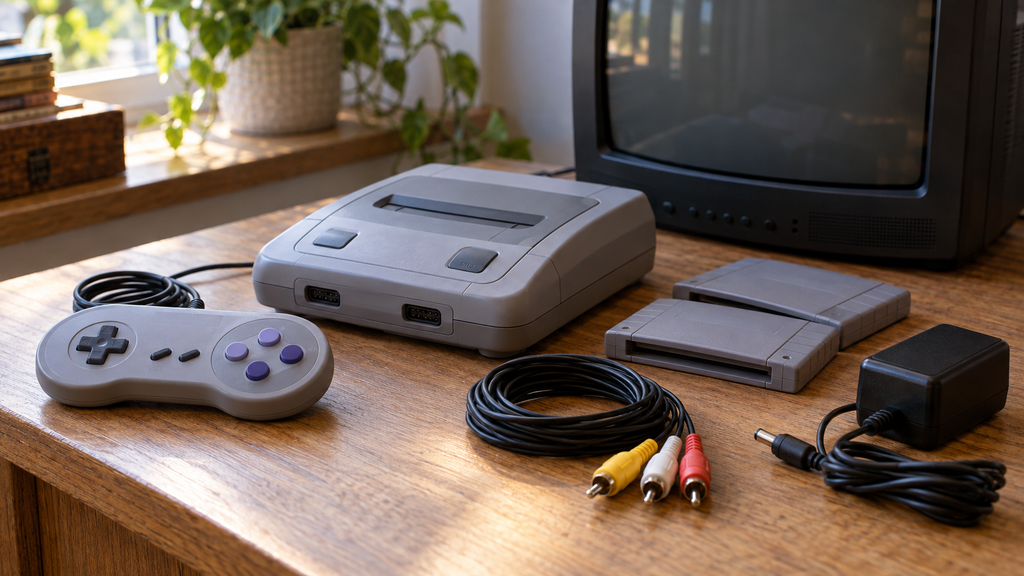
When buying a console, identify its video output and the inputs on your television or monitor. List any cable or compatible converter you will need, and include it in the budget.
Ask what is included with the console. A controller, power supply, video cable, or memory card shown nearby may be sold separately. If a converter is required, verify support for the console’s actual signal; matching connector shapes alone does not settle compatibility.
4. Is the Power Supply Suitable for Home Use?
Japan’s electricity supply is 100 volts AC. Read the input rating on the actual power supply or console you are considering.
A plug adapter changes the physical connection; it does not convert voltage. Have the correct power arrangement confirmed for the exact model and your home supply before using it. A replacement adapter also needs the correct electrical specifications, not merely a connector that fits.
How to Read Japanese Used-Game Labels
Small condition notes can tell you more than a large price tag. These are useful words to recognize, but each shop may use its own grading and testing procedures.
| Japanese label | Meaning | Your next question |
|---|---|---|
| 中古 | Used | What condition and testing details are available? |
| 箱なし | No box | Is anything else missing? |
| 説明書なし | No manual | Which other inserts or accessories are included? |
| 付属品欠品 | Accessories missing | Exactly which parts are missing? |
| 動作確認済み | Operation checked | What was tested, and when? |
| 動作未確認 | Operation not checked | Is there any functional guarantee? |
| 電池交換済み | Battery replaced | Which battery was replaced, and was the relevant function tested? |
| ジャンク | Junk / repair-or-parts stock | Am I prepared to buy something that may not work? |
Treat a testing note as a description of what was checked, rather than proof that every function works indefinitely. Starting a game, saving progress, reading a full disc, and testing a console’s ports are separate checks.
Be especially careful with junk stock. For example, HARD OFF’s published junk policy says these items have no product warranty and are not eligible for returns or exchanges. It also explains that a note reporting successful operation does not guarantee continued operation. Read the policy of the shop where you are actually buying.
For a first purchase intended for immediate play, prioritize a working item with clear condition information and understandable terms.
Inspect the Copy, Not Just the Cover
Ask staff before opening packaging or handling items from a display cabinet. Where inspection or a demonstration is available, focus on the parts that matter to your intended use.
For games, check the following:
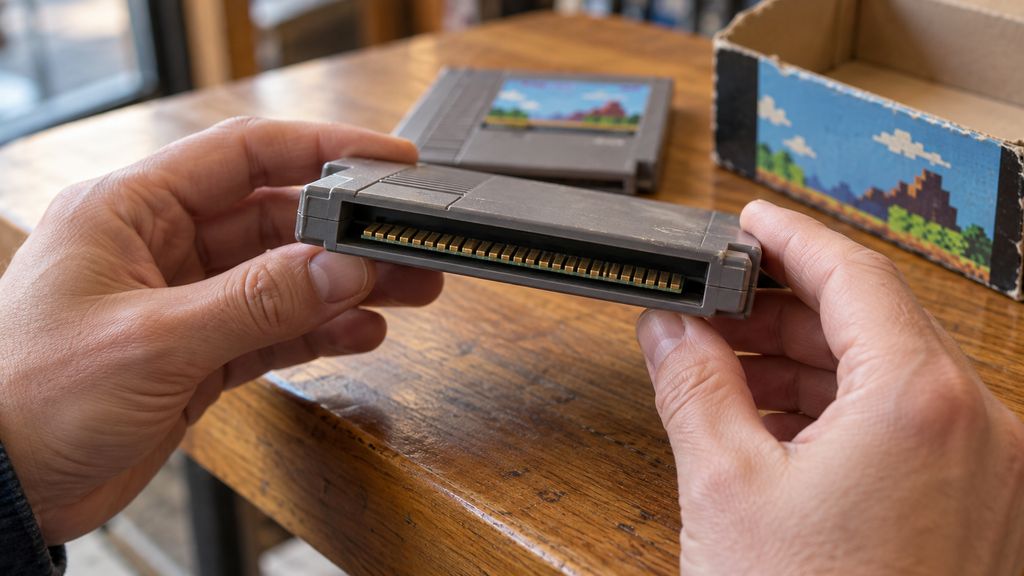
- Cartridges: shell and label condition, visible damage to contacts, and any disclosed repairs or replacement parts. For a title that uses a battery for saves or a clock, ask about that function specifically.
- Discs: the condition of the readable surface and center, whether every required disc is included, and any disclosed resurfacing or read problems.
- Packaging: the correct box and manual for the release, water damage, fading, tears, and missing inserts.
- Authenticity: whether the shop identifies the item as an original release and discloses reproduction labels, replacement shells, or other alterations.
A neat label or clean shell alone cannot authenticate an expensive cartridge. If the information available is not enough for you to feel comfortable, leave the purchase until you can verify it.
For hardware, ask about the screen, buttons, controller inputs, sound, game-reading function, and included power equipment as relevant to the model. A brief demonstration can answer some questions, but clarify the shop’s testing and return terms as well.
Keep the receipt and condition description. If photography is permitted, a clear image of the label can help you remember what was disclosed.
Useful Japanese Questions at the Counter
You can show these phrases on your phone. Add a photo and model number when asking about compatibility.
| Japanese | Meaning |
|---|---|
| 動作確認はされていますか? | Has it been tested? |
| 箱と説明書は付いていますか? | Are the box and manual included? |
| セーブはできますか? | Does saving work? |
| このソフトは、この本体で遊べますか? | Can I play this game on this console? |
| この日本版には英語の表示がありますか? | Does this Japanese version have English text? |
| 不具合があった場合、返品できますか? | Can I return it if there is a fault? |
For returns, also ask about the deadline and procedure. You need to know whether you would have to return to that branch before leaving Japan.
Japanese Perspective: Let the Details Be Part of the Visit
A Japanese edition offers more than another way to own the same game. Its title lettering, manual illustrations, packaging, and related guidebooks can be interesting objects in their own right.
Give yourself permission to browse those details. You might discover that a manual or game magazine is a more enjoyable souvenir than a console you cannot conveniently use. Just check that the item offers what you want: illustrations, readable text, a particular issue, or a connection to a favorite series.
Treat the store as a shared space. Follow photography signs, keep aisles clear, and ask staff to retrieve cabinet items. A patient visit gives you time to understand both the object and its condition.
Before You Pay: A Final Checklist
- Confirm the exact title, platform, and edition.
- Check region compatibility and language separately.
- Read the condition label and clarify the testing performed.
- Confirm the box, manual, cables, controllers, and other included items.
- Compare the total cost with your preset budget.
- Understand the return deadline and procedure.
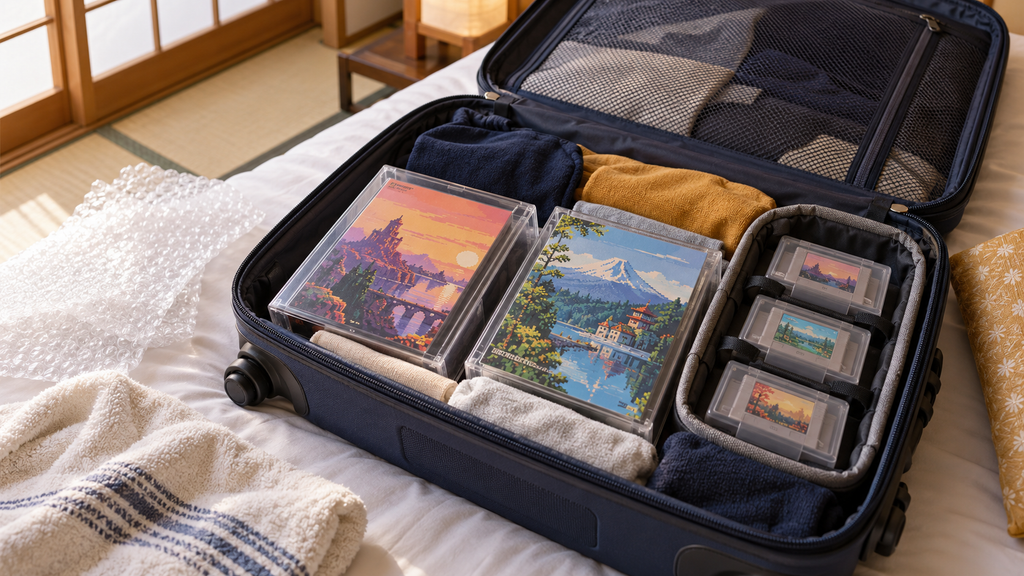
- Keep the receipt and plan protective packing for the journey home.
For cardboard boxes, avoid pressure from other luggage. Use suitable protective packaging for cartridges and discs, and keep small accessories together. Buying a protector or case only helps if its dimensions match the item you bought.
Frequently Asked Questions
Is Akihabara or Nakano Better for Retro Games?
For a first trip, choose by the rest of your itinerary. Akihabara can combine a specialist game shop with arcades and wider pop culture browsing. Nakano makes sense if you also want to explore collectible shops and gaming publications. Check stock directly if one particular title is the reason for your trip.
Will Japanese Retro Games Work on My Console at Home?
It depends on the platform, your console’s model and region, and the exact release. Check those details first. Language support is a separate question, even when the game is compatible.
Can I Shop Without Speaking Japanese?
You can prepare by saving Japanese titles, cover images, model numbers, and the questions above. A translation app may help you read labels, but ask staff to clarify any condition note that affects your decision. Do not assume English assistance will be available at every shop.
Should I Buy a Boxed Copy or a Loose Cartridge?
A loose cartridge may suit someone focused on playing, provided its condition and compatibility are right. A boxed copy makes sense when the original packaging is part of what you want to own. Compare actual copies and decide what the extra contents are worth to you.
Should I Buy Original Hardware or a Modern Rerelease?
Choose original hardware when the physical system and original release are part of the experience you want. If your priority is convenient play, check whether the publisher offers an authorized version for a system you already own. Verify the included game, language, and features before treating different editions as interchangeable.