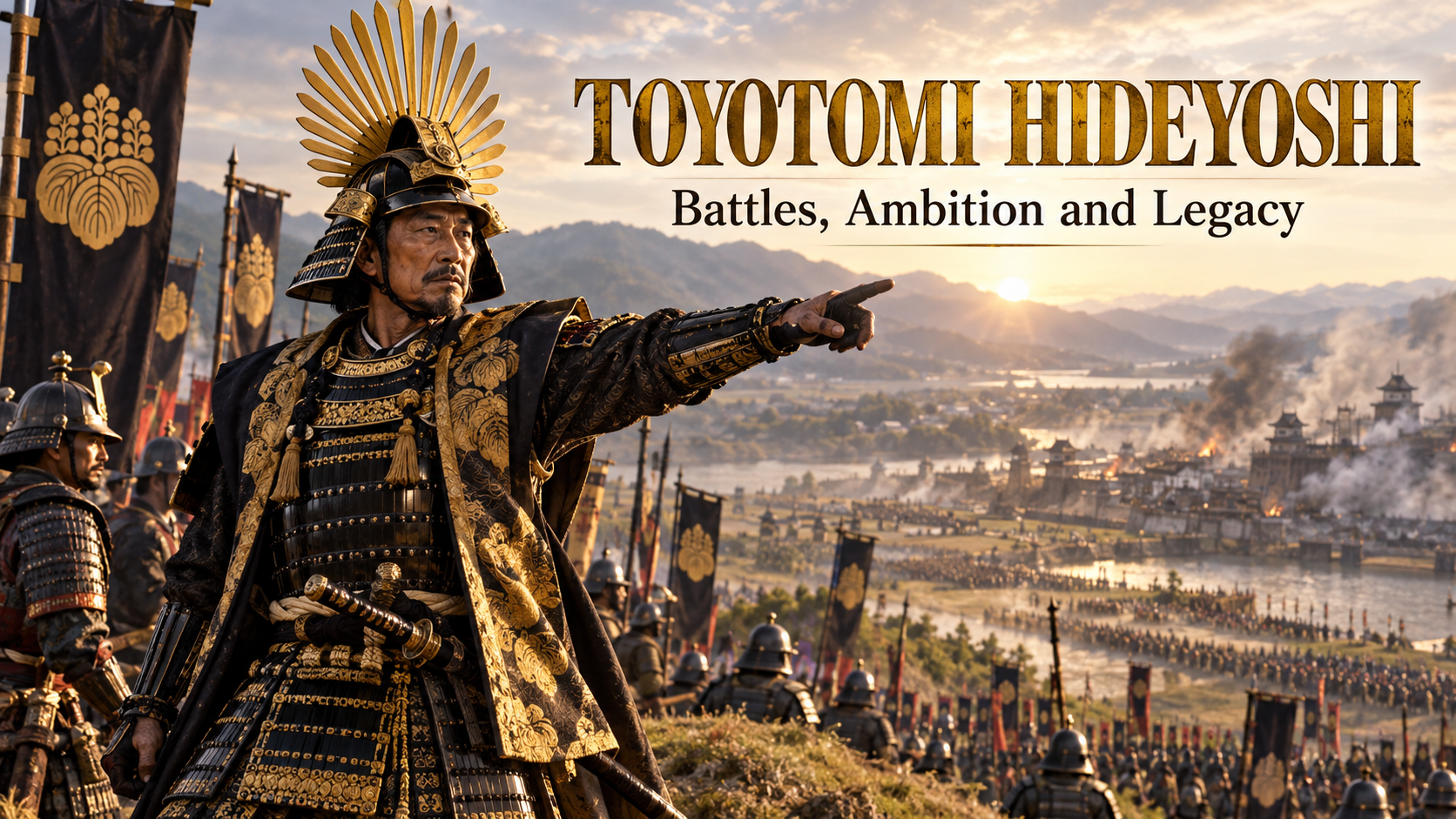
An army races east after its lord’s death. Spears clash on the wooded ridges above Lake Biwa. A fortress finds itself surrounded by floodwater. Toyotomi Hideyoshi’s rise is one of the most dramatic stories of Japan’s age of civil war.
Remembered for his humble beginnings, military skill and spectacular displays of wealth, Hideyoshi became Japan’s dominant ruler in the late sixteenth century. His influence survives in castle sites, temple memorials and the stories attached to familiar landscapes.
For overseas travelers, following his life connects Osaka and Kyoto with quieter places in Shiga, Okayama and Odawara. It also raises a difficult question: how should we remember a ruler whose achievements at home were followed by devastating invasions abroad?
Yamazaki: The Victory That Changed His Future
In 1582, Oda Nobunaga died after Akechi Mitsuhide attacked him at Honnoji in Kyoto. Hideyoshi, then campaigning against the Mori in western Japan, suddenly faced a completely different political situation.
He concluded an agreement with the Mori and moved his army east. This rapid return, remembered as the Chugoku Ogaeshi, brought him into confrontation with Mitsuhide at Yamazaki.
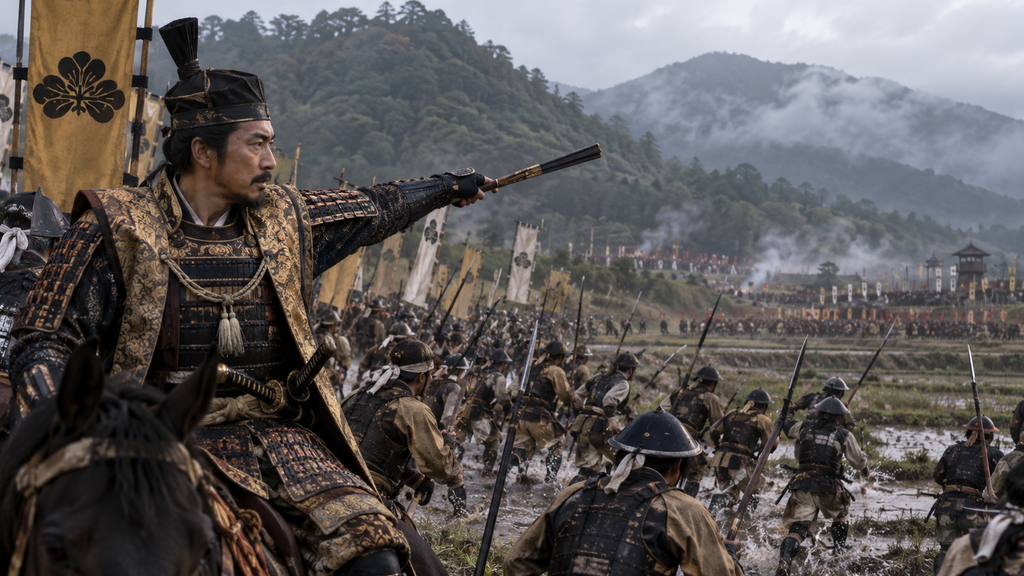
Hideyoshi’s victory removed Mitsuhide and gave him a powerful claim to leadership among Nobunaga’s surviving commanders. It did not automatically make him ruler of Japan. Other members of the Oda family and their retainers still had armies, territories and competing ambitions.
The battle is closely associated with Mount Tennozan, but fighting also took place across the low ground and waterways below it. The official Oyamazaki account helps visitors look beyond the mountain summit to the wider battlefield.
Who Was Toyotomi Hideyoshi?
Hideyoshi came from a modest background in Owari, in present-day Aichi Prefecture. Many colorful details of his childhood belong to later storytelling; his exact family circumstances are less securely documented than the familiar “peasant to ruler” narrative suggests.
He rose through service to Nobunaga, becoming a trusted commander. Readers may also encounter the names Kinoshita Tokichiro and Hashiba Hideyoshi. These refer to stages in the same man’s career, not different warriors.
His rise depended on more than personal courage. He managed subordinates, negotiated settlements and turned military opportunities into political advantage. His brother Hidenaga and other capable retainers were important to the power he built.
Unlike Tokugawa Ieyasu, Hideyoshi did not become shogun. He became kampaku, an imperial regent, in 1585, and received the Toyotomi name the following year. The title Taiko, often associated with him, refers to a retired kampaku.
Shizugatake: A Struggle for Nobunaga’s Inheritance
In 1583, Hideyoshi confronted Shibata Katsuie, another leading former commander of Nobunaga. Their struggle culminated in the Battle of Shizugatake in northern present-day Shiga.
This was a fight over the political order left behind by their dead lord. Loyalty to the Oda house could coexist with rivalry over who would exercise real authority within it.
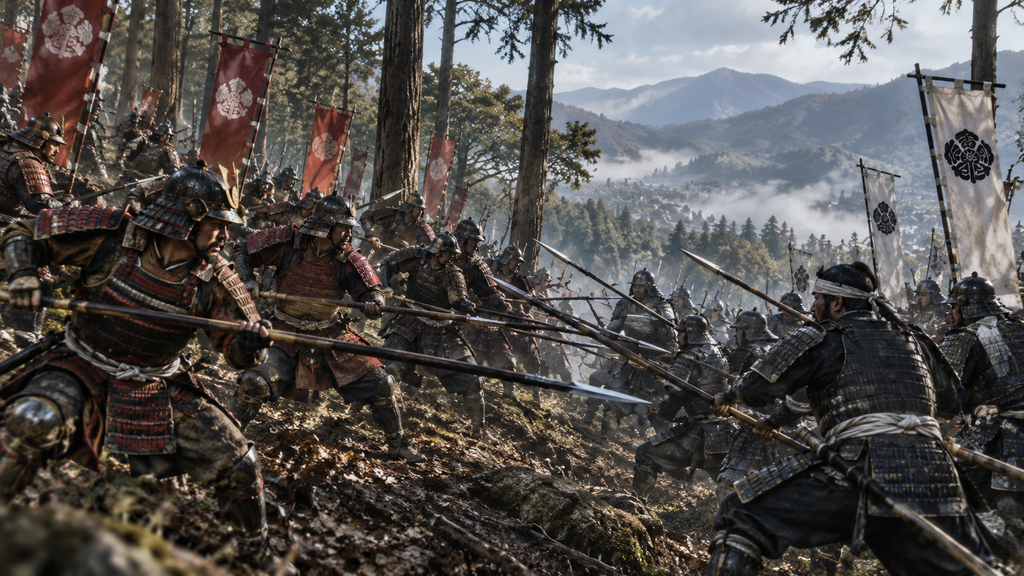
Hideyoshi’s victory broke a major rival’s position. The battle also became associated with the “Seven Spears of Shizugatake,” warriors celebrated for their service in the fighting.
Their fame gives the event memorable individual faces, but a battlefield was never simply seven heroes performing remarkable feats. Units, supplies, commanders and difficult terrain shaped what soldiers could accomplish.
The official Shiga battlefield guide introduces the conflict. Today’s views toward Lake Yogo and northern Lake Biwa offer a striking contrast with the violence remembered there.
Bitchu Takamatsu: Winning Through Water and Engineering
To understand the campaign Hideyoshi left before Yamazaki, return briefly to Bitchu Takamatsu in 1582. This castle stood in low, wet ground in present-day Okayama.
Hideyoshi’s forces used embankments and water to isolate the fortress. The episode is famous as a water siege, although the exact engineering arrangements and extent of the works remain subjects of investigation.
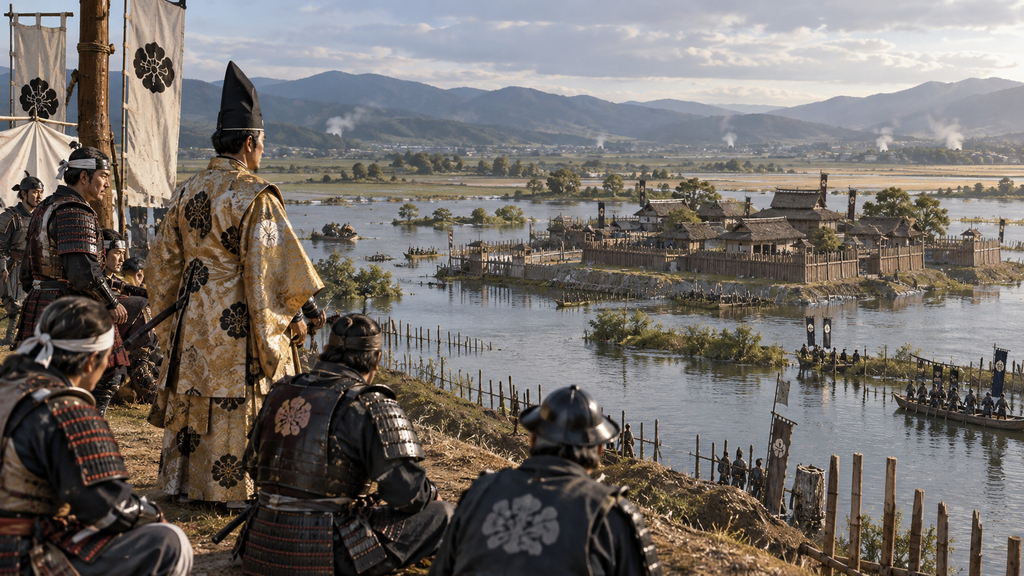
This is a different kind of military drama from a sword duel. Labor, terrain and control of movement became weapons. The defenders’ suffering also belongs in the story: the settlement involved the death of castle commander Shimizu Muneharu.
The site is now a historical park, rather than a preserved fortress rising from water. Use Okayama’s official historical overview to understand the remains. Bitchu Takamatsu is in Okayama; it should not be confused with Takamatsu city in Kagawa.
Odawara: An Army Large Enough to Reshape Japan
Hideyoshi’s path to dominance included setbacks, negotiations and campaigns across several regions. In 1584, fighting against the forces of Tokugawa Ieyasu and Oda Nobukatsu showed that he could not simply defeat every rival in a straightforward sequence.
He subsequently expanded his authority through campaigns in Shikoku and Kyushu. In 1590, he moved against the Hojo of Odawara, a major power in eastern Japan.
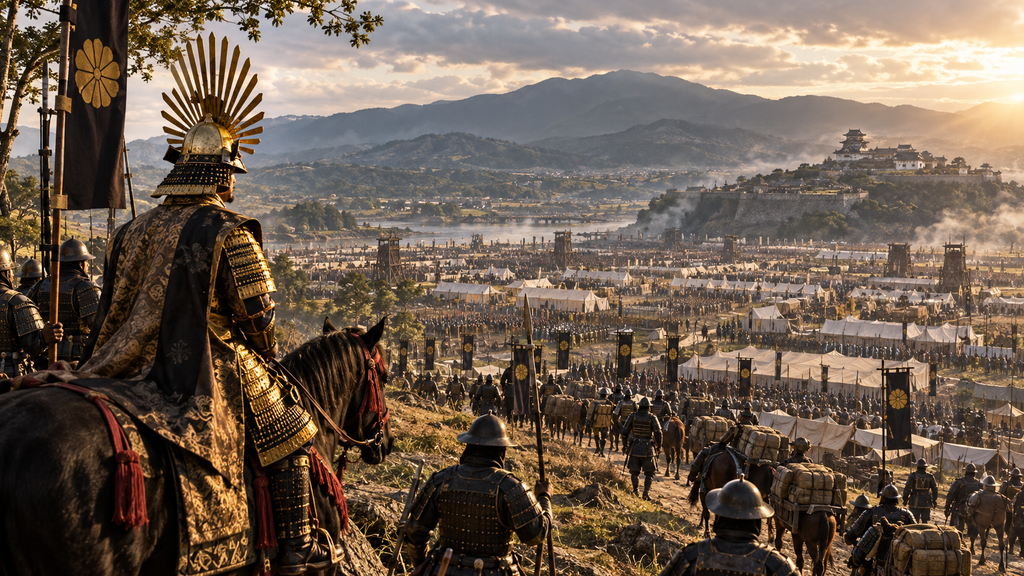
The Hojo submission was a major milestone in the process conventionally called Japan’s unification. That phrase describes the extension of political supremacy over regional lords; it should not be read as the instant creation of a modern nation-state.
At nearby Ishigakiyama, Hideyoshi built a substantial siege headquarters. Its nickname, “One-Night Castle,” is memorable, but it was not literally completed overnight. Odawara City’s explanation describes construction taking approximately eighty days. The traditional overnight reveal story belongs alongside that practical reality.
Osaka Castle and the Work of Governing
Hideyoshi began building Osaka Castle in 1583. It became a center of government and a monumental expression of his authority.
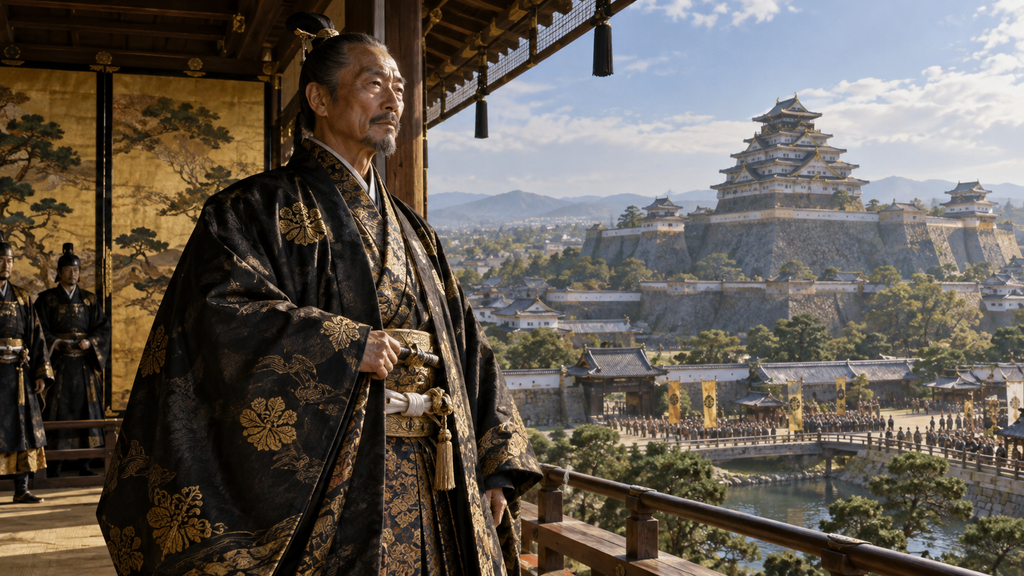
Governing required more than a magnificent residence. Land surveys made agricultural resources more legible to rulers, while the sword hunt of 1588 sought to remove weapons from farmers and reinforce a more controlled social order. These measures developed unevenly; they did not transform every community in the same way overnight.
There is a striking tension here. A man remembered for rising through a fluid society helped establish restrictions that made similar movement more difficult for others.
When visiting Osaka, distinguish its historical layers. The present main tower dates to 1931, and much of the visible fortification belongs to Tokugawa rebuilding. The official castle website explains that sequence. The Toyotomi Stone Wall Museum offers a connection to remains of the earlier castle beneath the later landscape.
Japanese Perspective: Shusse, Tea and Political Memory
The Japanese word shusse means advancement or success in the world. It provides one useful way to understand Hideyoshi’s enduring appeal. His career gives a dramatic shape to the idea that intelligence and initiative can change a person’s position.
That is an interpretation of his reputation, rather than a belief shared by every Japanese person. Different places and communities remember different parts of his life.
Tea culture provides another perspective. Hideyoshi’s patronage connected refined hospitality with political authority. Tea gatherings could display access, status and carefully chosen objects as well as aesthetic appreciation.
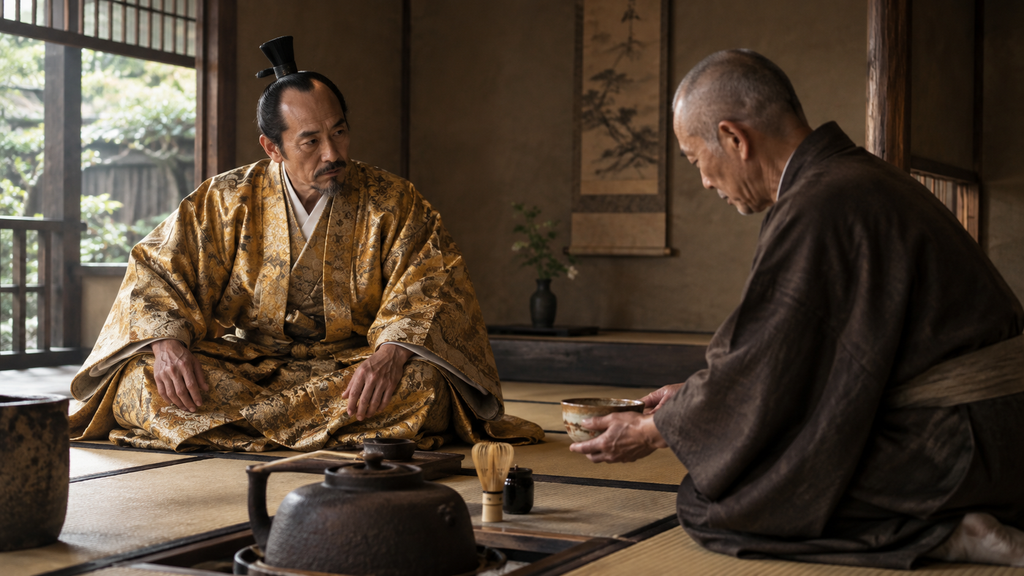
His famous portable golden tearoom makes that relationship especially visible. The Saga Prefectural Nagoya Castle Museum explains its use and presents a modern reconstruction. A quiet room like the illustration and a glittering golden interior express different aspects of the cultural world he inhabited.
Read more about the wider setting in our Japanese history articles.
The Invasions of Korea and a Fragile Succession
Hideyoshi ordered invasions of Korea beginning in 1592 and again in 1597, with ambitions extending toward Ming China. These campaigns brought widespread killing, destruction and displacement to Korea. They failed to achieve his intended conquest. The UCLA Korean History and Culture Digital Museum provides an introduction from the Korean side of the conflict.
He directed the war from Japan rather than personally leading troops across Korea. Hizen Nagoya Castle in present-day Saga served as a major invasion base. The Nagoya Castle Museum’s historical introduction places the site within those campaigns, which ended after his death in 1598.
An account of Hideyoshi’s military career needs this chapter. Domestic unification and cultural patronage do not erase the suffering caused by his overseas ambitions.
His death also left his young son Hideyori dependent on an unstable arrangement of powerful elders and administrators. Ieyasu later emerged dominant. The Toyotomi family’s destruction during the Osaka campaigns of 1614–1615 happened after Hideyoshi’s lifetime, so images of those battles should not be labeled as his personal victories.
Visiting Hideyoshi’s Japan: A Practical Starting Plan
Osaka and Kyoto: Allow Two or Three Days
For a first trip, this is the most manageable introduction. Allocate a half day to Osaka Castle’s grounds and museum, allowing extra time for the Toyotomi stone walls if they interest you.
In Kyoto, visit Kodaiji to encounter a different form of remembrance. Hideyoshi’s wife Nene founded the temple in 1606 in his memory. The temple’s own museum page introduces its history and collections. Temple gardens and memorial spaces invite a slower visit than a battlefield itinerary.
Add Oyamazaki as an optional half-day history walk, or allow longer if hiking Tennozan. Consult the town’s official hiking guidance for the route. Suggested durations here are planning estimates, not official tour lengths.
Shiga, Okayama and Odawara: Choose One Extension
Shizugatake suits travelers interested in ridge terrain and battlefield memory. Check local access and seasonal lift operation through the regional tourism guide, and wear shoes suitable for uneven paths.
Bitchu Takamatsu works as an Okayama excursion. Odawara and Ishigakiyama fit an eastern Japan itinerary more naturally. These destinations are spread apart; they are not a sensible checklist for one rushed day.
Timing and On-Site Etiquette
Spring and autumn generally offer more comfortable walking conditions than midsummer, though weather varies. Bring water, check trail notices and avoid exposed or slippery routes in bad weather.
Confirm opening hours, admission and transport shortly before traveling. At temples, follow photography rules and give worshippers space. At battlefield memorials, remember that these are places associated with human loss as well as dramatic stories.
For ideas beyond this historical route, browse our Japan travel guides.
FAQ
Was Toyotomi Hideyoshi a peasant?
He came from a modest background, but details of his early life are uncertain. The familiar peasant-to-ruler story simplifies a less completely documented history.
Was Hideyoshi a shogun?
No. He became kampaku, an imperial regent, and was later known as Taiko after retiring from that office.
What were his most important battles?
Yamazaki and Shizugatake were crucial to his rise after Nobunaga’s death. The Odawara campaign helped establish his wider supremacy. Bitchu Takamatsu illustrates his use of siege engineering.
Is today’s Osaka Castle Hideyoshi’s original building?
No. The main tower is a modern reconstruction, while the site preserves several historical layers. The Toyotomi stone wall display helps visitors understand the earlier castle.
Did Hideyoshi fight in the Siege of Osaka?
No. He died in 1598. The Osaka campaigns took place in 1614 and 1615, when his son Hideyori was the central Toyotomi figure.
Where should a first-time visitor begin?
Start with Osaka Castle and Kodaiji in Kyoto. Add a battlefield excursion according to your interests, mobility and available time.