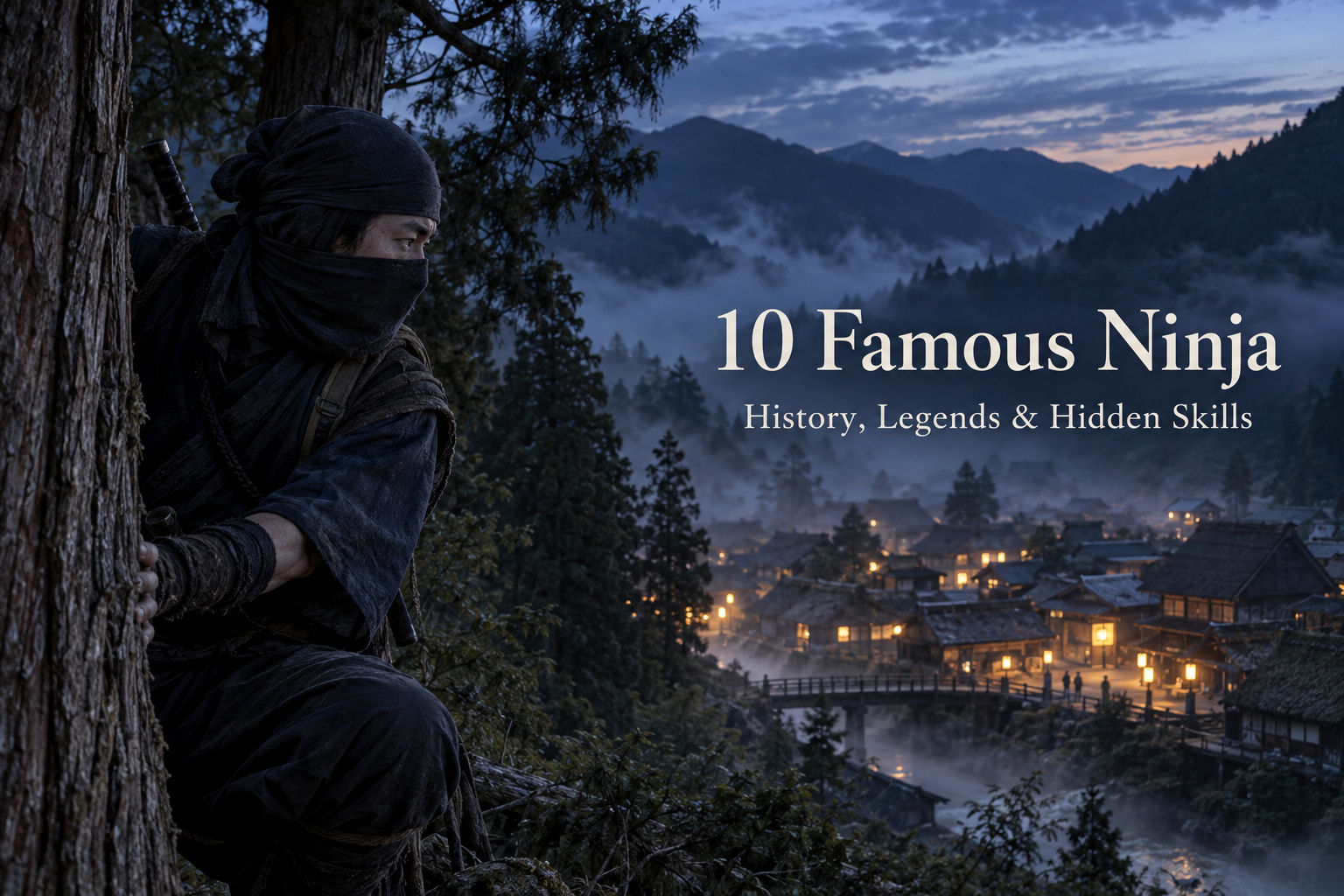
Who were Japan’s most remarkable ninja? Hattori Hanzo, Fuma Kotaro, and Sarutobi Sasuke are familiar names, but they do not all belong to the same kind of history. Some connect us to documented people and military service. Others became famous through storytelling, or through legends that grew around a much smaller historical core.
This selection introduces ten memorable figures associated with ninja culture. It is not a proven ranking of the strongest fighters, and it does not claim that all ten were real spies. The appeal lies in discovering what each name reveals: leadership, preserved knowledge, an unforgettable legend, or Japan’s changing imagination.
For overseas readers, that distinction opens a more interesting world than a list of superhuman assassins..
Before the List: Ninja, Shinobi and Samurai
Shinobi is a historical term for the people now commonly called ninja. Their central responsibility was gathering information for those they served. Reporting useful intelligence could matter more than defeating an opponent. Ninjutsu encompassed varied knowledge and methods, rather than simply spectacular fighting moves.
A samurai’s social position and a shinobi’s duties were not necessarily opposites. Avoid imagining two neatly separated races of warriors locked in permanent rivalry. The question to ask is what a person did, who employed them, and what the sources actually tell us.
The labels below describe the evidence, not the entertainment value. “Literary” does not mean unimportant: invented characters helped make ninja internationally recognizable.
1. Hattori Hanzo — The Commander Behind the Famous Name
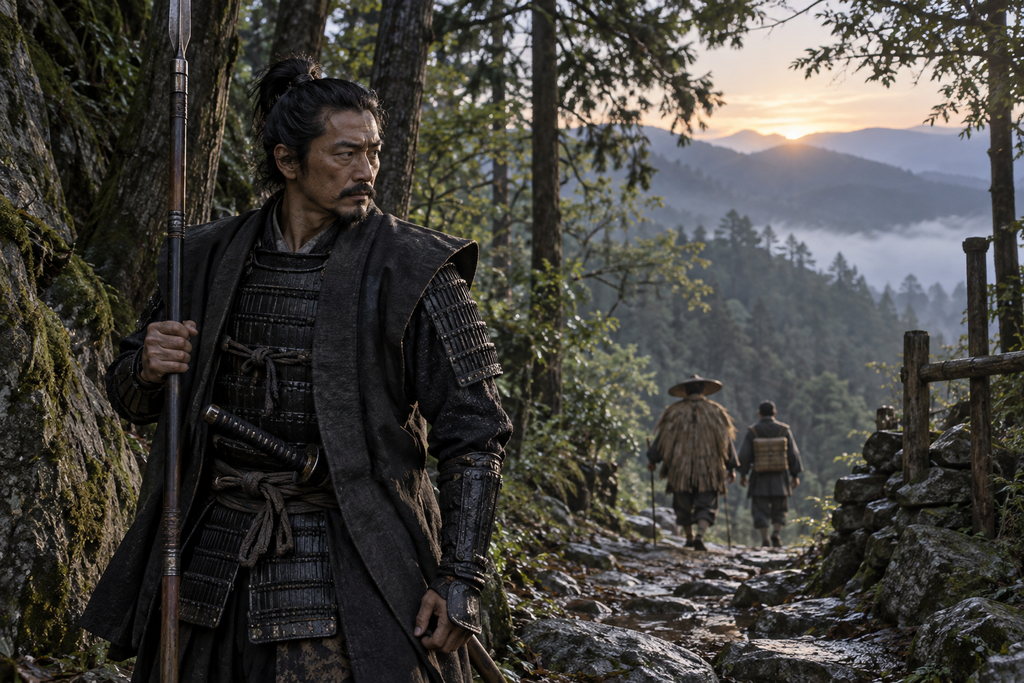
Evidence: Historical commander; later ninja image is heavily embellished.
The Hanzo most often meant in popular history is Hattori Hanzo Masanari, a supporter of Tokugawa Ieyasu. Hanzo was an inherited name, so a story mentioning it does not automatically concern the same individual. The Ninja Museum of Igaryu places the Hattori among Iga’s prominent families.
Mie University’s research on the Iga-mono identifies a group associated with Hanzo Masanari and discusses the military and intelligence duties of Iga people in Tokugawa service. This provides a more useful starting point than the image of one masked man accomplishing everything alone.
Why he belongs: Hanzo connects a globally familiar name with organization and service. Leading specialists is a different achievement from personally performing every feat later attributed to them.
What to notice: Our illustration presents a commander in armor. It deliberately treats him as a human participant in the warrior world, without borrowing a film or game costume.
2. Momochi Sandayu — The Master Who Lives Between History and Fiction
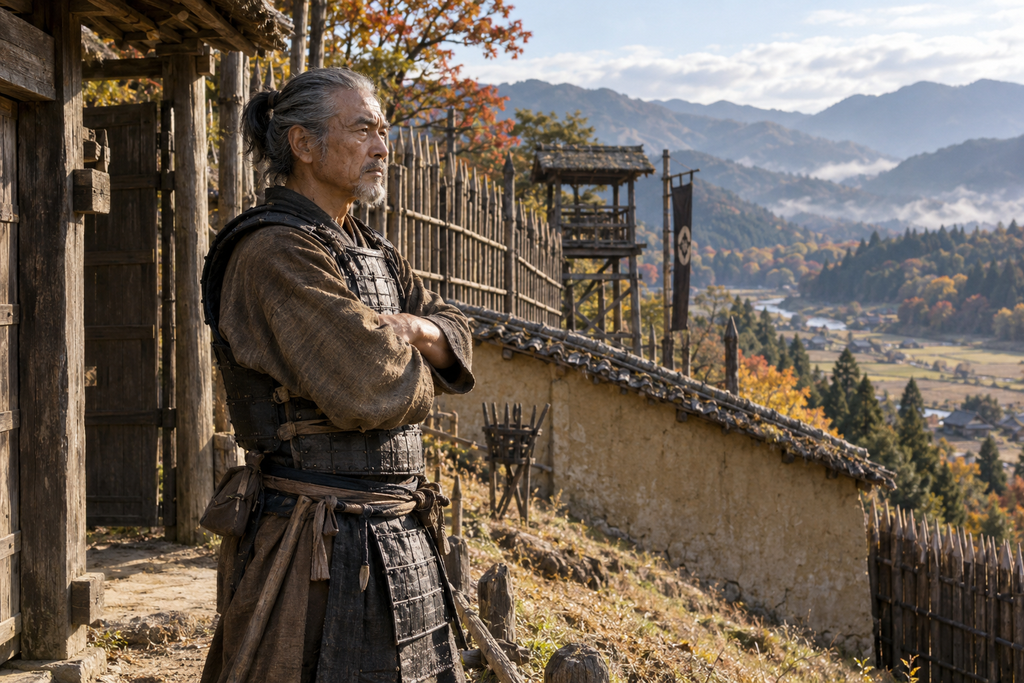
Evidence: Legendary teacher; distinguish him from the historical Momochi Tanba.
Momochi Sandayu is a classic example of why ninja names require care. Kodansha’s biographical dictionary describes him as a figure of tradition who appears as a teacher of Ishikawa Goemon. Later stories also connect him with Kirigakure Saizo. The dictionary distinguishes this character from Momochi Tanba, the local warrior associated with resistance to Oda Nobunaga’s invasion of Iga in 1581.
It is tempting to combine these details into one seamless biography. Doing so would turn a literary teacher, a historical family, and a regional conflict into a certainty the evidence does not support.
Why he belongs: Sandayu embodies the enduring image of the secretive master passing knowledge to a gifted student.
Japanese Perspective: A place associated with a legend can still be culturally meaningful. The useful distinction is between a site preserving local memory and a site proving every episode in a story.
3. Fuma Kotaro — The Fearsome Name of Odawara
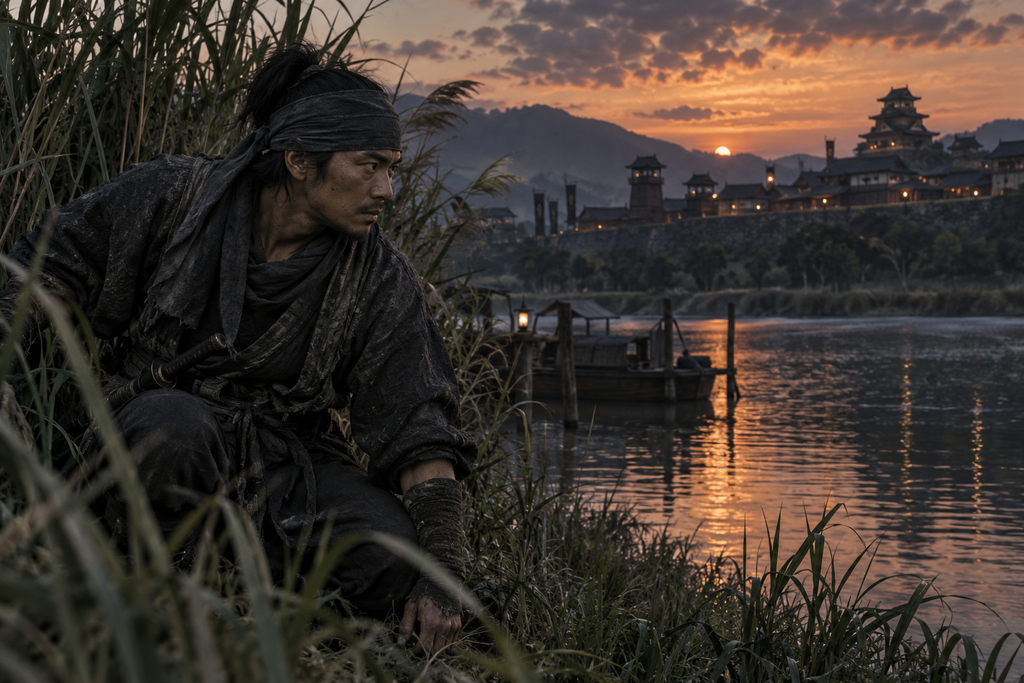
Evidence: Figure of Fuma tradition; individual exploits mix historical background and legend.
The Fuma are associated with the Hojo of Odawara. Kotaro is their best-known name, but the colorful biography commonly attached to him needs caution. Odawara’s tourism guide itself separates attributed exploits and folklore from firmer historical context, and notes the tradition that the leader’s name could be inherited.
Stories emphasize unsettling opponents and taking advantage of terrain. Famous encounters with Hattori Hanzo belong to ninja lore; they should not be treated as a verified rivalry between two champions.
Why he belongs: Kotaro offers a different regional doorway into ninja culture. Iga and Koka are important, but they are not the whole story.
Visit connection: Odawara Castle’s NINJA Museum uses the Fuma and Hojo setting for interactive exhibits. It is a modern interpretation of that history, rather than a surviving secret training headquarters.
4. Fujibayashi Yasutake — Preserving a World of Knowledge
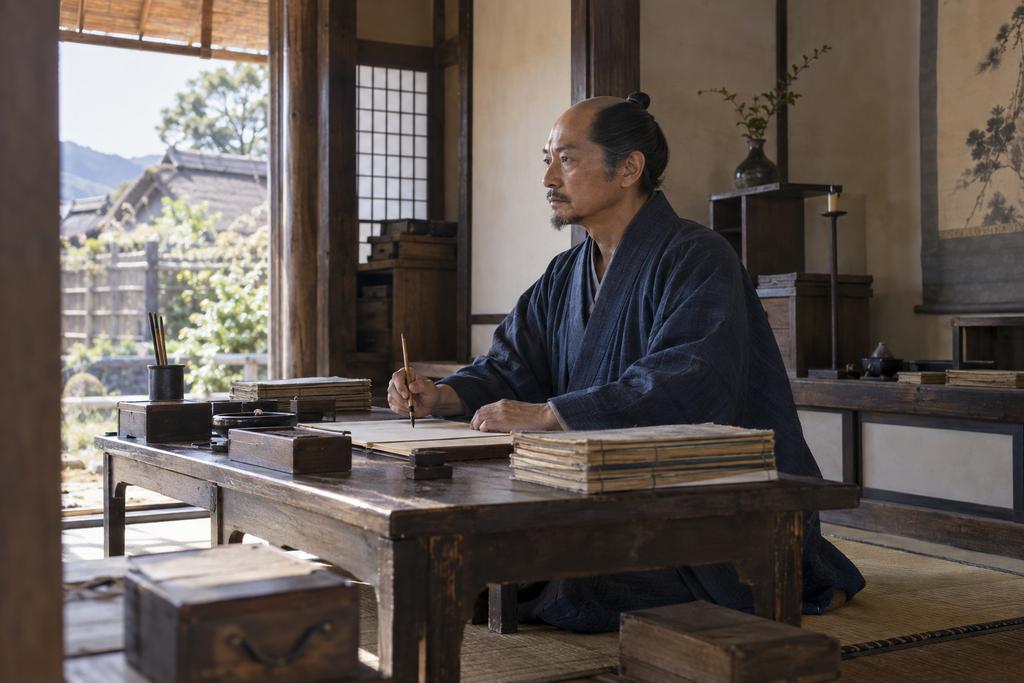
Evidence: Historical compiler associated with a surviving ninjutsu text.
Fujibayashi Yasutake is associated with the compilation of the Bansenshukai, also rendered Mansenshukai, in 1676. This work brings together traditions linked to Iga and Koka and remains one of the major texts discussed in ninja history.
His inclusion is about preservation, not an invented list of victories. A surviving manual gives us something that stories of unbeatable fighters cannot: material that can be read, compared, and questioned.
A manual also needs interpretation. It records teachings and claims, not a modern audit proving that every method worked or that every story occurred exactly as written.
Why he belongs: Yasutake helps change the question from “Who was the deadliest?” to “How do we know anything about this world?”
Reading tip: When choosing a translation, look for editorial notes that distinguish the old text from a modern author’s commentary. That makes unfamiliar terminology easier to evaluate.
5. Natori Masazumi — A Guide to the Shinobi’s Craft
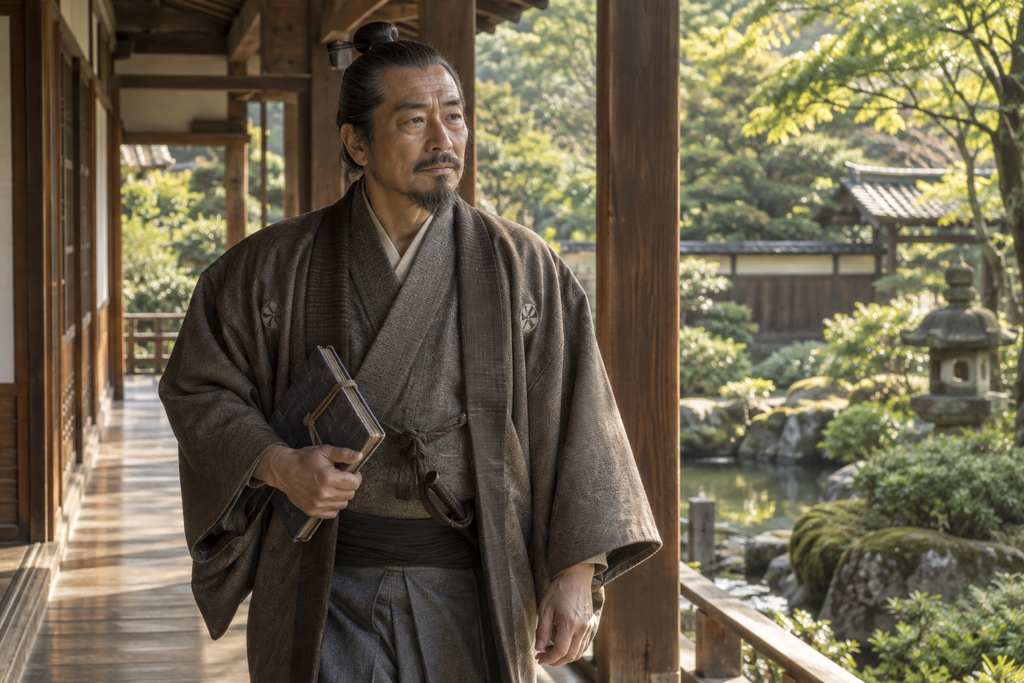
Evidence: Historical author; details of his life remain subjects of research.
Natori Masazumi, also encountered as Natori Masatake, is associated with the Shoninki, a ninjutsu work dating to 1681. The National Diet Library’s description identifies its author with the Kishu domain and explains that the text addresses matters including disguise and equipment.
Mie University’s lecture on Natori emphasizes how incomplete knowledge of his biography has been, even though the book is well known. The investigation of family and temple records shows that ninja research can involve careful archival work rather than decoding a mysterious modern claim.
Why he belongs: Natori represents a written tradition outside the familiar Iga-centered story. His inclusion makes this a guide to influential ninja-related figures, not a competition between celebrity warriors.
Visit connection: Wakayama is relevant to his story. A specialist interested in the text may find that connection rewarding, while a first-time visitor may prefer a broader museum introduction before seeking smaller heritage sites.
6. Kato Danzo — The Legend of “Flying Kato”
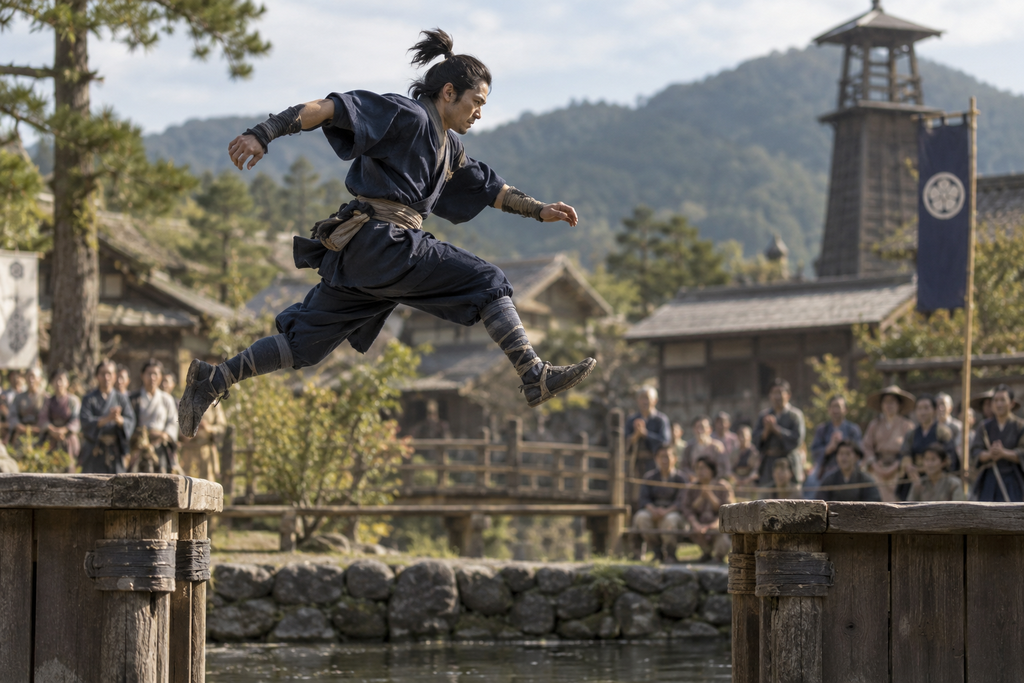
Evidence: Legendary ninja persona shaped by storytelling; no secure record of the familiar exploits.
Kato Danzo, often called Flying Kato, is famous for the seemingly impossible. That is also the reason to resist turning his legend into a straightforward military biography.
An account from Mie University’s International Ninja Research Center describes how studying the sources overturned the writer’s assumption that Danzo was a securely documented ninja. Stories moved between works and characters, eventually producing the familiar ninja identity. University research on ninjutsu and sorcery likewise examines Flying Kato within literary portrayals.
Why he belongs: Danzo illustrates how a reputation for extraordinary ability can become a character’s entire identity. His importance is in the history of the ninja image.
What to notice: The illustration interprets the nickname through a plausible acrobatic movement. It is not evidence of a recorded demonstration, and “flying” should not be read as a literal historical capability.
7. Ishikawa Goemon — From Thief to Larger-than-Life Ninja
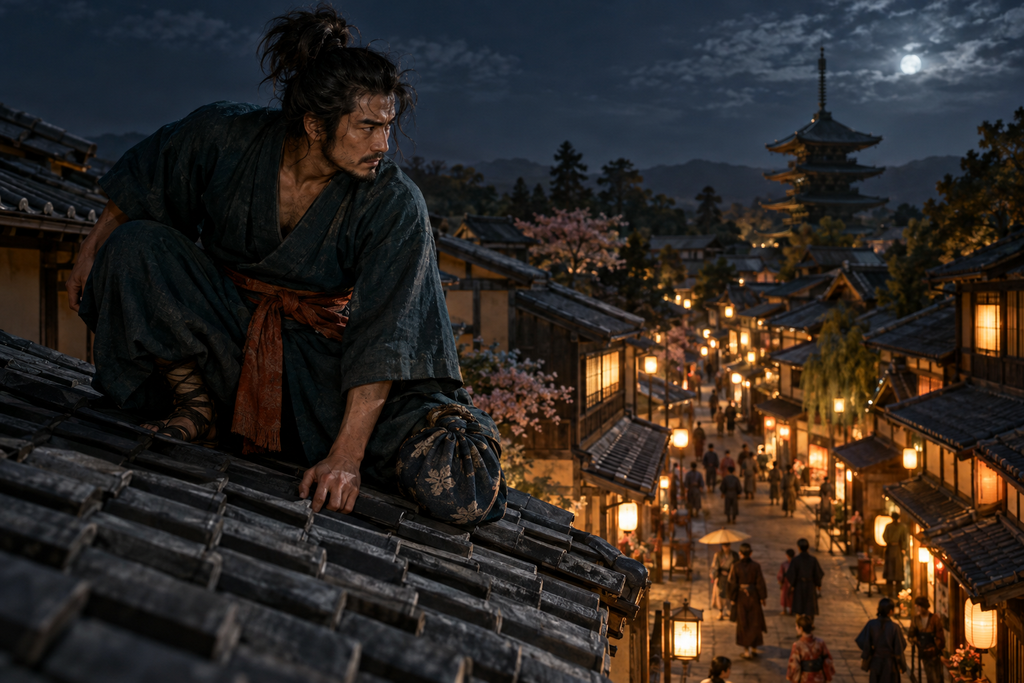
Evidence: Historical thief; famous ninja identity developed in later fiction.
Ishikawa Goemon offers a particularly clear distinction between a real person and an expanded legend. Mie University’s literary research identifies records supporting his existence as a thief, while explaining that much of the familiar biography should be treated as legend. His portrayal as a user of ninjutsu developed later.
Stage and literary versions made him an imposing character whose appeal could exceed simple approval of his actions. A dramatic performance tells us something about the audience and the period that created it; it is not the same thing as a record of his work as a spy.
Why he belongs: Goemon connects ninja culture with the imaginative world of outlaws and theatrical spectacle.
Japanese Perspective: Enjoying a powerful fictional portrayal does not require believing its every detail. Keeping the historical thief separate from later ninja versions makes those creative transformations more interesting.
8. Mochizuki Chiyome — A Famous Story That Needs a Label
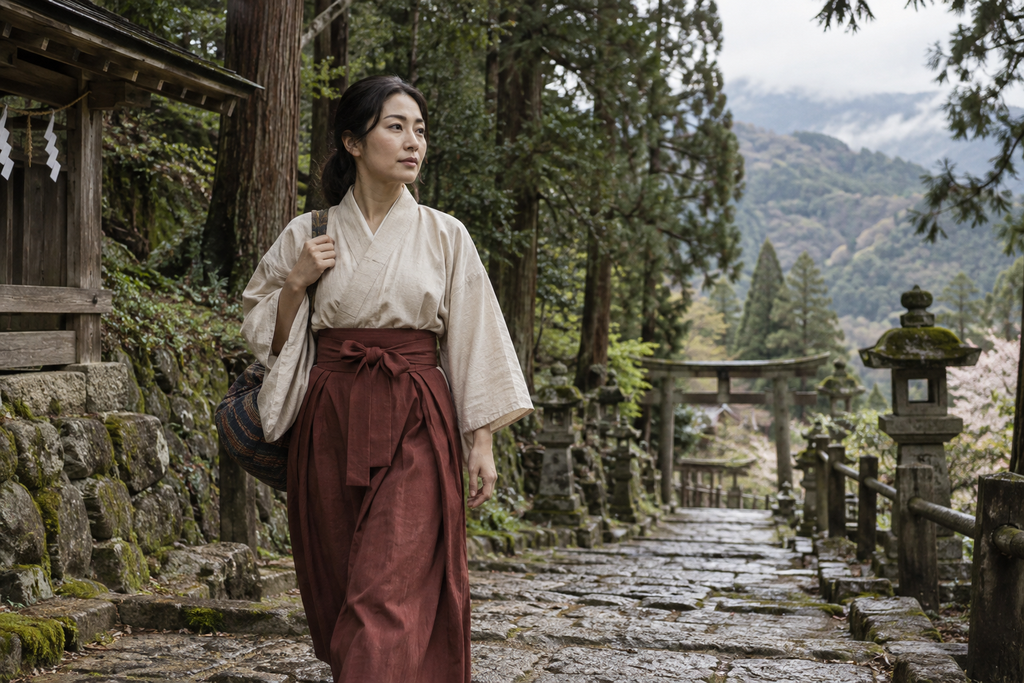
Evidence: Modern ninja legend; the claimed female spy organization is not established history.
Mochizuki Chiyome frequently appears in lists as the leader of a female ninja network serving Takeda Shingen. That account should not be presented as verified fact. Mie University scholar Katsuya Yoshimaru traces the influential biography to modern writing rather than secure evidence for the familiar organization.
The distinction matters particularly with kunoichi, a word widely understood today as a female ninja. Historical references to using women to assist intelligence gathering do not, by themselves, establish the modern image of a school of masked women assassins.
Why she belongs: Chiyome is included because readers are likely to encounter the story, and deserve to know its evidential limits.
What to notice: The modest shrine-path illustration visualizes the legend, not a proven uniform or occupation. It does not depict a documented scene from her life.
9. Sarutobi Sasuke — The Ninja as an Adventurous Hero
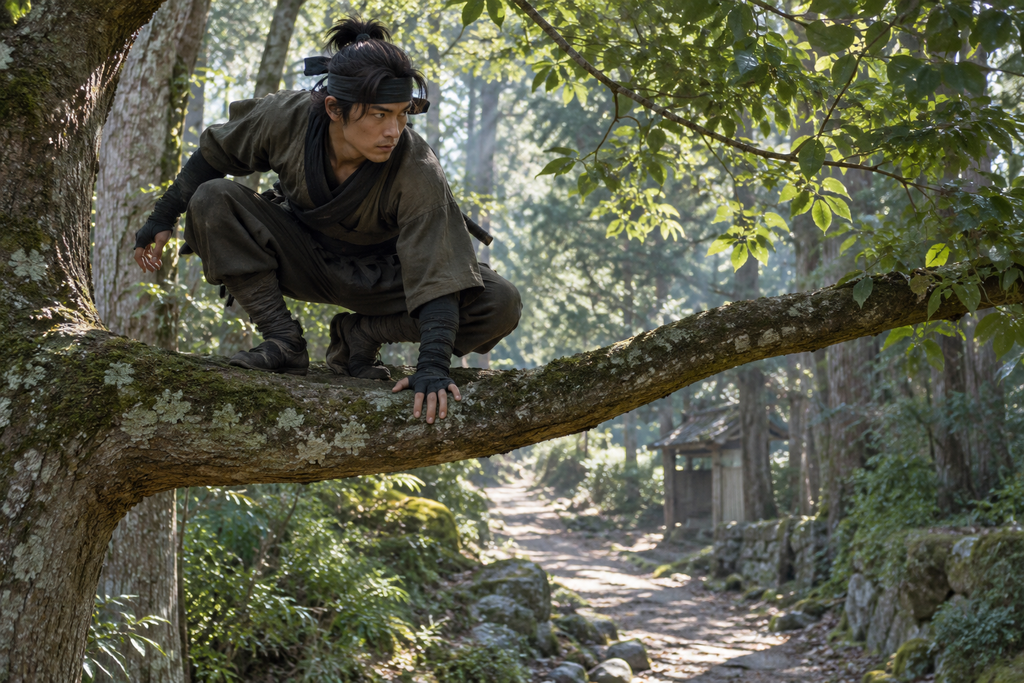
Evidence: Fictional character associated with Sanada storytelling.
Sarutobi Sasuke is a literary ninja, not a warrior with a recoverable service record. Mie University identifies both Sarutobi and Kirigakure as fictional retainers attached to the real Sanada figure known as Yukimura, or Nobushige.
Sasuke also helped popularize a more heroic ninja image through the Tachikawa Bunko tradition in the early twentieth century. That cultural role is a stronger reason for including him than pretending that his adventurous feats can be compared with a historical commander’s career.
Why he belongs: Sasuke shows how the ninja could become a figure of excitement and identification for readers.
For manga fans: This is the older Sarutobi Sasuke of Japanese storytelling. The illustration is an original interpretation of that literary figure, not a recreation of a modern manga character sharing part of the name.
10. Kirigakure Saizo — The Mystery of the Vanishing Ninja
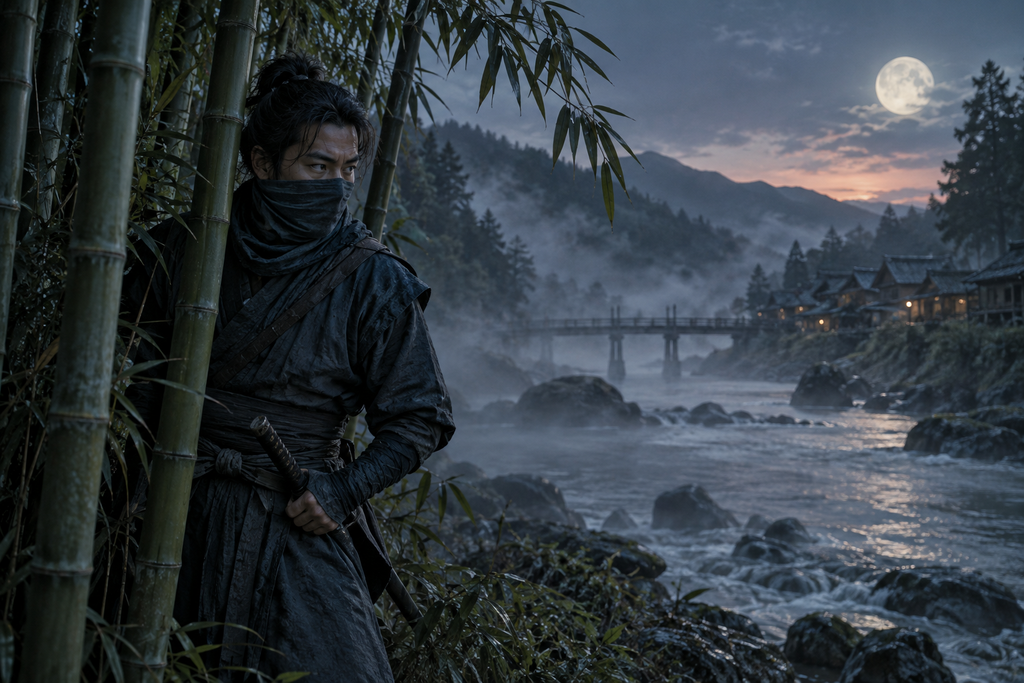
Evidence: Fictional ninja in Sanada-related literature and later adaptations.
Kirigakure Saizo is another famous literary figure associated with the Sanada world. The development of the character is itself part of the story: Mie University notes that the name Kirigakure appears in earlier literature before the familiar first name Saizo was fixed.
The name evokes concealment in mist, making him a natural symbol of the elusive ninja. It is an evocative image for fiction, not evidence that a historical person could dissolve into vapor.
Why he belongs: Saizo captures the appeal of what remains unseen. In our editorial reading, he complements Sasuke’s adventurous image with an atmosphere of uncertainty and concealment.
What to notice: The river mist in the illustration is natural scenery. The image interprets a literary mood rather than claiming to show an actual escape or a supernatural technique.
Japanese Perspective: Two Histories Worth Enjoying
Ninja culture becomes easier to understand when we follow two histories together: the history of people who performed intelligence work, and the history of the characters people imagined afterward.
A museum document, a local legend, and an exciting novel answer different questions. The document may help identify a person or duty. A legend reveals what a community remembers. A novel shows the possibilities a writer wanted readers to imagine.
The familiar black-clad silhouette belongs strongly to this visual history. Mie University traces its spread through theater and fiction, rather than describing it as a universal historical uniform.
For this article, the most useful Japanese perspective is therefore a habit of looking closely: enjoy a performance, then ask which parts come from documents and which from interpretation. You can appreciate both without making them interchangeable.
Where to Explore Ninja Culture in Japan
For a first trip, choose one area and leave time to understand it. These are suggested visit plans, not fixed transport schedules.
| Place | What makes it relevant | Suggested approach |
|---|---|---|
| Iga, Mie | Regional ninja heritage and the Ninja Museum of Igaryu | Allow a day for the museum and town; add rural sites only after checking access. |
| Koka, Shiga | A second major landscape of shinobi heritage | Visit as a separate excursion instead of squeezing both regions into a rushed day. |
| Odawara, Kanagawa | Fuma-themed interpretation at the castle’s NINJA Museum | Combine the museum and castle area for a focused outing. |
| Wakayama | Natori and the Kishu background of the Shoninki | Best suited to readers specifically interested in the written tradition. |
Iga’s visitor information describes a relocated late-Edo-period house and ninja-related collections at its museum. Look at the distinction between buildings, objects, and present-day demonstrations while exploring. Iga and Koka are also presented together in Japan’s heritage tourism information.
Odawara’s NINJA Museum emphasizes participatory exhibits based on the Fuma setting. Families and newcomers may enjoy that approach, while readers seeking archival depth should also use the sources below.
Before visiting: Check official access information, admission arrangements, and temporary closures. As checked on September 12, 2026, Odawara Castle has announced a temporary NINJA Museum closure on October 2, 2026. Consult its current notice before making plans.
Small memorial sites and temples may have different access arrangements from museums. Stay on permitted paths and respect private property. A memorial’s existence does not establish every story associated with its name.
FAQ
Who was the strongest ninja in Japan?
There is no reliable historical ranking. The evidence is too uneven, and intelligence work cannot be measured simply by fighting ability. This list highlights ten influential names from history and culture rather than declaring an unbeatable champion.
Was Hattori Hanzo a real person?
Yes, Hanzo Masanari was a historical Tokugawa supporter. However, Hanzo was an inherited name, and the famous popular image includes later embellishment. Do not assume every Hanzo story describes one man. [3]
Were Sarutobi Sasuke and Kirigakure Saizo real?
They are literary ninja characters associated with Sanada storytelling. They should not be presented as documented members of a historical special-operations team.
Was Mochizuki Chiyome’s female ninja school real?
The widely repeated account is not securely established. Scholarship on its origins identifies the familiar ninja biography as a modern construction. It is best labeled as a legend rather than taught as fact.
Why are writers included in a ninja top ten?
Fujibayashi Yasutake and Natori Masazumi matter because of the texts associated with them. Preserved writings give readers a different route into ninja history from tales of famous exploits.
Should I visit Iga, Koka or Odawara?
Choose Iga or Koka for a trip focused on the regions most closely associated with shinobi heritage. Consider Odawara for a castle-and-ninja outing from the Tokyo area. The best choice depends on your route and whether you prefer historical context or interactive exhibits.
Explore More with Yotsuha
Explore the wider setting of these stories at Explore Japan with Yotsuha. If the literary side of ninja culture interests you, continue to our Manga Reviews for another way to approach Japanese storytelling.
Sources and Further Reading
The selection and interpretations are editorial. These sources support the historical distinctions and visitor information; none establishes an official top-ten ranking. Research and visitor information checked September 12, 2026.
- Mie University International Ninja Research Center: What Is Ninja Study?
- Mie University: About Iga-mono in the Edo Era
- Ninja Museum of Igaryu: What Are Ninjutsu and Ninja?
- Kodansha Biographical Dictionary via Kotobank: Momochi Sandayu
- Odawara Guide: The Fuma Ninja Clan
- Odawara Castle: NINJA Museum
- National Diet Library: Reading Ninjutsu Manuals
- National Diet Library / Iga City Digital Museum: Shoninki
- Mie University: Research on Natori Masazumi
- Mie University International Ninja Research Center: Studying the Kato Danzo Story
- Mie University: Ninjutsu and Sorcery
- Mie University: What We Should Know About Ishikawa Goemon
- Mie University: What Is a Kunoichi?
- Mie University: Sarutobi and Kirigakure in Edo-Period Literature
- Mie University International Ninja Research Center: The Changing Image of Ninja
- Iga Visitor Guide: The Birthplace of Ninja
- JNTO Japan Heritage: Iga and Koka
- Odawara Castle: October 2, 2026 NINJA Museum Closure