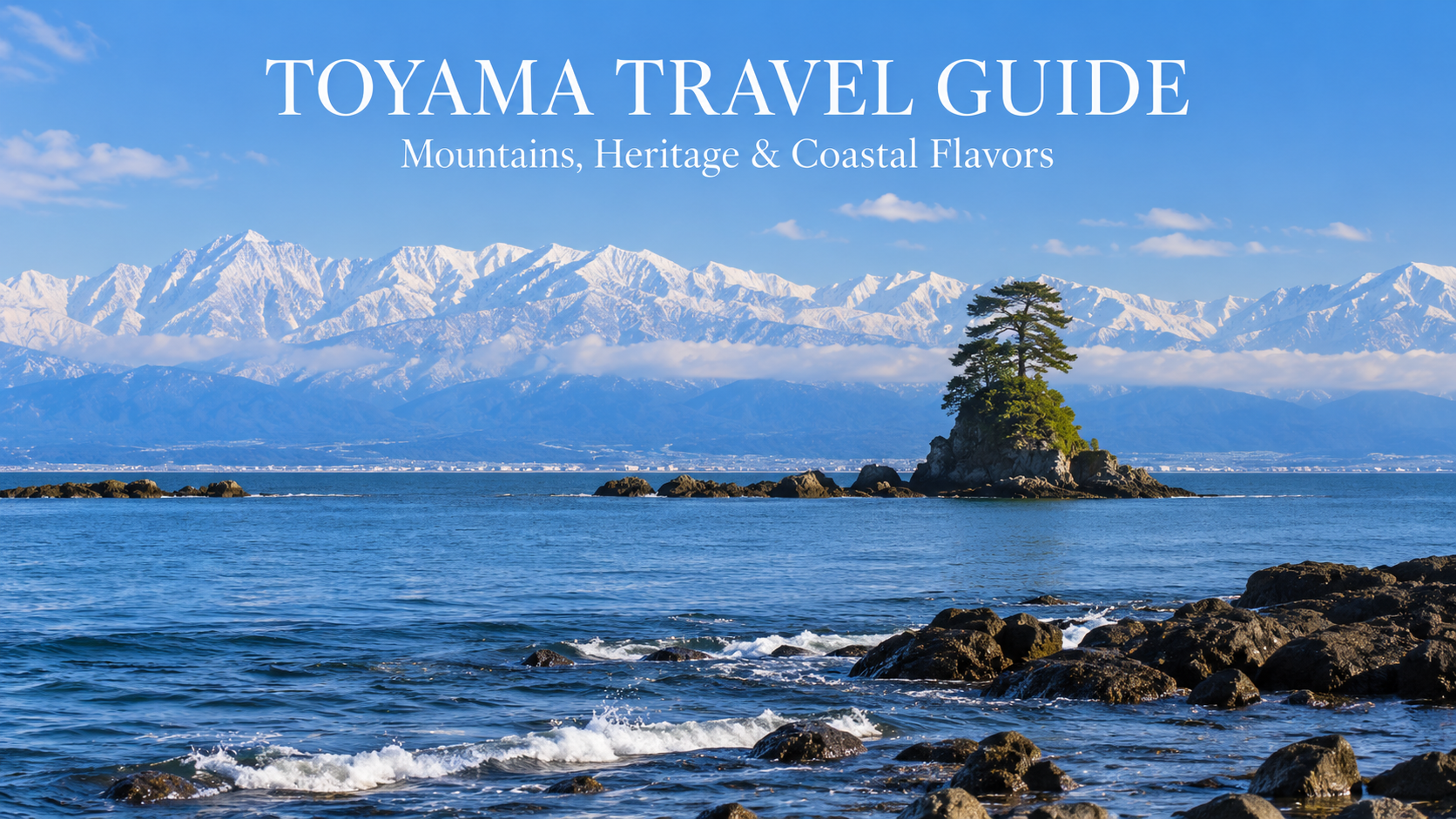
Toyama is a place to slow down between the mountains and the sea. On a clear day, snowy peaks rise beyond the blue waters of Toyama Bay. Inland, steep thatched roofs shelter mountain villages, while city workshops turn metal into objects made to be used every day.
For international visitors, this part of Japan offers more than a stop on the way to somewhere else. Stay long enough for a seafood meal, a historic neighborhood, and one carefully planned excursion, and Toyama begins to reveal its own character.
This Toyama travel guide introduces the main sights, regional flavors, and practical choices that make a first visit easier.
Images are original illustrations inspired by Toyama. They convey regional atmosphere and are not documentary photographs or exact reproductions of individual locations.
Why Visit Toyama?
Toyama Prefecture lies on Japan’s Sea of Japan side, within the Hokuriku area of the broader Chubu region. Its appeal comes from variety: you can combine urban sightseeing with coastal scenery, crafts, or mountain landscapes.
The key is to choose your priorities. The Tateyama Kurobe Alpine Route deserves a substantial part of your schedule. Gokayama requires its own transport planning. Neither works well as an afterthought squeezed between lunch and a train departure.
For a first visit, allow three days for Toyama City and two excursions. Add another day if you want both the mountain route and a relaxed visit to the historic villages.
1. Toyama City: A Comfortable Place to Begin
Toyama City makes a practical base, with rail connections, tram routes, restaurants, and accommodation around the station and central districts.
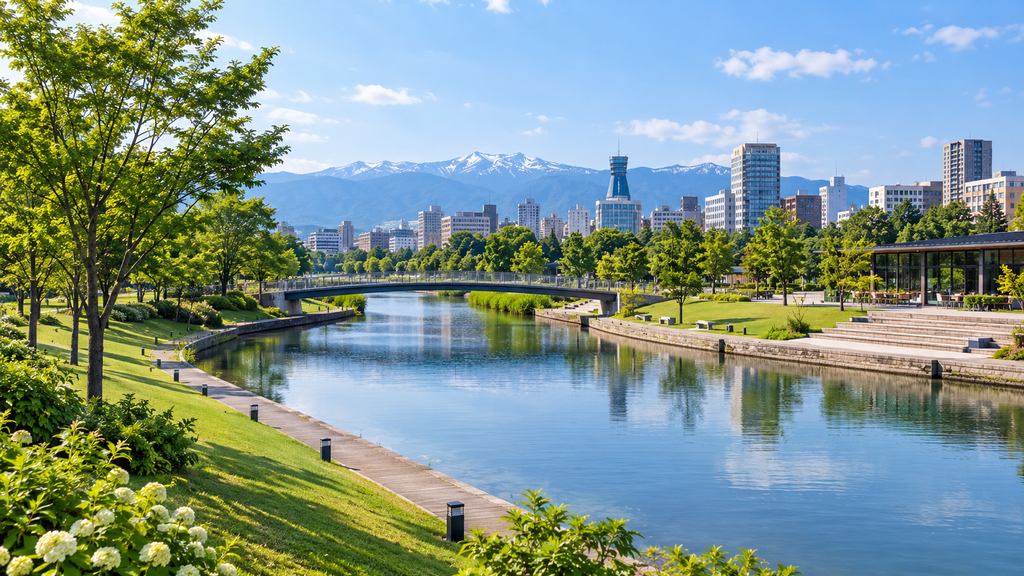
Start gently with a walk beside the water at Fugan Canal Kansui Park. Leave time to sit down rather than treating the park as a quick photograph stop. On another part of your city walk, browse shops or choose an indoor cultural attraction if the weather turns wet.
The city’s tram network can help connect your sightseeing, but check the route and payment instructions before boarding. A short tram ride is also a chance to see ordinary neighborhoods beyond the station area.
Japanese Perspective: Notice the Everyday City
Travel does not have to be a sequence of famous monuments. Watch how a neighborhood shopping street changes around lunchtime, explore the regional products in a station shop, or choose a cafe where you can pause over your plans.
These small experiences provide useful context for the more dramatic landscapes outside the city.
2. Tateyama Kurobe Alpine Route: Plan a Full Mountain Day
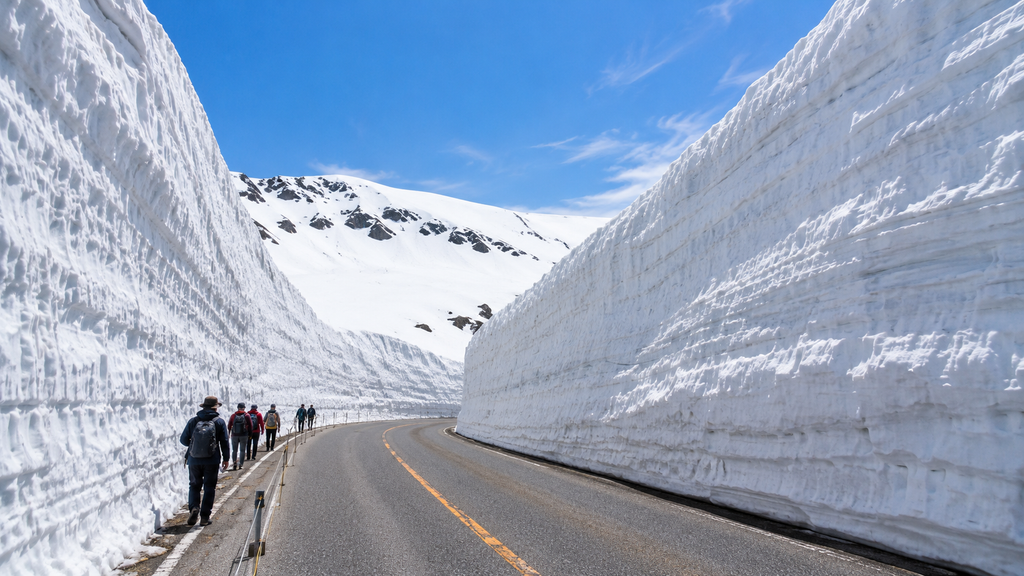
The Tateyama Kurobe Alpine Route connects the Toyama and Nagano sides of the Northern Japanese Alps through a series of transport links. The journey itself is part of the attraction, with changing views as you gain elevation.
For travelers staying in Toyama, an out-and-back visit toward Murodo can be more manageable than a complete crossing. A through trip toward Nagano is another option, but it requires a clear plan for onward transport and luggage.
Do not confuse the Alpine Route with the Kurobe Gorge Railway. They are different excursions with different access points and operating arrangements.
The Snow Wall Is Seasonal
The famous snow corridor near Murodo is associated with spring and early summer. It is not a year-round attraction, and its appearance changes as the snow melts.
The route itself operates seasonally, generally from spring through late autumn, with winter closure. Confirm the current year’s dates, ticket arrangements, and weather notices on the official Alpine Route website.
Bring warm layers, weather protection, sunglasses, and footwear suitable for the conditions. Even when Toyama City feels mild, the mountain environment can be cold. Leave spare time between connections and check the final return services before walking away from the terminal.
You do not need to climb a summit to enjoy the scenery. Choose a short, permitted walk that fits the conditions and your available time.
3. Amaharashi Coast: Where the Bay Meets the Mountains
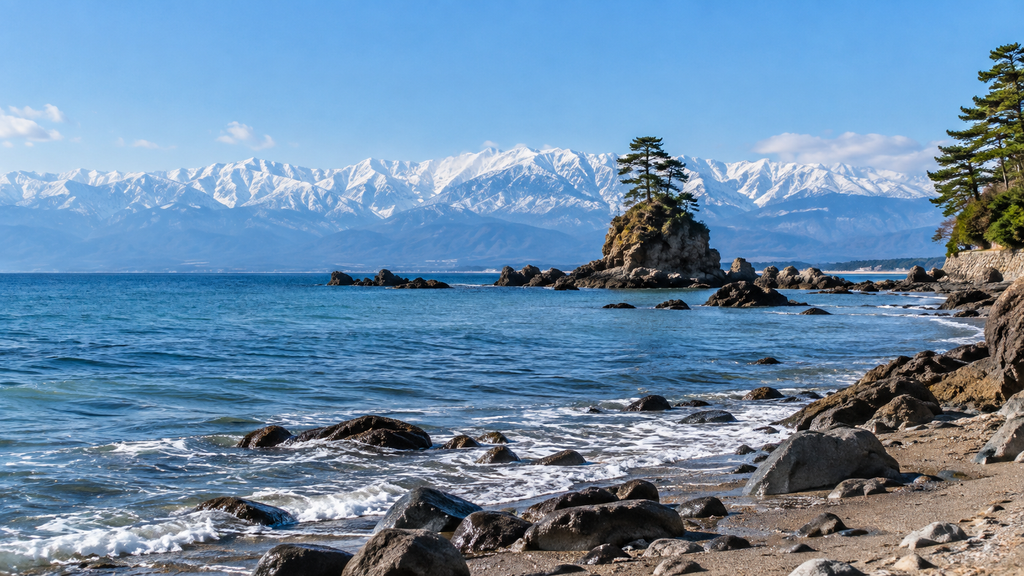
Amaharashi Coast is known for views across Toyama Bay toward the Tateyama mountain range. Small offshore rocks and coastal pines give the foreground a distinctive shape.
Clear visibility is essential for the famous mountain panorama. Haze, low cloud, and rain can hide the peaks completely, so think of a clear view as a welcome possibility rather than a promise.
The coast is accessible via the Himi Line from Takaoka. Check the timetable and leave enough time to reach your return train without rushing.
A coastal walk and a cafe break can still be enjoyable when the mountains are hidden. Keep to public areas and designated crossings; the railway scenery is best appreciated without stepping anywhere near the tracks.
For a longer outing, consider continuing toward Himi for a meal, provided the transport connections suit your day.
4. Gokayama: Discover Living Mountain Heritage
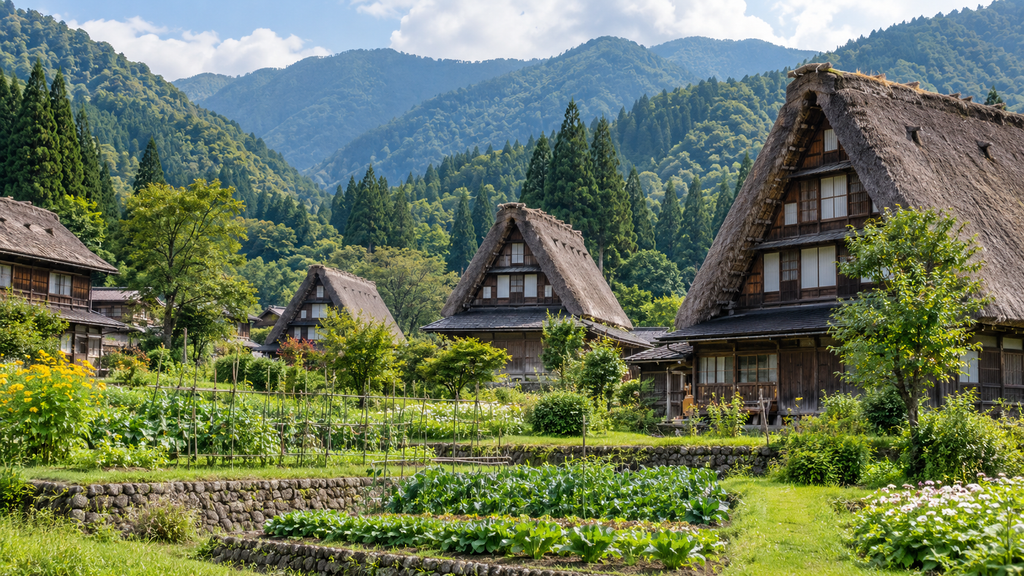
Gokayama’s Ainokura and Suganuma villages form part of the UNESCO-listed Historic Villages of Shirakawa-go and Gokayama. Their steep thatched houses are known as gassho-zukuri.
The roof shape evokes hands joined in prayer, but the architecture also reflects practical responses to a demanding mountain environment. Look beyond the outline of a roof to the timber, surrounding fields, and relationship between the houses and the landscape.
Choose one village for an unhurried first visit. If a historic house is open to visitors, going inside can help you understand the structure better than exterior photographs alone.
Japanese Perspective: Heritage Requires Ongoing Care
These villages are inhabited places. Roofs, paths, and buildings require work, and residents continue their daily routines around visitors.
Stay out of private gardens, keep voices low near homes, and follow local rules on photography, smoking, and access. Buying something from a local business or paying admission to an open house is a simple way to make your visit more than a passing photograph.
Check the World Heritage Bus information before traveling. Confirm the correct stop for your chosen village, walking access, and the last return bus.
5. Takaoka: Understand the Craft Behind the Souvenir
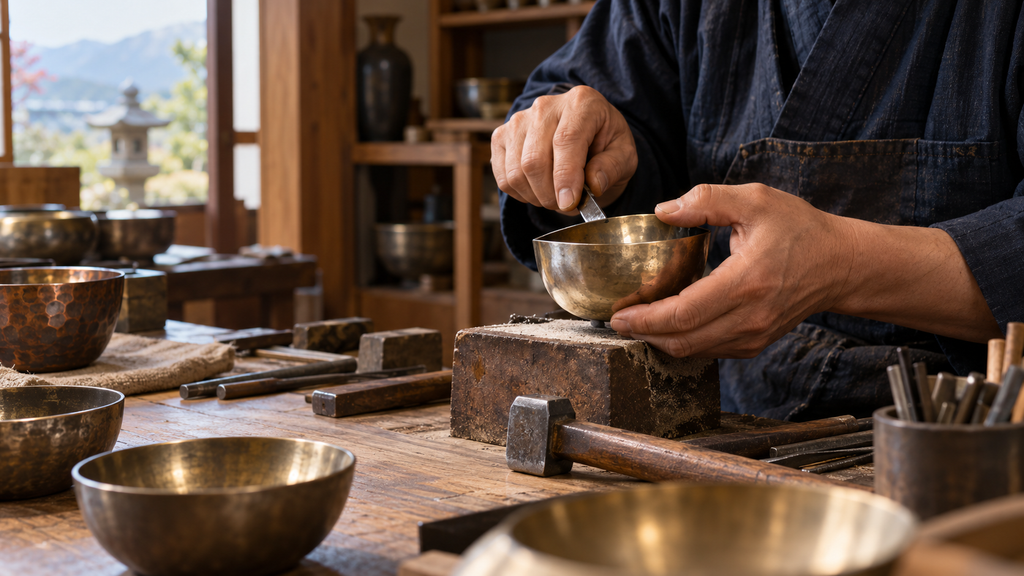
Takaoka offers another way to explore Toyama: through the objects people make. The city has a long metalcasting tradition, visible in workshops, galleries, and contemporary household goods.
Look for a factory visit or a hands-on experience if this interests you. Some workshops let visitors make small items such as a cup, plate, or chopstick rest. Availability, language support, and age requirements differ, so book the specific experience in advance.
Allow time to explore the surrounding historic streets as well. A craft visit feels more connected to its setting when you also walk through the neighborhood.
Japanese Perspective: Ask How an Object Is Used
Instead of choosing only by appearance, ask about an object’s weight, finish, and care. A small metal cup or tray can carry the memory of the maker’s explanation into everyday life at home.
Handmade does not mean every process is performed without machinery. What matters is understanding the material, the decisions involved, and the skills required to achieve the finished result.
What to Eat in Toyama
Seafood from Toyama Bay
White shrimp, or shiroebi, are a signature local ingredient. Try them in a restaurant preparation that suits you, such as a fried dish. Seasonal menus also feature specialties such as spring firefly squid and winter yellowtail.
Ask what is available that day instead of expecting every famous ingredient at every meal.
Masuzushi
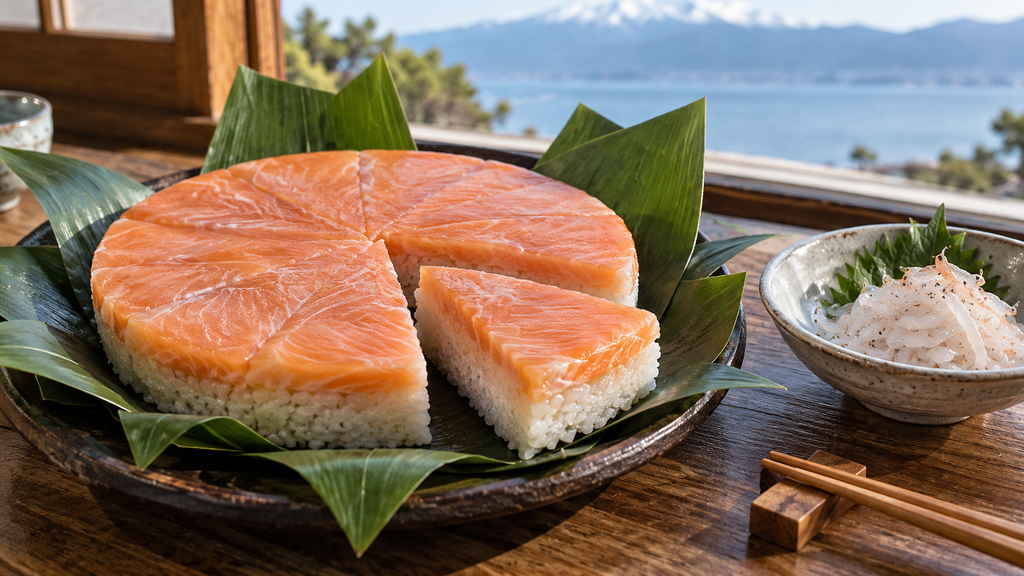
Masuzushi is pressed sushi made with seasoned trout or salmon and rice, commonly wrapped in bamboo leaves. Its round presentation makes it distinctive, and different makers offer different balances of fish, rice, and acidity.
Follow the seller’s storage and consumption instructions if buying it for later.
Japanese Perspective: Kombu Connects Food and Trade
Toyama’s use of kombu, or kelp, reflects historical maritime trade connections with Hokkaido. In kombujime, ingredients are placed against kelp to take on its flavor.
This is a useful reminder that regional food develops through travel and exchange as well as local geography.
For a different meal, look for Toyama Black ramen or Himi udon. The dark ramen broth is known for its strong soy-sauce flavor; udon offers another noodle option.
Tell restaurants about allergies or dietary requirements before ordering. Fish stock can appear in dishes that look vegetable-based, and a seafood destination still requires careful menu checking.
Best Time to Visit Toyama
Your ideal season depends on whether mountains, food, or towns are the main reason for your trip.
| Season | Good reasons to visit | Planning note |
|---|---|---|
| Spring | Seasonal seafood and the snow-wall period | Mountain access depends on opening dates and weather. |
| Summer | Green mountain scenery and village walks | Expect heat in the lowlands and changing mountain weather. |
| Autumn | Cooler town walks and mountain foliage | Higher areas become cold earlier; daylight shortens. |
| Winter | Seasonal food and snowy town or village scenery | The Alpine Route closes; snow can disrupt other transport. |
Keep your outdoor days flexible where possible. A city museum or craft visit can be a useful alternative when mountain weather is unsuitable.
Getting to and Around Toyama
Arriving by Train
Toyama Station is served by the Hokuriku Shinkansen from Tokyo. For journeys from other cities, check a current route planner, since connections depend on your starting point.
When traveling to Takaoka, pay attention to station names: Shin-Takaoka is the shinkansen station, while Takaoka Station serves other local connections. They are not interchangeable stops.
Choosing a Base
Stay near Toyama Station for convenient arrivals, meals, and onward transport. Takaoka can suit a trip focused on crafts and the western side of the prefecture.
A rural stay may provide a quieter evening, but confirm meal arrangements and the final transport connection before booking.
Practical Planning Tips
Carry a little cash for smaller businesses, check luggage storage before a day trip, and avoid assuming a rail pass covers trams, private railways, or mountain transport.
For Gokayama and the Alpine Route, work backward from your return journey. Knowing the final departure is more useful than simply knowing how early you can arrive.
A Three-Day Toyama Itinerary
Day 1: Toyama City and Local Food
Arrive, leave your luggage, and take a relaxed city walk. Visit the canal park if the weather is pleasant, then enjoy a regional dinner.
Day 2: Choose Mountains or Gokayama
During the operating season and in suitable weather, dedicate the day to an Alpine Route excursion.
If villages are your priority, choose Gokayama instead and build the day around the bus timetable. Trying to combine both would leave too little time at either destination.
Day 3: Takaoka and the Coast
Begin in Takaoka with a neighborhood walk or a prebooked craft experience. Continue to Amaharashi only if the timetable leaves comfortable time for both the coast and your onward journey.
With four days, give Gokayama and the Alpine Route separate days. In winter, replace the mountain route with city sightseeing, food, or another accessible destination.
Frequently Asked Questions
Is Toyama worth an overnight stay?
Yes. Staying overnight gives you more room for regional food and excursions that are awkward to fit into a short stopover.
Can I explore Toyama without a car?
Yes. The city and major rail corridors are practical by public transport. Rural buses and mountain connections require more planning.
Can I see the snow wall in winter?
The famous visitor snow-wall experience is associated with the route’s spring opening period, not its winter closure. Check the current event dates before booking.
Is Gokayama the same place as Shirakawa-go?
No. They share a UNESCO World Heritage listing, but Gokayama is in Toyama Prefecture and Shirakawa-go is in Gifu Prefecture.
Are the mountain views guaranteed at Amaharashi?
No. Visibility depends on the weather, and clouds can hide the range even when the coast itself is accessible.
Is Toyama suitable for a relaxed trip?
Yes, if you limit each day to one main area. Choose fewer excursions and leave space for meals, transfers, and weather changes.
Explore More of Chubu
Toyama sits between the Sea of Japan and the Japanese Alps, making it an ideal link between Hokuriku’s cultural cities and central Japan’s mountain destinations.
Ishikawa Travel Guide
Continue west to Kanazawa for Kenrokuen Garden, historic samurai and teahouse districts, regional crafts and the hot-spring towns of Kaga.
Read next: Ishikawa Travel Guide: Gardens, Heritage, and Local Flavors
Gifu Travel Guide
Compare Gokayama’s traditional villages with neighboring Shirakawa-go, then continue to Takayama and Gero Onsen for historic mountain-town culture.
Read next: Gifu Travel Guide: Mountain Towns, Heritage, and Local Flavors
Nagano Travel Guide
The Tateyama Kurobe Alpine Route connects the Toyama and Nagano sides of the Japanese Alps, making Nagano a natural continuation of a mountain-focused trip.
Read next: Nagano Travel Guide: Mountains, Heritage, and Local Flavors
Discover the rest of the region in our Chubu Travel Guides.