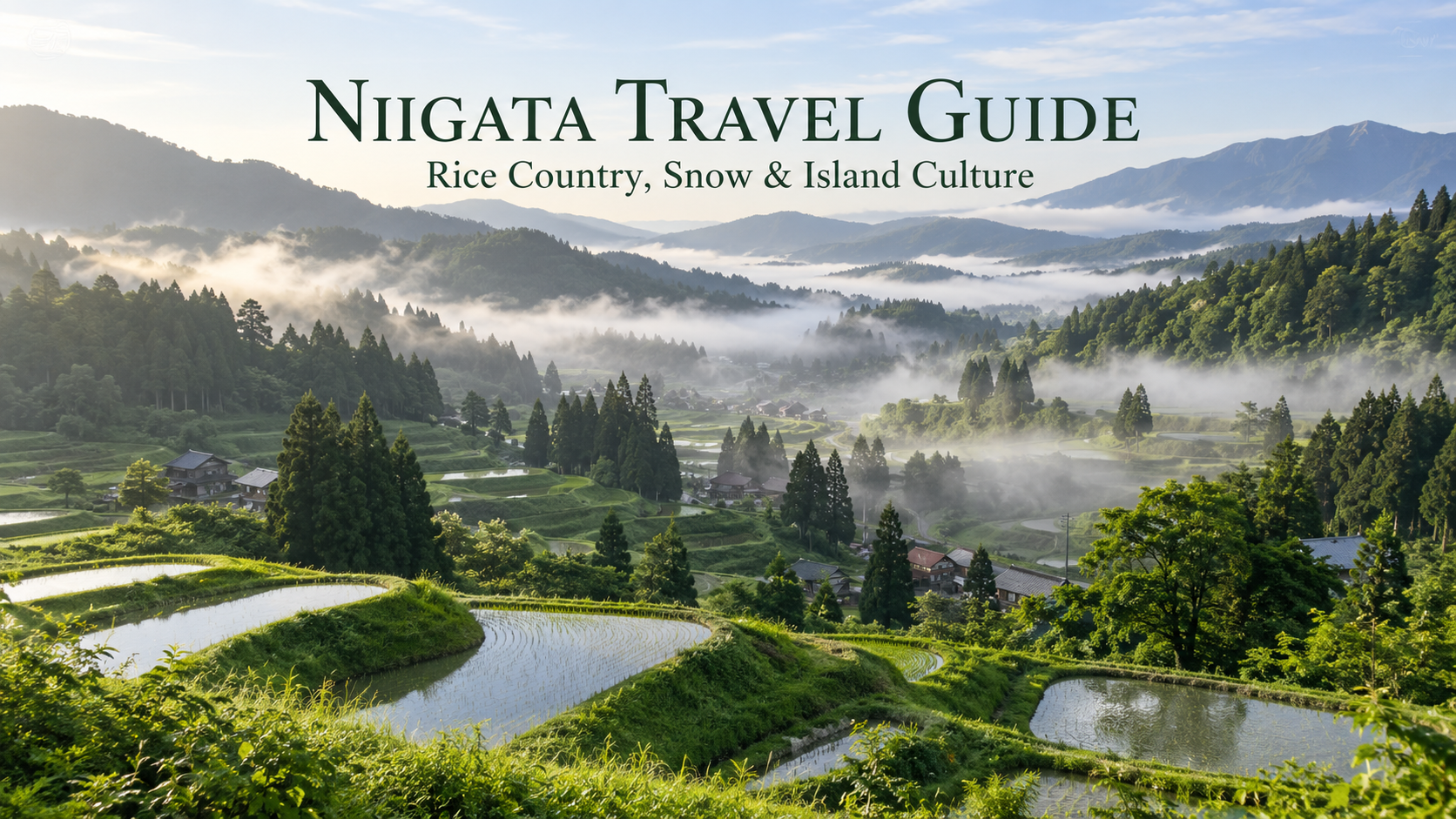
Niigata invites you to notice a different side of Japan: rice fields spreading across plains and hillsides, meals built around local ingredients, snowy mountain towns, and an island with its own landscapes and history. A good visit can begin with something as simple as a bowl of freshly cooked rice.
This Niigata travel guide introduces the main areas, food, seasons, and transport choices, with Japanese perspectives that connect what you see to life in the region. Rather than trying to cross the whole prefecture in a few days, choose the experience that matters most to you.
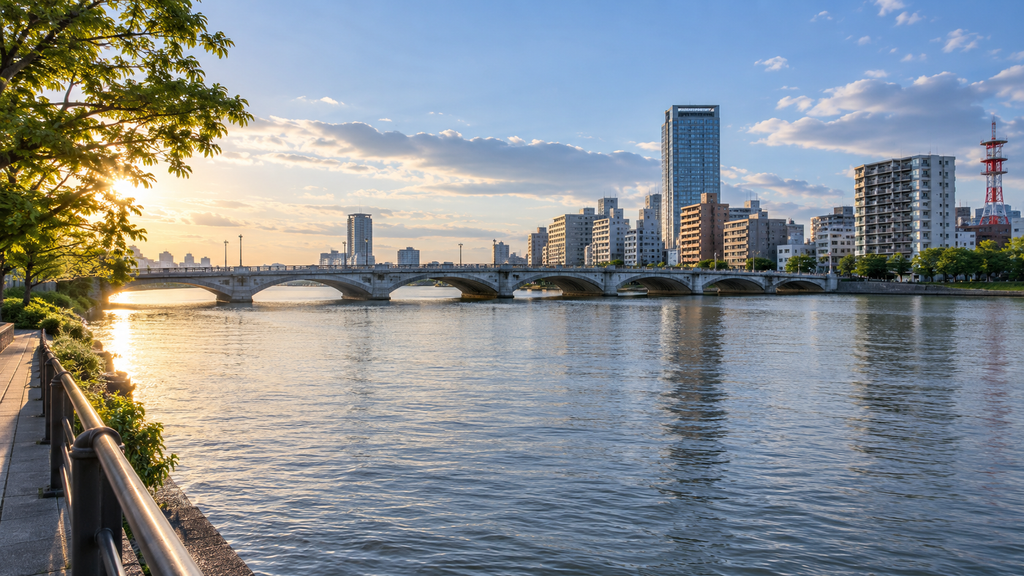
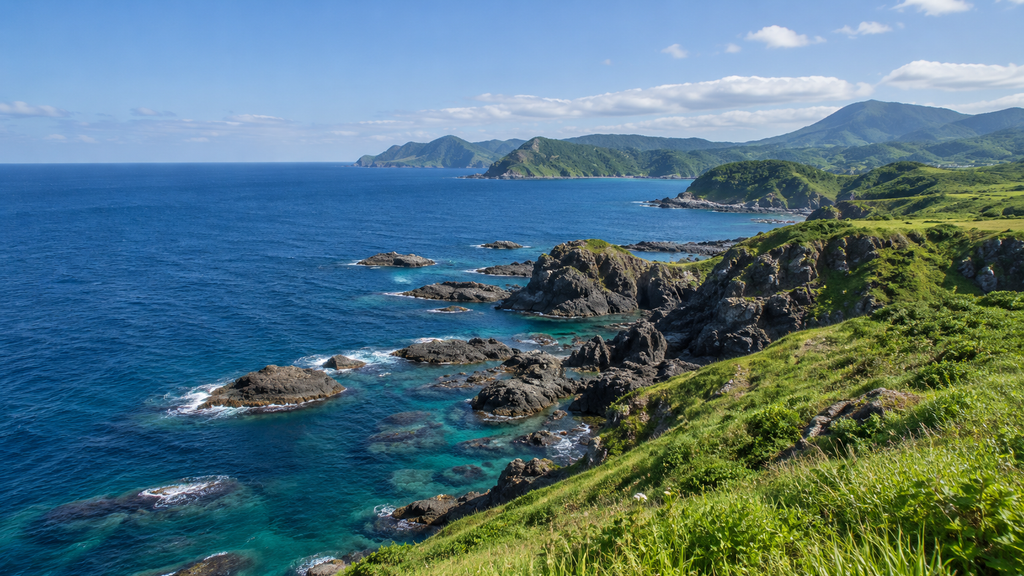
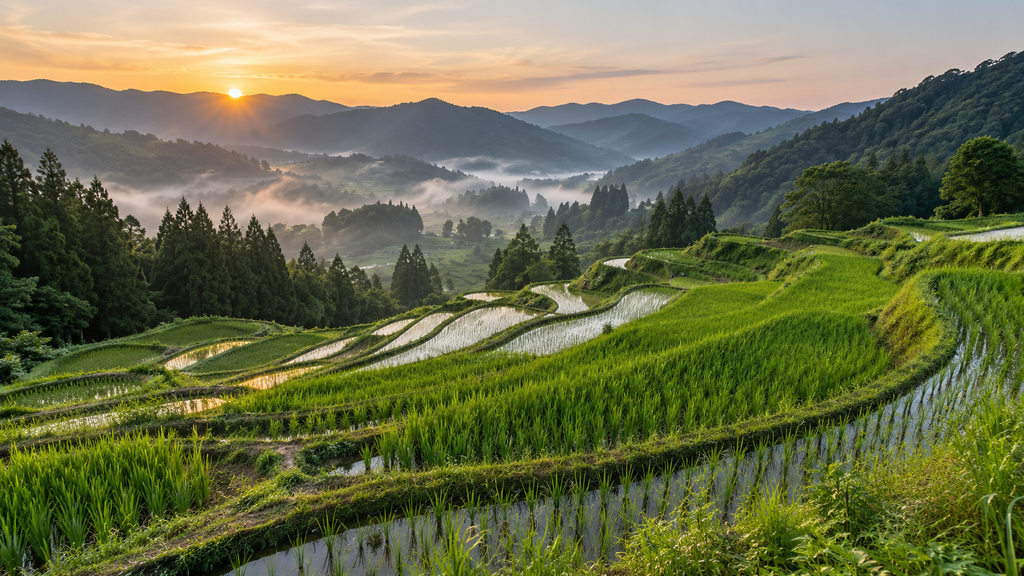
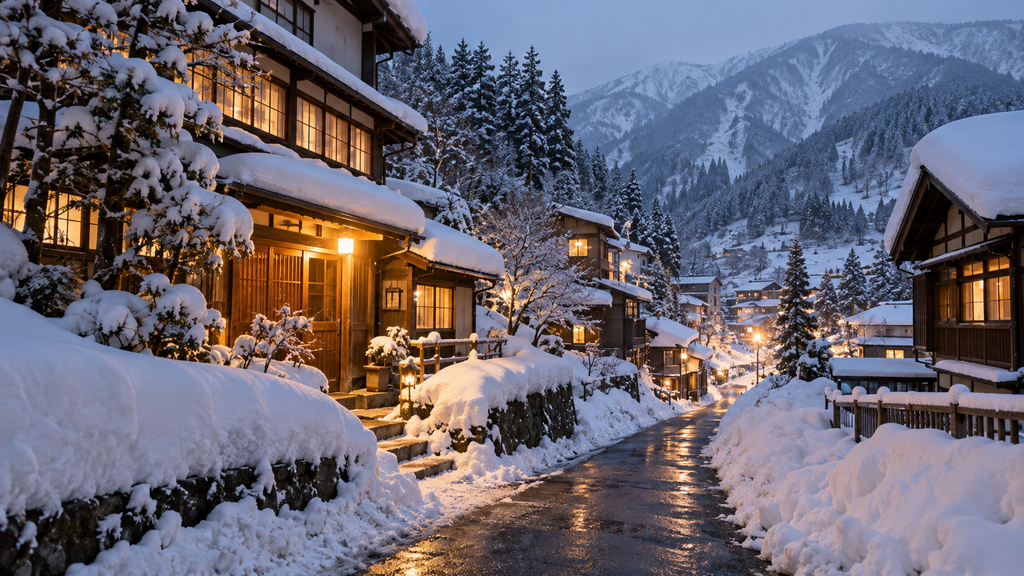
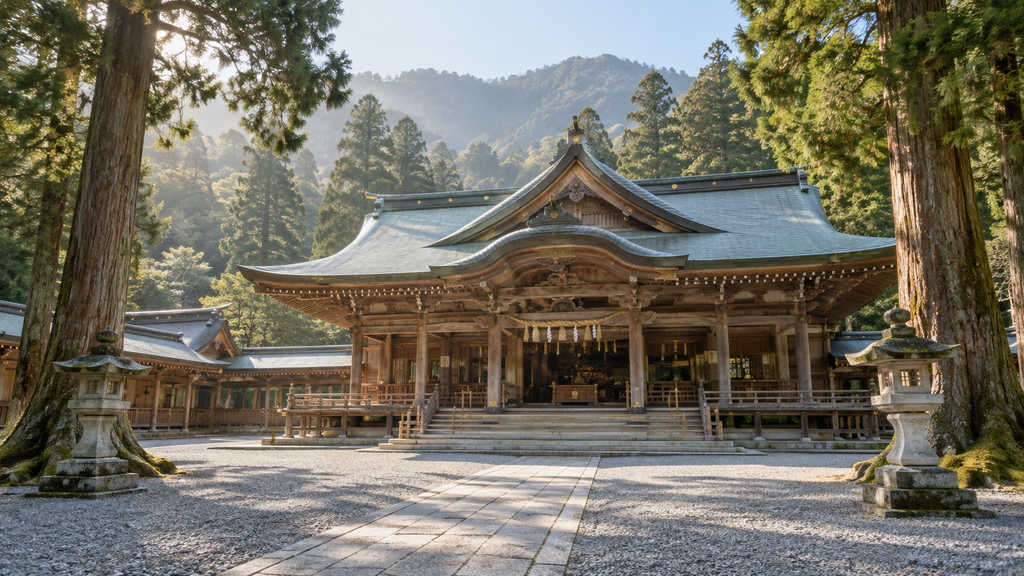
Images are original illustrations inspired by Niigata. They convey regional atmosphere and are not documentary photographs or exact reproductions of individual locations.
Why Visit Niigata?
Niigata suits travelers interested in food, countryside, seasonal scenery, and slower exploration. Its destinations are spread across a long stretch of the Sea of Japan coast and inland mountains, with Sado Island offshore.
Use these areas as starting points:
- Niigata City: riverside walks, regional dining, and the gateway to Sado.
- Sado Island: coastal landscapes and mining history, best with an overnight stay.
- Tokamachi and the Uonuma area: rice country, rural art, and mountain scenery.
- Echigo-Yuzawa: hot springs and winter sports with convenient railway access.
- Yahiko: shrine grounds, village atmosphere, and seasonal walks.
For three days, concentrate on part of the mainland. For Sado, plan a separate island stay rather than treating it as a short detour between trains.
1. Start with Niigata City and the Shinano River
Niigata City offers a gentle introduction to the prefecture. Walk beside the Shinano River and look for Bandai Bridge, one of the city’s familiar landmarks. The broad water and open views give the center a different atmosphere from Japan’s larger metropolitan districts.
Build the day around a river walk, a regional meal, and one additional interest. Browsing local food shops is a useful way to discover ingredients and souvenirs before deciding what to try. Give yourself time to explore beyond the immediate station area.
If traveling onward to Sado, remember that Niigata Station and the ferry terminal are separate places. Allow time for the transfer and check the operator’s boarding guidance. An overnight stay in the city can make an early island departure less stressful.
Japanese Perspective: Taste the Rice Before Adding Anything
Niigata’s reputation for rice becomes more meaningful at the table. Try a mouthful of plain rice before combining it with other dishes, noticing its aroma and texture. This is an invitation to appreciate an everyday staple, not a claim that every meal follows a formal ritual. A simple lunch can explain something about the region that a souvenir display cannot.
2. Give Sado Island Time to Unfold
Sado offers rocky coastlines, rural landscapes, and historical sites that deserve their own itinerary. Arriving at a port does not put every attraction within walking distance. Choose one area each day and arrange your island transport before booking a packed schedule.
The Sado Island Gold Mines were inscribed on UNESCO’s World Heritage List in 2024. The listed sites illustrate unmechanized mining methods, while visitor facilities help explain the work behind the island’s mining landscape. Check the exact site and tour you want: the heritage property and the various visitor attractions are not a single interchangeable stop.
Mining history also includes difficult human experiences. The mines’ later history includes Korean forced labor during Japan’s colonial rule and World War II. A thoughtful visit considers workers and living conditions alongside technology and production.
Plan coastal sightseeing around the weather. A rental car can help with dispersed destinations, while buses or organized tours require closer attention to schedules. Two nights give more flexibility than a quick overnight visit, especially when ferry conditions affect travel.
3. Explore Tokamachi’s Rice Country and Art
Around Tokamachi, rice terraces follow the contours of hillsides. Their appearance changes through the agricultural year: water can reflect the sky, young plants bring green lines, and ripening rice adds warmer color. Winter creates another landscape entirely.
Hoshitoge is a well-known terrace area, but a beautiful photograph does not guarantee identical conditions on your visit. Water levels, planting, harvest, weather, and access all vary. Ask locally about suitable viewpoints and current road conditions.
The wider Echigo-Tsumari Art Field adds contemporary art to rural exploration. Check the official visitor information for open venues, tours, and seasonal arrangements. Works are spread across the region, and not every site opens every day.
Japanese Perspective: Satoyama Is a Working Landscape
Satoyama describes landscapes where settlements, fields, and nearby woodland interact through human use and care. Rice terraces are part of that relationship. They are also workplaces: stay on permitted routes, never step onto field banks for a better photograph, and avoid blocking farm vehicles. Appreciating the view includes respecting the labor that sustains it.
4. Enjoy Echigo-Yuzawa in Winter or the Green Season
Echigo-Yuzawa is an accessible introduction to Niigata’s mountain side. The Joetsu Shinkansen connects it with Tokyo, making it a practical base for a short stay. Hot spring accommodation adds appeal beyond the ski slopes.
For winter sports, choose a resort according to your ability, lesson needs, rental equipment, and transport. Being near Echigo-Yuzawa Station does not mean every resort has the same access. Check your specific resort’s operating information before booking around a particular date.
Outside winter, look into seasonal mountain attractions and walks through the Yuzawa tourism guide. Summer facilities and lifts follow their own schedules; do not assume a winter operation continues unchanged all year.
Japanese Perspective: Snow Shapes Daily Life
Snow is scenery for a visitor, but it also creates everyday work for local communities. Cleared paths, snowbanks, and road maintenance reflect that effort. Keep entrances and cleared routes unobstructed, wear footwear suited to conditions, and allow extra time. A thoughtful snow-country visit includes noticing how people live with the season.
5. Slow Down Around Yahiko Shrine
Yahiko offers a different kind of day: a shrine visit, village stroll, and time beneath mature trees. Begin with the grounds of Yahiko Shrine, then decide whether to add the park or a mountain viewpoint according to the weather and your energy.
The surrounding area changes with the seasons, including autumn foliage. Check local transport and mountain facilities before relying on an additional excursion. A calm visit to the shrine and village can be enough on its own.
Japanese Perspective: Observe the Local Practice
Shrine customs can differ, so follow the instructions at the place you are visiting rather than assuming one memorized routine applies everywhere. Leave room for worshippers and pay attention to photography signs. You can appreciate a sacred setting without turning the visit into a performance or feeling obliged to imitate everything you see.
What to Eat in Niigata
Rice and Seafood
Try locally grown rice in a simple set meal or rice ball, as well as with seafood. Koshihikari is a familiar name, and Uonuma is particularly associated with it. Restaurants and shops vary in the rice they use, so ask if its origin interests you.
Seafood choices change with the catch and season. Let the menu guide you instead of arriving with a fixed expectation that one particular fish must be available.
Hegi Soba
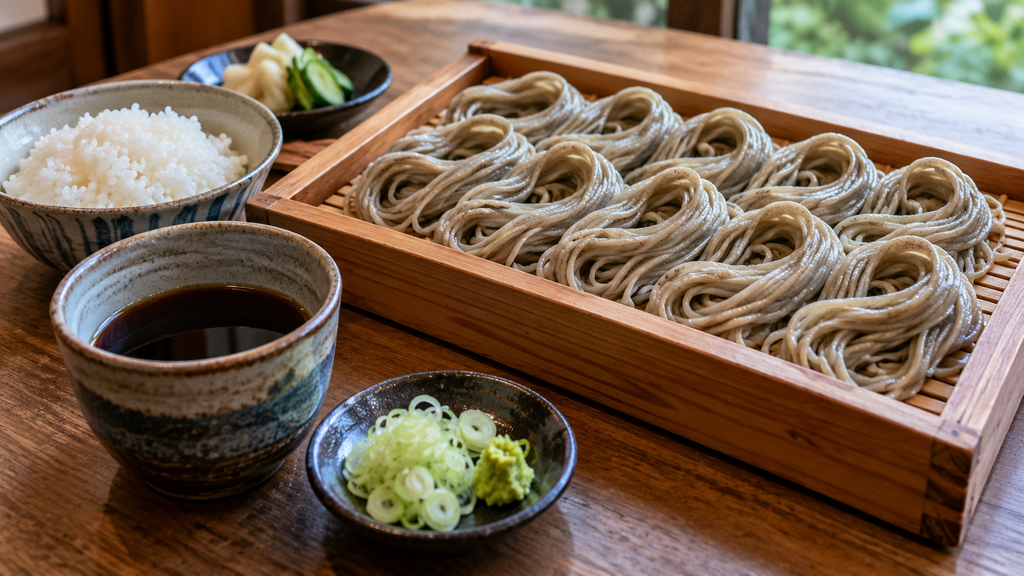
Hegi soba uses funori, a seaweed binder, and is served in a wooden tray called a hegi. Its neat bundles and smooth texture make it a distinctive regional noodle dish. Order according to your party size and check whether the tray is intended for sharing.
Japanese Perspective: Food and Craft Can Share a History
Hegi soba is connected with the region’s textile culture, where funori was also used. That link offers a concrete example of how local industries and cooking can influence one another. A noodle dish can tell a story about work and materials as well as taste.
Noppe and Local Sake
Noppe is a traditional dish featuring ingredients such as taro and other vegetables, with recipes varying between households and places. It introduces a homestyle side of Niigata cuisine.
Sake is another regional interest. If you drink, a small guided tasting can help you compare styles; check the venue’s current arrangements. You can enjoy Niigata’s food culture fully without alcohol, and any driver should leave tasting to another occasion.
Best Time to Visit Niigata
| Season | Good reasons to visit | Planning notes |
|---|---|---|
| Spring | Fresh greenery and changing agricultural scenery | Mountain snow may linger; check rural access. |
| Summer | Green rice fields and island exploration | Expect heat, humidity, and possible heavy rain. |
| Autumn | Harvest landscapes, food, and foliage | Timing varies by elevation and farming schedule. |
| Winter | Skiing, snow scenery, and hot spring stays | Build flexibility around road and transport conditions. |
Choose the season for your main interest. Niigata City, mountain districts, and Sado do not experience identical weather, so check each overnight destination separately.
Getting There and Around
The Joetsu Shinkansen connects Tokyo with Echigo-Yuzawa and Niigata City. Select the station for your actual destination: arriving in Niigata City does not put you close to every mountain attraction.
For Tokamachi, rail routes can involve a connection via Echigo-Yuzawa and Muikamachi. Countryside viewpoints generally require additional transport. A tour or arranged taxi can help if you do not drive; investigate availability before finalizing the day.
For Yahiko, plan around the local railway timetable and any transfers. Less frequent services can affect how much sightseeing fits comfortably.
For Sado, the Niigata–Ryotsu route is a common approach. Consult Sado Kisen for your date, vessel type, reservation needs, and operating status. A car ferry and jetfoil have different journey arrangements. Allow a buffer before any essential onward connection.
Public transport works well for major gateways, but rural Niigata requires more planning. Avoid renting a car solely for a winter mountain route unless you are prepared for the driving conditions.
Two Ways to Plan a Niigata Trip
Three Days on the Mainland
Day 1: Travel to Niigata City, walk by the river, and enjoy a regional dinner. Stay in the city.
Day 2: Visit Yahiko with a checked transport plan, then return to Niigata City. Keep the evening flexible.
Day 3: Travel south to Echigo-Yuzawa, store luggage if available, and choose a manageable town or hot spring visit before returning to Tokyo. A ski day deserves more time and an earlier start; add a night if skiing is the priority.
If rice terraces and art are your main interest, replace the Niigata City and Yahiko portion with a stay around Tokamachi and arrange local transport in advance.
Sado Extension: Add Two or Three Days
Stay in Niigata City before sailing, then spend at least one night on Sado. Two nights allow a more comfortable mix of mining history and coastal exploration. Select attractions around your accommodation and transport route, and leave room for weather-related changes before returning to the mainland.
Practical Tips
- Carry cash for smaller businesses and rural purchases.
- Confirm dinner and check-in times when staying at an inn with meals.
- Ask about bath rules and private-bath options at the specific property.
- Check food ingredients: noodle broth may contain fish even with vegetable toppings.
- Plan luggage storage and the final local connection before leaving a major station.
- Respect farmland, residential lanes, and signs restricting access.
FAQ: Visiting Niigata
Is Niigata worth visiting on a first trip to Japan?
Yes, especially if rice, regional food, snow, or rural scenery interests you. Choose a focused itinerary rather than trying to see the entire prefecture.
How many days should I spend in Niigata?
Three days work for a mainland introduction. Add two or three days if you want to include Sado without rushing.
Can I visit Sado as a day trip?
It may be possible with suitable ferry and island transport schedules, but an overnight stay gives more time and flexibility. Check connections before committing.
Do I need a car?
Not for every trip. Niigata City and Echigo-Yuzawa are accessible by rail, while rice terraces and dispersed island attractions need additional planning.
Is all of Niigata covered in deep snow in winter?
Conditions differ considerably between coastal, urban, and mountain areas. Check your specific destination rather than relying on a single prefecture-wide image.
What food should I try first?
Start with good local rice and a meal that suits your appetite, then try hegi soba or a seasonal seafood dish.
Explore More of Chubu
Niigata’s rice country, snowy mountains and Sea of Japan landscapes offer a distinctive side of central Japan. Continue your journey through neighboring mountain regions and the Hokuriku coast.
Nagano Travel Guide
Travel into Nagano for Matsumoto Castle, Zenkoji, mountain hot springs, historic post towns and the landscapes of the Japanese Alps.
Read next: Nagano Travel Guide: Mountains, Heritage, and Local Flavors
Toyama Travel Guide
Follow the Sea of Japan side of Chubu toward Toyama for fresh seafood, mountain scenery, traditional villages and the Tateyama Kurobe Alpine Route.
Read next: Toyama Travel Guide: Mountains, Heritage, and Coastal Flavors
Continue planning your journey through our Chubu Travel Guides.