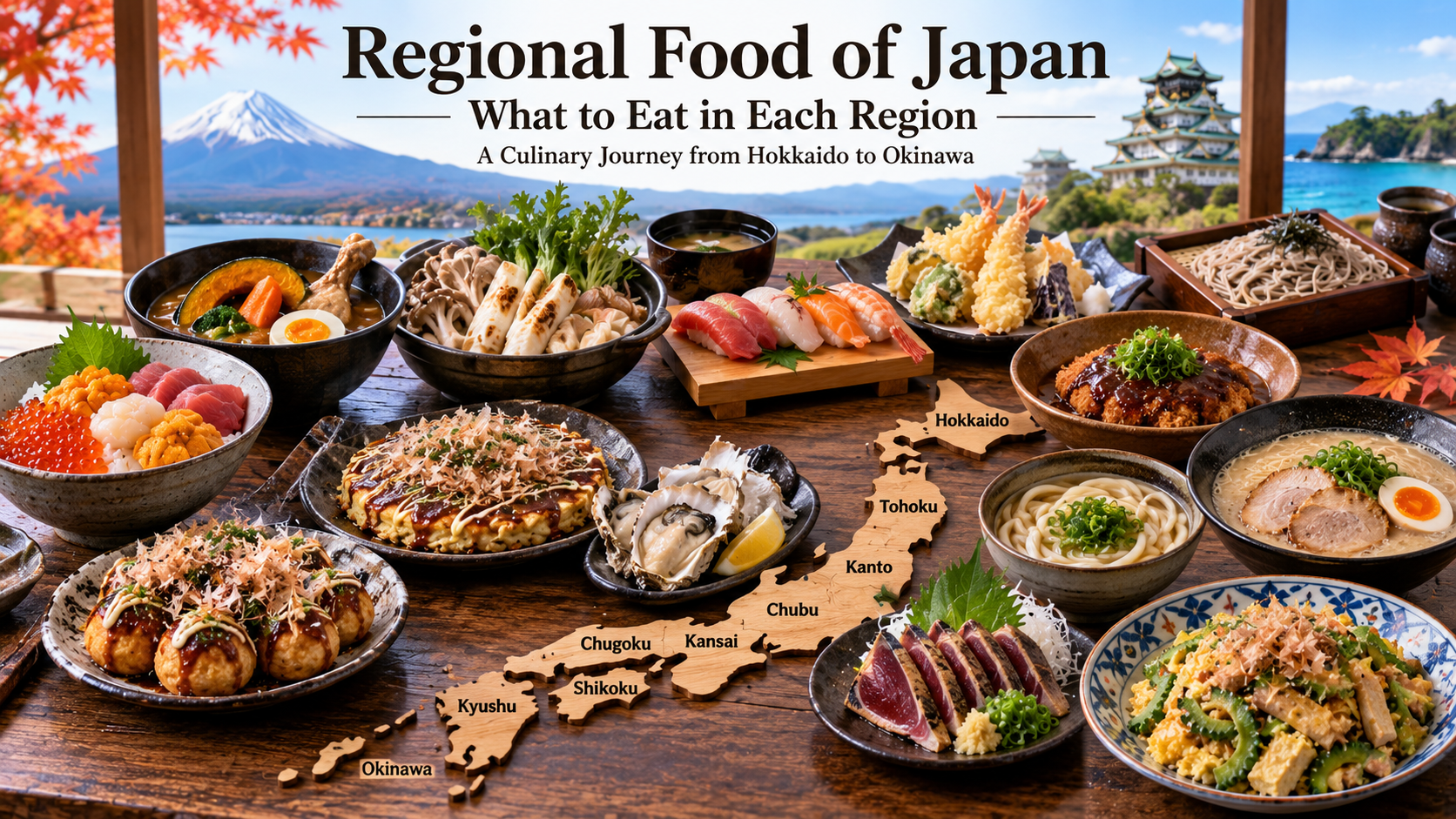
Japan is often introduced through a handful of famous foods: sushi, ramen, tempura, and perhaps wagyu beef.
But Japanese cuisine becomes much more interesting once you start traveling.
Food in snowy Hokkaido is not the same as food in subtropical Okinawa. Osaka is famous for casual dishes cooked on hot griddles, while Kyoto has a long tradition of delicate seasonal cuisine. Travel west to Fukuoka and pork-bone ramen becomes part of the local identity. Head to Shikoku and you may find yourself eating thick udon noodles or seared bonito.
Japan’s geography helps explain this diversity.
The country stretches a long distance from north to south and contains cold seas, mountain ranges, fertile plains, volcanic regions, and subtropical islands. Communities traditionally cooked with what was available nearby, gradually creating dishes that became closely associated with particular towns and prefectures.
For travelers, this creates a simple rule:
Do not eat exactly the same food everywhere you go.
Ask what the region is famous for.
You may discover that some of your favorite Japanese meals are foods you had never heard of before arriving.
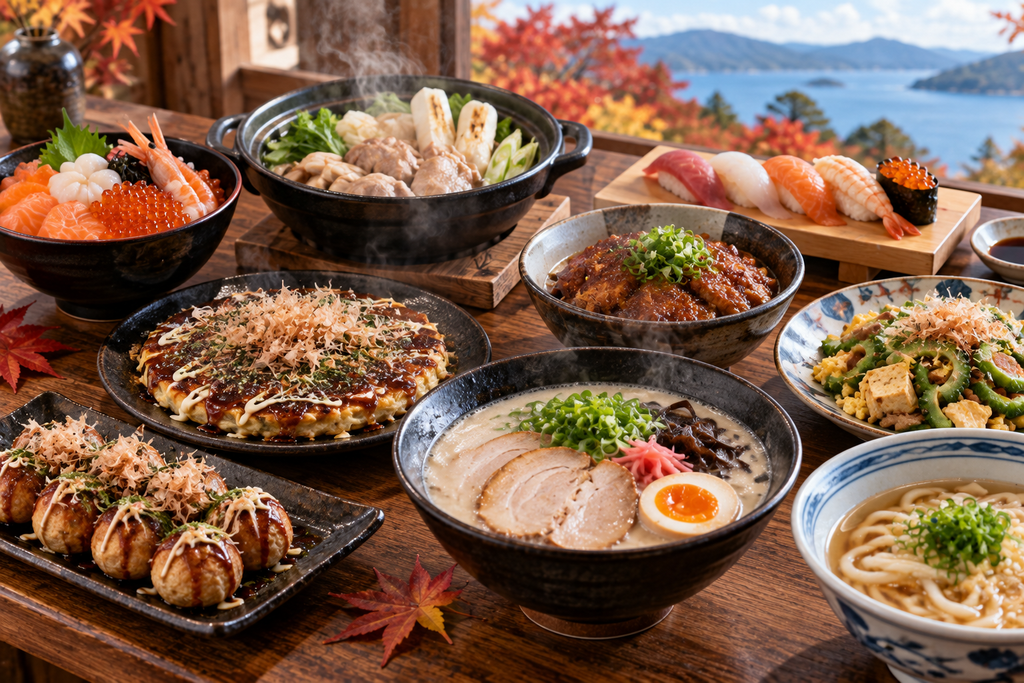
Why Does Japanese Food Change So Much by Region?
Modern transportation means you can now eat Hokkaido ramen in Tokyo or Okinawan food in Osaka.
Traditionally, however, food was much more closely connected to local geography.
Coastal communities had access to different types of fish and shellfish.
Mountain areas depended more heavily on vegetables, preserved foods, mushrooms, and grains. Regions with good rice-growing conditions developed strong rice and sake cultures, while areas where wheat grew well became known for noodles.
Climate mattered too.
Cold northern winters encouraged warming soups, hot pots, and preserved ingredients. Southern Japan developed food traditions suited to a warmer climate and different agricultural products.
History added another layer.
Port cities absorbed influences from overseas trade, castle towns developed their own food cultures, and major commercial centers such as Osaka created inexpensive dishes for large urban populations.
That is why “Japanese food” is better understood as a collection of regional cuisines rather than one fixed menu.
1. Hokkaido: Seafood, Dairy and Hearty Northern Food
Hokkaido is one of the easiest regions in Japan to associate with food.
Surrounded by cold seas, the island is famous for seafood such as crab, salmon, scallops, squid, sea urchin, and salmon roe.
A seafood bowl, or kaisendon, is an excellent introduction. A bowl of warm rice is topped with several varieties of fresh seafood, sometimes creating one of the most colorful meals you will encounter in Japan.
But Hokkaido is not only about seafood.
Its large agricultural areas produce potatoes, corn, wheat, and dairy products. Milk, butter, cheese, soft-serve ice cream, and desserts made with Hokkaido dairy products are widely popular.
Sapporo also has several dishes strongly associated with the city.
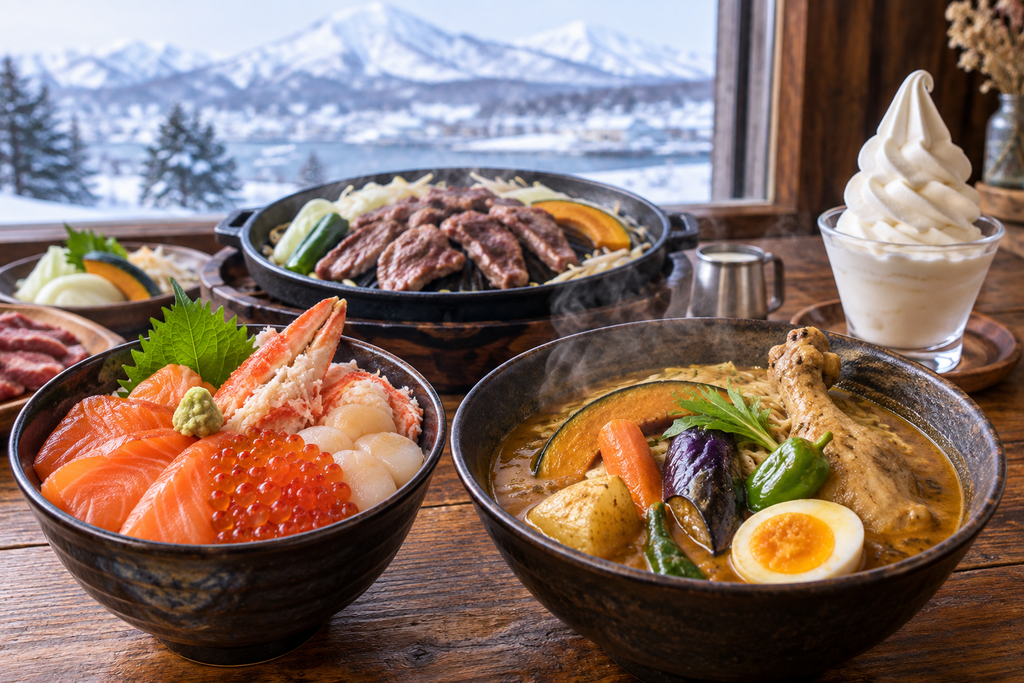
Soup Curry
Unlike the thick Japanese curry served over rice, Sapporo-style soup curry is much thinner and more aromatic.
Large pieces of vegetables are usually served in the broth together with chicken or other ingredients.
Jingisukan
Jingisukan is grilled lamb or mutton cooked with vegetables on a distinctive metal grill.
It is especially popular as a casual group meal.
Hokkaido Ramen
Different Hokkaido cities developed different ramen styles.
Sapporo is particularly associated with miso ramen, while Hakodate is known for lighter salt-based ramen.
If food is one of your priorities in Japan, Hokkaido can easily justify an entire trip.
Related Guide: Hokkaido Travel Guide for First-Time Visitors
2. Tohoku: Rice, Hot Pots and Warming Local Cuisine
South of Hokkaido lies Tohoku, a region of mountains, farming communities, heavy winter snowfall, and excellent rice-growing areas.
Many of its best-known dishes feel particularly suitable for cold weather.
Kiritanpo in Akita
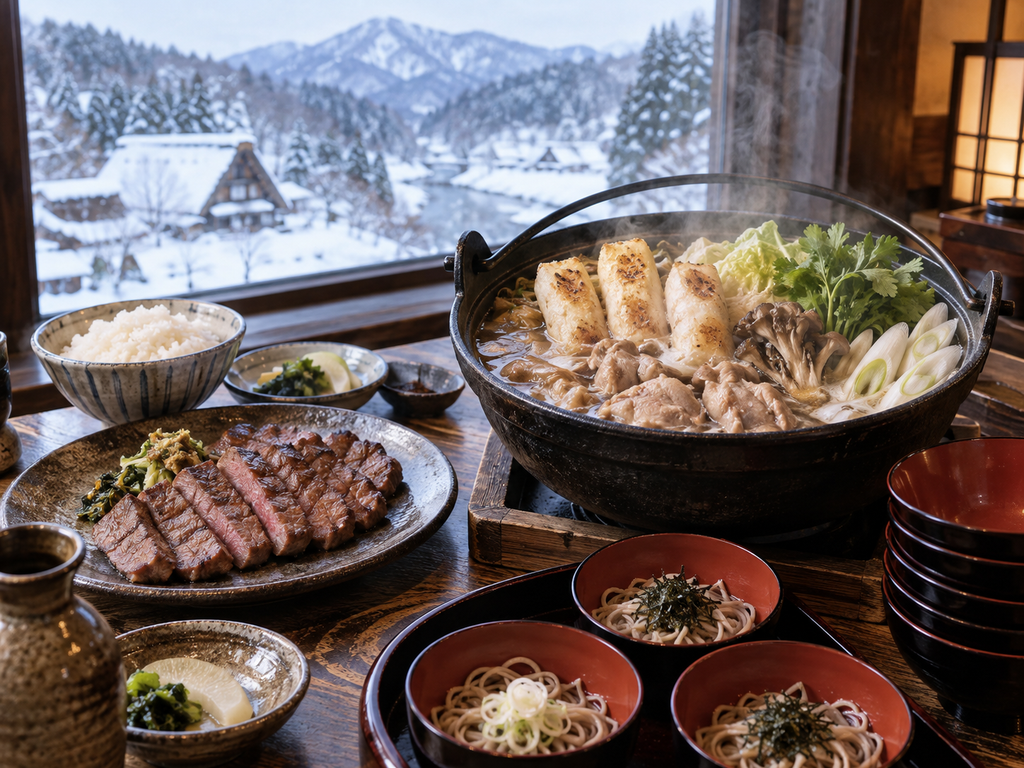
Akita’s kiritanpo begins with cooked rice that is mashed, wrapped around wooden sticks, and grilled.
The grilled rice can then be cut into pieces and added to a hot pot with chicken, vegetables, and broth.
It is warming, filling, and strongly associated with Akita.
Gyutan in Miyagi
Visit Sendai and you will quickly notice restaurants advertising gyutan, grilled beef tongue.
It is commonly served as part of a set meal with rice, soup, and side dishes.
Wanko Soba in Iwate
Iwate offers a completely different food experience.
With wanko soba, small portions of soba noodles are repeatedly added to your bowl.
The meal becomes almost an event, especially when diners challenge themselves to see how many servings they can eat.
Japanese Perspective
Regional food is an important part of domestic tourism in Japan.
A Japanese traveler visiting Sendai may already be planning to eat gyutan before arriving. Someone traveling to Akita may deliberately search for kiritanpo.
Food is often treated as part of the destination rather than simply something eaten between tourist attractions.
3. Kanto: Tokyo Food and Local Specialties Beyond the Capital
The Kanto region includes Tokyo, Kanagawa, Chiba, Saitama, Ibaraki, Tochigi, and Gunma.
Tokyo naturally dominates the image of Kanto food, but the region has much more variety than visitors sometimes realize.
Edomae Sushi
Modern Tokyo was once called Edo, and Edomae sushi developed using seafood from the waters around the city.
Historically, ingredients were often preserved through techniques such as marinating, simmering, or curing because refrigeration did not exist.
Modern sushi has changed dramatically, but Tokyo remains one of the world’s great destinations for sushi.
Soba and Tempura
Soba became an important part of everyday food culture in Edo.
Tempura also developed into one of the city’s famous foods.
Both remain easy to find in Tokyo today.
Yokohama and International Influence
Nearby Yokohama developed as an international port, and its food culture reflects that history.
The city also has one of Japan’s most famous Chinatowns.
Chiba Seafood
Chiba’s long coastline supports a strong seafood culture.
One local dish is namero, usually made from finely chopped fish mixed with ingredients such as miso and aromatic herbs.
Kanto shows how quickly food identity can change even within the area surrounding Japan’s largest city.
4. Chubu: Miso, Mountains, Rice and Seafood
Central Japan’s Chubu region is geographically complex.
It includes the Japanese Alps, fertile agricultural areas, the Pacific coast, and the Sea of Japan.
As a result, its cuisine varies considerably from prefecture to prefecture.
Nagoya’s Miso Culture
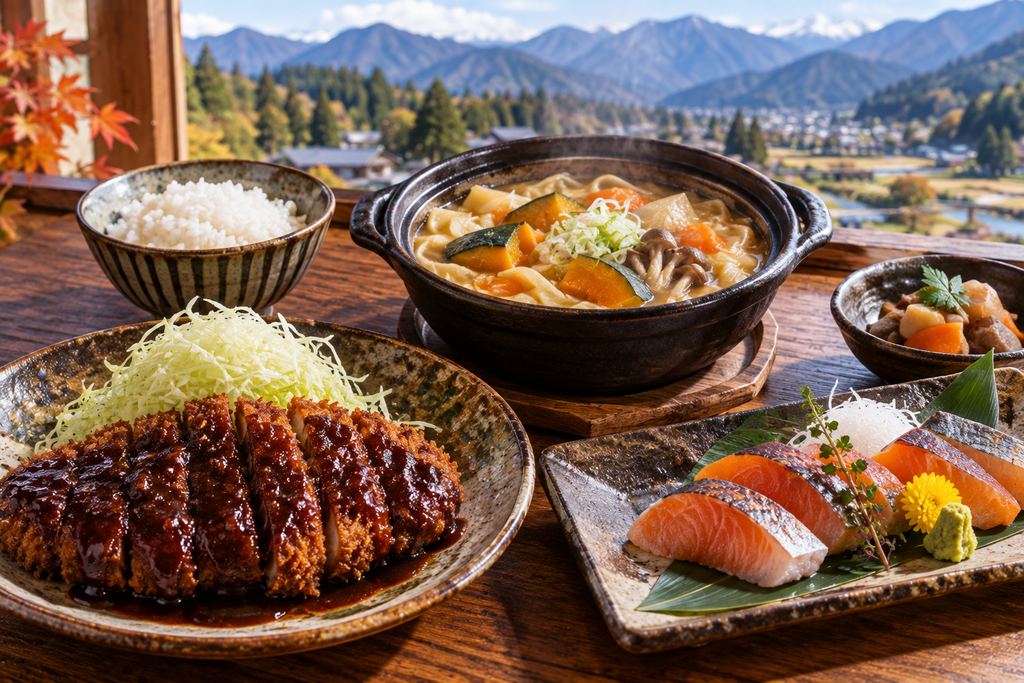
Aichi, particularly Nagoya, is famous for dishes using strong, dark miso.
One of the best-known is miso katsu.
A breaded pork cutlet is served with a rich miso-based sauce rather than the more familiar tonkatsu sauce.
Another local favorite is miso nikomi udon, noodles simmered in a strongly flavored miso broth.
Hoto in Yamanashi
Yamanashi is famous for hoto, thick noodles cooked in a hearty miso-based soup with vegetables such as pumpkin.
It is particularly satisfying during colder months.
Niigata Rice
Niigata is one of Japan’s famous rice-producing areas.
Rice may seem like an ordinary food to visitors, but regional differences are taken seriously in Japan.
High-quality local rice can be an attraction in itself.
Hokuriku Seafood
Toyama, Ishikawa, and Fukui face the Sea of Japan.
Seafood therefore plays an important role in local food culture.
This makes Chubu a particularly interesting region for travelers because mountain food, noodle dishes, rice culture, and coastal seafood can all appear during the same journey.
5. Kansai: Osaka Street Food and Kyoto Tradition
The Kansai region contains some of Japan’s most famous food destinations.
Osaka and Kyoto are geographically close, but their food cultures create very different impressions.
Osaka: Casual Food and Big Flavors
Osaka has a long reputation as a city where eating is part of the entertainment.
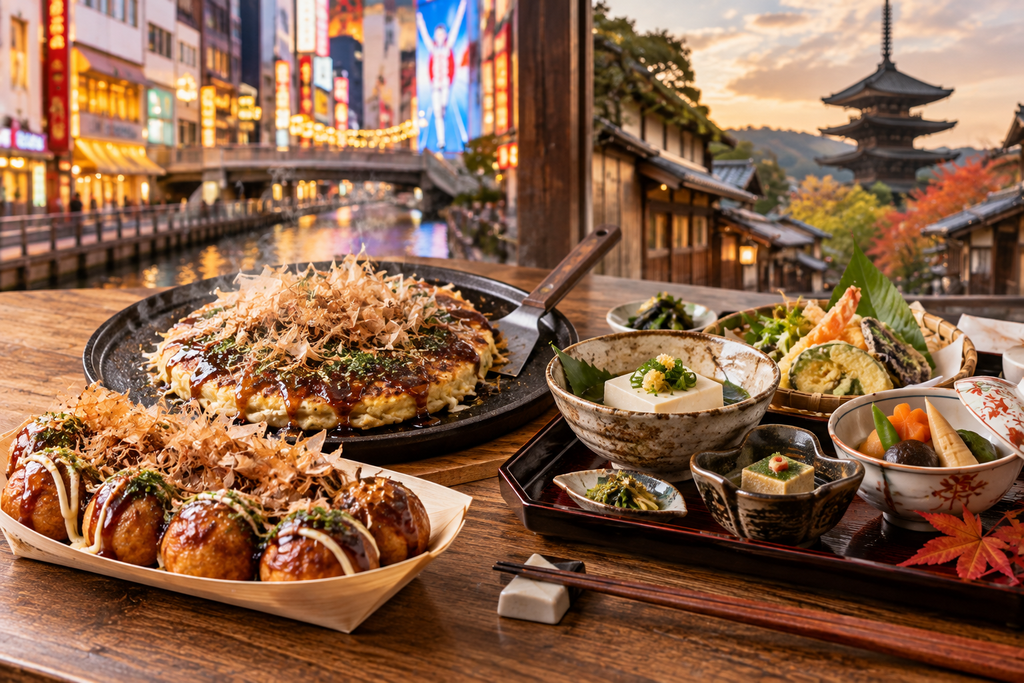
Takoyaki
Takoyaki are round pieces of batter cooked in special molded pans.
A piece of octopus sits inside each ball, while toppings commonly include sauce, mayonnaise, dried seaweed, and bonito flakes.
They are one of the classic foods to try around Dotonbori.
A Note from Yotsuha: I ate takoyaki in Osaka, and the contrast in texture was what I remember most. The outside had a pleasant toasted aroma, while the inside was soft. It was a simple but memorable example of Osaka’s casual food culture.
Okonomiyaki
Okonomiyaki is sometimes described as a Japanese savory pancake.
Cabbage and batter form the base, while meat, seafood, and other ingredients can be added before the dish is cooked on a griddle.
Eating it directly from the hot plate is part of the experience.
Kyoto: Seasonality and Subtlety
Kyoto presents a very different side of Japanese cuisine.
Traditional Kyoto cooking places considerable importance on seasonality, presentation, vegetables, tofu, and relatively delicate flavors.
You may encounter obanzai, Kyoto-style home cooking consisting of small dishes prepared with seasonal ingredients.
The contrast between Osaka and Kyoto is useful for visitors.
One region can contain both energetic street food and highly refined culinary traditions.
6. Chugoku: Hiroshima Okonomiyaki and Coastal Food
The Chugoku region occupies western Honshu and faces both the Sea of Japan and the Seto Inland Sea.
That geography gives seafood an important role in regional cuisine.
Hiroshima-Style Okonomiyaki
Hiroshima has its own version of okonomiyaki.
Rather than mixing everything together, ingredients are usually layered.
Cabbage, batter, pork, egg, and noodles are commonly combined into a substantial meal.
If you eat okonomiyaki in both Osaka and Hiroshima, comparing the two styles becomes part of the fun.
Hiroshima Oysters
Hiroshima is also famous for oysters.
Depending on the restaurant and season, they may be grilled, fried, steamed, or served in other local dishes.
Izumo Soba
In Shimane, look for Izumo soba.
The noodles are typically darker than many soba varieties because more of the buckwheat grain is used.
Yamaguchi and Fugu
Yamaguchi, particularly Shimonoseki, is closely associated with fugu, or pufferfish.
Preparation requires specially trained and licensed professionals because some parts of the fish contain dangerous toxins.
Regional cuisine in Chugoku demonstrates how strongly Japan’s coastal geography influences local food.
7. Shikoku: Udon, Bonito and Citrus
Shikoku is the smallest of Japan’s four main islands.
Its food culture, however, is highly distinctive.
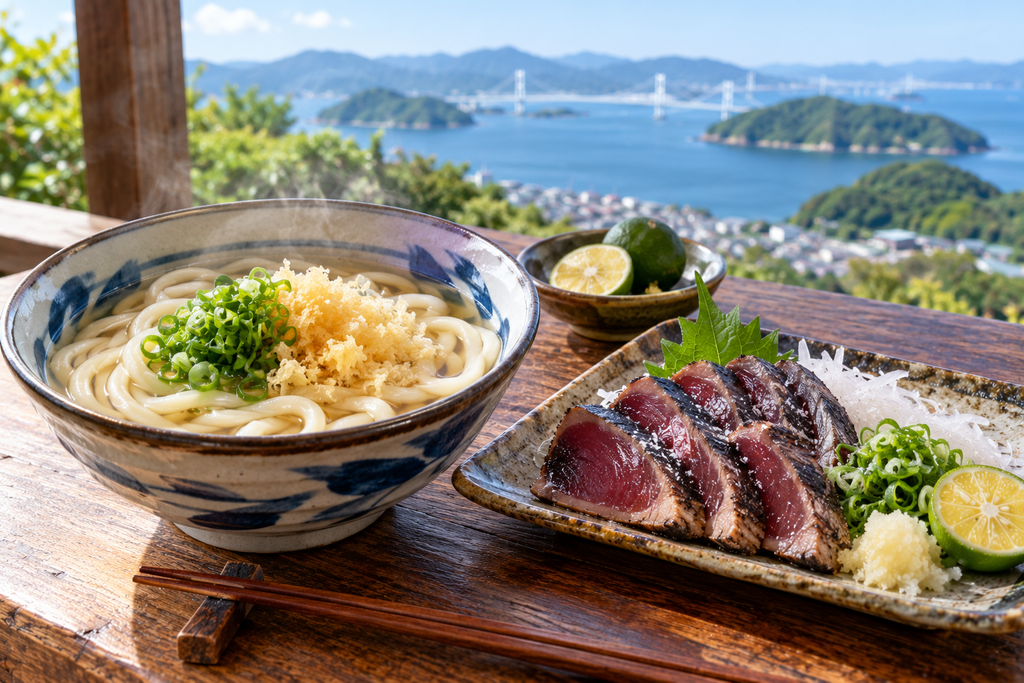
Sanuki Udon in Kagawa
Kagawa is famous for Sanuki udon.
The noodles are thick, smooth, and pleasantly chewy.
Udon shops range from simple self-service restaurants to more traditional establishments.
For travelers, eating a bowl of udon in Kagawa can be one of the simplest and least expensive regional food experiences in Japan.
Katsuo no Tataki in Kochi
Kochi is famous for katsuo no tataki.
Bonito is quickly seared over intense heat, leaving the surface cooked while the center remains relatively rare.
It is commonly served with condiments such as green onion, ginger, garlic, and citrus.
Sudachi in Tokushima
Tokushima is closely associated with sudachi, a small green citrus fruit.
Its fresh acidity works especially well with noodles and grilled fish.
Shikoku’s cuisine often feels closely connected to local ingredients rather than elaborate preparation.
8. Kyushu: Tonkotsu Ramen and Powerful Local Flavors
Kyushu is one of Japan’s strongest food regions.
Its cities and prefectures have developed many dishes that are now famous throughout the country.
Hakata Ramen
Fukuoka is home to Hakata ramen.
The dish combines thin noodles with a rich, cloudy pork-bone broth known as tonkotsu.
Many restaurants allow customers to order extra noodles through a system called kaedama.
If you are interested in Japanese ramen culture, eating Hakata ramen in Fukuoka offers valuable context.
Mentaiko
Fukuoka is also strongly associated with mentaiko, spicy seasoned cod roe.
It can be eaten with rice, added to pasta, or used in onigiri and other dishes.
Motsunabe
Another Fukuoka specialty is motsunabe, a hot pot containing offal, cabbage, garlic chives, and a strongly flavored broth.
Nagasaki Champon
Nagasaki developed through centuries of international contact.
Champon reflects that history.
It combines noodles, vegetables, seafood, and other ingredients in a rich soup and feels noticeably different from many standard Japanese noodle dishes.
Kagoshima Pork
Kagoshima is known for high-quality pork and dishes that make use of it.
Kyushu is therefore an excellent region for travelers who enjoy strongly flavored ramen, meat dishes, hot pots, and regional noodles.
Related Guide: Ramen in Japan: Types, Regional Styles, Ordering Tips & Local Culture
9. Okinawa: A Distinctive Island Food Culture
Okinawa’s food can feel surprisingly different from cuisine in mainland Japan.
The islands’ subtropical climate and the history of the former Ryukyu Kingdom helped create their distinctive culinary traditions.
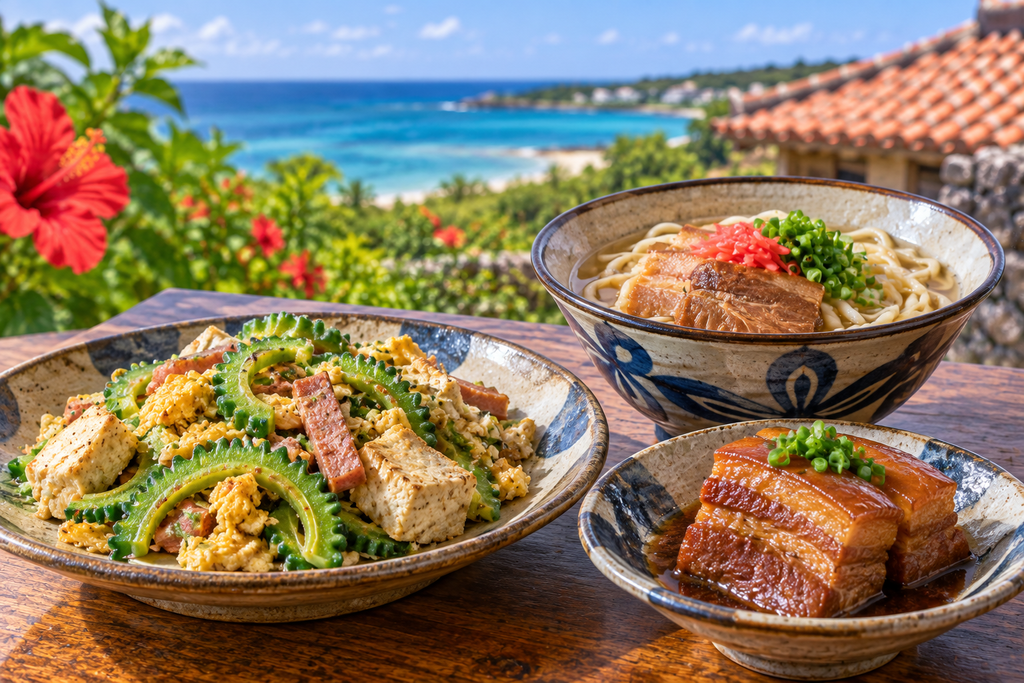
Goya Champuru
One of Okinawa’s most famous dishes is goya champuru.
Bitter melon is stir-fried with tofu, egg, and other ingredients.
The bitter flavor can surprise first-time visitors, but it is one of the foods most strongly associated with Okinawa.
Okinawa Soba
Despite its name, Okinawa soba is not the same as buckwheat soba from mainland Japan.
The noodles are wheat-based and usually served in broth with pork and green onion.
Rafute
Rafute is pork belly slowly braised until tender.
It demonstrates how important pork is in Okinawan cuisine.
For travelers who have already visited Tokyo, Kyoto, or Osaka, Okinawan food can reveal another side of Japan entirely.
Japanese Perspective: Local Food Is Part of the Journey
When Japanese people travel domestically, local food frequently becomes one of the main topics.
Before visiting a prefecture, people may search for its famous dishes.
After returning home, friends may ask:
“What did you eat?”
This relationship between travel and food appears everywhere.
Train stations sell regional bento boxes.
Airports display local sweets.
Hotels promote meals prepared with nearby seafood and vegetables.
Restaurants place signs outside advertising local specialties.
Even highway rest areas can become destinations because they sell food from the surrounding region.
You may see the Japanese word meibutsu used to describe a food or product for which an area is famous.
When you see a local meibutsu, it is often worth trying.
You Do Not Need Famous Restaurants
A common travel mistake is believing that every memorable Japanese meal needs to come from a famous restaurant.
Regional food is often found in very ordinary places.
Try:
- Neighborhood restaurants
- Local markets
- Supermarkets
- Train-station restaurants
- Department-store food halls
- Roadside stations
- Izakaya
- Small noodle shops
- Ryokan meals
A simple bowl of local udon may tell you more about a region than an expensive meal that could be served anywhere.
Related Guide: Izakaya in Japan: How to Order, What to Eat & Japanese Drinking Culture
How to Plan a Food Journey Across Japan
You do not need to travel the entire country to appreciate regional Japanese cuisine.
Simply match food to the destinations already on your itinerary.
If you visit Hokkaido, look for seafood and soup curry.
In Sendai, try gyutan.
In Tokyo, explore sushi, soba, and tempura.
Around Nagoya, try miso katsu.
In Osaka, eat takoyaki and okonomiyaki.
In Hiroshima, compare its okonomiyaki with Osaka’s version.
In Kagawa, order Sanuki udon.
In Fukuoka, try Hakata ramen.
And in Okinawa, make time for island dishes that you may not encounter elsewhere.
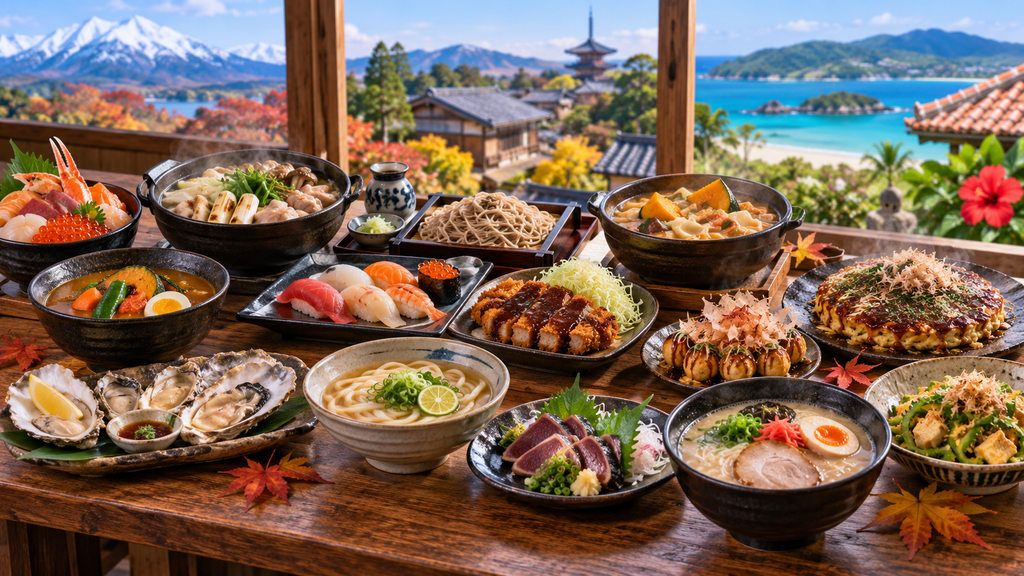
The important thing is not to create a checklist so long that eating becomes stressful.
Choose one or two specialties in each destination.
Allow yourself to discover the rest while traveling.
FAQ About Regional Food in Japan
Does every prefecture in Japan have local food?
Yes. Japan’s prefectures have foods connected to their local ingredients, climate, history, and culture. Some are famous throughout Japan, while others remain much more local.
Which region is best for seafood?
Hokkaido is especially famous for seafood, but many coastal areas offer excellent local fish and shellfish. Hokuriku, Chugoku, Shikoku, Kyushu, and other coastal regions all have their own specialties.
Where should ramen fans travel?
Hokkaido and Kyushu are particularly famous for distinctive regional ramen, but excellent ramen styles can be found throughout Japan.
What food should I try in Osaka?
Takoyaki and okonomiyaki are two classic starting points. Osaka also has many izakaya, kushikatsu restaurants, and casual food districts.
Is Okinawan food different from mainland Japanese cuisine?
Yes. Okinawan cuisine developed under different historical and climatic conditions and includes distinctive dishes such as goya champuru, Okinawa soba, and rafute.
Is regional Japanese food expensive?
Not necessarily. Many famous local foods are inexpensive everyday dishes such as noodles, rice bowls, street food, and set meals.
Final Thoughts
There is no single food that represents all of Japan.
Japanese cuisine changes as the landscape changes.
Hokkaido offers seafood and hearty northern cooking.
Tohoku brings warming hot pots and rice traditions.
Kanto combines old Tokyo cuisine with the enormous variety of the modern capital.
Chubu moves between mountain food, miso culture, rice, and seafood.
Kansai gives travelers both Osaka’s casual street food and Kyoto’s refined seasonal cooking.
Chugoku and Shikoku reveal the importance of the Seto Inland Sea.
Kyushu offers rich ramen, hot pots, and powerful regional flavors.
And Okinawa introduces a distinctive island cuisine shaped by its own climate and history.
So when you arrive in a new part of Japan, do not ask only:
“What Japanese food should I eat?”
Ask:
“What should I eat here?”
That small change in perspective can transform the way you experience food in Japan.
And sometimes, the meal you remember most will not be sushi in Tokyo or ramen from a famous shop.
It will be the simple local dish you discovered because you happened to be in exactly the right place.