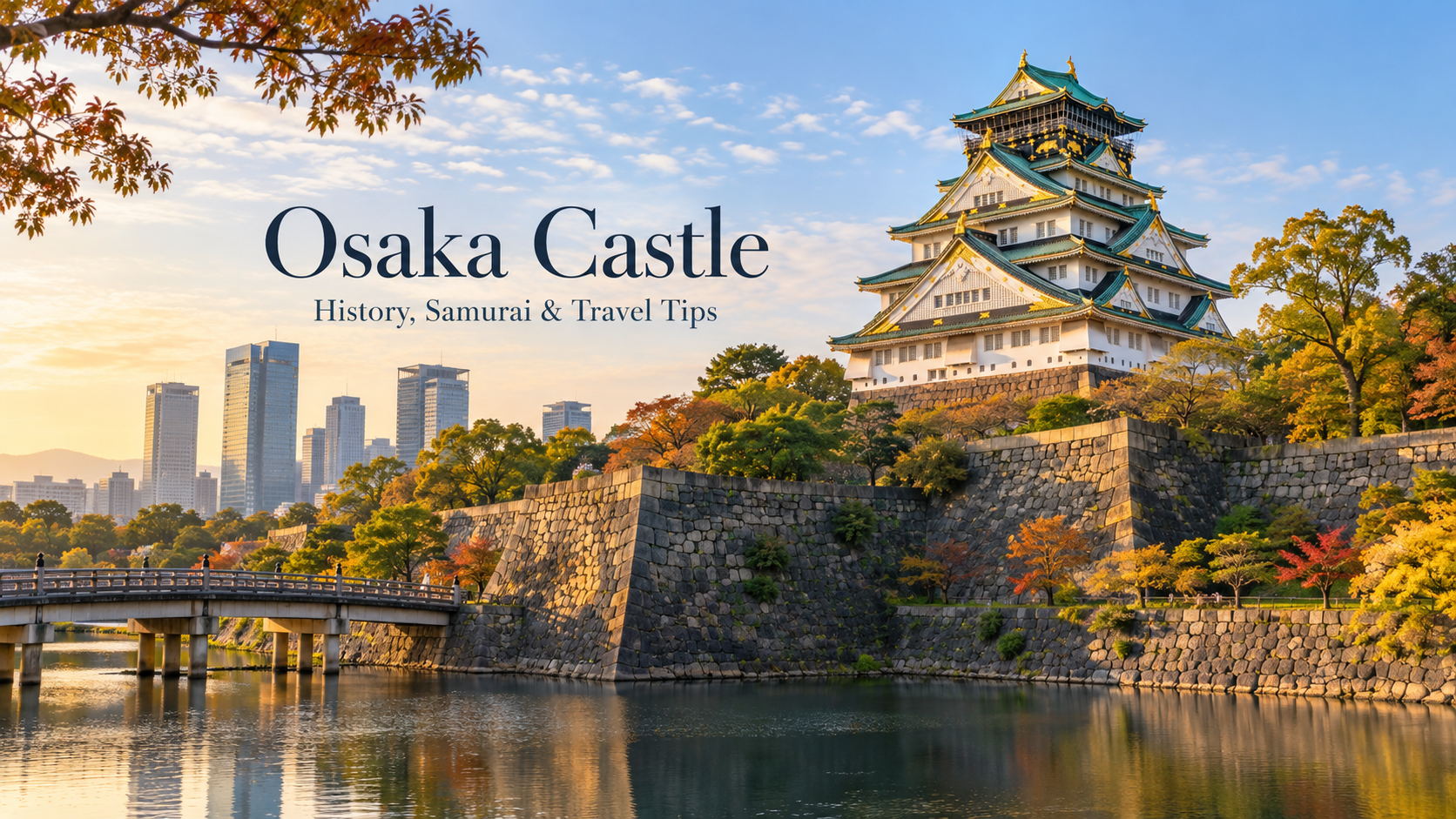
Osaka Castle combines golden roof ornaments, vast stone walls and a dramatic samurai past. Visit for the skyline views, but leave time to understand the battles and rebuilding behind this city landmark.
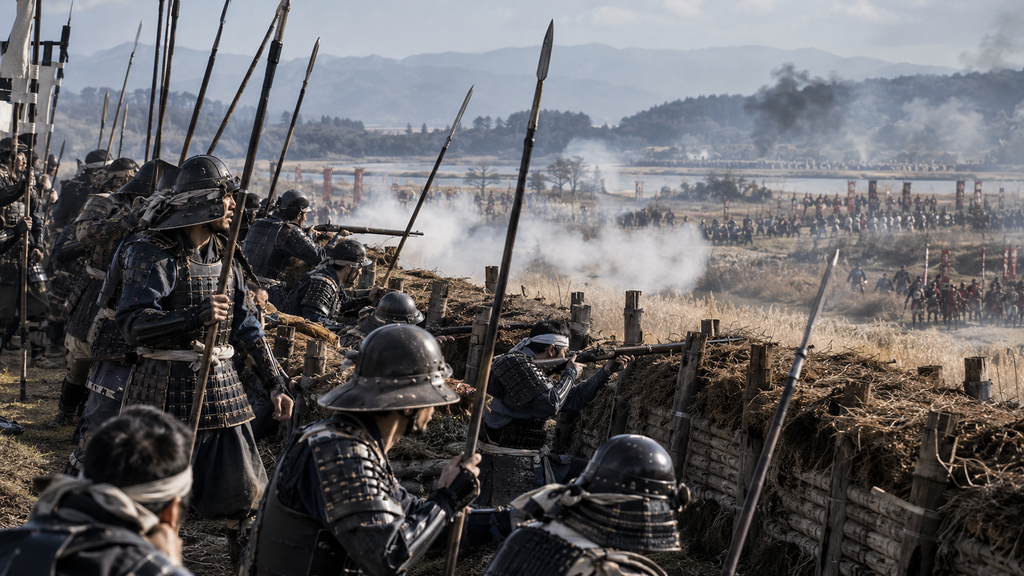
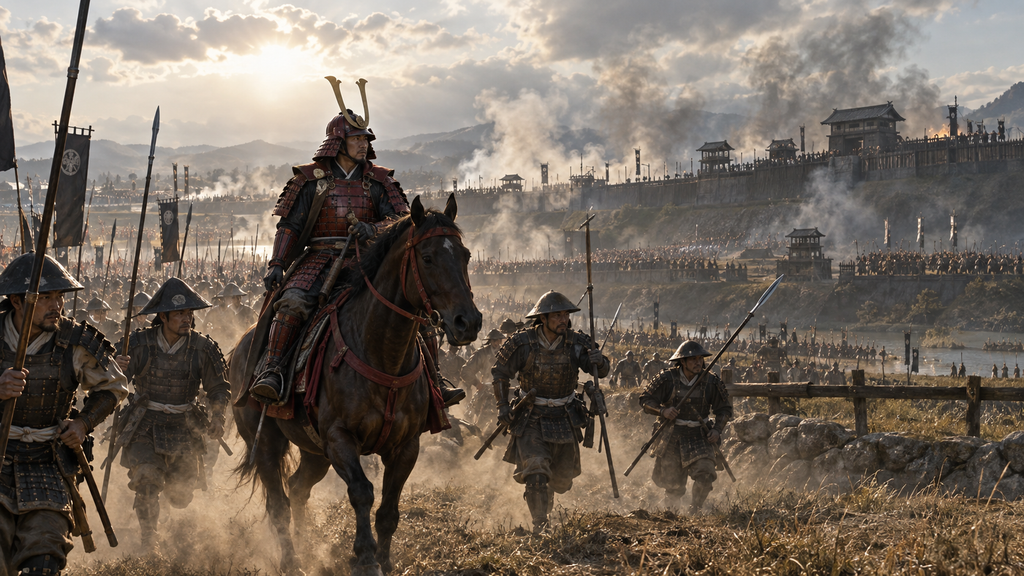
All images are AI-generated illustrations. Battle scenes are imaginative interpretations, not exact historical reconstructions.
Hideyoshi’s Castle and Today’s Tower
Toyotomi Hideyoshi began building Osaka Castle in 1583 as a base for his growing power. His castle fell in 1615. The Tokugawa shogunate later rebuilt the complex, leaving much of the stonework and moat layout visitors see today.
The current main tower dates to 1931 and was funded by citizens’ donations. Inside is a history museum, rather than an untouched samurai residence; the upper observation deck offers wide city views.
The Siege of Osaka: Two Campaigns
Winter 1614: Defending the Toyotomi
Tokugawa forces attacked the stronghold of Hideyoshi’s son, Hideyori. The Sanada Maru, an outwork associated with Sanada Nobushige, famously resisted attacks. Its precise appearance remains debated, so modern battle imagery should be read as interpretation.
Summer 1615: The Castle Falls
Fighting resumed in 1615, ending in the Toyotomi family’s defeat and the destruction of their castle. The campaigns helped secure Tokugawa rule. Remember that the peaceful park and modern tower do not reproduce the battlefield as it appeared then.
Japanese Perspective: Why Rebuilding Matters
One useful way to read Osaka Castle is as several histories layered together: Toyotomi ambition, Tokugawa authority and modern civic pride. The citizens’ support for the 1931 tower adds another story of belonging. A reconstructed building can still carry meaningful local memory.
What to See Beyond the Tower
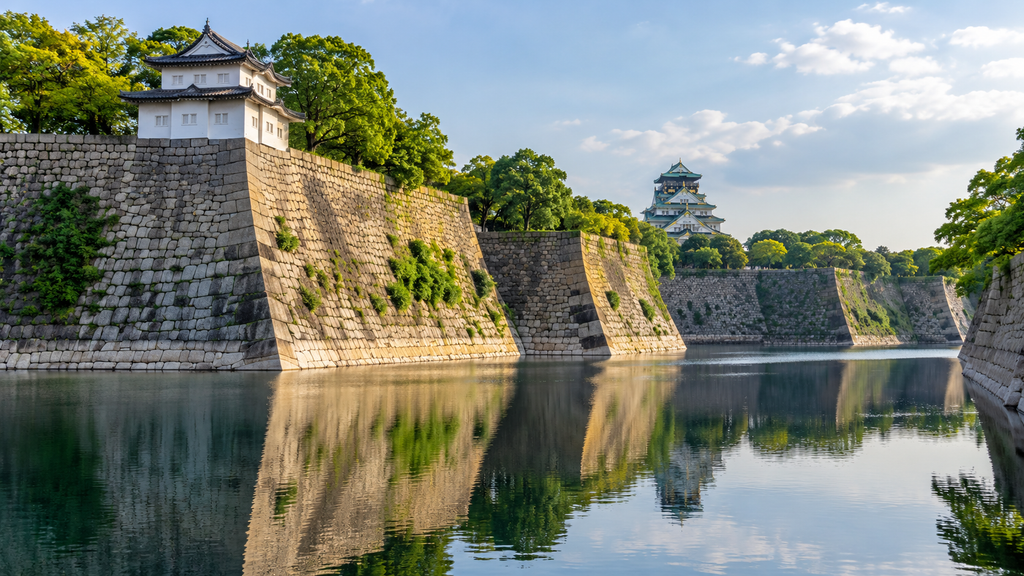
Walk beside the moats and look up at the huge stone ramparts. These defenses make the scale of the fortress easier to grasp. The Toyotomi Stone Wall Museum also reveals buried masonry from the earlier castle, helping distinguish Hideyoshi’s work from later construction.
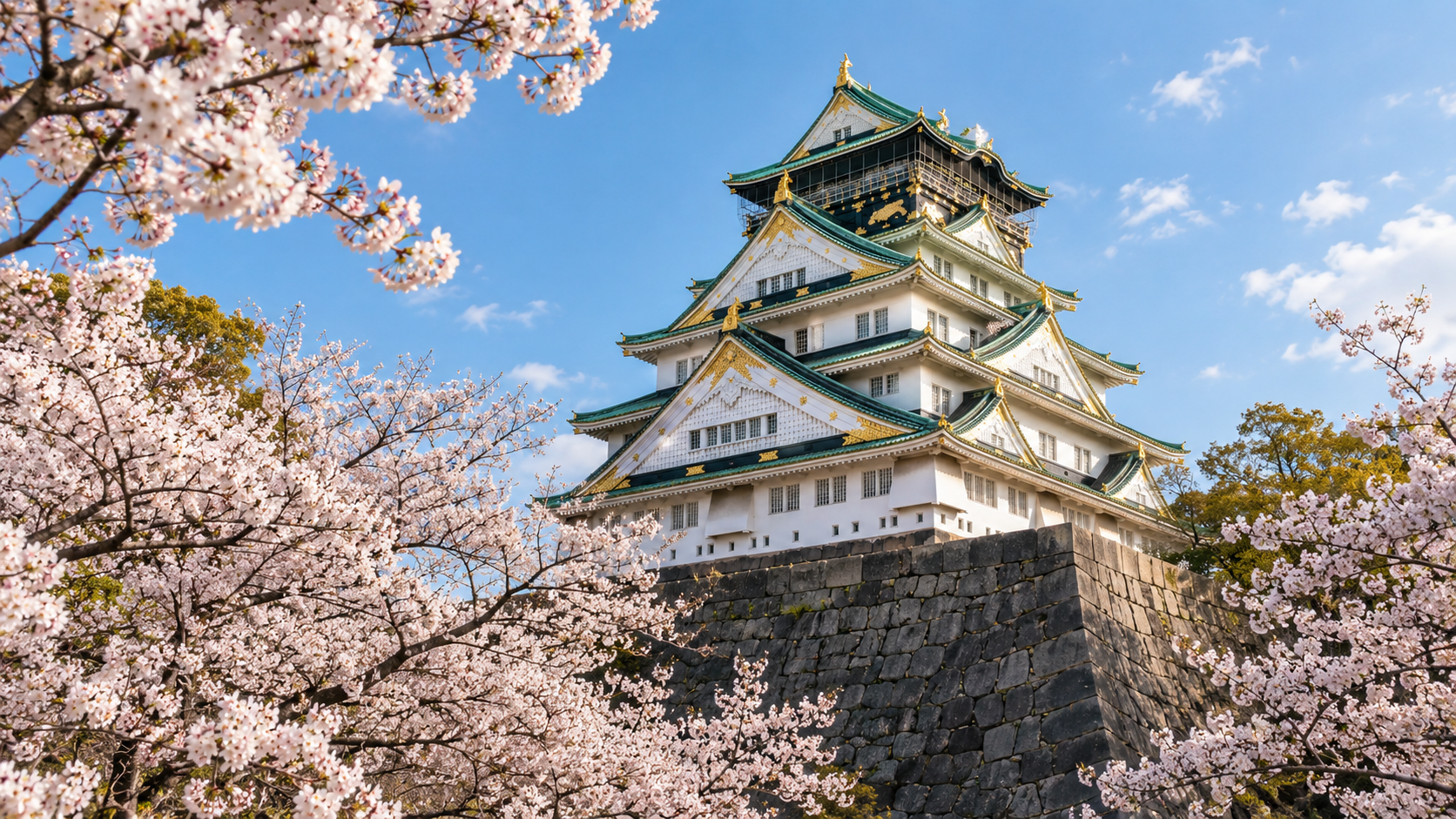
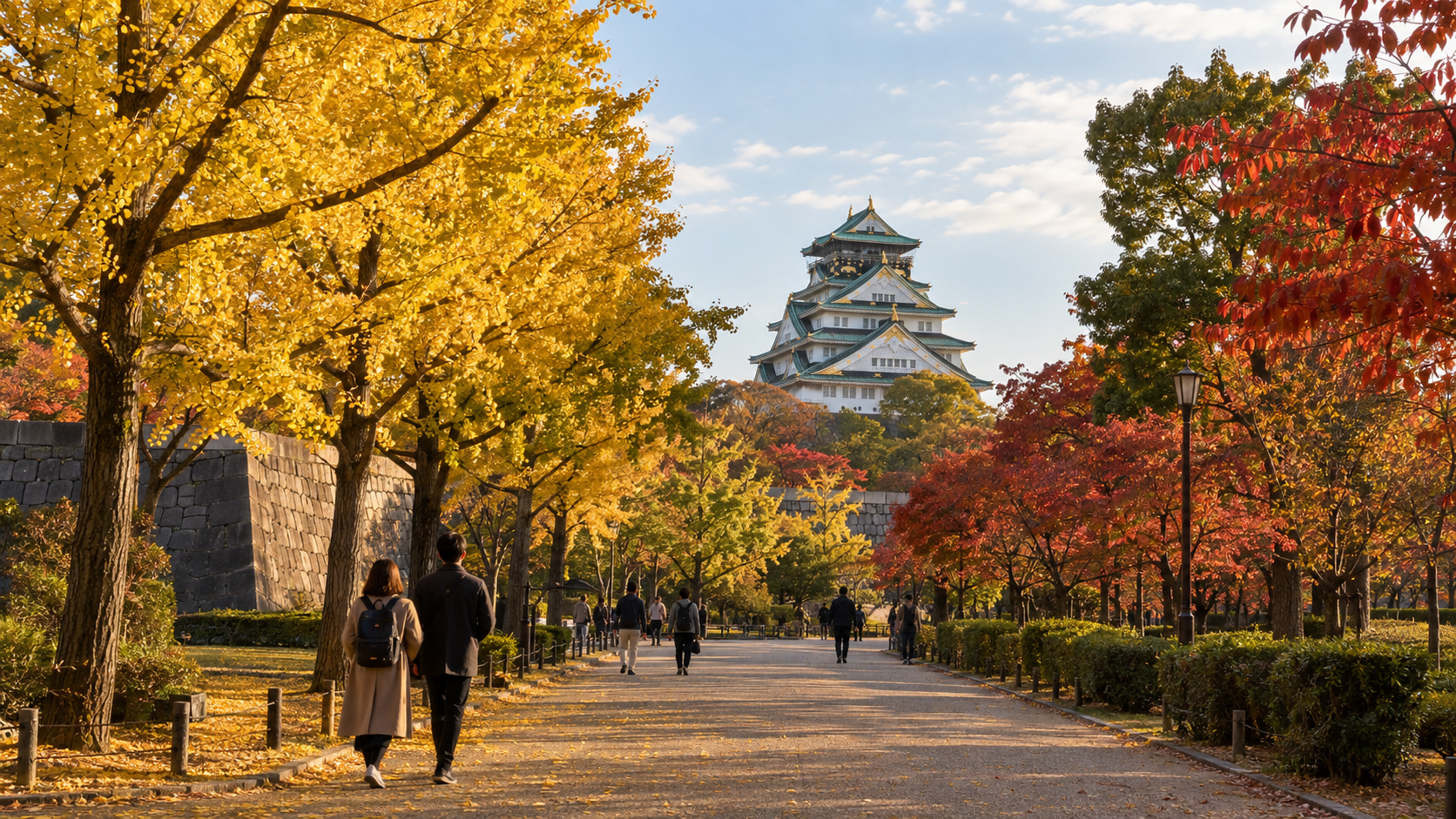
The park offers cherry blossoms in spring and colorful foliage in autumn. Seasonal timing varies; allow time for a relaxed walk rather than treating the tower as the only destination.
Practical Visiting Tips
Allow about two to three hours for the tower and a park walk. JR Osakajokoen and Morinomiya stations are convenient; the tower is roughly 15–20 minutes away on foot. Wear comfortable shoes and carry water in hot weather.
General park access is free; the tower and some attractions charge admission. Check the official castle website for current hours, tickets and closures.
FAQ
Is Osaka Castle original?
The main tower is a 1931 reconstruction. Historic walls and other surviving structures preserve older layers of the site.
Can I enjoy it without entering?
Yes. The moat, exterior views and park make a rewarding outdoor visit.
Related Japan Guides
Explore another side of samurai history in our Miyamoto Musashi guide.