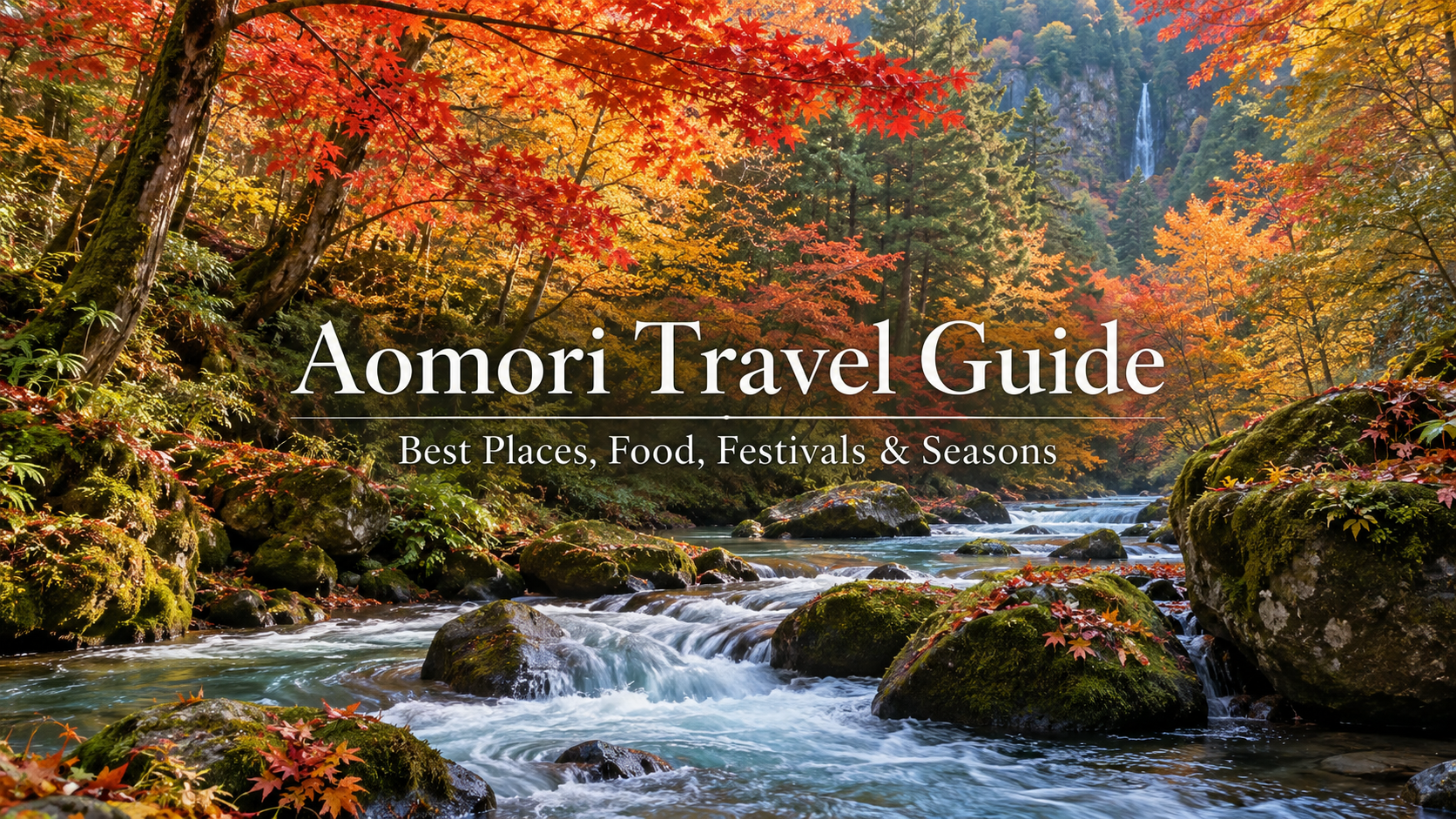
Aomori sits at the northern tip of Honshu, far from the fast urban rhythm many first-time visitors associate with Japan. Here, mountain streams cut through deep forests, snow reshapes entire towns in winter, summer festivals fill the streets with drums and illuminated floats, apple orchards stretch across the countryside, and fishing ports bring exceptionally fresh seafood to local tables.
Aomori is also larger and more varied than it first appears. Hirosaki and the Tsugaru area have a different atmosphere from Hachinohe on the Pacific side, while Oirase Gorge, the Hakkoda Mountains, Shirakami Sanchi, and the Shimokita Peninsula each deserve time of their own.
This guide is designed for first-time visitors who want to understand where to go, what to eat, which season to choose, and how to avoid turning an Aomori trip into a rushed checklist.
Aomori at a Glance
- Best for: Nature, festivals, food, hot springs, autumn leaves, snow, local culture, and slower travel
- Main gateways: Shin-Aomori Station, Aomori Airport, and Hachinohe Station
- Best-known nature: Oirase Gorge, Lake Towada, Hakkoda, and Shirakami Sanchi
- Culture highlights: Aomori Nebuta, Hirosaki Neputa, Jomon heritage, and Tsugaru traditions
- Food highlights: Apples, scallops, seafood, niboshi ramen, senbei-jiru, and ginger-miso oden
- Suggested first trip: About 3–4 days for a focused route; longer if adding Shimokita or Shirakami
Why Visit Aomori?
Aomori combines several versions of northern Japan in one prefecture. In the west, the Tsugaru area includes Hirosaki, apple country, mountain scenery, and distinctive festival traditions. Aomori City connects modern transport, seafood, Jomon history, and the famous Nebuta Festival. Toward the southeast, Lake Towada and Oirase Gorge lead into forest and volcanic landscapes, while Hachinohe brings fishing culture and the Pacific coast into the journey.
Farther north, the Shimokita Peninsula feels remote even by Aomori standards. Sacred Mount Osore, windswept coastlines, and the tuna port of Oma make it better suited to travelers who have extra time.
Aomori is not empty or unknown—its famous seasonal attractions can become very busy—but it often feels less standardized than Japan’s classic Tokyo–Kyoto–Osaka route. That difference is part of its appeal.
Japanese Perspective: Aomori Rewards Travelers Who Choose a Region
Many visitors underestimate the distances inside northern prefectures. Aomori is a good example. Trying to combine Hirosaki, Oirase, Hachinohe, Shirakami, and Shimokita in a few days may look possible on a map, but transport connections, weather, and seasonal schedules quickly make the trip tiring.
A more Japanese-style approach is to choose one area and let food, an onsen stay, a festival, or the season shape the rest of the route. In Aomori, traveling more slowly often creates a better experience than collecting more landmarks.
Aomori City: Festivals, Jomon History, and Seafood
Aomori City is a useful first base. Near the station, the Nebuta Museum WA RASSE introduces the craftsmanship, sound, scale, and energy of the Aomori Nebuta Festival throughout the year. Even outside the festival season, seeing full-size floats helps visitors understand how much construction, painting, lighting, and community work sit behind a single parade.
The city is also close to the Sannai-Maruyama Site, a large Jomon-period settlement included in the UNESCO-listed Jomon Prehistoric Sites in Northern Japan. Reconstructed buildings and archaeological remains reveal that northern prehistoric communities were sophisticated, settled societies with long histories connected to the landscape.
Back near the bay and markets, Aomori is a good place to try seafood, apple products, and strongly flavored niboshi ramen made with dried sardines.
Nebuta, Neputa, and Aomori’s Festival Culture
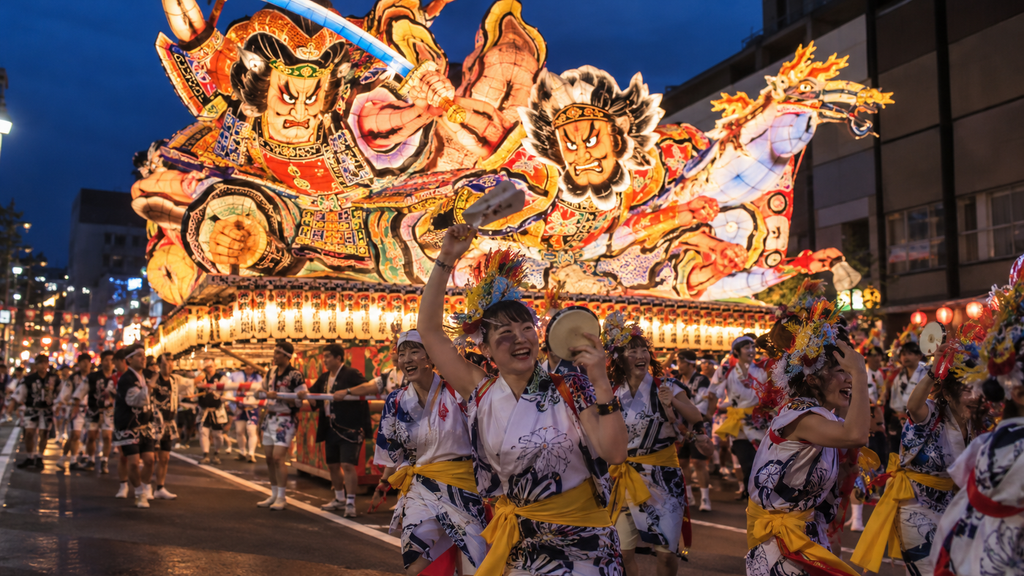
Visitors sometimes use the word “Nebuta” for every illuminated float festival in the prefecture, but local distinctions matter. Aomori City’s Nebuta is famous for large three-dimensional human figures. Hirosaki Neputa commonly features fan-shaped floats with dramatic paintings, while Goshogawara Tachineputa is known for extremely tall vertical structures.
The difference between the words Nebuta and Neputa is not simply a matter of one spelling being correct. The names reflect regional identity, pronunciation, history, and pride.
Japanese Perspective: A Matsuri Is Made by the Community
Matsuri is usually translated as “festival,” but that English word can make it sound like entertainment produced only for spectators. In Japan, many festivals depend on months of preparation by neighborhoods, craftspeople, musicians, volunteers, organizers, and local businesses.
At Aomori Nebuta, dancers known as haneto add movement and shouted rhythm to the procession. The important idea is participation: the festival exists because many people help carry it.
Hirosaki: Castle-Town Atmosphere, Cherry Blossoms, and Apples
Hirosaki is one of Aomori’s most rewarding cities for travelers who enjoy history and seasonal scenery. Hirosaki Park is famous throughout Japan for cherry blossoms, particularly the sight of petals gathering on the moat and creating broad pink surfaces across the water.
The exact cherry-blossom timing changes every year. That uncertainty is part of hanami, the Japanese custom of appreciating blossoms at their brief peak. Their beauty is closely connected with impermanence—the fact that the best moment does not last.
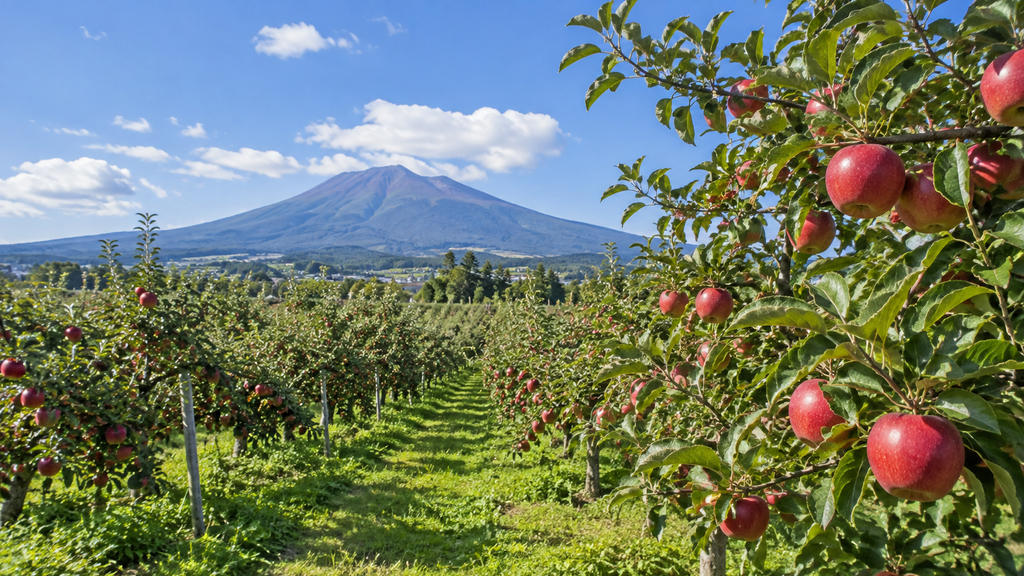
Hirosaki is also an excellent base for exploring Aomori’s apple culture. Aomori is Japan’s leading apple-producing prefecture, and visitors will find apple pies, cider, juice, jams, sweets, and many different fresh varieties. Comparing apple pies from local bakeries can easily become a small travel project of its own.
Oirase Gorge and Lake Towada
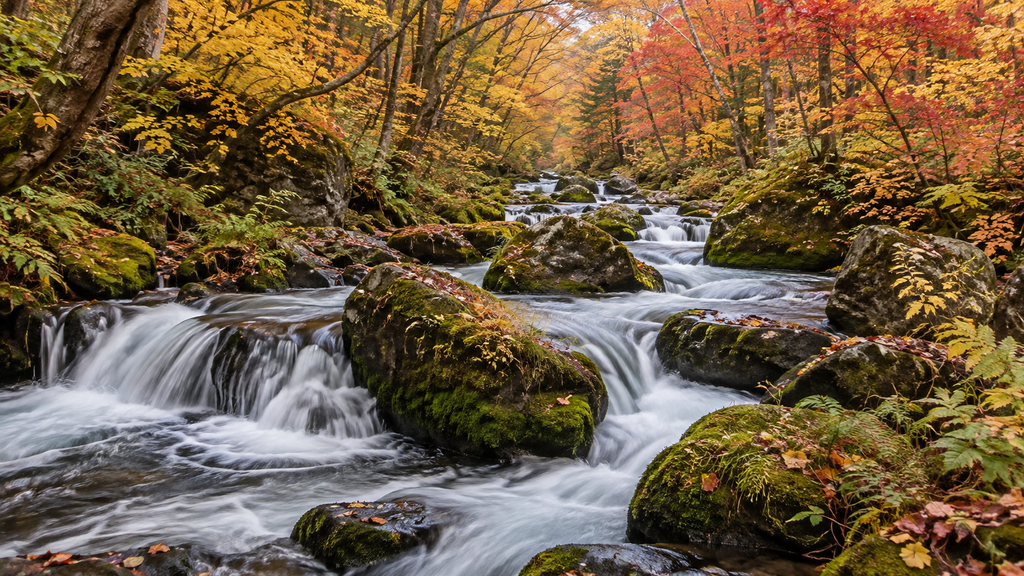
Oirase Gorge is one of Aomori’s most celebrated natural areas. The stream runs from Lake Towada through forest, moss-covered rocks, rapids, and waterfalls. A road and walking route follow much of the water, so visitors can choose shorter sections instead of walking the entire route.
Fresh green leaves make late spring and early summer especially beautiful, while autumn brings intense color and much larger crowds. Wet weather can make the forest look even richer, but proper footwear is important and visitors should stay on established paths rather than stepping onto delicate moss for photographs.
Lake Towada provides a dramatic contrast. After the enclosed stream and forest, the large caldera lake opens into broad water and mountain views. Bus and boat services can be seasonal, so always check current schedules when planning the day.
Hakkoda Mountains and Sukayu Onsen
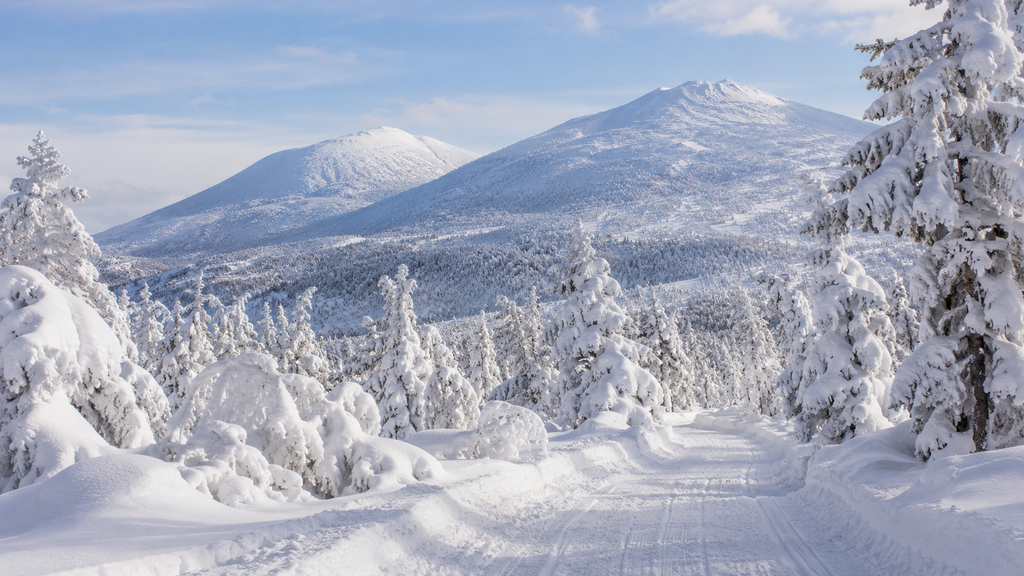
The Hakkoda Mountains are known for hiking and autumn colors in warmer months and deep snow in winter. Under suitable winter conditions, snow and ice can build around trees and create unusual formations often nicknamed “snow monsters.” The Hakkoda Ropeway makes high mountain scenery easier to access, although strong wind and severe weather can suspend operations.
Nearby Sukayu Onsen is famous for acidic hot-spring water and its historic wooden bathing hall. As with any Japanese onsen, wash before entering, keep towels out of the bathwater, and follow the facility’s current rules.
Japanese Perspective: Life in a Yukiguni
Yukiguni means “snow country.” For local residents, snow is not just beautiful scenery. It affects architecture, transport, school routines, work, road maintenance, food storage, and community cooperation. Enjoying Aomori in winter also means accepting delays, closures, and the practical realities of living with heavy snow.
Shirakami Sanchi: Ancient Beech Forest
Shirakami Sanchi spans Aomori and Akita and protects an extensive natural beech forest. Part of the area is a UNESCO World Heritage Site, but not every trail is designed for casual tourism. Some routes are accessible to ordinary visitors, while deeper areas require more preparation and may involve guides, permits, or advanced hiking ability.
This is a place where a shorter walk can be more meaningful than chasing a famous viewpoint. Water, shade, fungi, fallen trees, and new growth reveal the forest as a living system rather than a backdrop for photographs.
Shimokita Peninsula and Mount Osore
The axe-shaped Shimokita Peninsula stretches north into a much more remote landscape. Mount Osore, or Osorezan, is a Buddhist sacred site surrounded by volcanic rock, sulfurous air, pale ground, and a quiet lake. The landscape has long encouraged associations with death and the boundary between worlds.
It should not be treated as a horror attraction. People visit to pray, remember the dead, and reflect. Speak quietly, respect ritual areas, and avoid treating personal offerings as props for dramatic photographs.
Farther north, Oma is famous for tuna, but the journey is most worthwhile for travelers who also value remote coastal scenery and the experience of reaching the northern edge of Honshu.
Hachinohe: Markets, Coast, and Everyday Food
Hachinohe shows another side of Aomori. Fishing culture, markets, casual seafood, and the Pacific coast shape the city’s character. It is also a natural base for trying senbei-jiru, a savory soup made with special wheat crackers that soften in the broth while keeping a pleasantly chewy texture.
Nearby coastal scenery adds grassy shorelines, rocky views, and walking opportunities, making Hachinohe a strong choice for travelers who want local food without giving up nature.
What Should You Eat in Aomori?
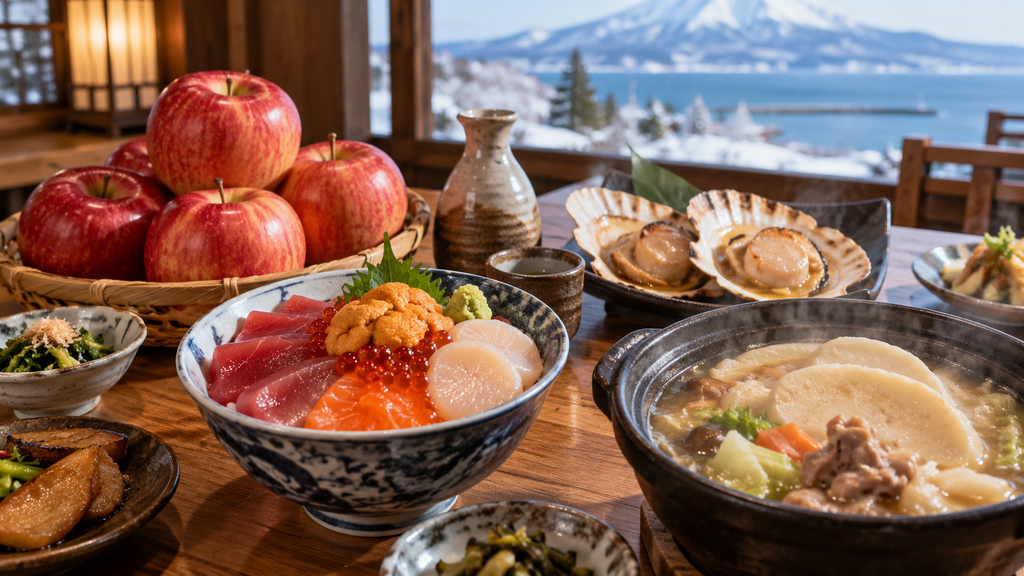
- Apples: Compare different varieties—the balance of sweetness, acidity, aroma, and texture varies considerably.
- Mutsu Bay scallops: Served raw, grilled, in rice dishes, or cooked with miso and egg.
- Kaiyaki miso: Miso, egg, and seafood traditionally cooked in a scallop shell.
- Senbei-jiru: Savory soup with special wheat crackers, particularly associated with the Hachinohe area.
- Ichigoni: A clear seafood soup associated with the Pacific coast.
- Nokkedon: Aomori City-style seafood rice bowl built by selecting ingredients from participating market stalls.
- Niboshi ramen: Dried-sardine ramen ranging from light broth to extremely intense versions.
- Ginger-miso oden: Warm simmered ingredients served with ginger and miso sauce.
Japanese Perspective: Northern Food Is Practical Before It Is Picturesque
Aomori cuisine reflects fishing ports, short growing seasons, preservation, and the need for warm, satisfying food through winter. Miso, dried fish, soups, pickles, and stored ingredients are not simply decorative “traditional flavors.” They developed from practical ways of living in a northern climate.
When Is the Best Time to Visit Aomori?
Spring
Spring is famous for Hirosaki cherry blossoms and fresh mountain greenery. Blossom timing changes each year, so check official forecasts close to your trip.
Summer
Summer is festival season, with Nebuta and Neputa events, hiking, coastlines, and long daylight. Accommodation around major festival dates should be booked early.
Autumn
Autumn is one of the best seasons for Oirase Gorge, Hakkoda foliage, apple harvests, and food-focused travel. Famous foliage areas can become crowded, especially on weekends.
Winter
Winter brings deep snow, hot springs, seafood, snow-country scenery, and special train experiences. It can be magical, but transport disruption and limited access must be built into the itinerary.
A Practical 3- or 4-Day Aomori Itinerary
- Day 1: Aomori City — waterfront, WA RASSE, seafood, and Sannai-Maruyama.
- Day 2: Hirosaki — park and castle-town atmosphere, apple sweets, local shops, and regional culture.
- Day 3: Oirase Gorge and Lake Towada — allow plenty of time and confirm seasonal transport.
- Day 4: Choose one direction: Hakkoda and an onsen, Hachinohe and the coast, or another full day around Hirosaki.
Shimokita and deeper Shirakami routes are usually better treated as separate additions rather than rushed Day 4 excursions.
Getting Around Aomori
The Tohoku Shinkansen reaches Shin-Aomori and Hachinohe, and the prefecture is also served by Aomori and Misawa airports. Trains work well between major cities, but natural attractions often depend on buses whose schedules change by season.
A rental car gives more flexibility outside winter. Winter driving, however, requires experience with snow, black ice, poor visibility, and early darkness. If you are not comfortable with those conditions, use trains, buses, taxis, or organized tours and keep the schedule flexible.
You may also hear Tsugaru-ben, a local dialect famous for sounds and vocabulary that can be difficult even for Japanese people from other parts of the country. It is not “incorrect Japanese”; it is part of Aomori’s regional identity.
FAQ: Planning Your First Aomori Trip
How many days do I need in Aomori?
Three to four days is a good starting point for Aomori City, Hirosaki, and Oirase/Lake Towada. Add more days if you want to visit Shimokita, Shirakami Sanchi, or spend time around Hachinohe.
Can I visit Aomori without a car?
Yes. Aomori City, Hirosaki, and Hachinohe are accessible by rail, and seasonal buses serve several major attractions. A car is more useful for rural routes, but it is not essential for a well-planned first trip.
Is Aomori worth visiting outside festival season?
Absolutely. Spring cherry blossoms, summer greenery, autumn foliage, apples, winter snow, hot springs, seafood, and Jomon heritage make Aomori a year-round destination.
Is Aomori difficult in winter?
It requires more flexibility. Heavy snow can affect roads and transport, but winter is also one of the prefecture’s most distinctive seasons. Avoid driving unless you are experienced in winter conditions.
Final Thoughts
Aomori’s appeal comes from contrast: glowing summer floats and silent winter roads, ancient settlements and modern markets, apple blossoms and volcanic stone, wild forests and working fishing ports.
Choose the season that interests you most, allow more time than the map suggests, and treat local customs as living practices rather than performances arranged for tourists. That patience is what allows Aomori to become more than a collection of photographs.
Explore More of Tohoku
Aomori is the northernmost prefecture of Honshu, but your journey through northern Japan does not have to end here. Continue south to discover mountain hot springs, samurai towns, historic temples and the dramatic landscapes of Tohoku.
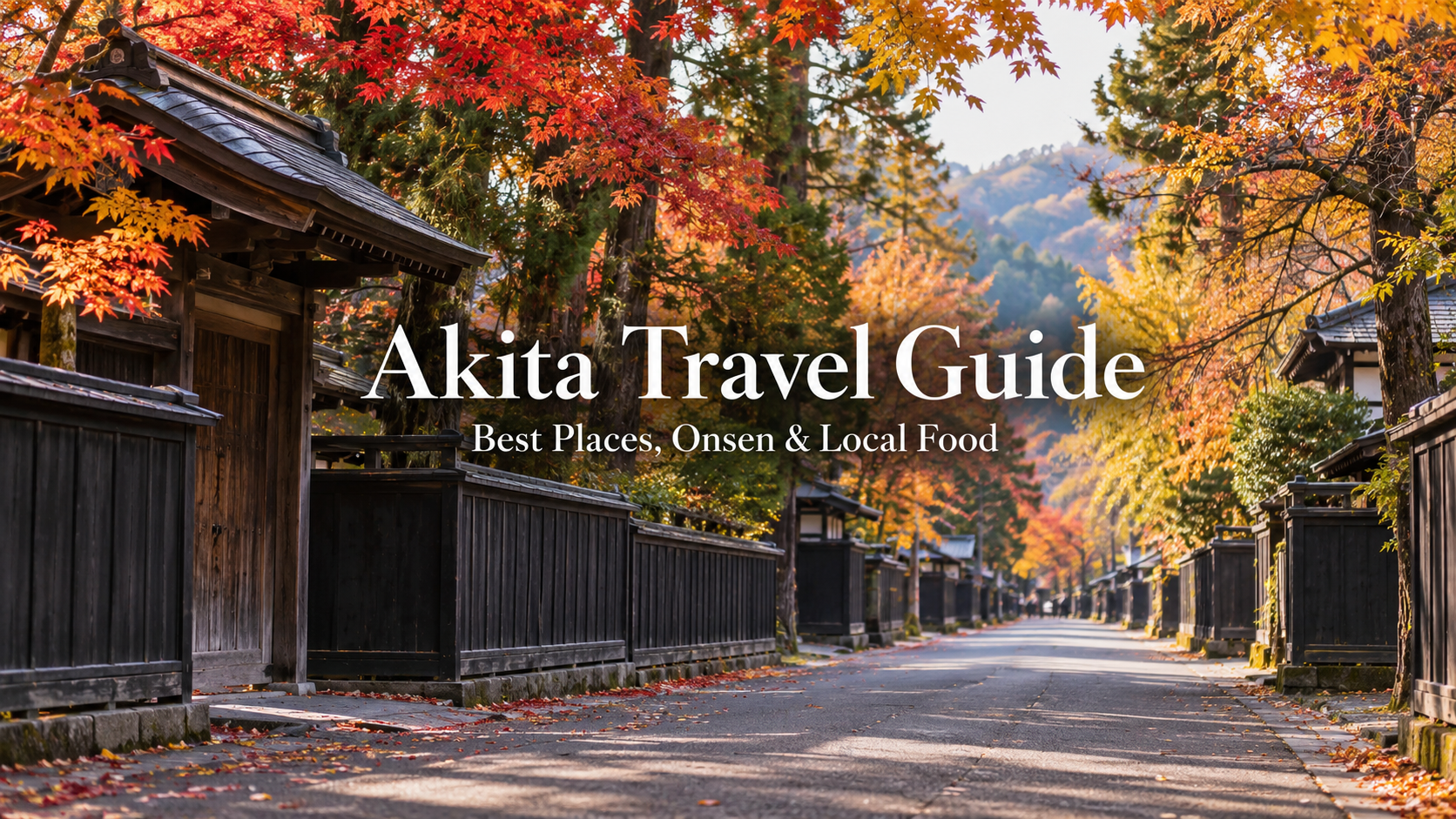
Akita Travel Guide
Continue into neighboring Akita for historic samurai streets in Kakunodate, the deep blue waters of Lake Tazawa, secluded mountain hot springs and distinctive regional traditions.
Read next: Akita Travel Guide: Best Places, Onsen, Food & Culture
Iwate Travel Guide
Travel south along the Pacific side of Tohoku to discover the World Heritage temples of Hiraizumi, the Sanriku Coast, mountain landscapes and Morioka’s famous regional food.
Read next: Iwate Travel Guide: Hiraizumi, Sanriku Coast, Food & Hidden Gems
Miyagi Travel Guide
Continue your Tohoku journey to Sendai and Matsushima, where samurai history, island scenery, seafood and hot springs come together in one of the region’s most varied destinations.
Read next: Miyagi Travel Guide for First-Time Visitors: Sendai, Matsushima, Food & Culture
Discover more destinations in our Tohoku Travel Guides.
Travel conditions, road access, opening hours, event dates, and transport schedules can change. Check official tourism and transport websites before traveling.