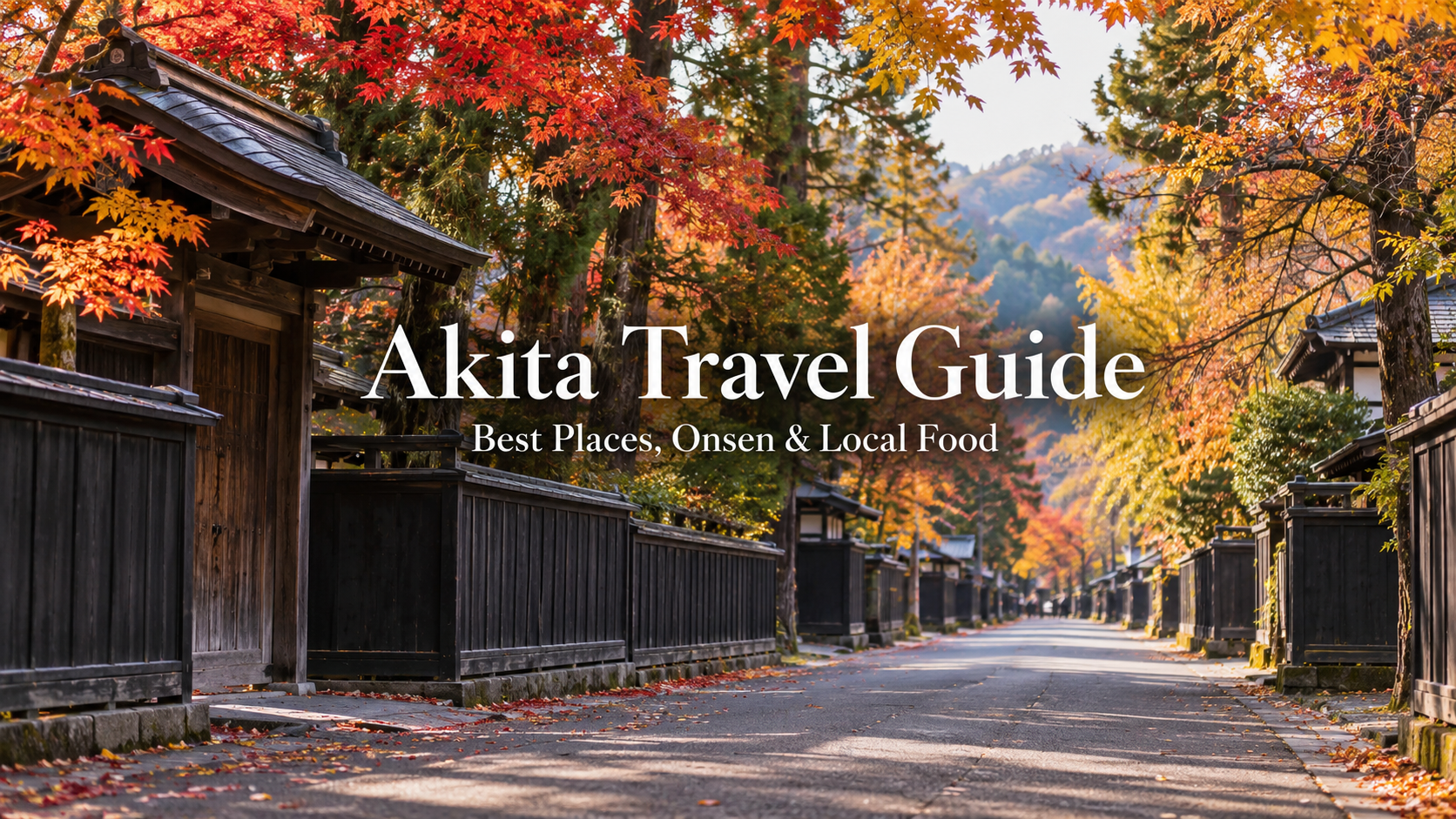
Akita Prefecture is one of the best destinations in Japan for travelers who want to experience a quieter, more traditional side of the country.
Located in the Tohoku region of northern Honshu, Akita is known for deep winter snow, mountain hot springs, historic towns, rice fields, folk traditions, and regional food. A journey here can take you from a former samurai district to Japan’s deepest lake, then into the mountains for an outdoor onsen surrounded by snow.
For international visitors who prefer nature, history, food, and slower travel to crowded city sightseeing, Akita can be one of the most rewarding prefectures in northern Japan.
Why Visit Akita?
Akita does not depend on one famous landmark. Its appeal comes from the combination of landscape, history, local culture, and everyday traditions.
Compared with Tokyo, Kyoto, or Osaka, many parts of Akita feel calm and spacious. Riding a train through the mountains, taking a local bus to an onsen, walking through a quiet castle town, or watching snow fall outside a traditional inn can become part of the travel experience.
Akita is especially good for travelers interested in:
- samurai history and preserved townscapes
- onsen and ryokan stays
- lakes, mountains, and seasonal scenery
- regional Japanese food and sake
- folk traditions and festivals
- destinations with fewer international visitors
A convenient first route connects Kakunodate, Lake Tazawa, and Nyuto Onsen, which can be combined over two or three days.
1. Kakunodate — Walk Through a Samurai Town
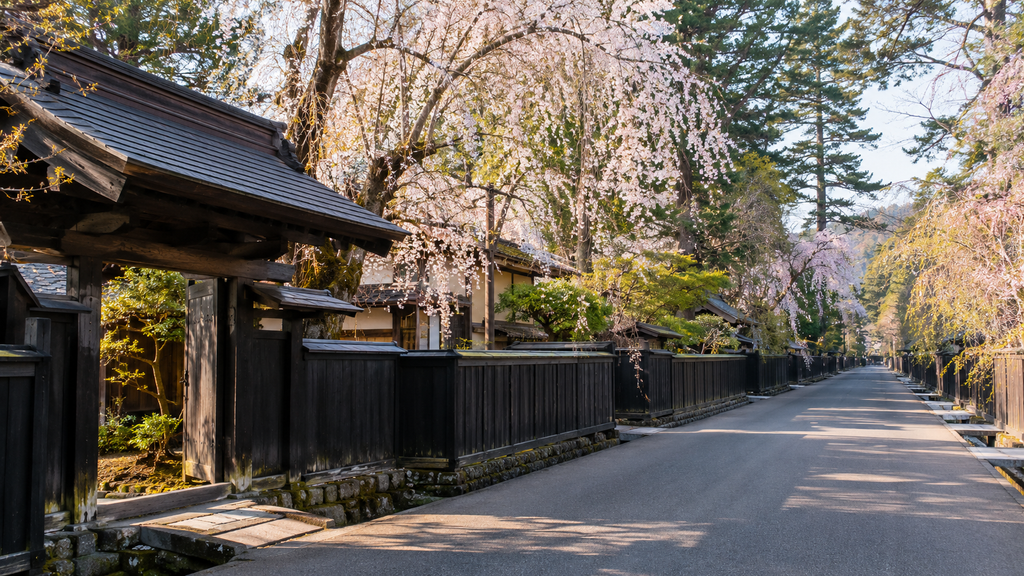
Kakunodate is one of Akita’s most famous destinations and one of the best places in Tohoku to experience the atmosphere of an Edo-period castle town.
The historic samurai district still contains traditional residences, gates, gardens, and long black wooden fences. Several former samurai homes are open to visitors, offering a glimpse into how warrior families once lived.
Spring is especially famous. Weeping cherry trees hang over the dark samurai walls, while cherry blossoms also line the nearby Hinokinai River. Because Akita is farther north than Tokyo and Kyoto, the blossom season generally arrives later, often from late April into early May.
Autumn brings red and gold leaves, while winter covers the district in snow and creates an even quieter historical landscape.
Japanese Perspective: Why the Streetscape Matters
Kakunodate is not about one spectacular building.
Much of its charm comes from machinami, a Japanese word describing the character created by an entire streetscape. Houses, walls, trees, roads, gardens, and the spaces between them work together to create a sense of place.
Instead of rushing from one residence to another, walk slowly and notice the atmosphere of the town itself.
2. Lake Tazawa — Japan’s Deepest Lake
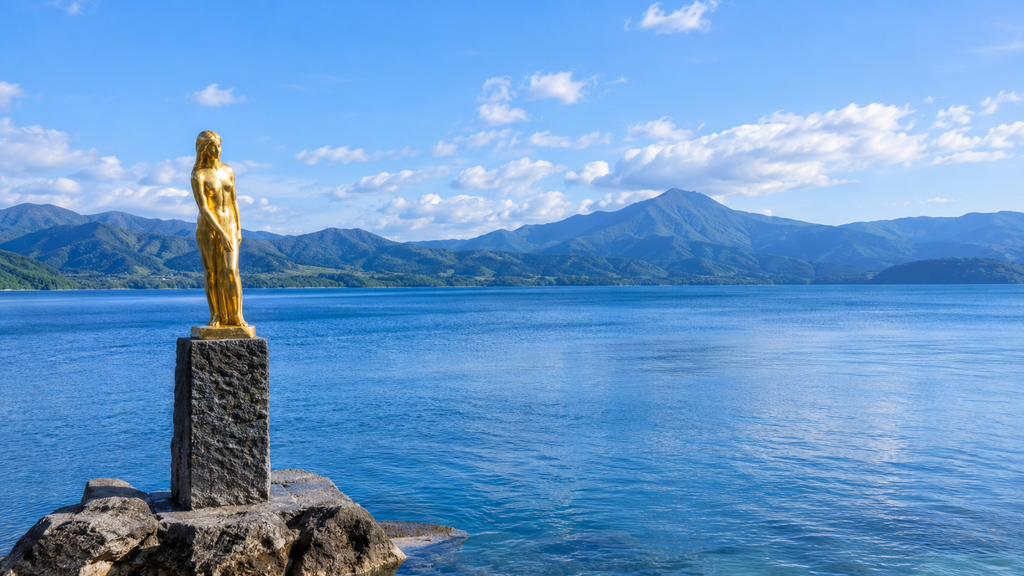
Not far from Kakunodate lies Lake Tazawa, one of Akita’s most impressive natural attractions.
With a maximum depth of 423.4 meters, it is the deepest lake in Japan. Its water can appear cobalt blue, turquoise, or indigo depending on the weather and light.
One of the most recognizable landmarks is the golden Statue of Tatsuko.
According to local legend, Tatsuko was a young woman who wished for eternal beauty and eventually became a dragon associated with the lake. Stories like this are common around Japanese mountains, lakes, shrines, and unusual natural formations.
Visitors can explore the lake by car, bicycle, sightseeing boat, or seasonal outdoor activities. The surrounding mountains are particularly beautiful in autumn, while winter creates a striking contrast between blue water and snow.
Japanese Perspective: Legends Give Places Identity
Local legends in Japan are not simply decorative stories for tourists.
They are part of the way communities have remembered and explained landscapes over generations. Knowing the Tatsuko story makes Lake Tazawa more than a scenic viewpoint; it becomes part of Akita’s cultural identity.
3. Nyuto Onsenkyo — A Mountain Hot Spring Escape
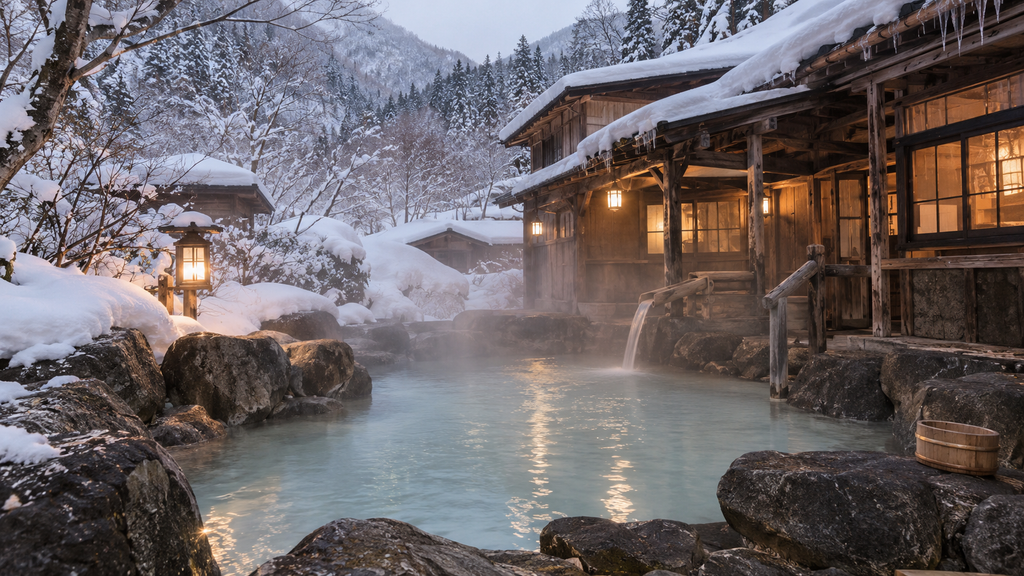
For many travelers, Nyuto Onsenkyo is the highlight of Akita.
Hidden in the mountains near Lake Tazawa, the area consists of seven hot spring inns, each with its own spring source. Traditional buildings, forest scenery, mineral-rich water, and outdoor baths create the feeling of a secluded retreat.
The best way to experience Nyuto Onsen is to stay overnight.
A typical ryokan visit may involve changing into a yukata, bathing before dinner, enjoying a regional meal, relaxing in your room, and returning to the bath later in the evening. In winter, deep snow turns the area into one of Japan’s most atmospheric onsen destinations.
Japanese Perspective: Understanding “Yukkuri”
Japanese people often use the expression yukkuri suru, meaning to relax, take your time, and avoid rushing.
An onsen trip is a good example. The bath is only one part of the experience. The journey into the mountains, the ryokan, seasonal food, quiet scenery, and time away from everyday responsibilities all matter.
Basic Onsen Etiquette
Wash your body before entering a shared bath, do not wear a swimsuit unless specifically allowed, and keep the small towel out of the bath water.
Tattoo policies vary, so check with each accommodation in advance when necessary.
4. Oga Peninsula — Understand the Namahage Tradition
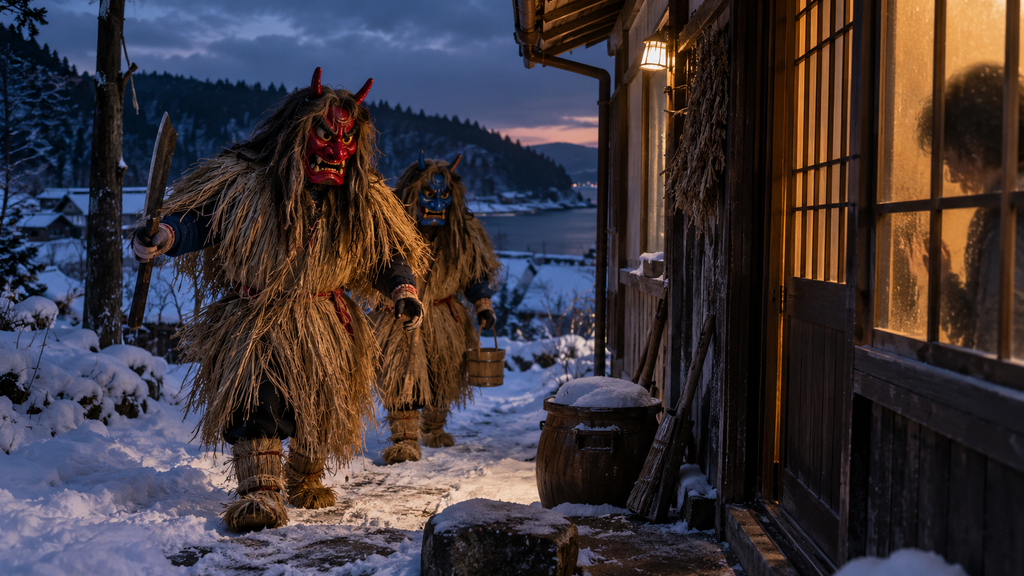
The Oga Peninsula introduces visitors to one of Akita’s most distinctive traditions: Namahage.
Namahage wear dramatic masks and straw clothing and traditionally visit homes on New Year’s Eve. Their frightening appearance can make them look like demons, but that description alone misses their cultural role.
During the ritual, Namahage search for people who are lazy or misbehaving and encourage family members to work, study, and behave properly. They are then welcomed by the household with food and drink.
Oga no Namahage was included in UNESCO’s Intangible Cultural Heritage listing in 2018 as part of Japan’s visiting-deity traditions.
The Namahage Museum is an excellent introduction for international visitors. Its collection also shows that masks and customs differ between communities.
Japanese Perspective: Scary Does Not Always Mean Evil
Traditional Japanese folk culture does not always divide supernatural beings neatly into “good” and “evil.”
A frightening visitor can also bring protection, good fortune, or an important warning. Namahage reflect an older relationship between community life, seasonal ritual, discipline, and belief.
Understanding that background makes the tradition much more meaningful than simply seeing it as a strange local monster.
5. Akita City and the Kanto Festival
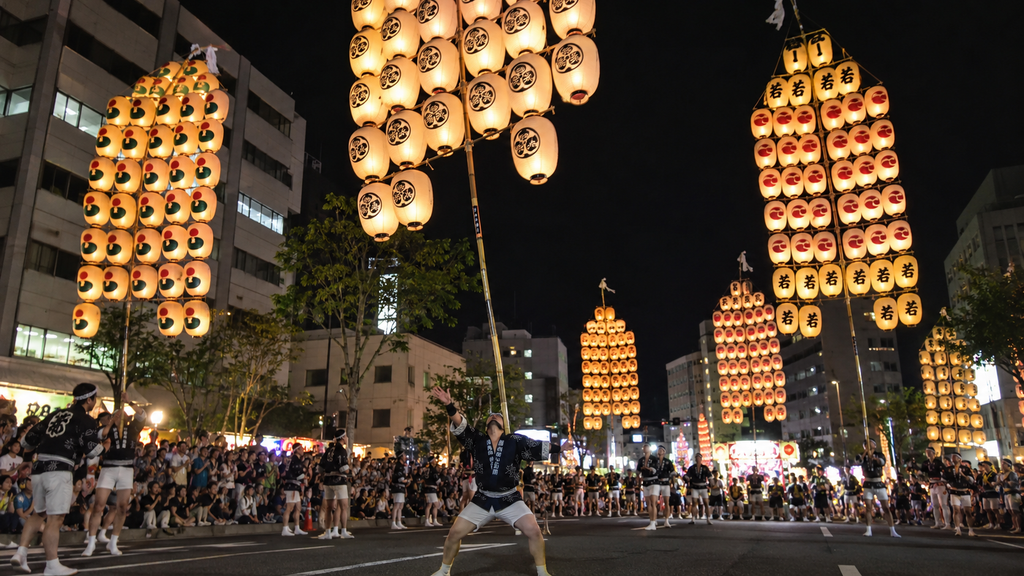
Akita City is the prefectural capital and a useful transportation base.
Its most famous event is the Akita Kanto Festival, normally held from August 3 to August 6.
During the nighttime performances, skilled participants balance tall bamboo poles covered with glowing paper lanterns on their hands, shoulders, foreheads, and hips.
The lanterns are arranged to resemble ears of rice, connecting the festival with prayers for a good harvest.
If you cannot visit in August, the Akita City Folk Performing Arts Heritage Center, commonly called Neburi Nagashi Kan, introduces Kanto and other local performing traditions throughout the year.
Japanese Perspective: Festivals Belong to Communities
Japanese festivals may look like spectacular tourist events, but their local meaning is deeper.
Neighborhood groups practice, maintain equipment, organize teams, and pass skills from one generation to another. The performance visitors see for a few hours may represent years of community participation.
This is one reason traditional festivals remain meaningful even in modern Japanese cities.
What to Eat in Akita
Food is one of the best ways to understand Akita. The prefecture is famous for rice, experiences long snowy winters, and developed dishes based on preservation and cold-weather cooking.
Kiritanpo
Akita’s signature dish is kiritanpo.
Cooked rice is mashed, shaped around a wooden stick, and grilled. It is often cut into pieces and simmered in a hot pot with chicken, mushrooms, vegetables, and broth.
Inaniwa Udon
Inaniwa udon originates in southern Akita.
The noodles are thinner and smoother than many other udon styles and are traditionally made through repeated kneading, stretching, and drying.
Iburigakko
Iburigakko is smoked and pickled daikon radish.
Its distinctive flavor comes from a preservation tradition suited to Akita’s snowy climate. Modern restaurants sometimes serve it with cream cheese.
Hinai Jidori
Hinai Jidori is one of Japan’s best-known regional chicken varieties and is often used in kiritanpo hot pot and oyakodon.
Akita Sake
Akita’s reputation for high-quality rice naturally extends to sake. Trying locally brewed sake with regional food is an easy way to experience the relationship between local agriculture and cuisine.
Japanese Perspective: Regional Food Often Began as Practical Food
Many Japanese specialties began as practical solutions.
Smoking, pickling, drying, fermenting, and salting helped people preserve food through difficult seasons. Iburigakko is a good example of how everyday knowledge later became a regional delicacy.
Best Time to Visit Akita
Spring: April to May
Spring is ideal for Kakunodate’s cherry blossoms. Because the season arrives later than in Tokyo or Kyoto, Akita is particularly attractive in late April.
Summer: June to August
Summer brings green mountain scenery and festivals. The Kanto Festival in early August is one of the strongest reasons to visit Akita City.
Autumn: October to November
Autumn may be the best all-around season for a first trip. Lake Tazawa, Kakunodate, and mountain areas become colorful, while cooler temperatures are perfect for onsen.
Winter: December to March
Winter shows Akita at its most dramatic. Snowy samurai streets and mountain baths are unforgettable, but heavy snow can affect transportation.
How to Get to Akita
The most convenient option for many international visitors is the Akita Shinkansen Komachi.
JR East operates direct services between Tokyo and Akita, with trains also stopping at Tazawako and Kakunodate. Typical Tokyo–Akita journeys take roughly four hours depending on the service.
Flights also connect Tokyo Haneda Airport and Akita Airport.
Within the prefecture, trains and buses are sufficient for Kakunodate, Lake Tazawa, Nyuto Onsen, and Akita City. A rental car becomes more useful for the Oga Peninsula and rural areas.
In winter, public transportation is often easier for travelers without experience driving in heavy snow.
Recommended 3-Day Akita Itinerary
Day 1 — Kakunodate
Take the Akita Shinkansen to Kakunodate.
Explore the samurai district and visit one or two historic residences. Stay around Kakunodate or Lake Tazawa.
Day 2 — Lake Tazawa and Nyuto Onsen
Spend the morning around Lake Tazawa and visit the Statue of Tatsuko.
Continue into the mountains in the afternoon and stay overnight at Nyuto Onsenkyo. Enjoy the bath, dinner, and ryokan atmosphere rather than adding too many activities.
Day 3 — Akita City or Oga Peninsula
Travel toward Akita City.
Choose Akita City for food and easy transportation, or continue to the Oga Peninsula if Namahage and folk culture are your priority.
With four days, visit both.
Practical Tips for Visiting Akita
Public transportation in rural Akita is less frequent than in large Japanese cities, so always check the return bus or train before visiting a remote destination.
If you stay at a mountain ryokan, a plan including dinner and breakfast is often convenient because nearby restaurants may be limited.
During winter, bring waterproof shoes with good grip and allow extra travel time.
Most importantly, leave space in your itinerary. Akita is better when you travel slowly.
Frequently Asked Questions About Akita
What is Akita most famous for?
Akita is well known for Kakunodate, Lake Tazawa, Nyuto Onsen, Namahage culture, the Kanto Festival, Akita dogs, rice, sake, kiritanpo, and Inaniwa udon.
How many days do you need in Akita?
Three days and two nights is a good minimum. Four or five days are better if you also want to explore the Oga Peninsula and Akita City.
Can you visit Akita without a car?
Yes. Kakunodate, Lake Tazawa, Nyuto Onsen, and Akita City are accessible by public transportation. A car is more useful for rural areas.
Is Akita worth visiting in winter?
Yes. Winter is especially atmospheric for Nyuto Onsen and Kakunodate, although heavy snow can affect transportation.
When is the best time for cherry blossoms in Kakunodate?
The main season is usually from late April into early May, although exact dates vary each year.
Final Thoughts
Akita is not trying to be Tokyo or Kyoto.
That is exactly why it is special.
Its appeal lies in quiet samurai streets, deep blue water, snowy mountain baths, regional food, powerful festivals, and traditions that still belong to the communities that created them.
For travelers exploring northern Japan, Akita combines particularly well with neighboring Aomori and the rest of Tohoku.
If you want to slow down and discover a different side of Japan, Akita deserves far more than a quick stop.
Explore More of Tohoku
Akita’s samurai towns, mountain hot springs and quiet landscapes make it a rewarding destination on its own, but neighboring prefectures offer even more ways to experience northern Japan.
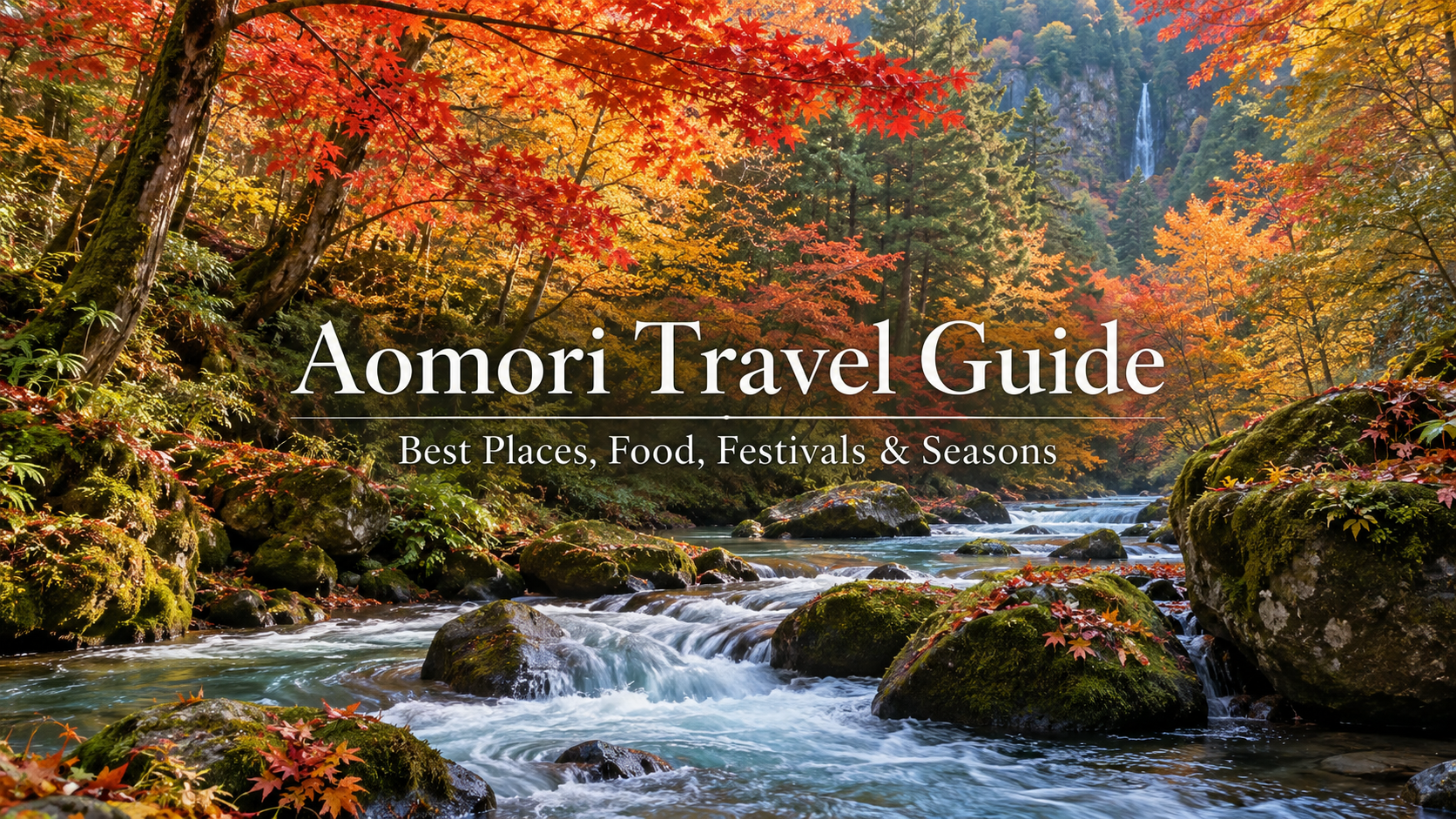
Aomori Travel Guide
Head north for Aomori’s spectacular summer festivals, apple country, fresh seafood, Oirase Gorge and some of northern Japan’s most dramatic seasonal scenery.
Read next: Aomori Travel Guide for First-Time Visitors: Best Places, Food, Festivals & Seasons
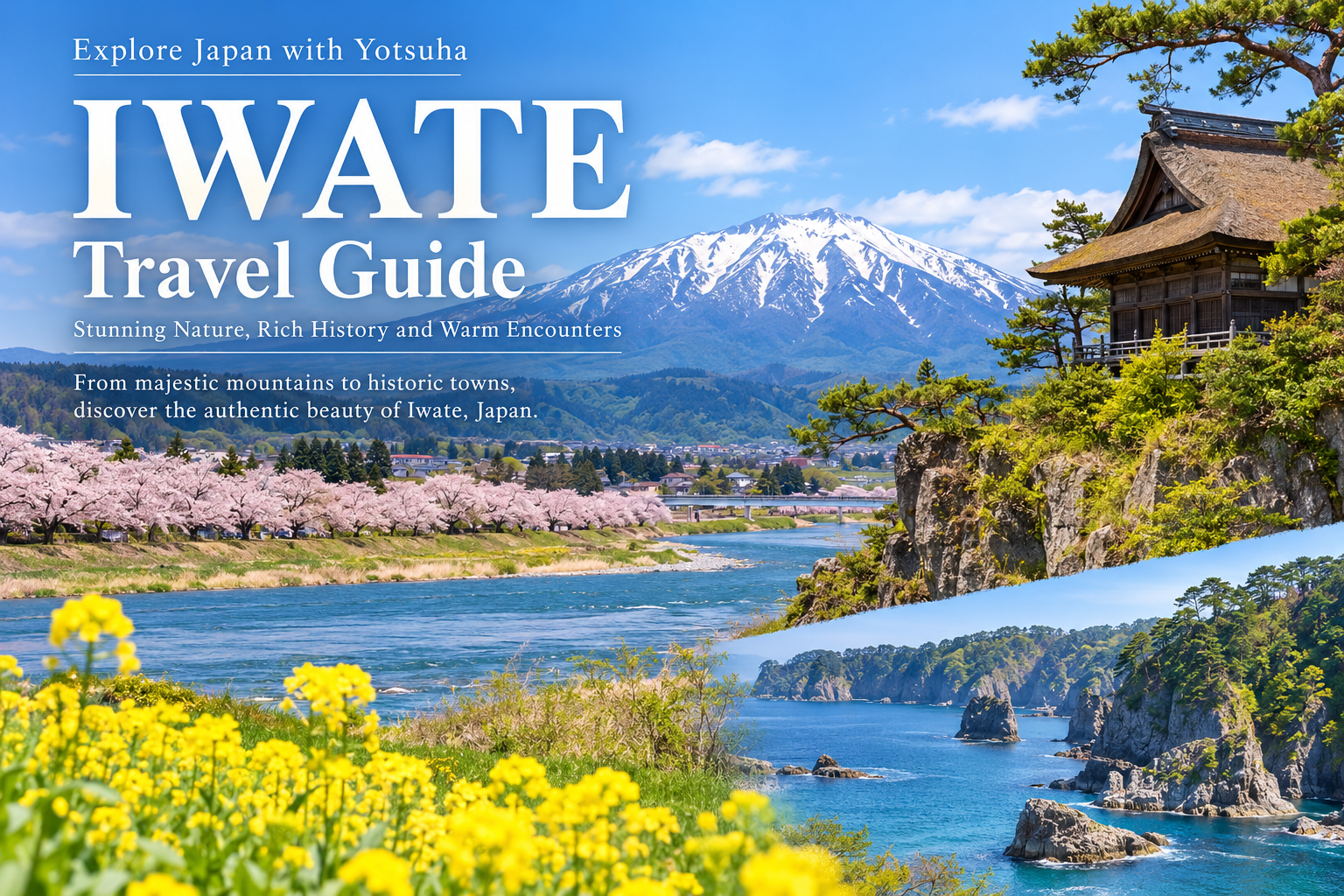
Iwate Travel Guide
Cross east into Iwate for the Buddhist heritage of Hiraizumi, the rugged Sanriku Coast, mountain hot springs and the regional food culture of Morioka.
Read next: Iwate Travel Guide: Hiraizumi, Sanriku Coast, Food & Hidden Gems
Yamagata Travel Guide
Continue south for Yamadera, Ginzan Onsen, Mount Zao and the sacred mountain landscapes of Dewa Sanzan.
Read next: Yamagata Travel Guide for First-Time Visitors: Temples, Onsen, Food & Four Seasons
Continue planning your northern Japan journey with our Tohoku Travel Guides.